This recipe delivers a consistently golden, caramelized fruit layer atop a tender vanilla crumb that remains structurally sound after every flip.

Achieving the perfect balance between juicy fruit and a stable cake base requires specific moisture control. This Brown Sugar Peach Upside Down Cake utilizes a high-fat batter to prevent the peach juices from making the crumb soggy. The result is a repeatable dessert that performs exactly the same way in every 9-inch pan.
Why This Brown Sugar Peach Upside Down Cake Works
Prep: 20 min · Serves: 8 · Difficulty: Medium
- Controlled moisture prevents a gummy texture.
- High-fat yogurt ensures a tender crumb.
- Standardized 350°F baking produces reliable results.
- Caramelized brown sugar creates deep flavor.
- Clear visual cues remove baking guesswork.
Precision creates consistency throughout every layer of this seasonal dessert. This peach upside down cake recipe relies on tested ratios to ensure the fruit remains the star without compromising the cake structure.
Get The Full Cake Recipe
Print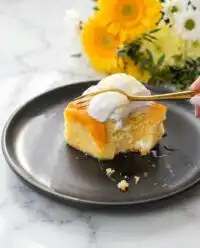
Brown Sugar Peach Upside Down Cake
- Total Time: 1 hour
- Yield: 8 servings
- Diet: Vegetarian
Description
This classic peach upside-down cake features tender, high-fat vanilla sponge crowned with perfectly caramelized fruit. The precise butter-to-yogurt ratio ensures a stable crumb that highlights fresh seasonal flavors in every bite.
Ingredients
- 2–3 fresh peaches, thinly sliced
- 1/2 cup unsalted butter, softened
- 3/4 cup light brown sugar
- 1 1/2 cups all-purpose flour
- 1 cup granulated sugar
- 2 large eggs
- 1 teaspoon vanilla extract
- 1/2 cup whole milk
- 1/4 cup Greek yogurt
- 2 teaspoons baking powder
- 1/2 teaspoon salt
Instructions
- Prepare the pan. Preheat your oven to 350°F, line a 9-inch springform pan with parchment paper, and grease the sides thoroughly with butter.
- Arrange the peaches. Pit and thinly slice the peaches, then arrange them in a tight spiral starting from the center of the pan outward.
- Cream the butter. Beat the room-temperature butter and sugars in a stand mixer for 3 minutes until the mixture is pale and fluffy.
- Emulsify the wet base. Add the vanilla extract and eggs one at a time, mixing on high speed until the batter is smooth and glossy.
- Whisk dry ingredients. Combine the flour, baking powder, and salt in a separate bowl, sifting if necessary to remove clumps.
- Incorporate the components. Gradually mix half of the dry ingredients into the butter mixture, followed by the milk and yogurt, then stir in the remaining flour.
- Bake the cake. Spread the batter evenly over the peaches and bake for 40 minutes, or until the top is golden and firm to the touch.
- Cool and invert. Let the cake rest in the pan for 15 minutes before running a knife around the edge and inverting it onto a serving plate.
Notes
- Weighing your flour to 188 grams is essential to avoid a dry or dense crumb.
- Use room temperature eggs and yogurt to prevent the butter emulsion from breaking.
- If the fruit sticks to the pan during inversion, gently warm the bottom of the pan over a burner for 30 seconds.
- Choose firm, ripe peaches rather than overripe ones to prevent excess juice from making the cake soggy.
- Prep Time: 20 mins
- Cook Time: 40 mins
- Category: Dessert
- Method: Baking
- Cuisine: American
The Working Components
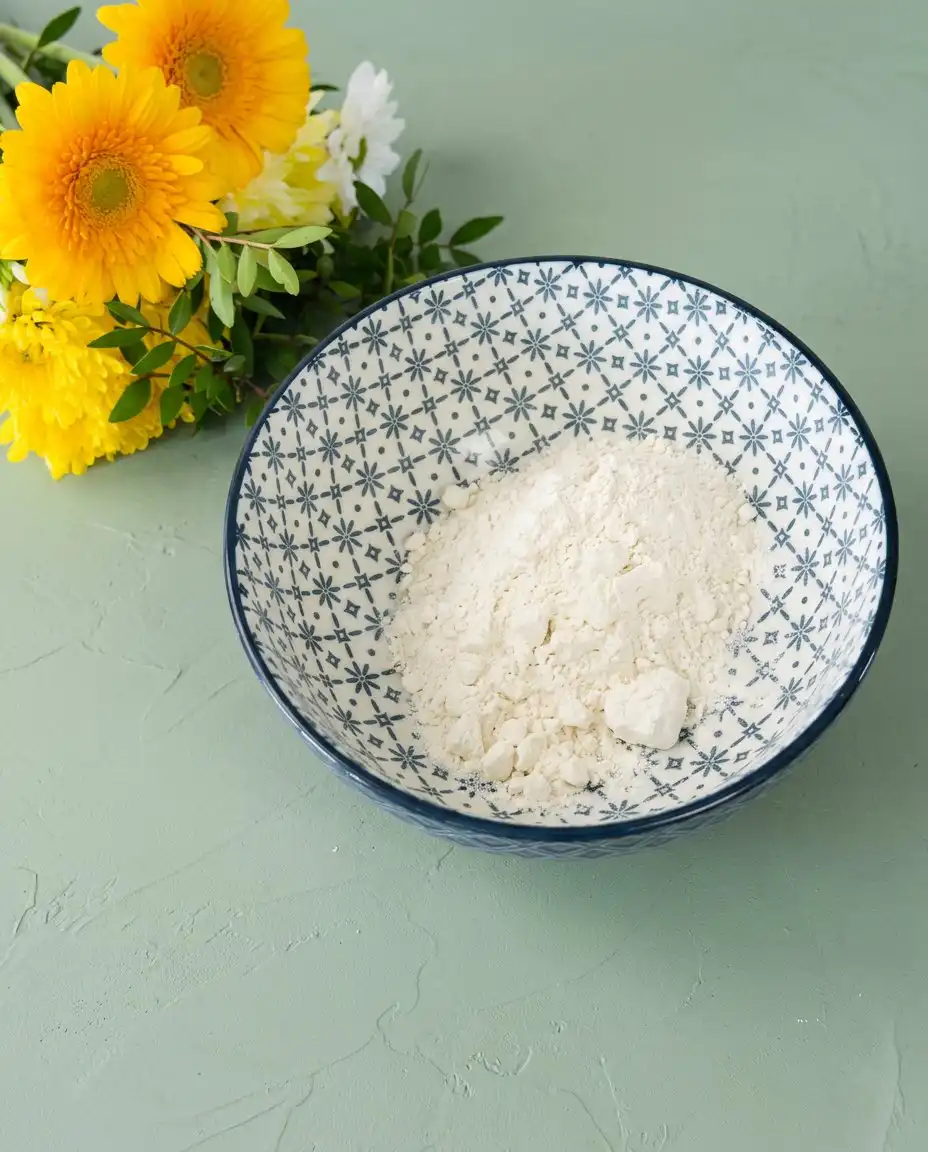
Successful baking depends on understanding how individual ingredients interact under heat. This recipe uses a combination of fats and sugars to create a specific crumb density that can support the weight of fresh fruit. Each element has been selected to provide structural integrity while maintaining a soft mouthfeel.
- Ripe Peaches: These provide the essential acidity and moisture needed to activate the leavening agents.
- Unsalted Butter: Using unsalted butter allows for exact control over the sodium levels in the batter.
- Light Brown Sugar: The molasses content in brown sugar contributes to a deeper caramelization during the bake.
- Large Eggs: These act as the primary emulsifier, binding the fats and liquids into a stable structure.
- Baking Powder: This provides the necessary lift to ensure the cake does not become dense under the fruit.
- Greek Yogurt: The high protein and fat content in yogurt weaken gluten strands for a more tender result.
| Ingredient | Why It Matters |
|---|---|
| All-Purpose Flour | Provides the gluten framework for stability. |
| Granulated Sugar | Assists in aeration during the creaming process. |
| Vanilla Extract | Enhances the natural sugars found in the peaches. |
| Whole Milk | Adds liquid volume without thinning the batter excessively. |
The Tested Procedure
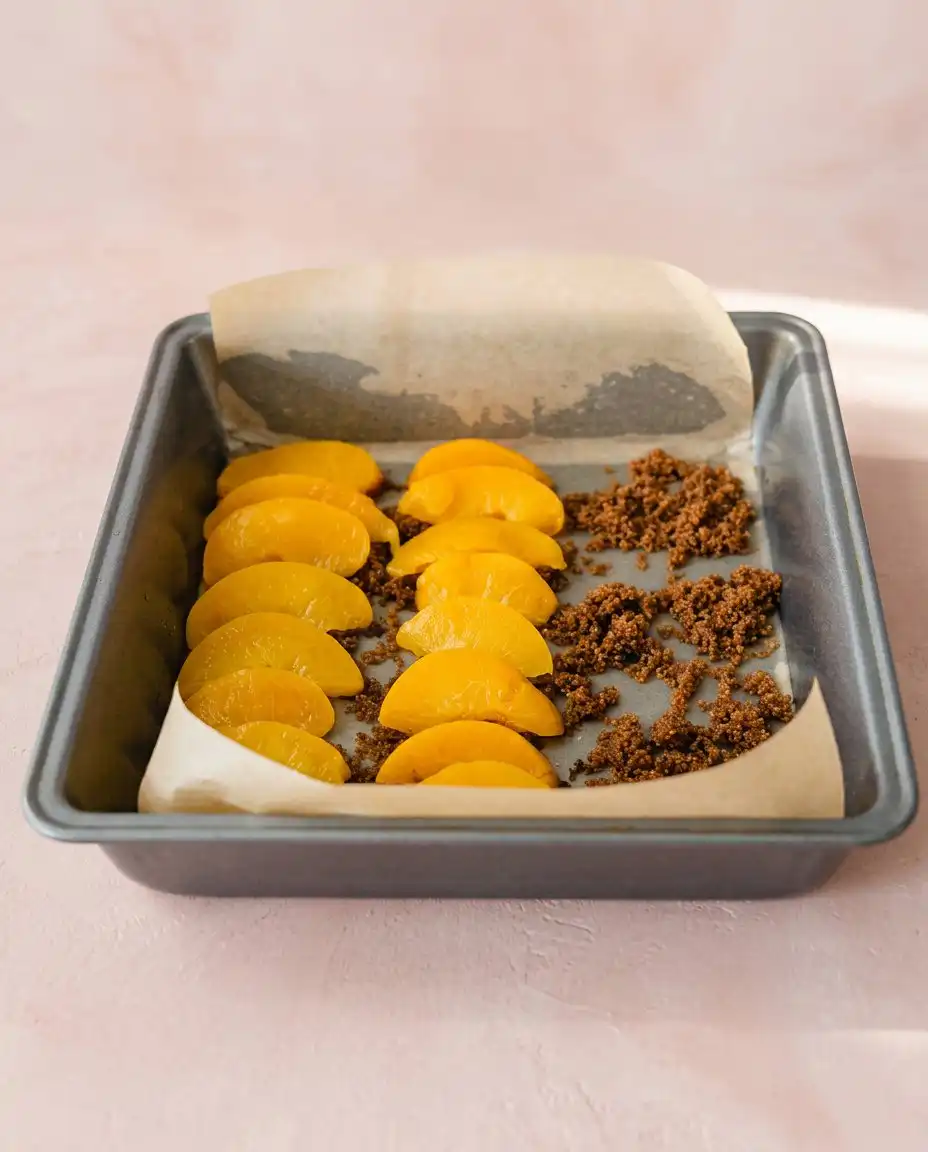
Step 1: Preparing the Pan Geometry
Preheat your oven to 350°F and line a 9-inch springform pan with a circle of parchment paper. Grease the sides of the pan and the paper thoroughly with softened butter to ensure a clean release later. This barrier is critical because the sugars in the fruit will become sticky as they cool.
Step 2: Arranging the Fruit Foundations
Pit and thinly slice the peaches into uniform half-moon shapes to ensure even cooking. Arrange the slices in a tight spiral starting from the center of the pan and moving outward. Fill every gap in the bottom layer to create a solid fruit presentation once the cake is inverted.
Step 3: Aerating the Butter and Sugars
Place the room temperature butter and both sugars into a stand mixer fitted with the whisk attachment. Beat on medium-high speed for 3 minutes until the mixture is pale and has a noticeably fluffy texture. This step creates the microscopic air pockets required for a light, airy crumb.
Step 4: Emulsifying the Wet Base
Add the vanilla extract and the eggs one at a time while mixing on high speed. Ensure each egg is fully incorporated before adding the next to maintain a stable emulsion. The batter should appear smooth and glossy before you move on to adding the dry ingredients.
Step 5: Preparing the Dry Mixture
Whisk the all-purpose flour, baking powder, and salt in a separate glass bowl until the leavening agent is evenly distributed. Sifting these ingredients can further help prevent clumps and improve the final texture of the cake. Set this bowl aside until the wet base is ready for integration.
Step 6: Integrating the Components
Add half of the dry ingredients to the mixer and stir until only a few streaks of flour remain visible. Pour in the milk and yogurt and mix briefly on low speed to avoid overworking the gluten. Add the remaining flour mixture and stir until the batter is just combined and structurally uniform.
Step 7: Baking Your Brown Sugar Peach Upside Down Cake
Transfer the batter into the prepared pan by dropping large spoonfuls over the fruit and then gently spreading to the edges. Bake for 40 minutes at 350°F or until a toothpick inserted into the center shows only a few moist crumbs. The top should be a deep golden brown and feel firm to the touch.
Step 8: The Controlled Cool and Flip
Allow the cake to sit in the pan on a wire rack for exactly 15 minutes before attempting to release it. Run a thin knife around the perimeter of the pan to loosen any caramelized sugar that may have stuck to the sides. Place a serving plate over the pan and invert it in one swift motion to reveal the fruit layer.
Test Kitchen Notes
We tested this—here’s what won: always weigh your flour to exactly 188 grams using a digital scale. Volumetric measurements are prone to error and can lead to a dry, dense cake if the flour is packed too tightly into the cup. Referencing how to properly measure flour for baking will help you maintain the correct hydration ratio in your batter.
If your fruit layer sticks to the pan, here is why and how to fix it: the sugar likely cooled too much before the flip. You can briefly place the bottom of the pan over a warm stovetop burner for 30 seconds to re-liquefy the caramel. This heat will loosen the bond between the peaches and the pan surface for a smoother release.
Ensure your eggs and yogurt are at true room temperature before mixing to prevent the butter from curdling. When cold liquids hit creamed butter, the fat solidifies and breaks the emulsion, resulting in an uneven bake. Set these ingredients on the counter for at least 60 minutes prior to starting the recipe.
Using a springform pan provides the best results because the removable sides prevent the fruit from being disturbed during the unmolding process. If you must use a standard round pan, ensure your parchment paper has a small overhang to help lift the cake. You can find more details on pan selection in our guide for classic peach upside down cake.
Avoid using overripe peaches that have turned mushy as they will release too much juice and dissolve into the batter. Choose fruit that is firm but gives slightly when pressed, which indicates the sugars have developed without the cell walls breaking down. This ensures the slices retain their shape and visual appeal after the bake.
Frequently Asked Questions
Can I use frozen peaches for this upside down cake?
You can use frozen peaches, but they must be completely thawed and patted dry with paper towels before use. Frozen fruit releases significantly more moisture than fresh fruit, which can cause the batter to become soggy. We recommend increasing the baking time by 5 minutes if the fruit feels particularly cold or wet during assembly.
How should I store the leftovers to maintain the texture?
Store any remaining cake in an airtight container in the refrigerator for up to three days. Because of the high moisture content in the fruit layer, the cake can become soft if left at room temperature for too long. Reheat individual slices in a 300°F oven for 5 minutes to restore the original texture before serving.
What happens if I use a different size pan?
Using a pan larger than 9 inches will result in a thinner cake that bakes faster and may become dry. Conversely, a smaller pan will cause the batter to overflow or remain raw in the center while the edges burn. We calibrated this specific ratio for a standard 9-inch round pan to ensure even heat distribution.
Why did my cake sink in the middle after I took it out?
A sunken center usually indicates that the cake was underbaked or that the oven temperature was too high, causing the outside to set before the inside. Use an instant-read thermometer to check that the internal temperature has reached 210°F. Ensure your baking powder is fresh, as expired leavening will fail to support the weight of the fruit.
Can I substitute the Greek yogurt with sour cream?
Yes, sour cream can be used as a 1:1 substitute for Greek yogurt because it has a similar fat content and acidity level. Both ingredients serve to tenderize the crumb by interfering with gluten formation. Avoid using low-fat or fat-free versions, as the lack of lipids will result in a tougher, less flavorful cake.
Is it possible to freeze this peach cake for later?
This cake freezes well when wrapped tightly in plastic wrap and then a layer of aluminum foil. It can be stored in the freezer for up to two months without significant loss of quality. Thaw the cake overnight in the refrigerator and allow it to reach room temperature before serving to ensure the caramelized layer is soft.
Tested Variations
You can introduce a more complex flavor profile by adding two tablespoons of quality bourbon to the wet ingredients. The alcohol burns off during the baking process but leaves behind notes of oak and vanilla that pair exceptionally well with the fruit. Our bourbon peach upside down cake testing showed this variation is particularly popular for adult gatherings.
For a different texture, try replacing the vanilla extract with a half teaspoon of almond extract and adding sliced almonds to the bottom of the pan. This provides a nutty contrast to the soft peaches and adds a subtle crunch to the caramelized topping. We found that this variation benefits from a slightly longer cooling time to allow the nuts to set into the sugar.
If you prefer a more intensely spiced cake, whisk one teaspoon of ground cinnamon and a quarter teaspoon of nutmeg into the dry ingredients. These warm spices complement the brown sugar topping and provide a deeper aromatic experience as the cake bakes. This adjustment does not change the structural integrity of the crumb and remains highly consistent.
Finishing & Plating
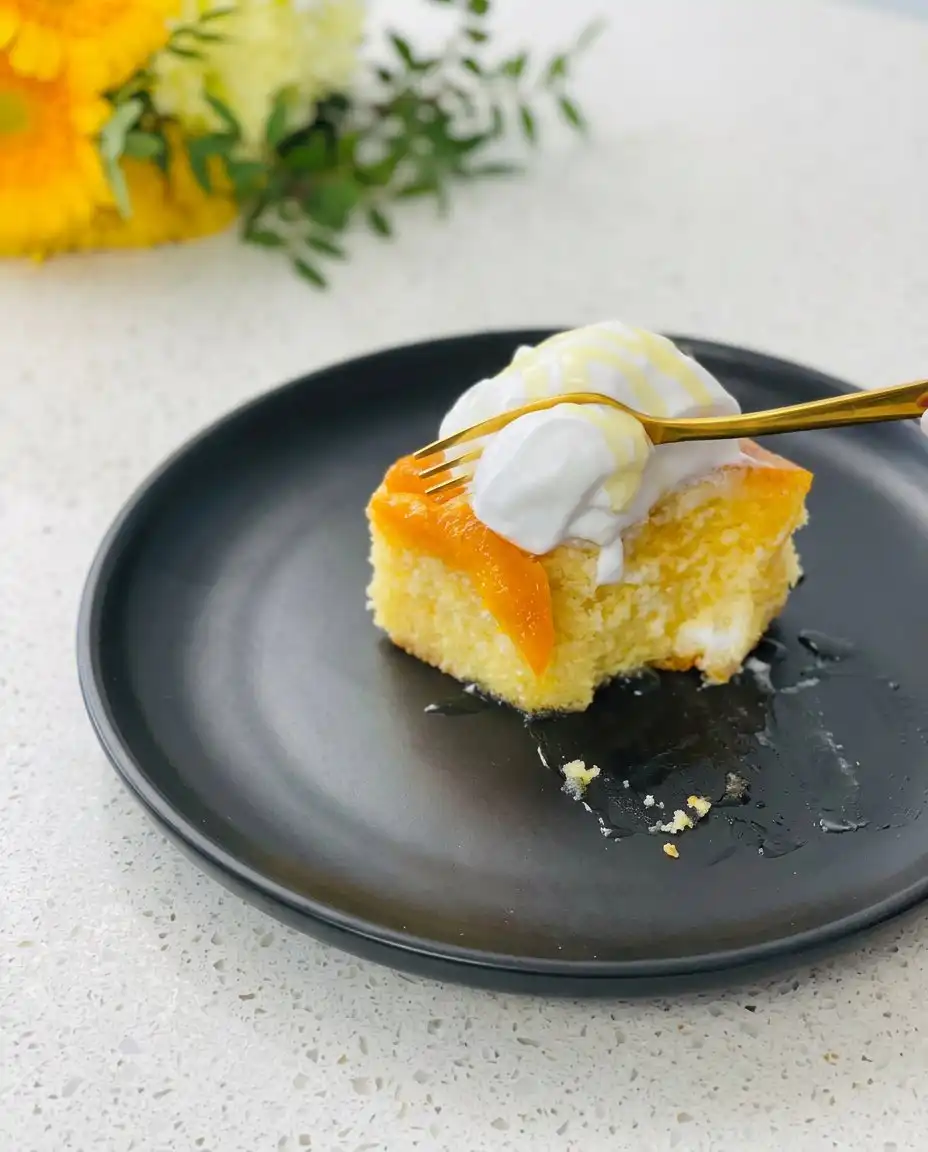
This dessert is best served slightly warm, approximately 20 minutes after the initial flip, to allow the caramel to remain fluid. For a more formal presentation, serve each slice with a dollop of unsweetened whipped cream or a scoop of high-quality vanilla bean ice cream. The cold cream provides a temperature contrast to the warm fruit that enhances the overall eating experience.
If you are looking for a different approach to peach desserts, you might consider our no bake caramel peach upside down cake for warmer days. For this specific baked version, a dusting of powdered sugar just before serving can add a professional finish. Ensure the cake has cooled sufficiently so the sugar does not immediately dissolve into the fruit juices.
Pair this cake with a light roast coffee or a floral Earl Grey tea to balance the richness of the brown sugar and butter. The acidity in the tea cuts through the sweetness of the peaches, making it an excellent choice for an afternoon service. Always cut the cake with a sharp, serrated knife to ensure clean slices through the fruit layer.
Recipe Recap
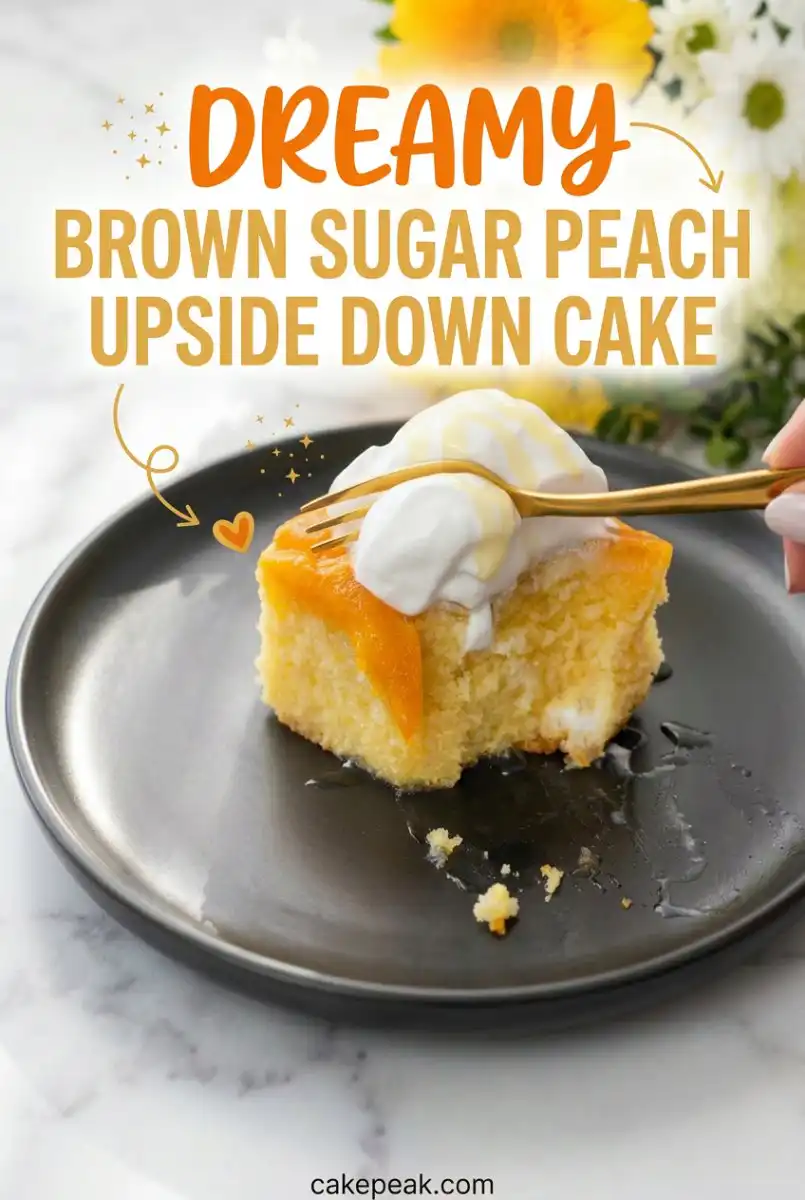
This Brown Sugar Peach Upside Down Cake is the result of multiple test kitchen iterations designed to eliminate common baking failures. By following the precise steps of creaming the butter and monitoring the internal temperature, you can achieve repeatable results every time. The science behind the perfect crumb lies in the balance of moisture and fat, which we have carefully standardized in this formula.
We encourage you to experiment with the technique and observe how the ingredients react in your own kitchen environment. If you enjoy the depth of flavor in this topping, you should also try our peach cake brown sugar frosting for your next baking project. Sharing your results with a community of detail-oriented bakers helps refine these methods for everyone.
Please share your successful bakes with us on our social channels to join the conversation. You can find more precision-based recipes and baking science on our Pinterest, Facebook, TikTok, or Telegram. We look forward to seeing your technical progress in the kitchen.