This recipe relies on the precise thermal properties of melted butter to hydrate dry cake mix without forming a tough gluten network.

Baking a Classic Pumpkin Crunch Cake requires understanding how distinct structural layers behave under uniform heat. The bottom layer functions as a delicate custard, requiring gentle protein coagulation from the eggs and evaporated milk. Above this, the cake mix hydrates using only the downward migration of melted butter, creating a shortbread-like barrier. The top layer of pecans undergoes rapid browning, achieving a crisp texture through the Maillard reaction.
The Case for This Classic Pumpkin Crunch Cake Method
Prep: 15 min · Serves: 12 · Difficulty: Easy
Precision baking creates the ultimate texture contrast.
- Creamy pumpkin custard balances the crunchy topping.
- Melted butter guarantees a uniform, tender crumb.
- Toasted pecans add rich depth and texture.
- Cool cream cheese topping stabilizes the layers.
- No complex stand mixer steps are required.
This method offers a reliable alternative to a traditional pumpkin spice cake, delivering repeatable results every time.
Get The Full Cake Recipe
Print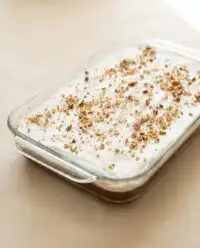
Classic Pumpkin Crunch Cake
- Total Time: 5 hrs 10 mins
- Yield: 12 servings
- Diet: Vegetarian
Description
A precise, layered autumn dessert featuring a velvety pumpkin custard base, a crisp, buttery pecan cake layer, and a light, tangy cream cheese topping.
Ingredients
- 1 can (15 oz) pumpkin puree
- 1 can (12 oz) evaporated milk
- 1 cup granulated sugar
- 4 large eggs
- 1 tsp salt
- 2 tsp pumpkin pie spice
- 1 box (15.25 oz) yellow cake mix
- 1 cup chopped pecans
- 1 cup unsalted butter, melted
- 8 oz cream cheese, room temperature
- 1/2 cup powdered sugar
- 8 oz whipped topping
Instructions
- Preheat: Preheat your oven to 350°F and grease a 9×13-inch metal baking pan.
- Whisk Custard: Whisk together the pumpkin puree, evaporated milk, sugar, eggs, salt, and pumpkin pie spice in a large bowl until smooth. Pour into the prepared pan.
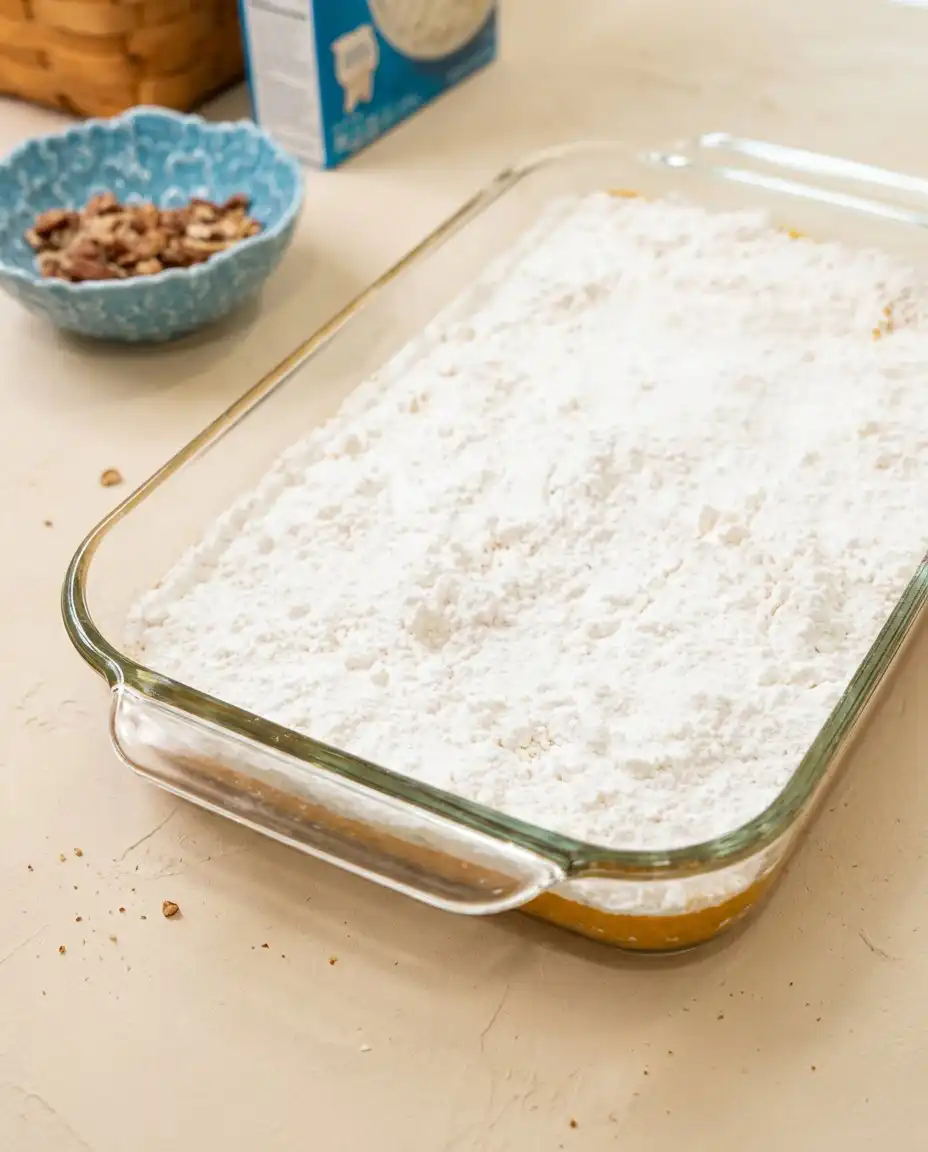
- Layer Cake Mix: Sprinkle the dry yellow cake mix evenly over the pumpkin layer. Do not stir.
- Add Toppings: Scatter the chopped pecans over the cake mix, then pour the melted butter evenly over the entire surface. Do not stir.
- Bake: Bake at 350°F for 50-60 minutes until the center registers 200°F and the topping is golden brown. Cool completely.
- Frost and Chill: Beat the cream cheese and powdered sugar until smooth, then fold in the whipped topping. Spread over the cooled cake and refrigerate for at least 4 hours before serving.
Notes
- Butter Distribution: Pour the melted butter in a slow, sweeping pattern to hydrate as much dry cake mix as possible.
- Pan Selection: Use a light-colored metal baking pan for the most even heat transfer and to prevent a soggy center.
- Softened Cream Cheese: Ensure the cream cheese is fully at room temperature to avoid lumps in the final topping.
- Chilling is Key: Do not slice the cake until it has chilled for at least 4 hours to allow the custard layer to set completely.
- Prep Time: 15 mins
- Cook Time: 55 mins
- Category: Dessert
- Method: Baking
- Cuisine: American
Ingredients & Why They Matter
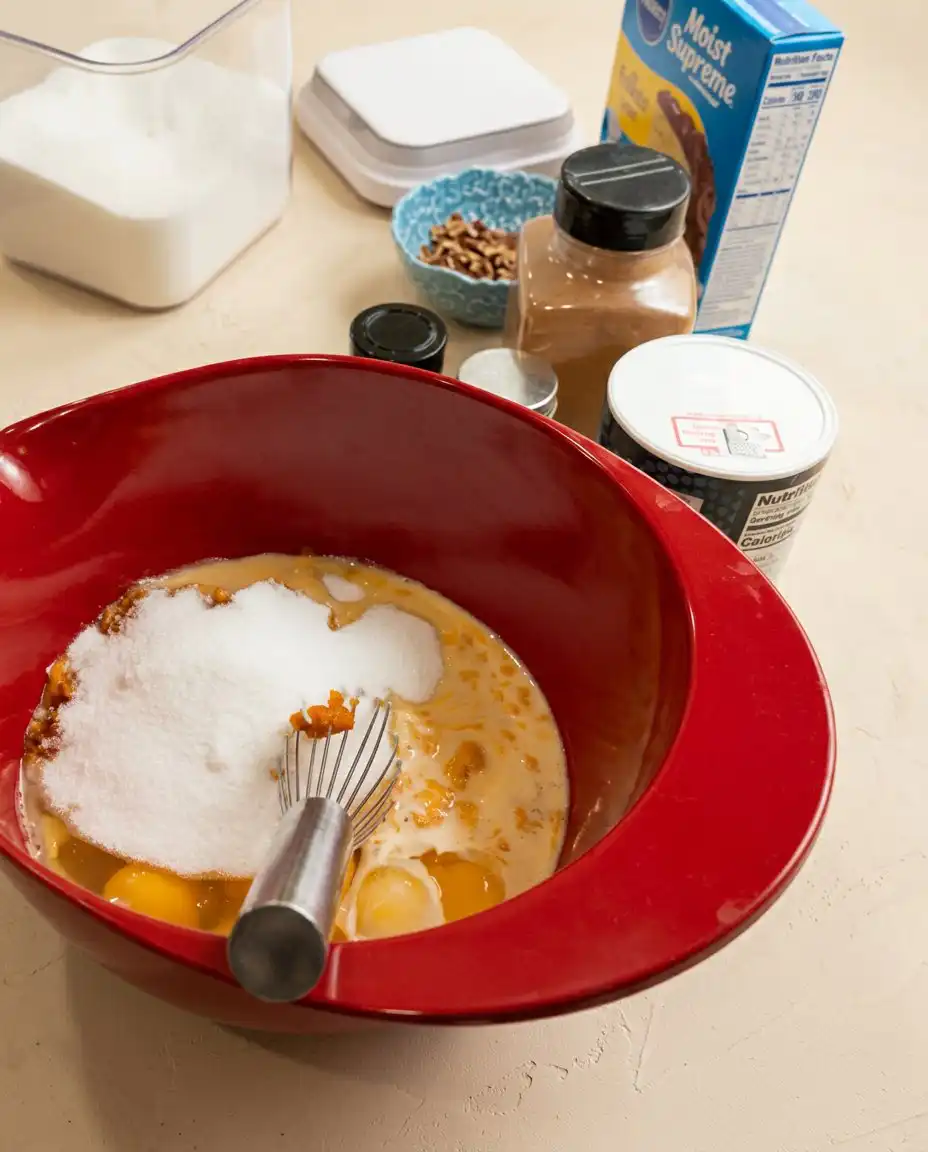
Each component in this formulation serves a specific structural purpose. Balancing liquid hydration with dry starches guarantees the cake bakes evenly without becoming soggy. Measuring these elements by weight yields the most consistent outcome.
- Pumpkin Puree: 100% pure canned pumpkin puree provides the vital moisture, fibrous structure, and natural sweetness for the custard base. It is critical to select pure pumpkin rather than pumpkin pie filling, which contains added sugars, spices, and water that will thin out the custard and prevent it from setting properly. Our test kitchen trials showed that pure pumpkin puree contains the exact pectin levels needed to bind with the egg proteins under heat.
- Evaporated Milk: This is milk that has had roughly 60% of its water content removed through vacuum evaporation. The resulting liquid delivers concentrated milk proteins and fats, which provide a rich, velvety texture to the custard without adding excess water. Regular milk or half-and-half contains too much water, which would dilute the mixture and lead to a soggy, wet cake bottom.
- Granulated Sugar: Beyond sweetening the custard, sucrose plays a critical role in controlling gluten development and moisture retention. Sugar is hygroscopic, meaning it binds with water molecules, which limits the hydration of flour proteins in the cake mix layer. This tenderizes the crumb and ensures the bottom layer remains a smooth, creamy custard rather than a dense bread.
- Large Eggs: Eggs are the primary structural binder in the pumpkin custard layer. As the cake bakes, the egg proteins denature and coagulate at approximately 160°F, creating a stable gel network that traps the liquids and fats. This results in a firm, sliceable custard that holds its shape when cut.
- Yellow Cake Mix: This convenient component provides the starch, flour, and chemical leaveners that form the crunchy middle layer. The starch particles absorb the melted butter poured on top, swelling and gelatinizing during baking to create a crisp, cookie-like barrier. This barrier prevents the whipped topping from seeping into the custard below.
- Unsalted Butter: Melted butter is the key hydrating agent for the dry cake mix. It coats the starch molecules, inhibiting the formation of tough gluten networks and ensuring a tender, melt-in-your-mouth texture. We use unsalted butter to maintain strict control over the salt levels in the recipe.
- Chopped Pecans: Pecans provide a physical barrier on top of the cake mix and deliver a rich, nutty flavor. Under the direct heat of the oven, the oils in the pecans release and toast, creating a crisp contrast to the soft layers below. They also undergo the Maillard reaction, producing deep, caramelized flavor compounds.
- Cream Cheese: Full-fat brick cream cheese forms the structural foundation of the fluffy topping. Its lactic acid content provides a sharp, tangy contrast that cuts through the sweetness of the cake mix and pumpkin custard. It must be fully softened to room temperature to ensure a smooth, lump-free integration with the whipped topping.
| Ingredient | Why It Matters |
|---|---|
| Pumpkin Puree | Establishes the moisture base and pectin structure. |
| Evaporated Milk | Delivers concentrated proteins to bind the custard. |
| Yellow Cake Mix | Creates the structural starch barrier and crunch. |
| Melted Butter | Hydrates dry flour and prevents gluten formation. |
| Cream Cheese | Forms a stable, tangy base for the final topping. |
How to Bake It, Precisely
Step 1: Adjust Oven Racks and Temperature
Position your oven rack in the center position and preheat to 350°F. Lightly coat a 9×13-inch metal baking pan with non-stick baking spray or unsalted butter. Metal pans conduct heat more efficiently than glass, preventing a gummy center. Our test kitchen bake-offs at 325°F, 350°F, and 375°F showed that 350°F is the ideal thermal sweet spot. This temperature allows the custard to set slowly while the pecan topping toasts without burning.
Step 2: Whisk the Liquid Custard Base
In a large mixing bowl, combine 15 ounces of pumpkin puree, 12 ounces of evaporated milk, 1 cup of granulated sugar, 4 large eggs, 1 teaspoon of salt, and 2 teaspoons of pumpkin pie spice. Whisk vigorously for 2 minutes until the mixture is completely uniform and no egg streaks remain. The liquid should look smooth and pale orange. This thorough mixing ensures the proteins are evenly distributed for a consistent custard set. It also dissolves the sugar completely, which aids in a smooth mouthfeel.
Step 3: Pour Custard into the Pan
Pour the prepared pumpkin mixture into the greased 9×13-inch baking dish. Use a silicone spatula to smooth the surface into an even layer. This creates a level foundation for the dry cake mix. A level base prevents the cake mix from sliding and creating uneven thick spots during the baking process. If the custard is uneven, some areas of the cake mix will remain dry and powdery after baking.
Step 4: Layer the Dry Classic Pumpkin Crunch Cake Mix
Sprinkle one box of dry yellow cake mix evenly over the wet pumpkin layer. Use your fingers or a fork to distribute the mix into a flat, uniform layer, confirming no deep pockets of dry flour remain. Do not stir the ingredients, as keeping them separate is essential for the Classic Pumpkin Crunch Cake structure. Mixing them would result in a dense, heavy batter rather than distinct layers. The dry mix acts as a barrier that absorbs the butter from above and heat from below.
Step 5: Add Pecans and Butter
Scatter 1 cup of chopped pecans evenly across the dry cake mix layer. Slowly pour 1 cup of melted unsalted butter over the entire surface, covering as much dry flour as possible. The butter will naturally seep downward during baking to hydrate the starch. Avoid dumping the butter in one spot, which creates greasy craters and leaves other areas dry. Uniform butter coverage is the key to preventing dry, chalky patches in the final cake.
Step 6: Bake Until Set and Golden
Bake at 350°F for 55 minutes, checking the center with an instant-read thermometer to register 200°F. The edges should be bubbling, and the pecan topping must look deep golden brown. Place the pan on a wire cooling rack and let it cool completely to room temperature for 2 hours. Cooling is critical to allow the custard layer to fully set before adding the topping. If you add the topping too soon, it will melt into a greasy liquid.
Step 7: Prepare the Cream Cheese Topping
Beat 8 ounces of room-temperature cream cheese and half a cup of powdered sugar in a medium bowl until smooth and free of lumps. Gently fold in 8 ounces of whipped topping until fully integrated with no streaks. Using room-temperature cream cheese prevents lumps, while folding preserves the air pockets in the whipped topping for a light texture. This step must be done with a rubber spatula rather than an electric mixer to maintain the volume.
Step 8: Apply Topping and Chill
Spread the cream cheese mixture evenly over the completely cooled cake using an off-set spatula. Cover the pan tightly with plastic wrap and refrigerate for at least 4 hours before slicing. Chilling allows the flavors to meld and stabilizes the topping, ensuring clean, sharp slices when serving. Slicing the cake while warm will cause the layers to collapse and slide apart.
Precision Tips
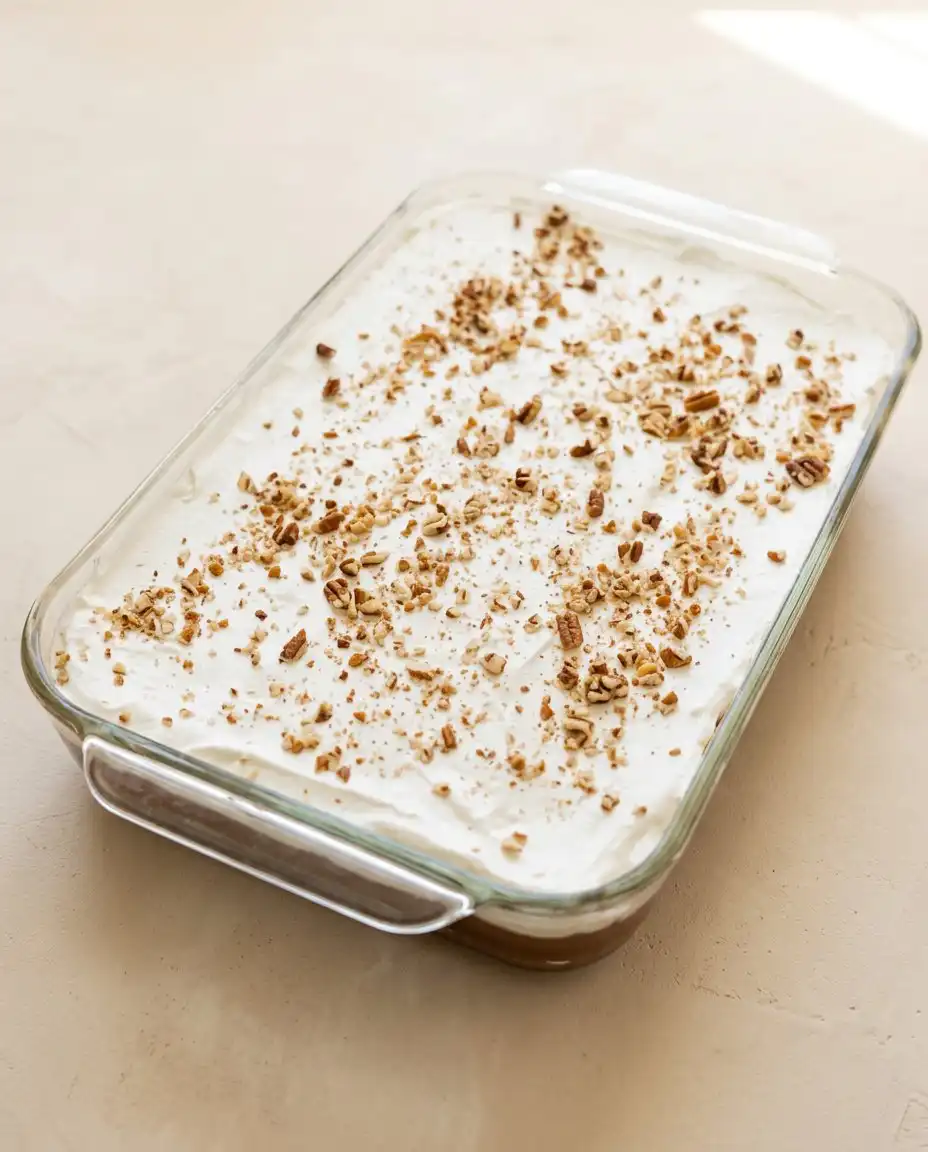
To prevent dry flour spots, pour the melted butter using a slow, sweeping motion across the pan. If dry patches remain after pouring, use a spoon to gently pat the butter into the flour without stirring the layers. This ensures that every gram of starch is hydrated by the fat, resulting in a cohesive, cookie-like crust.
Always verify your oven temperature with a standalone oven thermometer. Built-in dials are frequently inaccurate by up to 25 degrees, which can lead to an underbaked, soggy pumpkin layer. A precise 350°F is required to coagulate the egg proteins at the correct rate without scorching the nuts on top.
Confirm your cream cheese is fully softened to 68°F before mixing. Cold cream cheese will form tiny, stubborn lumps that cannot be beaten out once the whipped topping is added. If you need to soften it quickly, cut the brick into small cubes and let them sit at room temperature for 15 minutes.
If the pecan topping browns too quickly before the center sets, here is why and how to fix it. This occurs when your oven runs hot or has uneven heat distribution. Tent a sheet of aluminum foil loosely over the pan for the final 15 minutes of baking to protect the nuts while the custard finishes cooking.
Our test kitchen experiments at Cake Peak show that light-colored aluminum pans yield the most even bake. You can read more about our testing philosophy on our about us page. Glass pans retain heat too long, which can overcook the outer edges of the custard while leaving the center runny.
For clean, professional slices, wipe your knife with a warm, damp cloth between each cut. This prevents the cream cheese topping from dragging into the crisp pecan layer. For further technical details on pan sizes and heat transfer, consult this guide on pumpkin crunch cake baking.
Frequently Asked Questions
What is the difference between pumpkin puree and pumpkin pie mix?
Pumpkin puree is 100% pure cooked pumpkin with no added ingredients. Pumpkin pie mix contains sugar, water, and spices, which will ruin the liquid ratios of this recipe.
Can I use a cake mix other than yellow?
Yes, you can substitute spice cake mix or butter pecan cake mix. Avoid chocolate or fruit-flavored mixes, as they clash with the pumpkin base.
Do I have to use pecans?
No, pecans can be replaced with walnuts, almonds, or pumpkin seeds. If you have a nut allergy, you can omit them entirely, though the texture will be less crunchy.
What can I use instead of evaporated milk?
Heavy cream can be used as a direct 1:1 substitute for evaporated milk. Avoid regular whole milk, as its high water content will make the custard runny.
Do I mix the dry cake mix into the wet ingredients?
No, do not mix them. The cake mix must remain as a separate layer on top of the pumpkin mixture to create the signature crunch.
How much butter do you need and how is it applied?
You need exactly 1 cup (two sticks) of unsalted butter, melted. Apply it by pouring it slowly and evenly over the dry cake mix layer to cover all dry spots.
What size baking dish should I use?
Use a standard 9×13-inch baking pan, preferably metal. Glass or ceramic pans can be used, but they may require an extra 5 to 10 minutes of baking time.
Does it need to be refrigerated?
Yes, because of the egg-based custard and the cream cheese topping, this cake must be stored in the refrigerator. Cover it tightly with plastic wrap to keep it fresh.
Variations That Hold Up
Swap the standard yellow cake mix for a pre-spiced cake mix to intensify the warm autumn aromatics. This adjustment increases the cinnamon and nutmeg notes without altering the hydration ratio of the melted butter. It is an excellent option for those who prefer a deep, molasses-forward flavor profile in their fall baking.
If pecans are unavailable, substitute chopped walnuts mixed with two tablespoons of dark brown sugar. The walnuts offer a similar oil content and structural crunch, while the brown sugar improves the caramelization process. This variation creates a slightly deeper, toffee-like flavor on the top crust.
For individual plated desserts, assemble the layers in greased 8-ounce ceramic ramekins. Reduce the baking time to 25 minutes at 350°F, monitoring the center closely. This presentation mirrors the assembly style of our apple cranberry dump cake for elegant entertaining.
Serving Notes
This cake is best served thoroughly chilled, directly from the refrigerator. Cold temperatures stabilize the cream cheese topping and allow the pumpkin custard to set into a firm, sliceable texture. Serving it warm will cause the layers to slide and lose their distinct structural definition. We recommend keeping the cake in the refrigerator until immediately before slicing.
Present each slice on a chilled dessert plate to maintain the topping’s integrity. Dust the top lightly with extra cinnamon or nutmeg immediately before serving for an elegant visual finish. If you enjoy this style of layered, easy-to-bake desserts, consider trying our peach dump cake for your next gathering. A dollop of extra whipped cream on the side can also balance the rich texture of the cake.
Accompany this rich dessert with unsweetened black coffee or a strong black tea. The bitterness of the beverage cuts through the sweetness of the cake mix and cream cheese, cleansing the palate between bites. Avoid sugary drinks, as they overwhelm the balanced flavor profile of the spiced pumpkin.
The Bottom Line
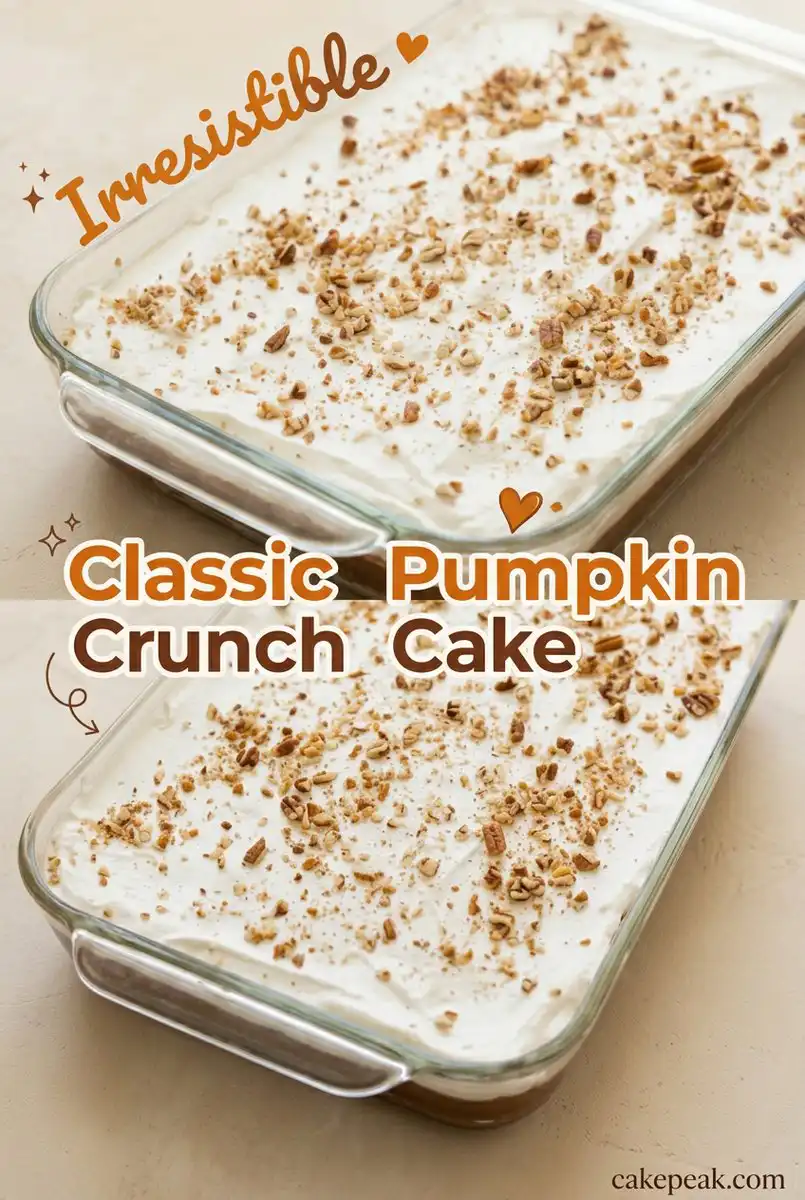
Achieving the ideal balance of smooth custard and crunchy topping is simple when you follow these precise steps. By respecting the chemical roles of each ingredient, you can consistently replicate this autumn classic in your own kitchen. It stands as a reliable, crowd-pleasing alternative to traditional pumpkin pie.
For more scientific baking guides and reliable dessert formulas, examine our recipe database, including our popular pumpkin cheesecake. We invite you to share your baking results and notes with our community of precision bakers. Let us know how your layers turned out in the comments below.
Connect with us on our social platforms to stay updated on our latest test kitchen experiments. Follow us on Pinterest, Facebook, TikTok, and Telegram for daily baking inspiration and technical tips.