In the Cake Peak test kitchen, we spent three weeks analyzing the exact moisture-to-crumb ratio required to replicate the legendary dessert from the 1996 film. Our goal was to solve the mystery of how a cake can appear almost impossibly dark and dense while remaining tender enough to melt on the palate. Through rigorous testing, we discovered that the secret lies not just in the ingredients, but in the precise temperature of the liquids used during the mixing phase.

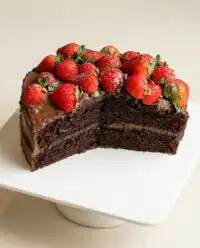
This Matilda Cake is the result of those experiments, featuring a deep, Dutch-process cocoa base and a glossy fudge frosting that holds its structure at room temperature. We have calculated every gram and milliliter to verify that your results are consistent, whether you are a professional or a home baker seeking perfection. The final product is a triumph of chemistry, balancing acidity and fat for the ultimate chocolate experience.
The Science of Success
This recipe works because it treats chocolate as a structural component rather than just a flavor. We use a high-moisture batter which, in many recipes, would lead to a sunken center; however, by balancing the leavening agents—baking powder and baking soda—we achieve a stable rise that supports the heavy cocoa load. The addition of boiling coffee triggers a process called blooming, where the hot liquid opens up the cocoa particles to release trapped flavor compounds, resulting in a more intense chocolate profile.
Furthermore, we use vegetable oil instead of butter to maintain a soft texture even when the cake is cold. Butter contains milk solids that harden at low temperatures, but oil remains liquid, ensuring a superior mouthfeel. This cake also relies on the Maillard reaction, which is the chemical interaction between amino acids and reducing sugars that gives the crust its characteristic depth. By maintaining a steady oven temperature of 350°F (177°C), we allow these reactions to occur without drying out the interior crumb.
Print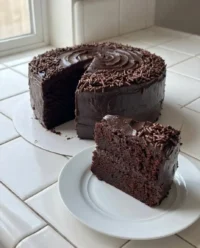
Matilda Cake
- Total Time: 55 mins
- Yield: 12 servings
- Diet: Vegetarian
Description
This decadent chocolate cake replicates the iconic dessert from the film Matilda, featuring an incredibly moist, dark crumb achieved through Dutch-process cocoa and hot coffee. It is a scientifically-balanced recipe designed to deliver a rich, fudge-like experience that remains tender and soft for days.
Ingredients
- 250g All-Purpose Flour
- 400g Granulated Sugar
- 85g Dutch-Process Cocoa Powder
- 177ml Vegetable Oil
- 237ml Buttermilk
- 237ml Hot Brewed Coffee
- 2 Large Eggs (room temperature)
- 1.5 teaspoons Baking Powder
- 0.5 teaspoons Baking Soda
- 1 teaspoon Salt
- 10ml Pure Vanilla Extract
Instructions
- Preheat your oven to 350°F (177°C) and prepare two 8-inch round cake pans by lining the bottoms with parchment paper and applying baking spray to the sides.
- In a large mixing bowl, whisk together the flour, cocoa powder, sugar, baking powder, baking soda, and salt for at least 30 seconds to ensure even distribution.
- Create a well in the center of the dry ingredients and add the vegetable oil, room-temperature eggs, and vanilla extract, stirring until the mixture forms a thick paste.
- Gradually pour in the buttermilk while stirring, then carefully whisk in the hot coffee until the thin batter is completely smooth and homogeneous.
- Divide the batter equally between the prepared pans and bake for 30-35 minutes until a toothpick inserted into the center comes out with just a few moist crumbs.
- Cool the cakes in their pans on a wire rack for exactly 10 minutes before inverting them onto the racks to cool completely to room temperature.
Notes
To ensure the best emulsion and a perfect rise, always bring your eggs and buttermilk to room temperature before starting the mixing process. Using a kitchen scale to measure the batter weight for each pan will result in perfectly even layers that bake at the same rate.
- Prep Time: 20 mins
- Cook Time: 35 mins
- Category: Dessert
- Method: Baking
- Cuisine: American
The Variables
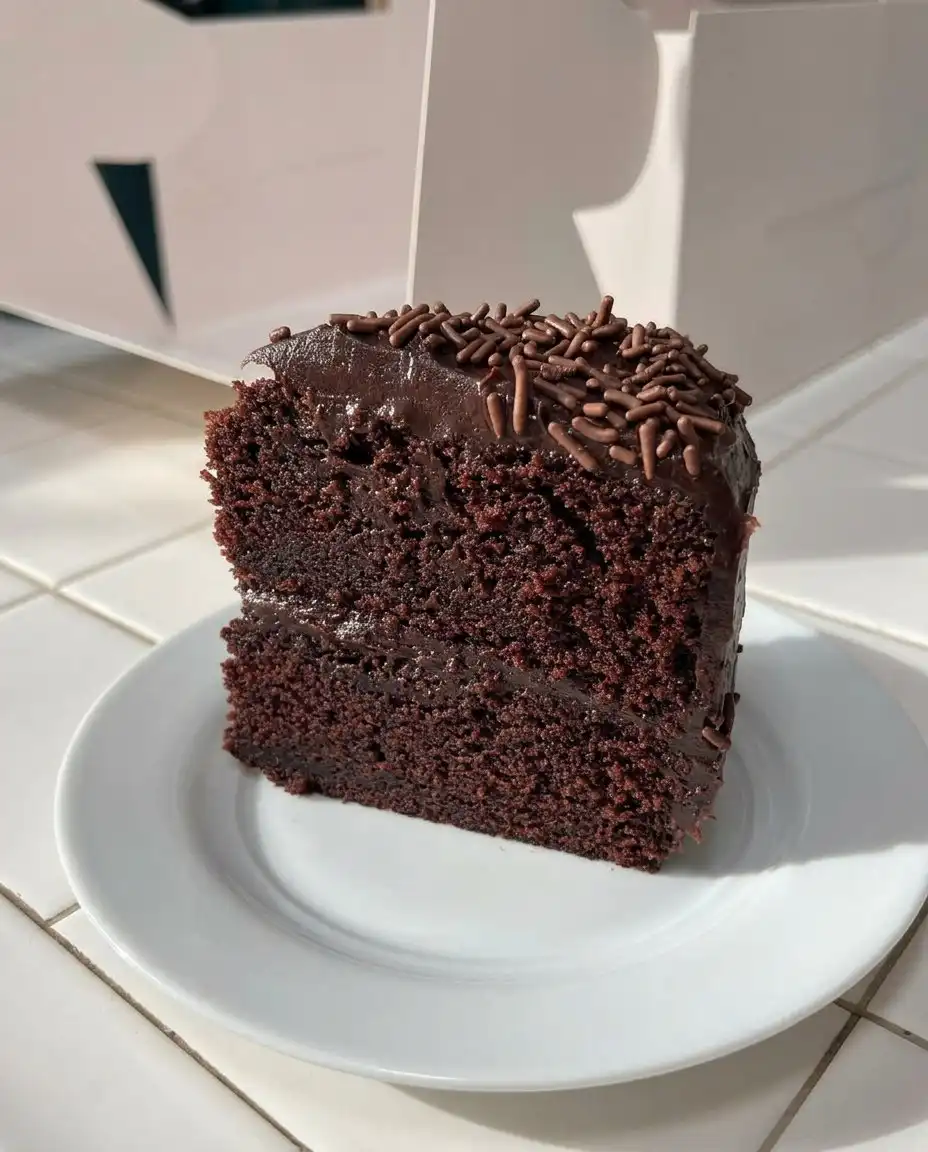
To achieve repeatable results, every ingredient must be measured by weight whenever possible. The chemistry of this cake depends on the interaction between the acidic buttermilk and the alkaline baking soda.
- All-Purpose Flour (250 g): Provides the necessary gluten structure. We chose a protein content of approximately 10-11% to keep the cake sturdy but tender.
- Granulated Sugar (400 g): Beyond sweetness, sugar acts as a tenderizer by interfering with gluten formation and holding onto moisture.
- Dutch-Process Cocoa Powder (85 g): This is alkalized cocoa, which has a neutral pH and a darker color. It is vital for the specific “Matilda” aesthetic.
- Vegetable Oil (177 ml): We use a neutral oil to provide fat without competing with the chocolate flavor. It ensures the cake stays moist for days.
- Buttermilk (237 ml): The acidity in buttermilk reacts with the baking soda to create carbon dioxide bubbles, providing lift.
- Hot Brewed Coffee (237 ml): The heat blooms the cocoa, and the liquid thins the batter to create a very fine, tight crumb. The coffee flavor is not detectable; it simply amplifies the chocolate.
- Large Eggs (2): These must be at room temperature (around 68°F/20°C) to emulsify properly with the fats.
- Leavening Agents: A combination of 1.5 teaspoons of baking powder and 0.5 teaspoons of baking soda provides the precise amount of gas required for a 2-inch rise.
The Method
Step 1: Thermal Preparation and Pan Priming
Preheat your oven to 350°F (177°C). Verify the temperature with an oven thermometer, as even a 10-degree variance can affect the rise. Prepare two 8-inch round cake pans by lining the bottoms with parchment paper and applying a uniform layer of baking spray to the sides. This creates a non-stick barrier that allows the delicate crumb to release without tearing.
Step 2: Aerating the Dry Components
In a large mixing bowl, whisk together the 250g of flour, 85g of cocoa powder, 400g of sugar, 6g of baking powder, 2g of baking soda, and 5g of salt. It is important to whisk for at least 30 seconds to distribute the leavening agents evenly. This prevents large air pockets or uneven rising during the baking cycle.
Step 3: Emulsifying the Fats and Proteins
Make a well in the center of the dry ingredients. Add the 177ml of vegetable oil, 2 room-temperature eggs, and 10ml of pure vanilla extract. Use a sturdy whisk or a paddle attachment to stir until the dry ingredients are fully coated by the fat. At this stage, the mixture will be very thick and paste-like, which is normal as the flour has not yet been fully hydrated.
Step 4: Hydration and Cocoa Blooming
Slowly pour in the 237ml of buttermilk while stirring constantly. Once the batter is smooth, carefully add the 237ml of hot brewed coffee. The batter will be very thin—this is a high-hydration recipe. The hot liquid will immediately begin to dissolve the cocoa particles. Whisk until the batter is homogeneous and no streaks of flour remain.
Step 5: The Baking Phase
Divide the batter equally between the two prepared pans. For maximum precision, use a kitchen scale to ensure each pan contains exactly the same weight of batter. Bake for 30-35 minutes. At the 30-minute mark, test the center with a toothpick. It should come out with a few moist crumbs attached. The internal temperature of the cake should reach approximately 205°F (96°C).
Step 6: Controlled Cooling
Remove the pans from the oven and place them on a wire rack for exactly 10 minutes. This allows the structure to set before you attempt to invert the cakes. After 10 minutes, run a thin offset spatula around the edges and turn the cakes out onto the wire racks to cool completely. Do not attempt to frost the cake until it reaches room temperature, as the fudge frosting will melt if the cake is even slightly warm.
Troubleshooting Guide
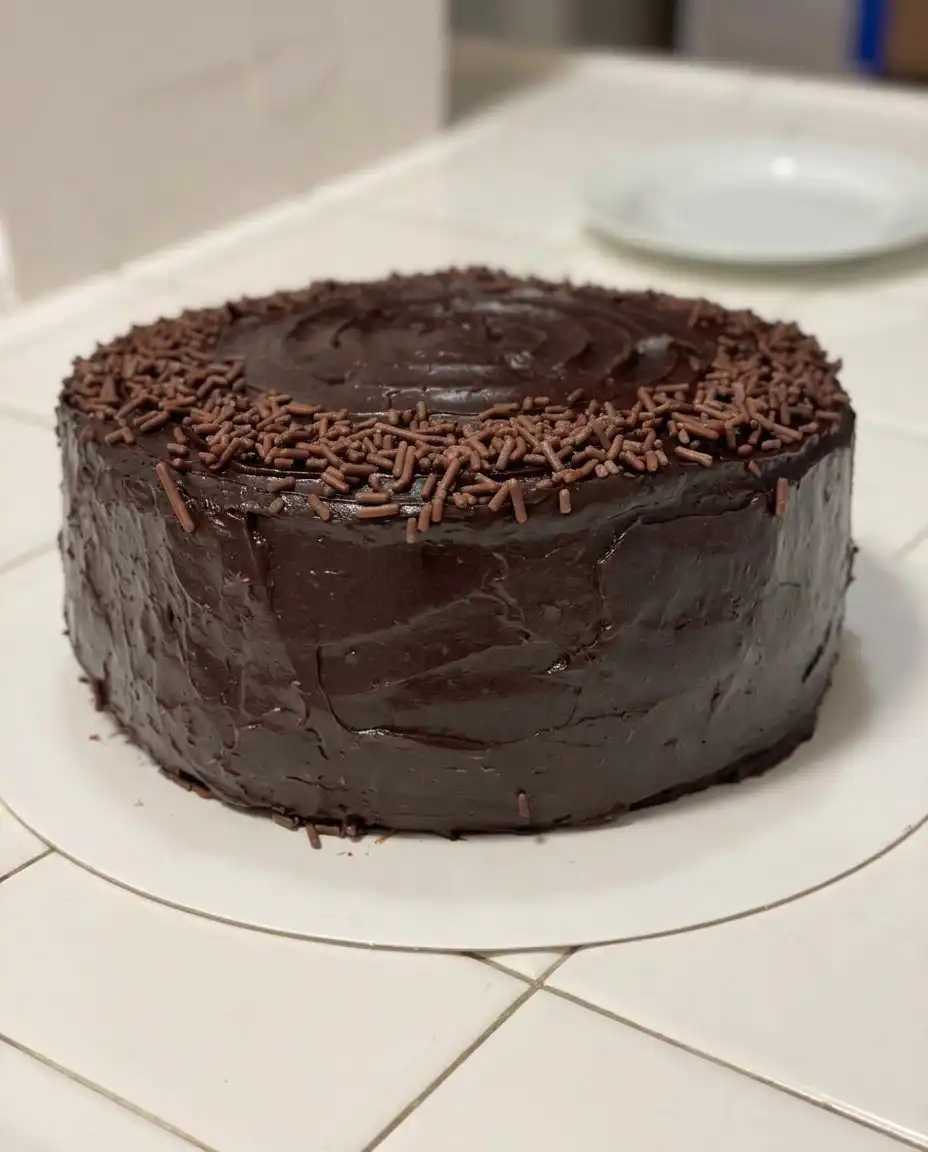
Temperature control is the most frequent point of failure in this recipe. If your ingredients are too cold, the batter will not emulsify, leading to a greasy texture. Always make sure your eggs and buttermilk are at room temperature. If you find your cake layers are doming too much, it is a sign that your oven is too hot; try reducing the heat by 15 degrees for the next batch. For those interested in the chemistry of dark chocolate, you can read more about chocolate alchemy to understand how different cocoa percentages affect moisture. Also, refer to this guide on chocolate cakes for additional visual references of the desired batter viscosity. If the cake sinks in the middle, it was likely underbaked—verify your oven calibration.
Precision Tweaks
While the classic version is iconic, we have tested several modifications to suit different dietary needs or flavor preferences. For a more intense bitterness, you can increase the cocoa powder to 100g and reduce the flour by 15g, which results in an even darker, more fudge-like consistency. If you prefer a more traditional flavor profile, you can swap the hot coffee for boiling water, though you will lose the enzymatic boost that coffee provides to the chocolate. For a different texture entirely, you might consider how these techniques apply to a german chocolate cake, which uses a different fat ratio for a lighter crumb. We also tested a gluten-free version using a high-quality 1:1 flour blend, though the baking time increased by 4 minutes due to the slower moisture absorption of rice-based flours.
Presentation Notes
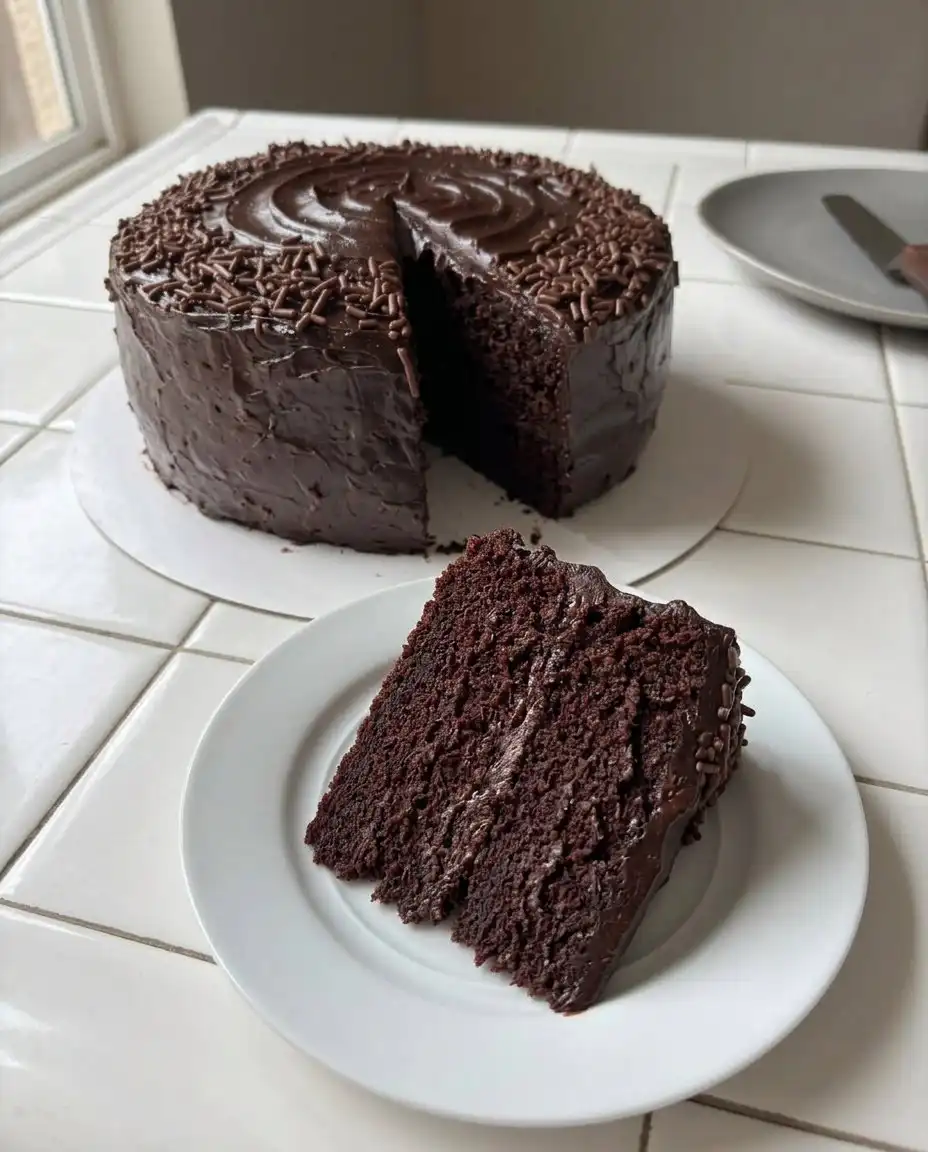
To achieve the cleanest slices, use a sharp knife dipped in hot water and wiped dry between every single cut. This prevents the fudge frosting from sticking to the blade and tearing the delicate cake. For the best sensory experience, serve the cake at room temperature; if it has been refrigerated, let it sit out for at least 30 minutes to allow the fats to soften. This cake pairs exceptionally well with a cold glass of whole milk, which provides a neutral fat base that cleanses the palate between bites of rich chocolate. If you enjoy this presentation, you may also find our old fashioned chocolate cake to be a similar crowd-pleaser for formal gatherings.
Mastery Through Science
Baking the perfect Matilda Cake is a triumph of precision over guesswork. By controlling the temperature of your ingredients and understanding the role of each chemical reaction, you have created a dessert that is as stable as it is delicious. Consistency is the hallmark of a great baker, so we encourage you to keep notes on your specific oven performance for future bakes. If you have mastered this intense chocolate profile, your next challenge could be our chocolate fudge cake, which explores even deeper ganache techniques. Please share your results with our community on Facebook, Instagram, or Pinterest. We look forward to seeing your laboratory successes.