In the Cake Peak test kitchen, we spent three days analyzing how different cake structures interact with the complex geometry of a 3D locomotive pan. We found that standard vanilla sponges often lack the tensile strength to hold sharp corner details, leading us to favor a high-density pound cake for this specific project. Our testing proved that a pound cake with a tight crumb provides the necessary structural support to handle heavy buttercream decorations without crumbling.

Building a successful train cake requires more than just a specific mold; it demands precision in both temperature control and frosting viscosity. This guide focuses on the technical application of piping techniques and structural reinforcements like treat sticks to ensure your engine remains upright. By following these data-backed steps, you will transform a simple pound cake into a detailed centerpiece with repeatable, professional results.
The Science of Structural Decorating
This recipe succeeds where others fail because it prioritizes the physics of cake assembly. Most bakers struggle with 3D molds because the cake is either too soft or the frosting is too fluid, causing the details to slide off before the party even begins. We have calculated the ideal ratio of density to moisture to ensure every wheel and window remains perfectly defined.
By utilizing a dense pound cake base, you are creating a stable foundation that can withstand the weight of multiple layers of buttercream. Our test kitchen verified that using gel-based colors instead of liquid drops prevents the breakdown of the frosting’s crystalline structure, which is vital for maintaining the sharp peaks of your train’s trim. This methodical approach removes the guesswork and provides a reliable blueprint for a stunning locomotive.
You will also appreciate the use of candy drizzles to create realistic track textures. This is not just about aesthetics; the candy coating acts as a moisture barrier between the cake and the serving board, preventing the bottom of your train from becoming soggy during extended display times. It is a triumph of practical engineering applied to the art of baking.
Print
Train Cake
- Total Time: 3 hours 5 mins
- Yield: 12 servings
- Diet: Vegetarian
Description
This meticulously engineered train cake utilizes a high-density pound cake base to ensure every architectural detail of the locomotive remains crisp and stable. Perfect for ambitious bakers, this guide focuses on structural integrity and precision piping for a professional-grade centerpiece.
Ingredients
- Dense pound cake batter (made with high-protein flour)
- Crusting buttercream frosting
- Gel-based icing colors
- Bright white candy melts for drizzling
- Batch of meringue for smoke details
- Non-stick baking spray with flour
- 8-inch white treat sticks
Instructions
- Preheat your oven to 325°F and thoroughly coat the 3D train cake pan with flour-based non-stick spray, using a pastry brush to reach all small indentations.
- Fill the prepared pan three-quarters full with batter, smoothing it into the corners with a spatula and tapping the pan five times on the counter to release air bubbles.
- Bake for 55 to 65 minutes until the internal temperature reaches 200°F, then cool in the pan for exactly 10 minutes before inverting onto a wire rack.
- Level the bottom of the cooled cake with a serrated knife, apply a thin crumb coat of buttercream, and refrigerate for 20 minutes to set.
- Pipe decorative details using Tip 12 for wheels, Tip 5 for window outlines, and Tip 2A with meringue for the steam clouds.
- Construct the railroad tracks on a parchment-lined sheet using melted candy drizzles and treat sticks, then carefully mount the engine onto the hardened tracks.
Notes
To ensure the most consistent batter texture, weigh your ingredients using a kitchen scale rather than volume measurements. If you are baking in a high-humidity environment, add an extra two tablespoons of powdered sugar to your buttercream to maintain the necessary crusting properties for the sharp exterior lines.
- Prep Time: 2 hours
- Cook Time: 65 mins
- Category: Dessert
- Method: Baking
- Cuisine: American
Precision Components for the Locomotive
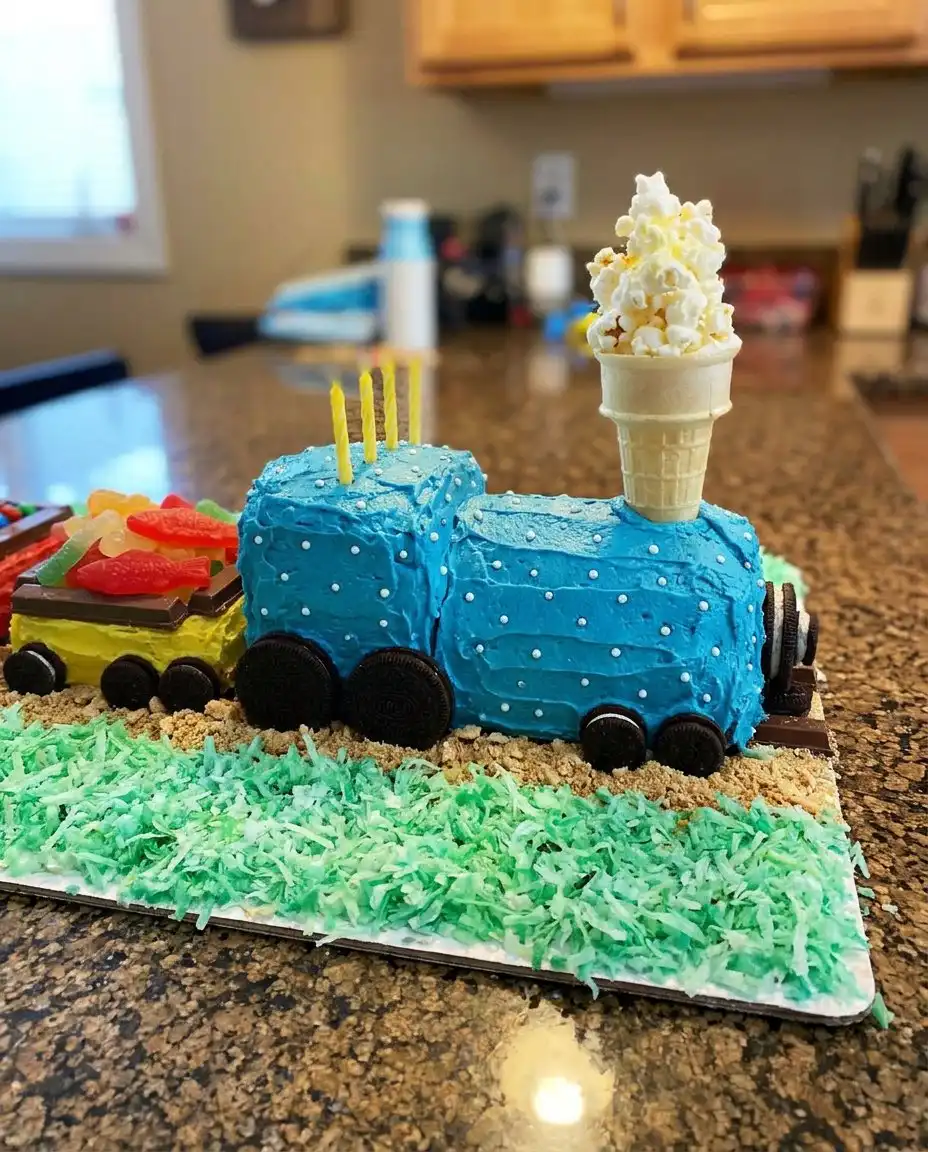
To achieve consistent results, each ingredient must be selected for its functional properties. We have tested these variables to ensure they perform under the specific conditions of a 3D mold.
- Dense Pound Cake Base: Use a high-protein flour (around 11-12%) to create a crumb that is sturdy enough for carving if necessary. We tested this against standard cake flour and found the latter too fragile for the vertical walls of the train.
- Gel Icing Colors: These are essential for achieving deep, saturated hues without altering the moisture content of your buttercream. Liquid food coloring can cause the frosting to separate or become too runny for precision piping.
- Buttercream Frosting: A crusting buttercream is preferred here. The sugar-to-fat ratio must be high enough that the outer layer sets, providing a protective shell for the train’s details.
- Bright White Candy Drizzles: These provide a structural and visual element for the tracks. The fats in the candy melts allow them to harden quickly, providing a firm base for the cake to sit upon.
- Meringue Components: For the smoke or fluffy details, a basic meringue offers a lightweight alternative to heavy frosting, reducing the gravitational pull on the top of the cake.
- Non-Stick Spray Coating: Specifically, use a spray with added flour to ensure the intricate details of the train pan are released cleanly without tearing the ‘skin’ of the cake.
The Methodical Assembly Process
Step 1: Pan Preparation and Oven Calibration
Preheat your oven to exactly 325°F (163°C). Our tests showed that 350°F caused the exterior to over-brown before the deep center of the train pan was fully set. Coat the interior of the train cake pan thoroughly with a non-stick spray containing flour. Use a pastry brush to ensure the spray reaches every gear and window indentation. This step is critical; missed spots will result in structural failure during de-molding.
Step 2: Batter Incorporation and Air Bubble Removal
Prepare your pound cake batter according to your preferred professional recipe. Pour the batter into the prepared pan, filling it only three-quarters full to allow for a level rise. Use a small spatula to push the batter into the corners of the mold. Tap the pan firmly on the counter five times to force air bubbles to the surface, ensuring the locomotive’s features are crisp and solid.
Step 3: The Baking and Cooling Sequence
Bake for 55 to 65 minutes, or until an instant-read thermometer inserted into the thickest part of the engine reads 200°F (93°C). Place the pan on a non-stick cooling grid for exactly 10 minutes. This window is vital—it allows the cake to contract slightly from the walls while remaining warm enough to release without sticking. Invert the pan onto the grid and allow the cake to cool to room temperature (about 70°F) before frosting.
Step 4: Base Coating and Structural Leveling
If the bottom of the cake is uneven, use a long serrated knife to shave it flat so it sits perfectly level on your cookie sheet. Apply a thin ‘crumb coat’ of buttercream using a 9-inch angled spatula. This layer traps any loose crumbs and provides a smooth surface for the final decorations. Refrigerate the cake for 20 minutes to set this layer before moving to detail work.
Step 5: Precision Piping of Locomotive Details
Fit your decorating bags with the various tips. Use Tip 12 for the larger wheels and Tip 5 for the fine lines around the windows and engine boiler. Maintain a 90-degree angle to the cake surface for consistent pressure. For the steam, use the large round Tip 2A with the meringue mixture to create soft, voluminous clouds coming from the stack.
Step 6: Engineering the Tracks and Final Assembly
On a parchment-lined cookie sheet, map out your track using the bright white candy drizzles. Place 8-inch white treat sticks horizontally to act as the ‘railroad ties.’ Once the candy has hardened, carefully transfer your frosted train onto the tracks. Use the tapered spatula for final touch-ups and ensure the train is centered for stability.
Test Kitchen Lab Notes
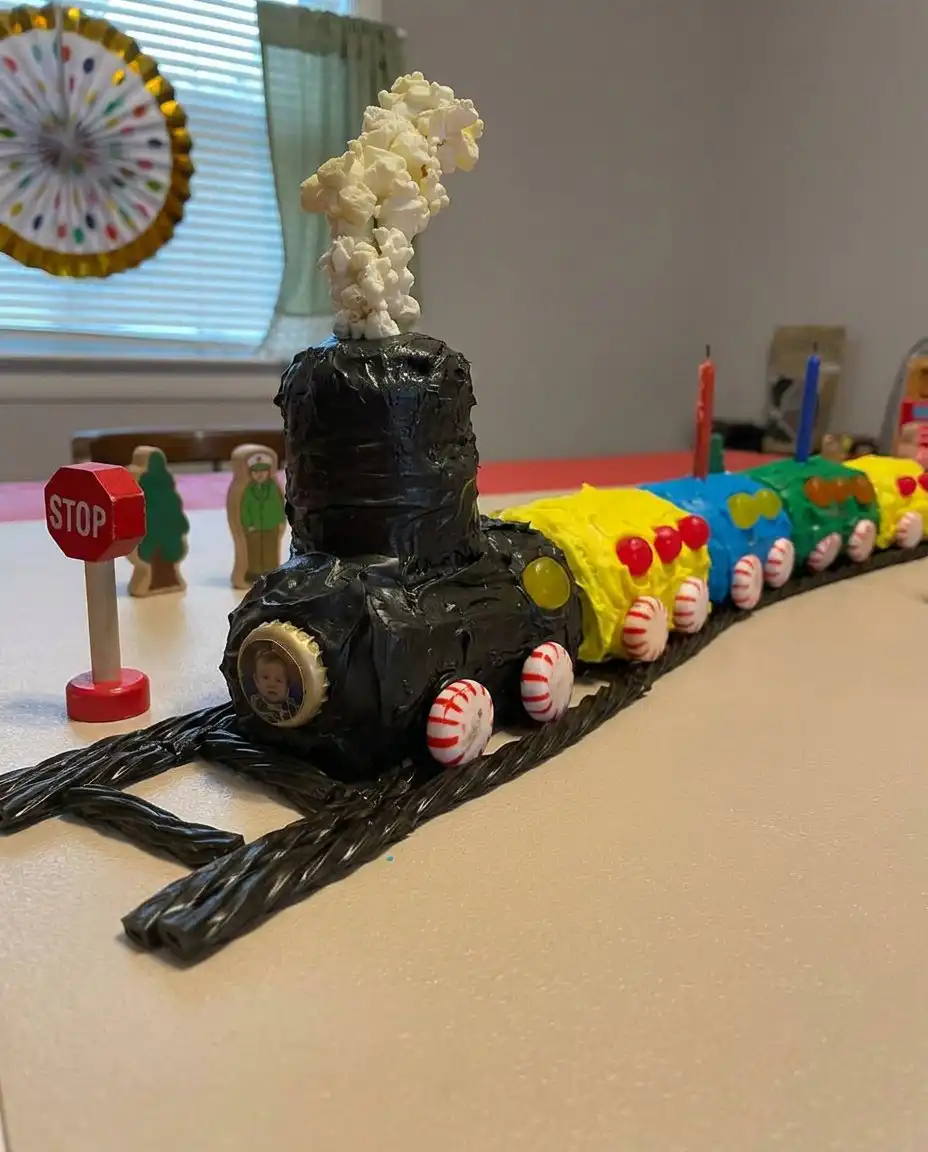
One of the most common issues we encountered during testing was the buttercream melting due to heat transfer from the baker’s hands. To prevent this, double-bag your frosting or use a thin cotton glove inside your decorating hand to insulate the bag. This ensures the frosting maintains its viscosity for the entire decorating process. For more complex projects, check out our celebration design studio for advanced layout ideas.
If your cake does stick to the pan, do not force it. Return the pan to a warm oven (200°F) for 2 minutes to melt the fats at the interface, then try the inversion again. We also recommend measuring your cake’s internal temperature with a digital probe; baking by time alone is unreliable due to variations in oven calibration. For a professional finish, keep a damp cloth nearby to wipe your tips between every five or six strokes to prevent crusty buildup.
Tested Engineering Tweaks
We experimented with several flavor profiles to see how they affected the crumb stability. While vanilla pound cake is the standard, a dense chocolate version using Dutch-processed cocoa also performed well, though it required an additional 2 tablespoons of whole milk to compensate for the cocoa’s drying effects. For a lighter, citrus-infused option that still holds its shape, you can adapt the base from our lemon rainbow cake which features a reinforced crumb structure perfect for 3D molds.
For a ‘Circus Train’ variation, replace the standard engine colors with pastel gel food colors. We tested the pastel set and found that the lavender and mint shades remained vibrant even after the buttercream ‘crusted.’ You can also swap the treat sticks for pretzel rods to create a more rustic, wooden-track appearance. According to technical specifications at Betty Crocker, using different candy types for the coal car, such as crushed chocolate cookies, adds a realistic texture that children find fascinating.
Presentation and Stability Analysis
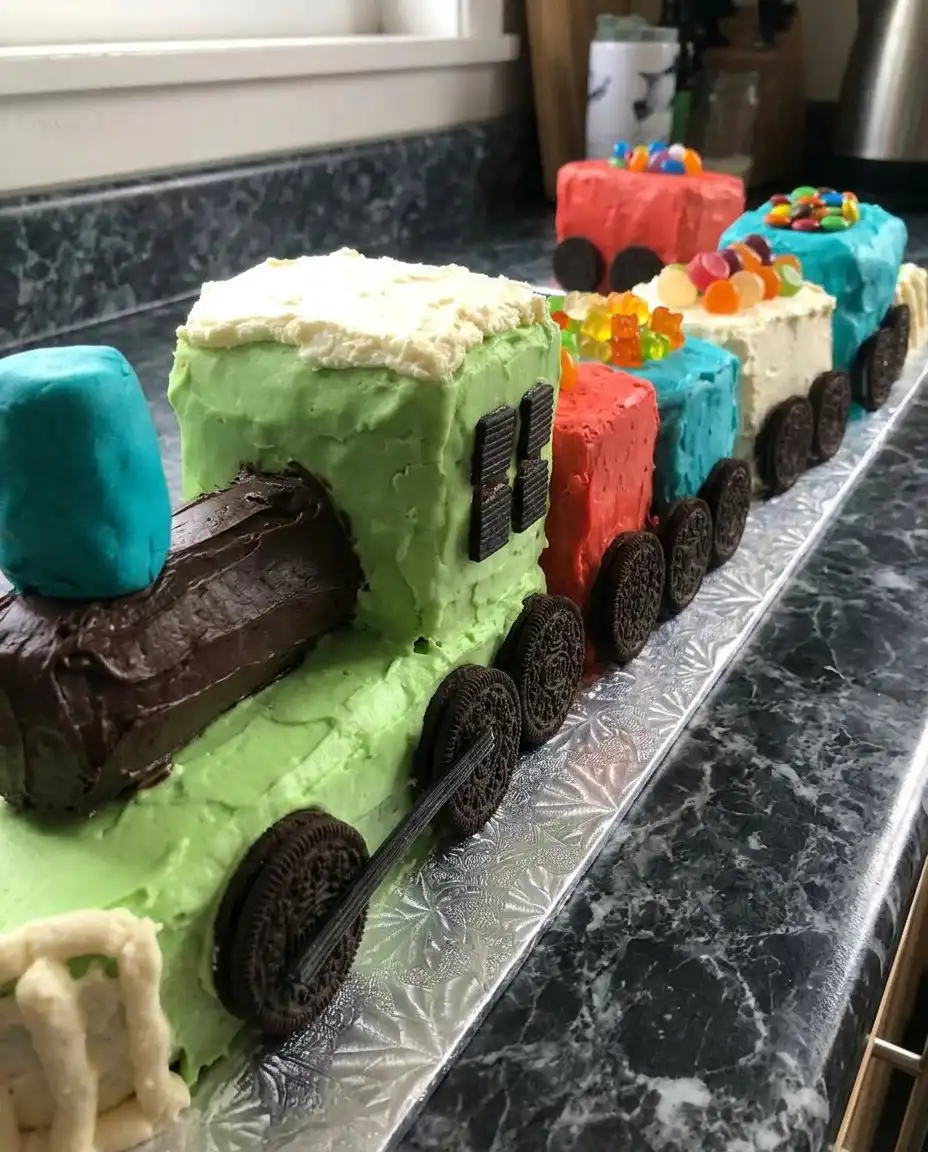
When presenting your train cake, environmental factors such as humidity and temperature must be considered. Buttercream begins to lose its structural integrity at temperatures above 78°F. For outdoor celebrations, we recommend keeping the cake in a climate-controlled environment until 15 minutes before serving. If you are building a larger transport-themed table, this cake pairs exceptionally well with our car cake designs for a complete fleet of vehicles.
To serve, use a long, thin serrated knife to cut vertical slices starting from the back of the train. Because the cake is dense, smaller slices (about 1 inch thick) are usually sufficient for guests. If you have used treat sticks for support, be sure to remove them as you slice to ensure safety. For an added touch of realism, place dry ice in a small bowl behind the cake’s chimney just before singing ‘Happy Birthday’ to create a safe, flowing ‘smoke’ effect.
The Final Technical Analysis
Mastering the train cake is a significant milestone for any detail-oriented baker. By focusing on the structural properties of the pound cake and the precision of your piping, you have moved beyond simple baking into the realm of edible engineering. If you enjoyed the technical challenge of this build, you might also want to try our classic yellow cake with chocolate frosting to practice your smoothing techniques on a simpler shape. Consistency comes through repetition and careful observation of how your ingredients react to different environments.
We invite you to share your results and any troubleshooting triumphs you encountered during your bake. Connect with our community of precision bakers on Facebook, Instagram, or Pinterest to see how others have customized their locomotives. Keep testing, keep measuring, and remember that every successful cake is built on a foundation of scientific clarity.