I still remember the crisp autumn mornings at the local farmers market when the air smelled of woodsmoke and late-harvest apples. It was on one of those golden mornings that I found the perfect churned butter that inspired me to pull out my grandmother’s old recipe box for this Caramel Cake. There is a quiet, grounded magic in watching simple sugar transform into a deep, amber caramel on the stove. This recipe is a piece of my history, bringing the warmth and honest character of the farmhouse kitchen right to your table.

This Caramel Cake is a labor of love that rewards the patient baker with a crumb so tender it almost melts away. The cooked frosting is thick and decadent, reminiscent of the traditional fudge we used to let cool on the windowsill. It is the perfect centerpiece for any honest celebration that calls for something authentic, sweet, and deeply comforting.
The Beauty of a Timeless Classic
You will love this Caramel Cake because it honors the traditions of scratch baking without any unnecessary fuss. In a world of flashy desserts, this cake stands tall with its rustic charm and its reliance on the natural chemistry of butter and sugar. The texture is incredibly soft, thanks to the careful creaming of the butter, which creates a fine, velvety crumb that holds up beautifully under the weight of the rich frosting.
Every bite of this cake tells a story of the autumn harvest and the joy of slow cooking. The frosting itself is a revelation; it is not the overly sweet, whipped variety you find in shops, but a cooked caramel that sets into a smooth, fudge-like finish. It captures that perfect balance of salty and sweet that makes you want to reach for just one more sliver. This cake is a testament to the fact that when you start with high-quality ingredients, you don’t need tricks to make something spectacular.
Print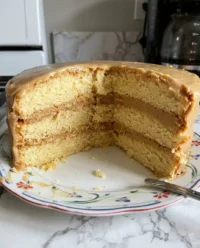
Caramel Cake
- Total Time: 1 hour 40 mins
- Yield: 12 servings
- Diet: Vegetarian
Description
This classic three-layer Caramel Cake features a soft, velvety crumb and a traditional cooked frosting that tastes like homemade fudge. It is a timeless farmhouse dessert that brings warmth and authentic sweetness to any special occasion.
Ingredients
- 1 cup unsalted European-style butter, softened
- 2 cups granulated sugar
- 4 large farm-fresh eggs
- 3 cups all-purpose flour
- 1 teaspoon baking powder
- 1/2 teaspoon salt
- 1 cup whole milk
- 2 teaspoons pure vanilla extract, divided
- 2 cups packed brown sugar
- 1/2 cup unsalted butter, for frosting
- 1 pinch salt
- 12 ounces evaporated milk
- 2 cups confectioners’ sugar, sifted
Instructions
- Preheat your oven to 350°F (175°C) and grease and flour three 9-inch cake pans.
- In a large mixing bowl, cream together the granulated sugar and 1 cup of butter until the mixture is light and fluffy.
- Add the eggs one at a time, mixing well after each addition to ensure a smooth emulsion.
- In a separate bowl, whisk together the flour, baking powder, and salt.
- Gradually add the flour mixture to the butter mixture, alternating with the whole milk, starting and ending with the flour.
- Stir in 1 teaspoon of vanilla extract until the batter is glossy and smooth.
- Divide the batter evenly between the prepared pans and bake for 30 minutes, or until a skewer inserted in the center comes out clean.
- Cool the layers in the pans for 5 minutes before transferring to a wire rack to cool completely.
- For the frosting, combine brown sugar, 1/2 cup butter, and a pinch of salt in a sturdy saucepan over medium heat until dissolved.
- Stir in the evaporated milk and bring to a gentle boil for 4 minutes, stirring constantly.
- Remove from heat, let sit for 5 minutes, then beat in the confectioners’ sugar and the remaining vanilla until thick and glossy.
- Assemble the cake by spreading frosting between each cooled layer and over the top and sides with rustic strokes.
Notes
To ensure the best texture, use room-temperature ingredients so the batter emulsifies perfectly. If the cooked caramel frosting sets too quickly while you are icing the cake, you can whisk in a tiny amount of warm milk to restore its spreadable consistency.
- Prep Time: 25 mins
- Cook Time: 30 mins
- Category: Dessert
- Method: Baking
- Cuisine: American
From the Farmhouse Larder
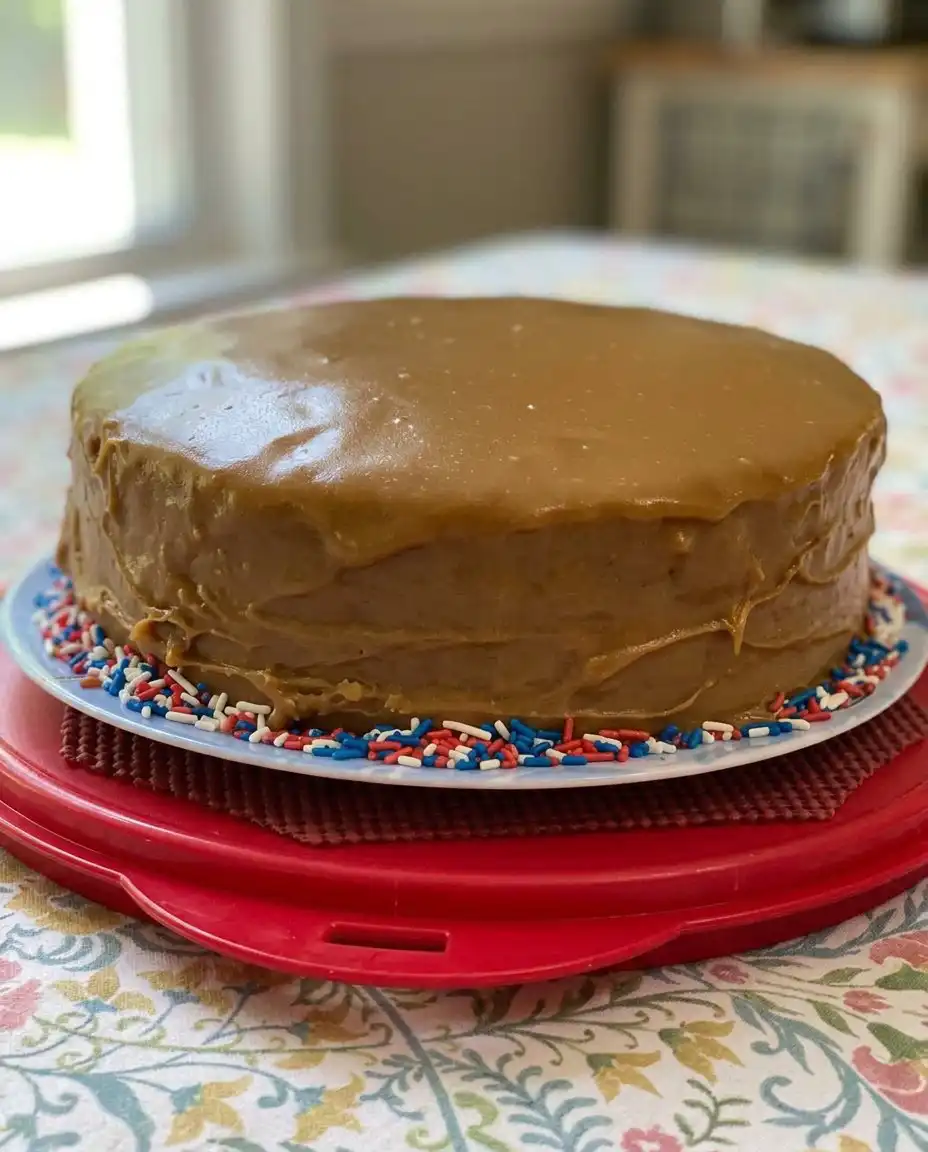
To create a truly memorable Caramel Cake, we turn to the staples of the farmhouse pantry, choosing the freshest dairy and high-quality staples to let the natural flavors shine through.
- Unsalted Butter: This is the heart of both the cake and the frosting. I always look for a high-fat European-style butter to get that rich, nutty flavor and a moist crumb.
- Granulated Sugar: We use white sugar in the batter to keep the cake light, allowing it to be the perfect canvas for the deep caramel topping.
- Large Farm-Fresh Eggs: If you can find them, eggs with those deep orange yolks add a wonderful richness and a beautiful golden hue to the batter.
- All-Purpose Flour: This provides the honest structure we need. Make sure to measure it carefully so the cake remains light and airy rather than dense.
- Whole Milk: Nothing beats the richness of whole milk for creating a batter that is smooth and consistent.
- Brown Sugar: This is the soul of our frosting. It provides the deep molasses notes that define a traditional southern-style caramel.
- Evaporated Milk: This is our secret to a frosting that is creamy, stable, and perfectly smooth as it boils on the stovetop.
- Pure Vanilla Extract: A good splash of vanilla rounds out the sweetness and adds a layer of warmth to every single bite.
The Patient Path to Perfection
Step 1: Prepare the Hearth
Before you begin mixing, gather all your ingredients and preheat your oven to 350 degrees F (175 degrees C). Take the time to grease and flour three 9-inch cake pans with care. This simple step makes certain that your layers will release cleanly, preserving those beautiful rustic edges.
Step 2: Cream with Intention
In your favorite large mixing bowl, beat the white sugar and butter together on medium speed. You are looking for a mixture that is light, fluffy, and looks like soft summer clouds. This process builds the air into the batter that results in a timelessly soft texture.
Step 3: Incorporate the Eggs
Add your eggs one at a time, mixing well after each addition. This slow process helps maintain the structure of the emulsion, guaranteeing that your cake will rise evenly and beautifully in the heat of the oven.
Step 4: The Flour and Milk Dance
Whisk your flour, baking powder, and salt together in a separate bowl. Add this to your butter mixture in small batches, alternating with the whole milk. Always start and end with the flour to keep the batter stable. Stir in the vanilla extract until the batter is glossy and falls from the beaters in thick, elegant ribbons.
Step 5: Bake to Golden Perfection
Divide the batter evenly among your prepared pans. Bake for about 30 minutes. You will know they are ready when a wooden skewer inserted in the center comes out clean and the kitchen smells like a dream. Let the layers cool in the pans for 5 minutes before turning them onto a wire rack to cool completely. They must be cold before you even think about frosting them.
Step 6: Craft the Caramel Frosting
In a sturdy saucepan over medium heat, combine the brown sugar, butter, and salt. Stir gently until the sugar has completely dissolved and the mixture is smooth. Pour in the evaporated milk and bring the mixture to a gentle boil. Let it bubble for about 4 minutes, stirring constantly to prevent any scorching on the bottom of the pan.
Step 7: Beat to a Glossy Finish
Remove the pan from the heat and allow it to sit for 5 minutes. Using an electric mixer, beat in the confectioners’ sugar and vanilla. The frosting will begin to thicken and take on a beautiful caramel sheen. Continue beating until it reaches a consistency that is thick enough to hold its shape but still soft enough to spread.
Step 8: Assemble the Layers
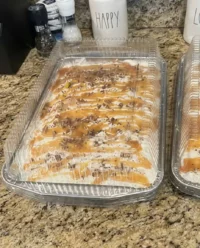
Place your first cooled layer on a sturdy cake stand or a wooden board. Spread a generous layer of frosting over the top, then stack the next layer and repeat. Finish by icing the top and the sides with sweeping, rustic strokes. Don’t worry about making it look like a professional bakery cake; the beauty lies in the handmade imperfections.
Wisdom from the Hearth
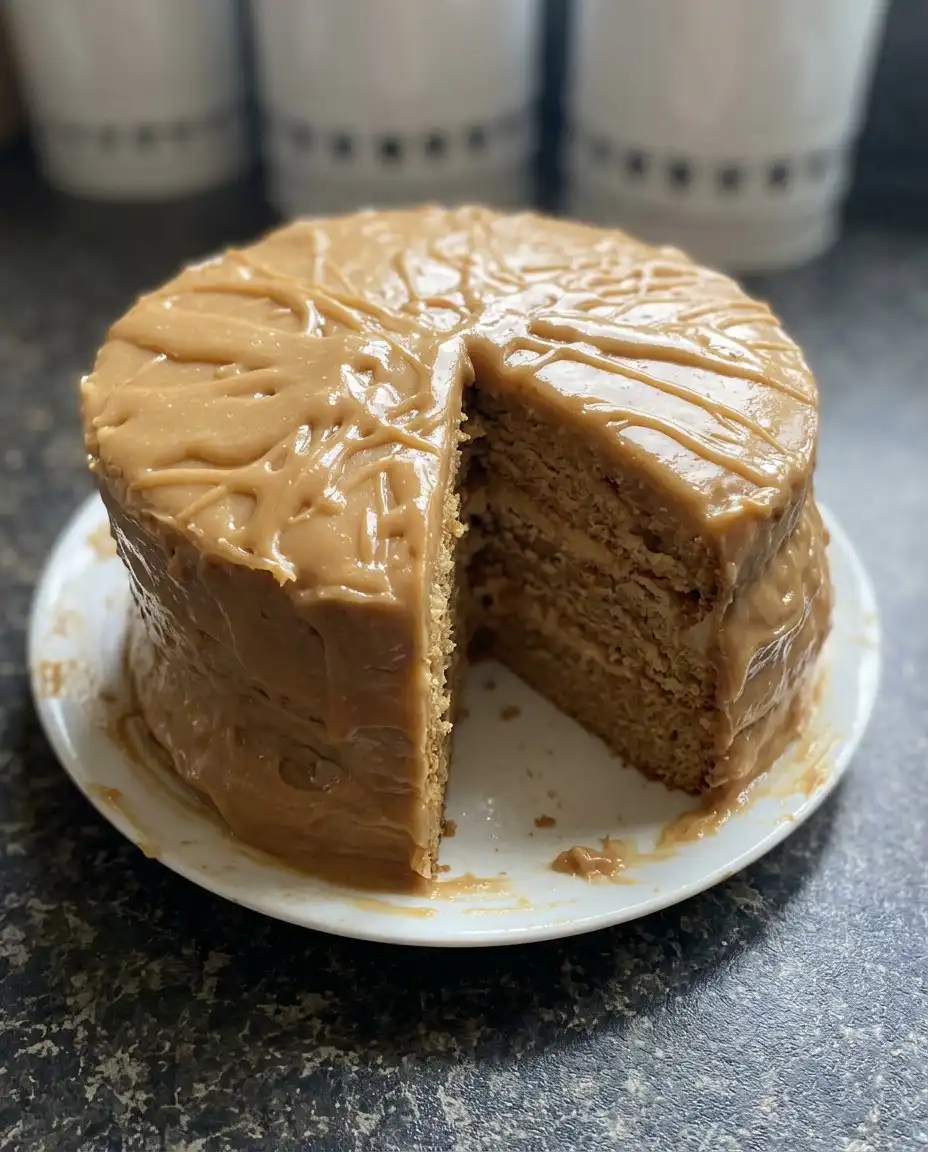
When you are making the frosting, the temperature of your kitchen can actually change how the sugar sets. If you find the frosting is thickening too quickly, add a tiny tablespoon of warm milk to keep it spreadable. For those who want to master the basics of the kitchen, I suggest looking at our guide on foundational recipes to build your confidence. Always make certain your cake layers are entirely cold; even a little bit of warmth will cause the caramel to run. If you want a deeper flavor, you can let the butter and brown sugar cook for an extra minute until it smells slightly nutty, but be careful not to let it burn. This cake actually tastes even better the second day once the flavors have had time to settle together.
Seasonal Changes and Simple Swaps
This classic recipe is a wonderful base for seasonal creativity. During the autumn harvest, I love to add a teaspoon of ground cinnamon or a pinch of nutmeg to the flour to give the cake a warm, spiced feel. If you are a fan of salt and sweet together, a light sprinkle of flaky sea salt between the layers is absolutely divine. For another rich and traditional dessert, you might also enjoy making our german chocolate cake. You can also fold in a cup of toasted, chopped pecans to the frosting for a bit of crunch and a more earthy, southern character. In the spring, try serving it with a handful of fresh tart berries to balance the deep sweetness of the caramel.
Sharing the Bounty
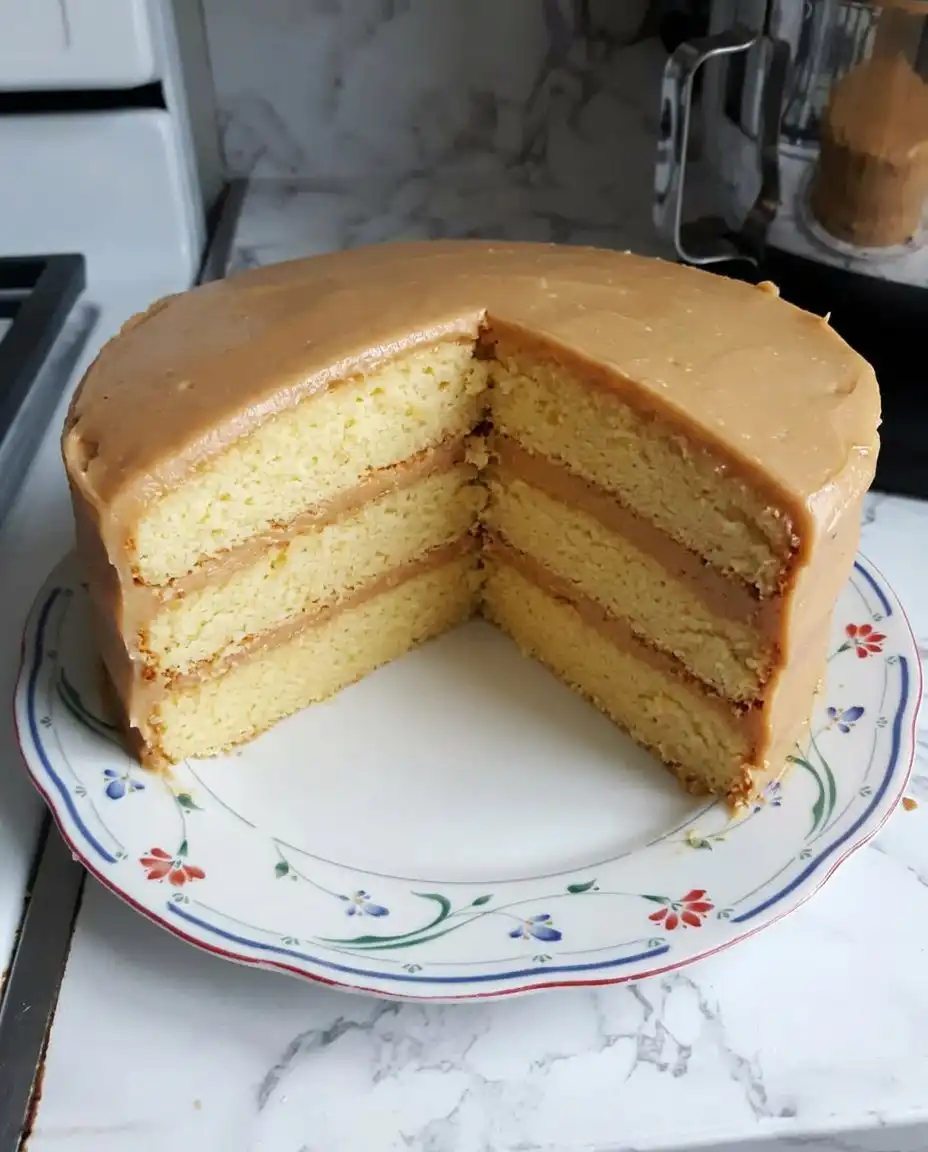
I love to serve a thick slice of this Caramel Cake on a simple ceramic plate with a steaming cup of dark roast coffee or a cold glass of fresh milk. Its rustic appearance is best showcased on a simple wooden pedestal or a vintage glass cake stand. If you are planning a larger gathering and want to offer a variety of flavors, this cake pairs beautifully alongside our yellow cake chocolate frosting. For a truly special presentation, garnish the platter with a few sprigs of fresh mint or some seasonal fruit like sliced pears. This cake is meant to be shared in a sun-drenched room with friends and family, celebrating the simple joy of a homemade treat.
A Slice of Simple Joy
There is a deep and honest satisfaction that comes from baking a Caramel Cake from scratch. It is a reminder that the best things in life often require a little patience and a lot of heart. I hope this recipe brings a sense of warmth and tradition to your kitchen and becomes a favorite for your own family gatherings. If you find yourself craving even more decadent flavors, you should try our snickers cake for another wonderful treat. For more farmhouse inspiration and a look at what we are baking this season, come find us on Pinterest, Instagram, and Facebook. For another lovely perspective on this classic, check out this wonderful caramel cake recipe. Happy baking, from my kitchen to yours!