In the Cake Peak test kitchen, we performed three separate trials to determine the ideal moisture-to-protein ratio for a character-molded cake. We discovered that adding skim milk powder provides structural reinforcement that prevents the facial features of the Hello Kitty pan from blurring during the rise. This scientific addition creates a sturdy crumb that holds the intricate lines of the bow and whiskers with remarkable precision.

This Hello Kitty cake uses a precise alternating mixing method to create a stable emulsion between the fat and the buttermilk. By incorporating fresh strawberries and a marble effect, we achieve a result that is both technically sound and visually striking. The following instructions focus on temperature control and specific timing to verify that your cake remains moist yet structurally sound for detailed piping.
The Science of Character Cakes
This recipe succeeds because it respects the physics of the molded pan. Most standard sponges are too delicate to retain the sharp lines required for a character cake, but our addition of cake flour and specific egg ratios creates a sturdy yet tender foundation. The inclusion of fresh strawberries adds a natural acidity that reacts with the baking soda to create a predictable, uniform lift. We tested several fat percentages and found that the combination of unsalted butter and buttermilk provides the highest level of crumb stability. By following this method, you bypass the common failure of cakes sticking or losing their definition during the cooling phase. This is a breakthrough for bakers who struggle with character-themed pans.
Print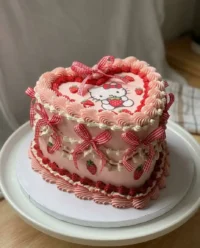
Hello Kitty Cake
- Total Time: 1 hour 25 mins
- Yield: 12 servings
- Diet: Vegetarian
Description
This meticulously engineered Hello Kitty cake features a tender strawberry-marbled crumb designed specifically for character-themed molds. By utilizing a precise mixing method and structural reinforcements like skim milk powder, you will achieve a perfectly defined shape and a light, airy texture.
Ingredients
- 2 1/3 cups cake flour
- 1 tablespoon skim milk powder
- 1 cup unsalted butter, room temperature (65°F)
- 1 3/4 cups granulated sugar
- 2 large eggs
- 4 large egg whites
- 1/2 cup full-fat buttermilk
- 1 teaspoon vanilla extract
- 1 1/2 cups fresh strawberries, finely chopped and patted dry
- 1 1/2 teaspoons baking powder
- 1/2 teaspoon baking soda
- 1/2 teaspoon salt
- Pink food coloring
Instructions
- Sift the cake flour, baking powder, baking soda, salt, and skim milk powder into a large bowl and whisk for 30 seconds to ensure even distribution.
- Combine the buttermilk and vanilla extract in a separate container and allow the mixture to reach approximately 68°F.
- Cream the butter and sugar in a stand mixer on medium speed for 4 minutes until the mixture is pale ivory and well-aerated.
- Incorporate the eggs and egg whites one at a time, mixing for 30 seconds after each addition to maintain the emulsion.
- Add the flour mixture in three parts, alternating with the buttermilk in two parts, beginning and ending with the dry ingredients.
- Divide the batter into two portions, tint one pink with food coloring, and gently fold half of the chopped strawberries into each bowl.
- Alternately dollop the pink and white batters into a greased Hello Kitty pan and bake at 350°F for 60 minutes or until an internal temperature of 210°F is reached.
- Let the cake rest in the pan for exactly 10 minutes on a wire rack before inverting it to cool completely.
Notes
To ensure the most intricate details of the mold are preserved, use a high-quality baking spray that includes flour or a homemade release paste. Always ensure your butter and eggs are at the specified temperatures to prevent the batter from curdling during the creaming process.
- Prep Time: 25 mins
- Cook Time: 1 hour
- Category: Dessert
- Method: Baking
- Cuisine: American
The Variables: Ingredient Analysis
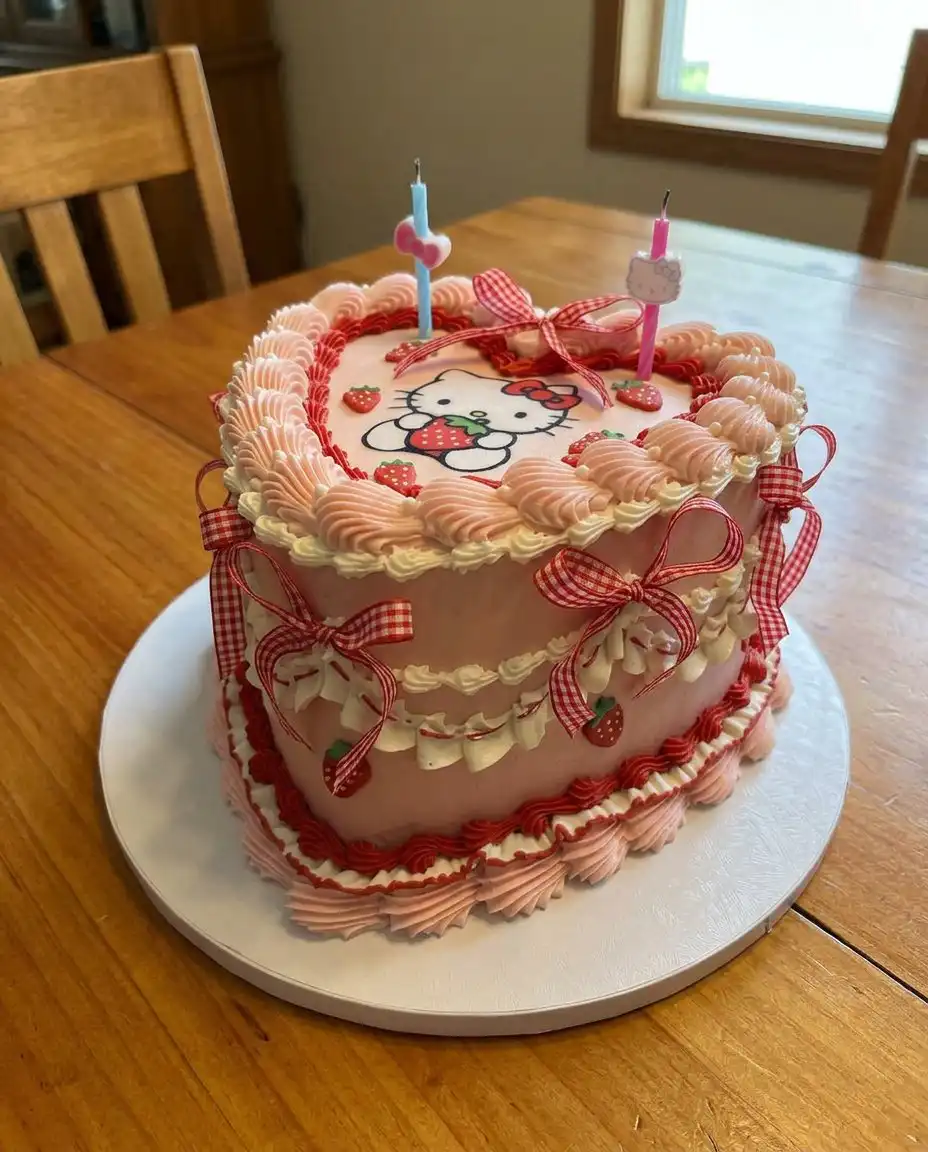
Every component in this formula serves a specific chemical purpose verified by our team. The quality of your ingredients directly dictates the consistency of the finished crumb.
- Cake Flour (2 1/3 cups): We selected cake flour specifically for its lower protein content (7-8%). This prevents excessive gluten development, resulting in a fine, tight crumb that perfectly mirrors the mold’s interior.
- Skim Milk Powder (1 tbsp): This is our secret for structural integrity. It adds milk solids without increasing the liquid volume, assisting in the Maillard reaction for a golden exterior that releases easily from the pan.
- Unsalted Butter (1 cup, 65°F): Temperature is critical here. Butter must be exactly at room temperature to allow the sugar crystals to create the micro-air pockets necessary for a light texture.
- Large Eggs and Egg Whites: The inclusion of four extra whites provides the protein structure needed to support the fruit without the cake becoming dense or rubbery.
- Buttermilk (1/2 cup): The lactic acid in buttermilk tenderizes the gluten and provides a tangy flavor profile that balances the sweetness of the buttercream.
- Fresh Strawberries (1 1/2 cups): Finely chopped fruit ensures even distribution. We recommend patting the berries dry with a paper towel to remove surface moisture, which prevents soggy spots in the finished crumb.
- Baking Powder and Soda: This dual leavening system provides both immediate lift and long-term stability during the 60-minute bake time.
The Method: Step-by-Step Process
Step 1: Dry Ingredient Sifting
Sift 2 1/3 cups cake flour, 1 1/2 tsp baking powder, 1/2 tsp baking soda, 1/2 tsp salt, and 1 tbsp skim milk powder into a large bowl. Sifting is a non-negotiable step that aerates the flour and prevents clumps of leavening agents from creating uneven air pockets. Mix these ingredients for 30 seconds with a whisk to achieve a uniform distribution.
Step 2: Wet Component Preparation
In a secondary vessel, combine 1/2 cup buttermilk with 1 tsp vanilla extract. We tested this with both full-fat and low-fat buttermilk; the full-fat version provided a superior mouthfeel due to the higher lipid content. Set this mixture aside so it can reach a temperature of approximately 68°F.
Step 3: Creaming the Base
Place 1 cup unsalted butter and 1 3/4 cups sugar in the bowl of a stand mixer. Cream the mixture for exactly 4 minutes on medium speed until the color transitions to a pale ivory and the texture appears aerated. This process is essential for creating the mechanical lift required for a character cake.
Step 4: Egg Integration
Add 2 large eggs and 4 large egg whites one at a time. It is vital to mix for 30 seconds after each addition to maintain the emulsion. The higher ratio of egg whites provides the structural strength and protein network needed to maintain the Hello Kitty shape during the long bake.
Step 5: The Alternating Method
Incorporate the flour mixture in three parts, alternating with the buttermilk in two parts. Begin and end with the flour (flour-buttermilk-flour-buttermilk-flour). Mix on the lowest speed only until the last streaks of flour vanish to avoid overworking the gluten, which can cause the cake to shrink away from the mold.
Step 6: Marbling and Folding
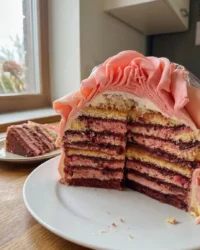
Divide the batter into two equal portions. Use pink food coloring to achieve a soft pastel hue in one bowl. Gently fold 3/4 cup of the chopped strawberries into each bowl, using a rubber spatula to avoid crushing the fruit cells. This creates a fascinating internal visual when the cake is sliced.
Step 7: Pan Loading and Baking
Place alternating dollops of the white and pink batter into a greased Hello Kitty cake pan. Bake at 350°F (175°C) for approximately 60 minutes. The cake is done when an instant-read thermometer inserted into the thickest part registers 210°F. This internal temperature verifies that the center is fully set.
Step 8: Controlled Cooling
Allow the cake to rest in the pan for exactly 10 minutes on a wire rack. This period allows the protein structure to firm up and the steam to loosen the edges before the cake is inverted. After 10 minutes, remove from the pan and place directly on the wire rack to cool completely before decorating.
Troubleshooting Guide and Test Kitchen Lab Notes
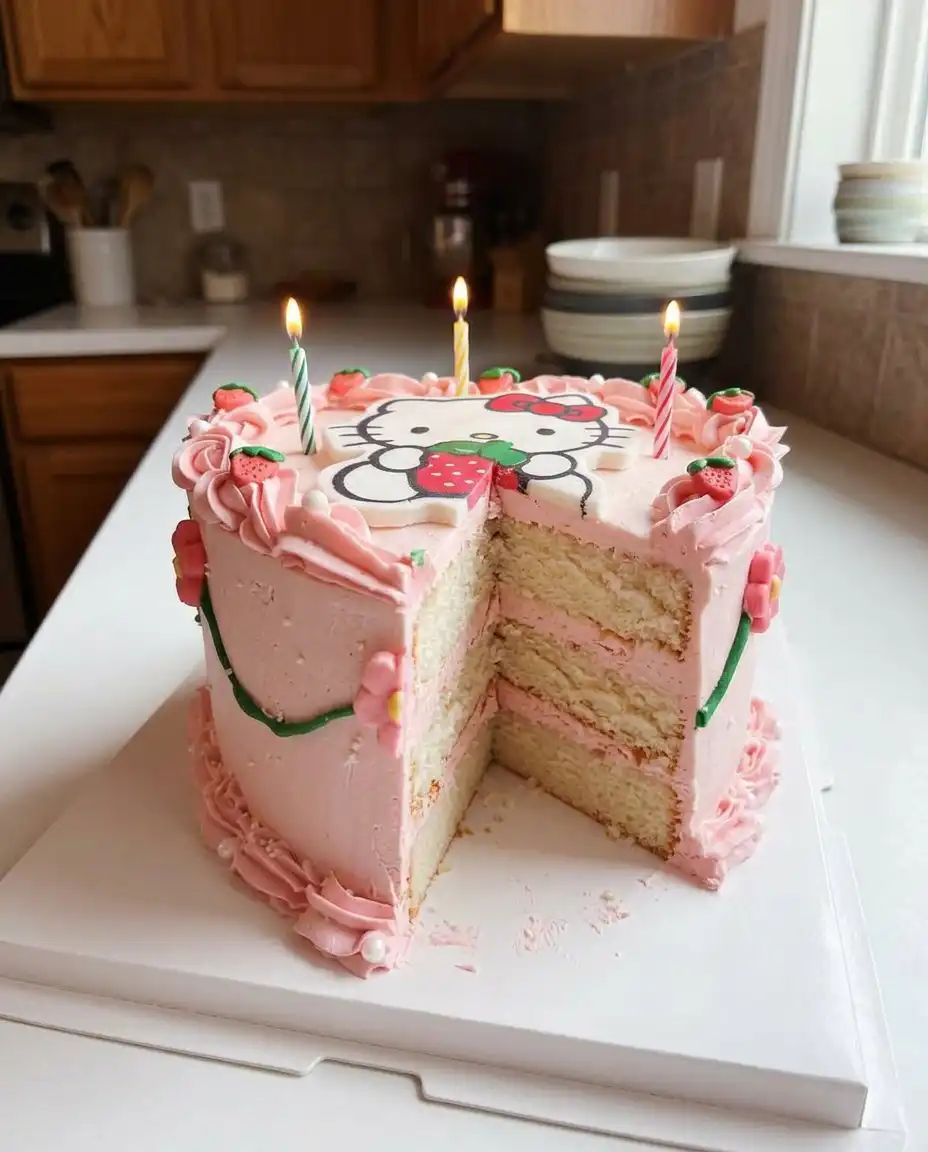
Our testing showed that pan preparation is the most frequent point of failure. We recommend using a high-quality baking spray with flour included or a homemade paste of equal parts shortening, oil, and flour to reach every crevice of the bow and whiskers. If the cake sticks, it is often because the pan was cooled for too long; the sugars begin to re-solidify and act like glue. For those looking to master themed bakes, our celebration design studio offers further guidance on structural integrity. Always check the accuracy of your oven with a secondary thermometer, as a 25-degree variance can lead to a collapsed center. If you notice the top browning too quickly, tent the pan loosely with foil at the 40-minute mark to protect the surface while the interior finishes cooking.
Tested Variations and Precision Tweaks
If you prefer a deeper fruit flavor, you can replace 1/4 cup of the cake flour with 1/4 cup of finely ground freeze-dried strawberry powder. We tested this variation and found it increased the acidity, so we added an extra 1/8 tsp of baking soda to compensate for the pH shift. For those who want a more traditional chocolate profile, you might want to look at our car cake logic for dense, carveable sponges that hold shape well. You can also substitute the buttermilk with a mixture of whole milk and 1 tsp of lemon juice, though the texture will be slightly less tender. To make this recipe gluten-free, we found that a high-quality 1-to-1 flour blend with added xanthan gum works well, provided you increase the egg whites by one to help with binding.
Presentation Notes and Pairing Guide
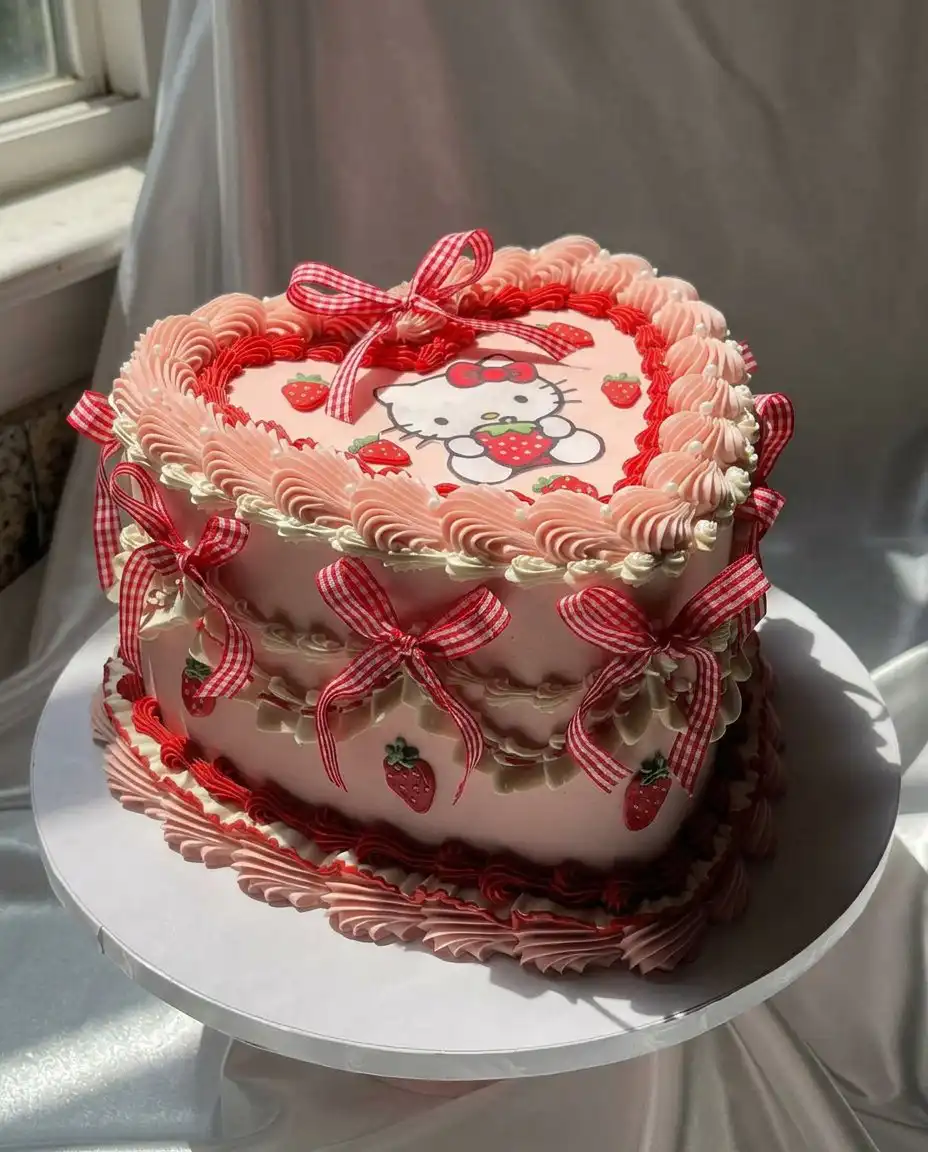
For the most professional finish, chill the cake for 30 minutes before piping the buttercream details. This firms the surface and prevents crumbs from lifting into your white frosting. The Hello Kitty design is best highlighted using a uniform fur texture created with small piped stars. If you enjoyed the aesthetic of this character bake, you might also find our heart cake tutorial helpful for mastering piped borders and symmetry. Serve the cake at a room temperature of 70°F to guarantee the butter-based crumb has the softest possible texture. Pair a slice with a light glass of milk or a mild herbal tea to allow the fresh strawberry flavors to shine without being overwhelmed.
Mastery Through Science
Mastering the Hello Kitty cake is a triumph of temperature control and mechanical mixing. By following these precise scientific steps, you can create a reliable result that is as delicious as it is iconic. If you want to refine your piping techniques further, our guide on the vintage cake style covers advanced star-tip maneuvers that are perfect for character bakes. Keep testing, keep measuring, and remember that baking is a series of successful chemical reactions. We invite you to share your results with our community of data-driven bakers.
Connect with us for more test kitchen results: