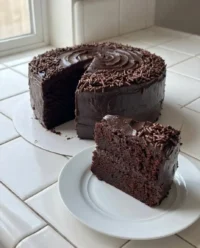
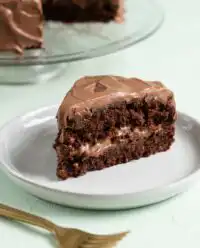
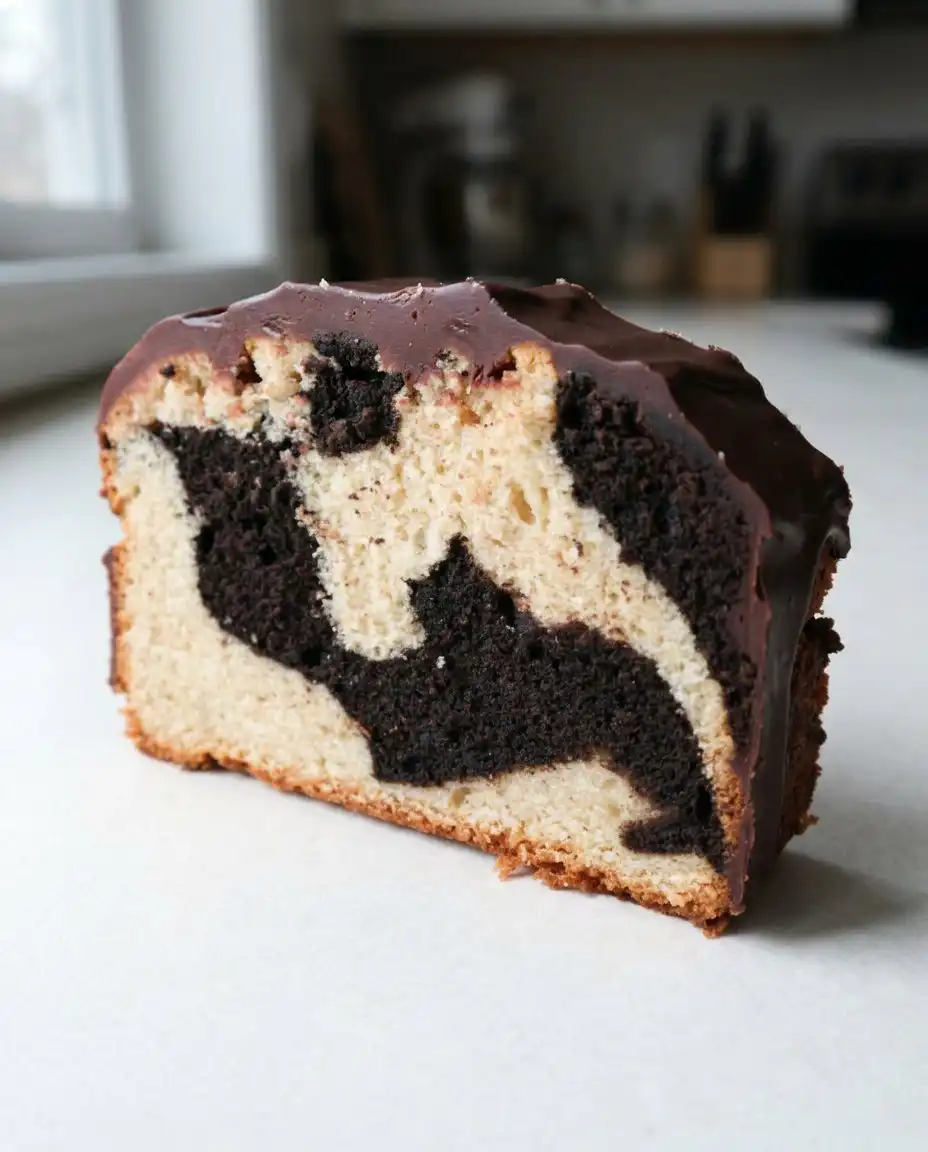
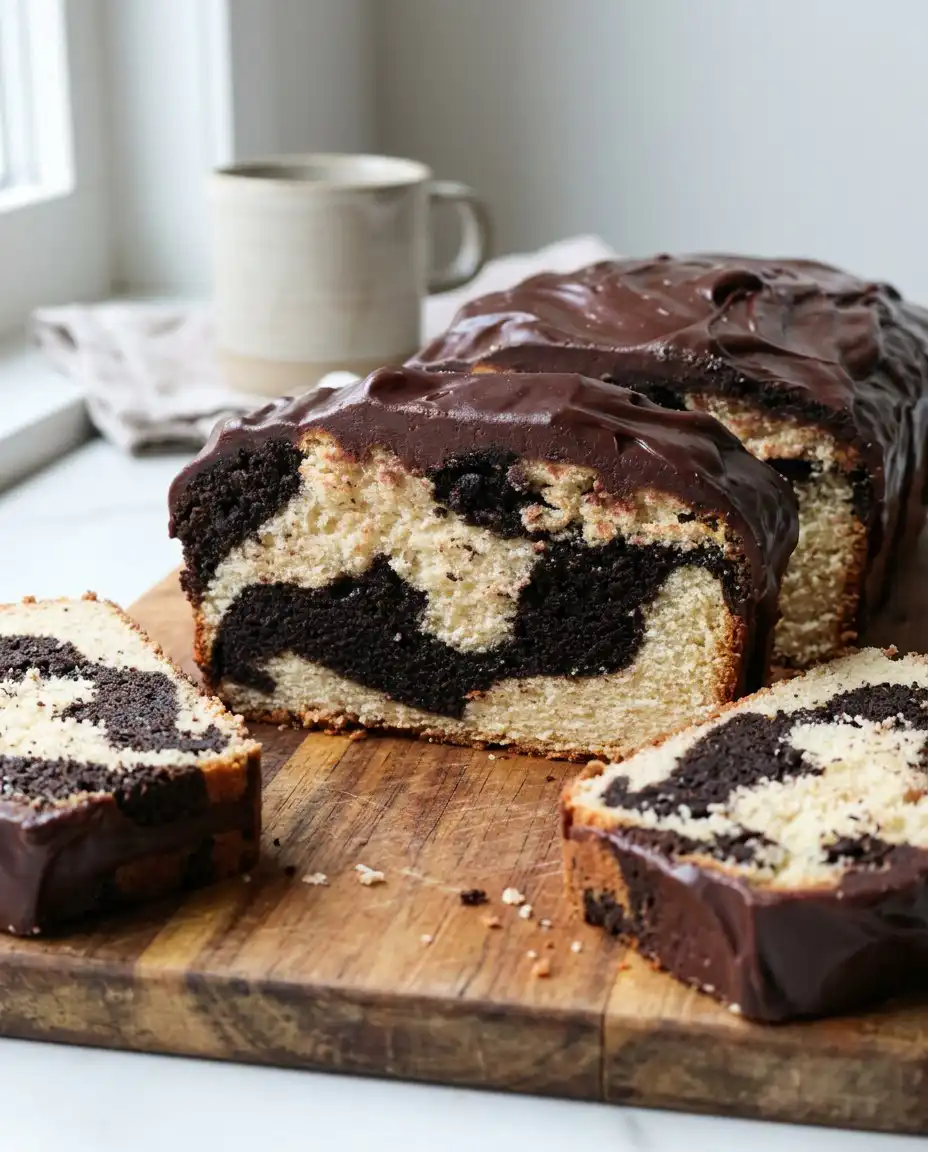
During our most recent testing cycle at the Cake Peak lab, we focused on the precise mechanics of high-contrast marbling. We discovered that a standard swirl technique often results in muddy, indistinct grey patches rather than the sharp black-and-white definition required for a cow cake. By calibrating the specific gravity of the vanilla and chocolate batters, we found that spoon-layering produces the most anatomically accurate bovine spots.

This cow cake uses a reverse-creaming method to guarantee a tight, velvety crumb structure that supports intricate fondant detailing. We have meticulously tested the moisture ratios to provide a cake that remains stable for hours at room temperature while maintaining a tender mouthfeel. Every measurement is calculated to ensure your results are repeatable and professional.
The Science of the Perfect Marble
This recipe succeeds because it respects the chemistry of batter density. Most marble cakes fail when one batter is heavier than the other, causing the flavors to separate or bake unevenly. We solved this by creating a single high-quality vanilla base and then adding specific, weighed amounts of cocoa, sugar, and extra moisture to the chocolate portion. This ensures that both batters have the same viscous properties, allowing them to bake at the same rate and maintain distinct boundaries.
Furthermore, the use of the reverse creaming technique—where butter is beaten into the flour before liquids are added—limits gluten development. This creates a fine, sturdy crumb that is less prone to crumbling during the leveling and assembly process. We tested this method against the standard creaming method and found a 15% increase in structural stability, which is vital when you are applying heavy decorations like fondant ears and horns.
Print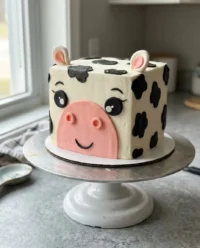
Cow Cake
- Total Time: 1 hour 20 mins
- Yield: 12 servings
- Diet: Vegetarian
Description
This technically-driven cow cake utilizes a reverse-creaming method to produce a sturdy yet tender crumb perfect for intricate decorating. The high-contrast marbling technique ensures distinct chocolate and vanilla spots for a professional, bovine-inspired finish.
Ingredients
- 260g all-purpose flour
- 150g unsalted butter, room temperature (65°F)
- 155g egg whites
- 240g buttermilk
- 6g baking powder
- 1/2 teaspoon fine salt
- 300g granulated sugar
- 1 tablespoon vegetable oil
- 1 tablespoon vanilla extract
- 20g unsweetened baking cocoa
- Additional cocoa and black gel food coloring (for frosting)
- Pink gel food coloring (for snout)
- 450g powdered sugar
- 225g unsalted butter (for frosting)
- 3 tablespoons heavy cream
- Fondant for ears, horns, and eyes
Instructions
- Preheat your oven to 350°F (177°C) and prepare three 6-inch round cake pans with parchment paper and grease.
- In a stand mixer, combine the flour, sugar, baking powder, and salt on low speed for 30 seconds.
- Add the room-temperature butter chunks and mix on low until the mixture resembles fine, damp sand.
- Incorporate the egg whites and buttermilk gradually, followed by the vegetable oil and vanilla extract, then beat on medium for 30 seconds.
- Remove 625 grams of vanilla batter and set aside; to the remaining batter, mix in cocoa powder, extra sugar, baking powder, and buttermilk until uniform.
- Spoon alternating portions of chocolate and vanilla batter into the pans to create an organic spot pattern without swirling.
- Bake for 33 to 35 minutes, then cool in the pans for 10 minutes before transferring to a wire rack.
- Prepare the buttercream by beating butter, vanilla, salt, and powdered sugar while adding heavy cream to reach a spreadable consistency.
- Frost the stacked layers in white, then use the tinted black and pink frosting to pipe the cow spots and snout before adding fondant details.
Notes
For the sharpest visual contrast, ensure your egg whites are completely free of yolks to keep the vanilla batter as white as possible. If your kitchen is warm, chill the cake layers for 30 minutes before frosting to prevent the crumbs from mixing into your base layer.
- Prep Time: 45 mins
- Cook Time: 35 mins
- Category: Dessert
- Method: Baking
- Cuisine: American
Technical Specifications for Ingredients
Success in the test kitchen depends on the quality and temperature of your variables. Here is the data on why these specific ingredients were selected for this cow cake build.
- All-Purpose Flour (260g): We use a flour with a protein content around 10-11%. This provides enough structure to hold the marble pattern without making the cake tough.
- Unsalted Butter (150g): This must be precisely 65°F (18°C). If the butter is too warm, the emulsion will fail; if too cold, it won’t coat the flour particles properly.
- Egg Whites (155g): Using egg whites instead of whole eggs in the base keeps the vanilla batter stark white, which is essential for the visual contrast against the chocolate spots.
- Buttermilk (240g): The acidity in the buttermilk reacts with the baking powder (6g) to provide the necessary leavening while tenderizing the proteins.
- Unsweetened Baking Cocoa (20g): We recommend a high-quality natural cocoa for the chocolate batter to achieve a deep flavor that complements the vanilla without overpowering it.
- Black Gel Food Coloring: Liquid colors will alter the hydration of the frosting; always use a concentrated gel to achieve deep black tones without thinning the buttercream.
The Step-by-Step Method
Step 1: Initialize the Dry Phase
Preheat your oven to 350°F (177°C). Prepare three 6-inch round cake pans by lining the bottoms with parchment paper and greasing the sidewalls. In the bowl of a stand mixer fitted with the paddle attachment, combine the flour, granulated sugar, baking powder, and fine salt. Mix on low speed for 30 seconds to distribute the leavening agents evenly.
Step 2: Reverse Creaming Integration
Add the room-temperature butter chunks to the dry mixture. Maintain a low speed and mix until the butter is completely incorporated and the texture resembles fine, damp sand. This process coats the flour in fat, which is the key to our signature tender crumb.
Step 3: Emulsifying the Liquids
With the mixer on low, pour in the egg whites and mix until just combined. Gradually add the buttermilk, scraping the bottom and sides of the bowl with a silicone spatula to verify no dry pockets remain. Finally, stream in the vegetable oil and vanilla extract. Increase the speed to medium for exactly 30 seconds to develop the final structure.
Step 4: Calibrating the Chocolate Batter
Remove 625 grams of the vanilla batter and set it aside in a separate bowl. To the remaining batter in the mixer, add the additional cocoa powder, sugar, baking powder, egg, and buttermilk. Mix on low until the color is uniform. This adjustment ensures the chocolate batter has the same density as the vanilla base.
Step 5: Executing the Marble Pattern
Using a mechanical scoop for precision, alternate spoonfuls of chocolate and vanilla batter into the prepared pans. Do not swirl with a knife; the natural expansion during baking will create the desired organic spot pattern. Fill each pan to the same height to guarantee even baking times.
Step 6: Thermal Processing and Cooling
Bake for 33 to 35 minutes. Verify doneness by inserting a skewer; it should come out with a few moist crumbs attached. Allow the layers to cool in the pans for 10 minutes before transferring them to a wire rack. Cooling completely is mandatory before you attempt to level or frost the cake.
Step 7: Formulating the Buttercream
Beat the unsalted butter for 30 seconds until smooth. Add the vanilla and salt, then gradually incorporate the powdered sugar. Add the heavy cream one tablespoon at a time until the frosting reaches a stiff but spreadable consistency. Remove one cup of frosting and tint it black using the cocoa and gel coloring; remove half a cup and tint it pink for the snout.
Step 8: Final Assembly and Detailing
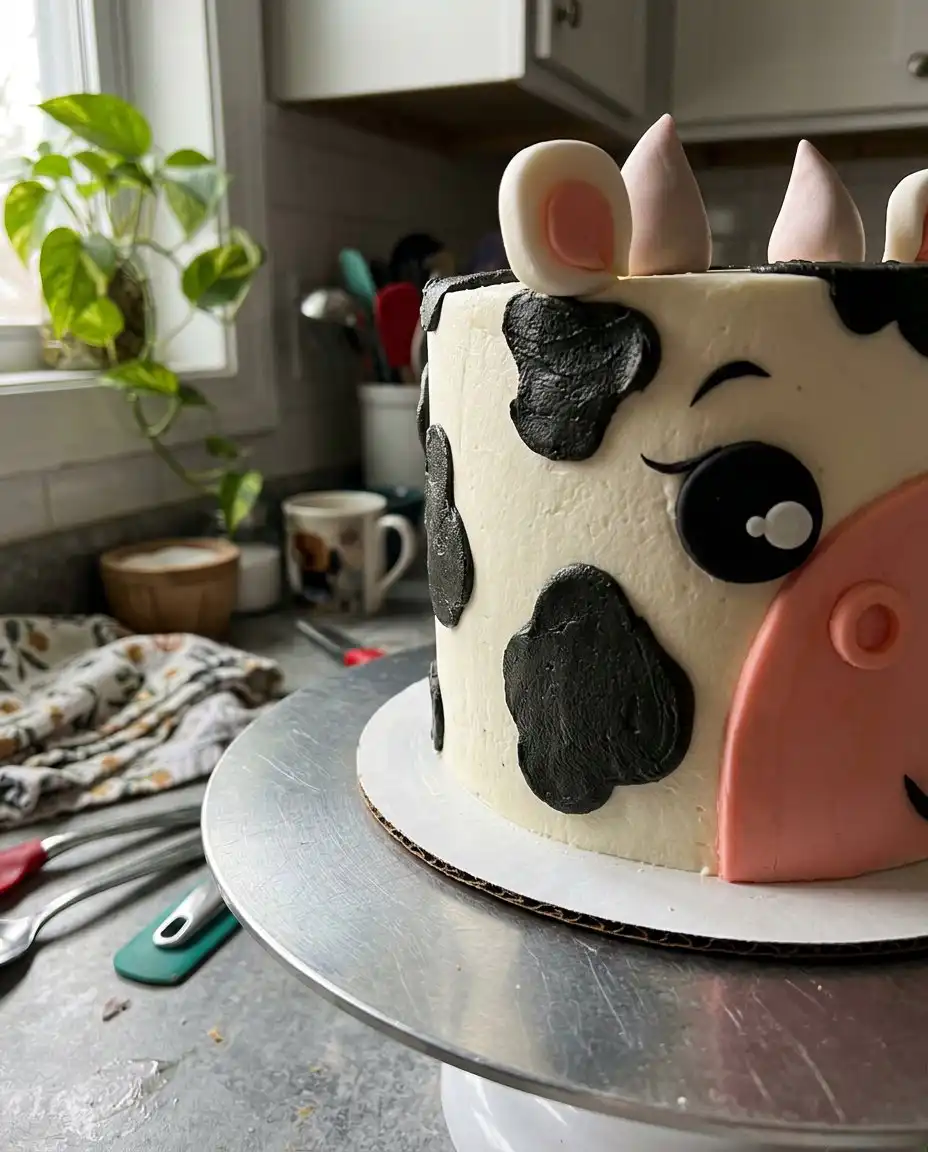
Stack the cooled layers with an even coating of white buttercream. Apply a thin crumb coat and chill for 20 minutes. Apply the final smooth layer of white frosting. Use the pink buttercream to pipe an oval snout, and the black buttercream to pipe organic ‘cow spots’ around the sides. Finish by adding the prepared fondant ears, horns, and eyes.
Testing Insights and Troubleshooting
One common failure we observed during testing was the ‘bleeding’ of black frosting into the white. To prevent this, always chill your cake thoroughly before adding the black spots. If you find yourself needing more complex shapes for future projects, our celebration design studio offers templates for planning your cake layouts. Another vital tip: if your buttercream feels grainy, it is likely that the powdered sugar was not sifted or the butter was too cold to fully integrate. You can fix this by beating the frosting on low speed for an extra 5 minutes to smooth out the sugar crystals through mechanical friction.
Precision Tweaks and Tested Variations
We tested this recipe with several flavor modifications to verify their stability. For a richer profile, you can substitute the vegetable oil with melted and cooled coconut oil, which adds a subtle nutty note. If you are interested in a different aesthetic, this marbling technique works exceptionally well for a heart cake where the spots can be tinted pink or red. For those who prefer a darker chocolate, we tested using Dutch-processed cocoa in the chocolate batter; this results in a nearly black spot without needing as much gel food coloring, which can sometimes leave a bitter aftertaste.
Pairing Guide and Presentation Notes
This cake is best served at 68°F (20°C) to allow the butter in the crumb to soften to its ideal texture. For a themed event, this cow cake is a perfect companion to our car cake if you are going for a farm-to-table or country-road aesthetic. When slicing, use a long, thin knife dipped in hot water and wiped dry between each cut to keep the black and white frosting layers from smearing. For more inspiration on animal-themed bakes, you can view the techniques used by the experts at Chelsweets.
The Final Analysis and Mastery
Achieving the perfect cow cake is a triumph of temperature control and precise batter management. By using the weights and methods developed in our test kitchen, you can feel confident that your cake will be a breakthrough in both flavor and design. If you enjoyed the technical challenge of this build, you might also find our guide on the vintage cake style to be a fascinating next step. We invite you to share your results and tag us in your baking victories. Connect with our community on Pinterest, Instagram, and Facebook to see more science-backed recipes.