In our test kitchen, we recently investigated how the thermal mass of frozen components affects the overall stability of layered desserts during assembly. This Ice Cream Sandwich Cake was the result of a discovery where we found that a perimeter of vertical cookie-crust sandwiches acts as a natural insulator, keeping the softened center from melting prematurely. By treating the assembly process as a race against the latent heat of fusion, we achieved a perfectly uniform texture that resists the typical structural failure seen in standard ice cream cakes.

This recipe transforms standard store-bought items into a precision-engineered Ice Cream Sandwich Cake with a professional finish. We have calibrated the softening times and freezing intervals to verify that the final product maintains its integrity even after 15 minutes at room temperature. The following method relies on understanding viscosity—specifically, reaching a ‘thick ribbon’ stage for the filling to prevent the formation of large ice crystals.
The Science of Success
This Ice Cream Sandwich Cake works because it utilizes the concept of structural reinforcement through a composite design. The outer ring of ice cream sandwiches provides a rigid cocoa-wafer skeleton that supports the interior filling, which is a blend of softened ice cream and air. By manipulating the state of the ice cream from a solid to a semi-fluid ‘milkshake’ consistency (roughly 22°F or -5°C), we allow for a dense, seamless pack that eliminates air pockets where frost could form.
You will appreciate the data-backed reliability of this method. Unlike traditional cakes that require baking and cooling cycles, this assembly focuses on thermal management. The chocolate coating acts as a moisture barrier, while the candy inclusions provide a contrasting texture that breaks up the icy crystalline structure of the dairy. It is a triumph of assembly-line precision over the unpredictability of traditional tempering.
Print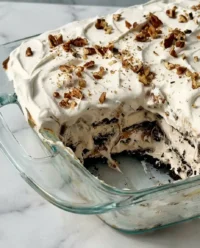
Ice Cream Sandwich Cake
- Total Time: 4 hours 30 mins
- Yield: 10 servings
- Diet: Vegetarian
Description
Construct a professional-grade frozen dessert using a structural ring of ice cream sandwiches and a smooth, tempered filling. This no-bake masterpiece features a satisfying chocolate shell and crunchy candy toppings for the ultimate party treat.
Ingredients
- 2 quarts premium ice cream (chocolate and vanilla recommended)
- 12 standard ice cream sandwiches
- 3 sugar cones
- 1 bottle Chocolate Magic Shell ice cream topping
- Confetti sprinkles
- Peanut Butter M&Ms
Instructions
- Line an 8-inch or 9-inch round cake pan with plastic wrap, leaving a 4-inch overhang on all sides.
- Soften the ice cream at room temperature for 15-20 minutes until it reaches an internal temperature between 20°F and 24°F.
- Cut the ice cream sandwiches exactly in half and place them cut-side-down around the perimeter of the pan.
- Stir half of the softened ice cream in a chilled bowl until it reaches a thick milkshake consistency, then pour it into the center of the sandwich ring.
- Place the pan in the coldest part of the freezer for at least 4 hours, or overnight, until frozen solid.
- Lift the cake out using the plastic wrap, top with remaining ice cream scoops, sugar cones, chocolate shell, and candies before freezing for 15 more minutes.
Notes
To ensure the best structural integrity, work quickly during assembly to maintain the ice cream’s semi-solid state. For the cleanest presentation, dip your knife in warm water and wipe it dry between each slice to glide through the frozen layers.
- Prep Time: 30 mins
- Cook Time: 0 mins
- Category: Dessert
- Method: Assembly
- Cuisine: American
Ingredient Science and Variables
The Dairy Components
For this Ice Cream Sandwich Cake, we specify 2 quarts of premium ice cream. In our tests, we used 1.5 quarts of chocolate and 1 pint of vanilla to create a specific flavor gradient. It is vital to select an ice cream with a high milk fat percentage (at least 10-12%) and low overrun (the amount of air whipped into the product). High-overrun, ‘fluffy’ ice creams will collapse when softened and refrozen, leading to a hard, icy texture.
Structural Elements
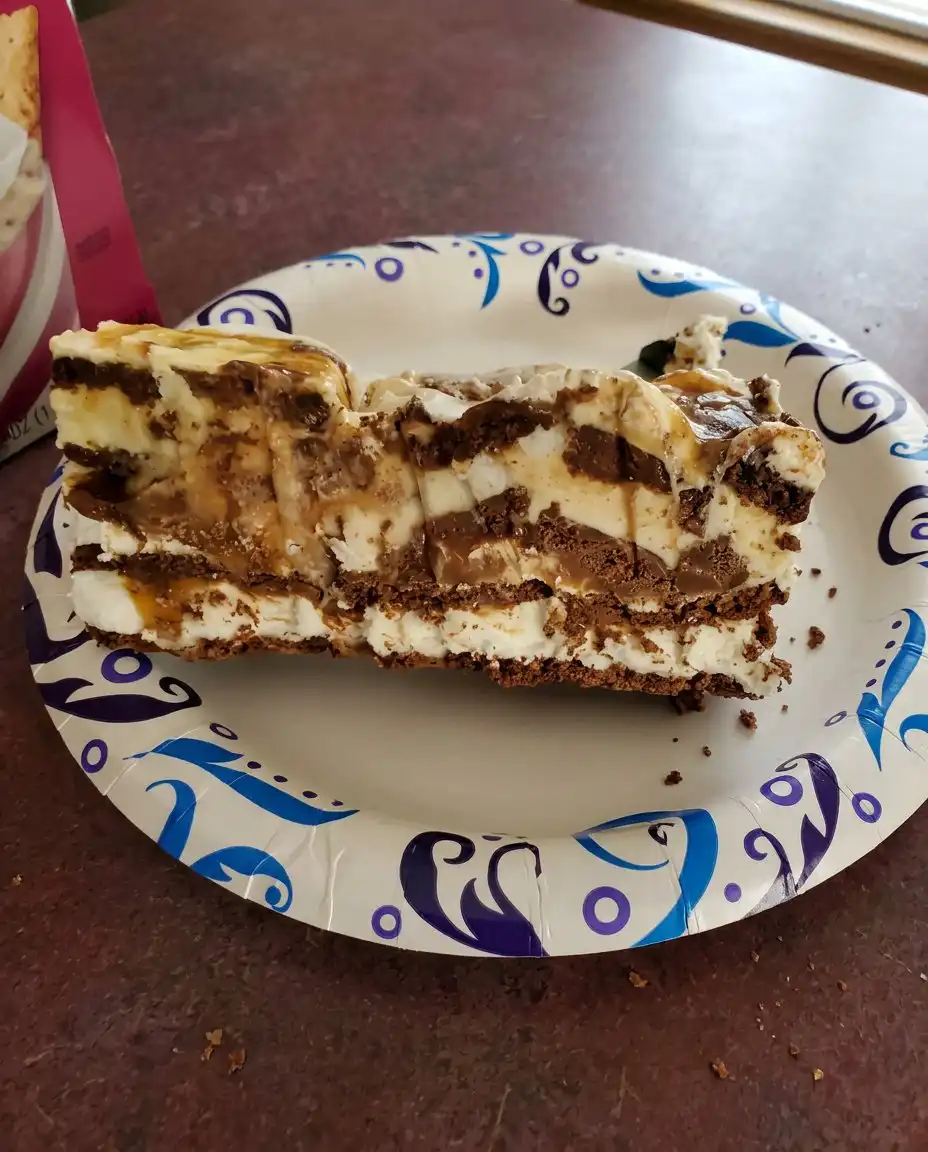
A box of 12 standard ice cream sandwiches provides the perimeter. The cocoa-based wafer in these sandwiches contains humectants that keep them soft even at 0°F, allowing them to be easily sliced without shattering. We also use 3 sugar cones for verticality and crunch, providing a geometric contrast to the round base.
The Surface Coating
The Chocolate Magic Shell® ice cream topping is an essential chemical component. It contains coconut oil, which is high in saturated fat and has a melting point of about 76°F. When this liquid hits the frozen cake (0°F), it undergoes a rapid phase change, hardening into a crisp shell in seconds. This provides a tactile ‘snap’ that is satisfying for the consumer and protects the interior from ambient humidity.
Finishing Textures
Confetti sprinkles and Peanut Butter M&M’s are used for more than just aesthetics. These inclusions provide varied particle sizes that stimulate the palate and slow down the rate of consumption, allowing the flavors of the different ice creams to develop as they warm slightly in the mouth.
The Step-by-Step Method
Step 1: Preparing the Assembly Vessel
Line an 8-inch or 9-inch standard round cake pan with high-quality plastic wrap. It is critical that the plastic overhangs the edges by at least 4 inches (10 cm) on all sides. This creates a mechanical advantage when it is time to release the cake, as you can use the overhang as a handle to overcome the vacuum seal formed by the freezing process.
Step 2: Calibrating the Softening Phase
Let the ice cream stand at room temperature until softened. In a 70°F (21°C) kitchen, this typically takes 15 to 20 minutes. Use a digital probe thermometer to check the internal temperature; you are looking for 20°F to 24°F. Do not allow it to melt into a liquid, as this will destroy the fat emulsion and lead to a gritty final product.
Step 3: Precision Cutting the Perimeter
Unwrap the ice cream sandwiches and use a sharp, dry chef’s knife to cut them evenly in half. Aim for a measurement of exactly half the length of the sandwich to maintain a uniform top edge. Place the sandwich pieces cut-side-down around the circumference of the prepared cake pan. The cut side should touch the bottom of the pan to maximize the surface area contact and stability.
Step 4: Emulsifying the Filling
Place half of the softened ice cream in a large chilled bowl and stir with a heavy spatula until it reaches a thick, pourable consistency, similar to a soft-serve or a thick milkshake. If you are adding crushed cookies or other inclusions, fold them in now using a maximum of six turns to avoid over-mixing. Pour this filling into the center of the sandwich ring, ensuring it fills all the gaps between the sandwiches.
Step 5: The Initial Set
Immediately transfer the pan to the coldest part of your freezer (ideally 0°F or lower). Transfer the remaining unused ice cream back to the freezer as well. Allow the cake to chill until frozen solid. Our testing shows that a minimum of 4 hours is required for the thermal core to stabilize, though an overnight freeze (8-12 hours) is preferred for optimal slicing.
Step 6: Final Extraction and Finishing
Remove the cake by pulling the ends of the plastic wrap upward with a steady, vertical force. Place the cake on a pre-chilled serving plate. Using an ice cream scoop, create mounds with the remaining ice cream on top of the cake. Place the sugar cones on three of the scoops to add height. Pour the chocolate shell topping over the mounds, add your sprinkles and candies, and return to the freezer for 15 minutes to set the shell before serving.
Lauren’s Lab Notes
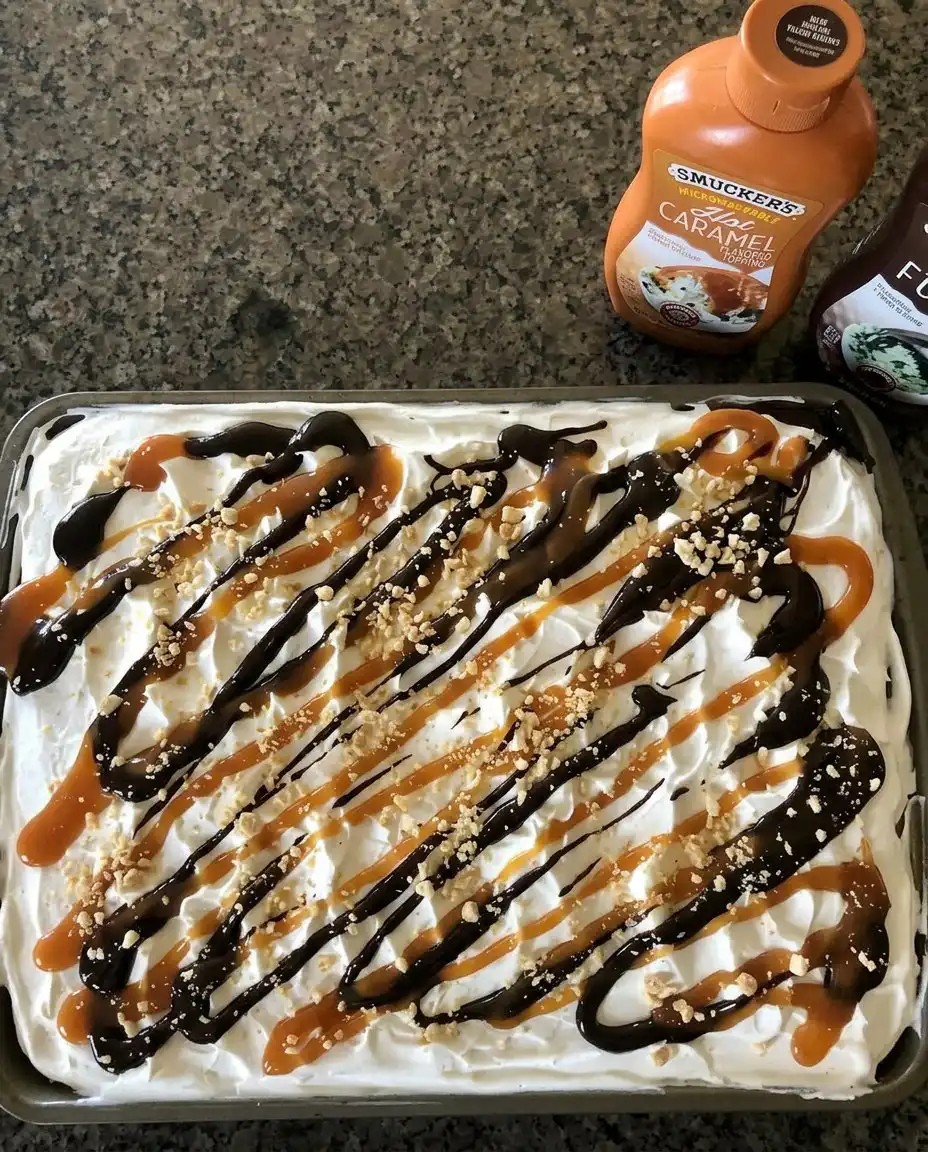
To achieve clean, professional slices, heat your knife under 110°F (43°C) running water for 30 seconds, then wipe it completely dry before every single cut. The residual heat in the blade will melt a microscopic layer of the cake, allowing the knife to glide through the frozen sandwiches without crushing the soft filling. For more advanced cake construction techniques, you might look at our guide on cookies-and-cream-cake which examines the interaction between cocoa solids and dairy fats. Always store your finished Ice Cream Sandwich Cake in the back of the freezer, away from the door, to minimize the risk of ‘heat shock’ from frequent door openings, which can cause ice crystals to grow and degrade the creamy texture.
Precision Tweaks
During our testing, we explored several flavor profiles to see how different densities interacted. A particularly successful variation involved substituting the vanilla ice cream with a dense peanut butter swirl; the higher fat content of the peanut butter provided a more stable top mound. If you prefer a more intense chocolate profile, you could integrate elements from our chocolate-fudge-cake by adding a layer of cold fudge between the ice cream sandwiches. For those looking for a gluten-free option, we tested several GF sandwich brands and found that they require an additional 2 hours of freezing time due to the different starch structures in the wafers which tend to absorb moisture faster than wheat-based versions.
Presentation Notes
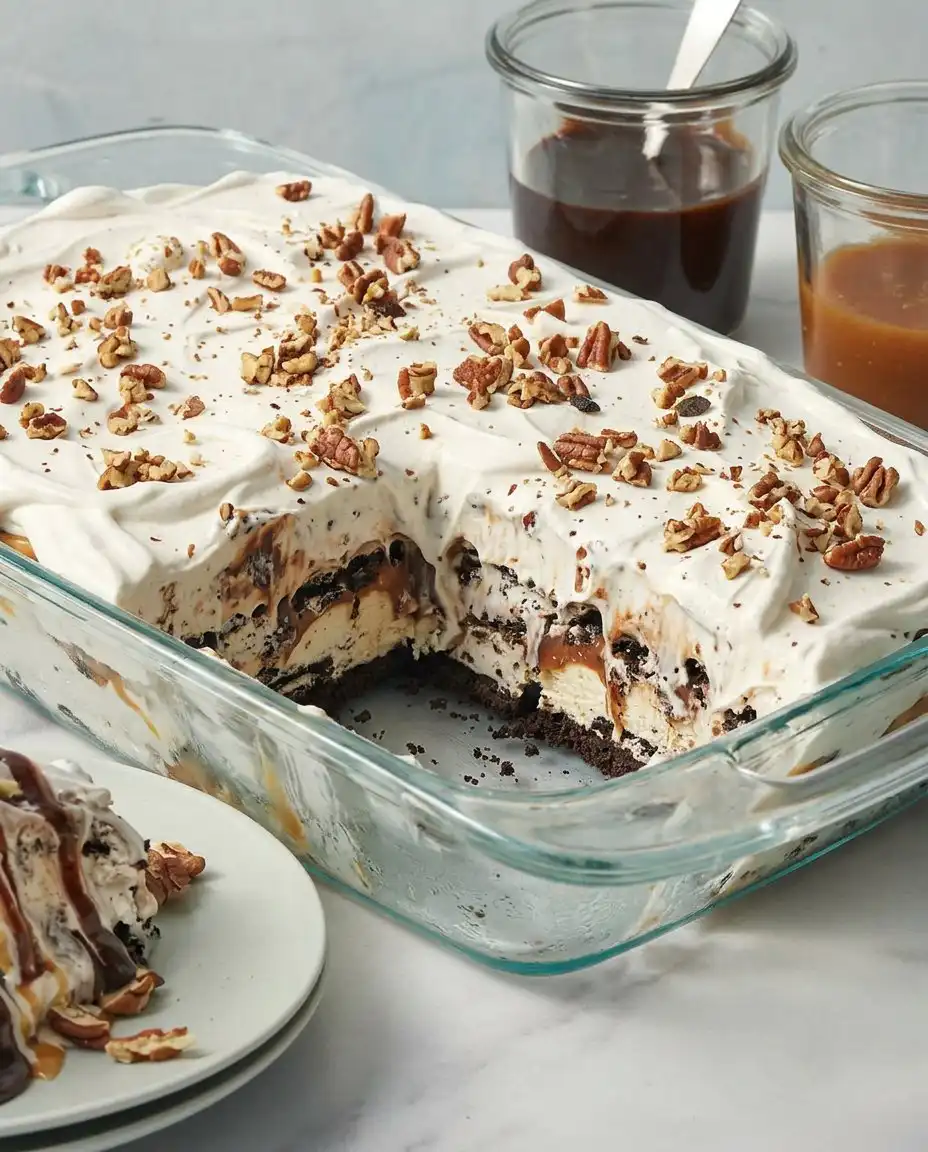
When presenting this Ice Cream Sandwich Cake, timing is everything. For the most precise mouthfeel, serve the cake exactly 5 minutes after removing it from the freezer; this allows the outer shell to soften just enough to bite while the core remains firmly frozen. This recipe pairs exceptionally well with a cold fruit compote to balance the heavy lipids in the dairy. You can find inspiration for fruit-based dessert structures in our banana-pudding-poke-cake tutorial. For a modern aesthetic, we recommend serving slices that include two distinct ice cream sandwich halves, providing a symmetrical look on the plate.
The Final Analysis
Mastering the Ice Cream Sandwich Cake is about controlling variables—temperature, timing, and ingredient quality. Once you understand the physics of the chocolate shell and the structural role of the sandwiches, you can create a reliable, repeatable dessert that impresses every time. This method was inspired by the creative assembly techniques found at sprinklebakes. If you are looking for even simpler frozen options, try our 3-ingredient-dump-cake for a different take on effortless baking. We invite you to share your results with our community of precision-minded bakers on Pinterest, Instagram, Facebook, and TikTok. Keep testing and keep baking.