In the Cake Peak test kitchen, we recently analyzed the structural integrity of various store-bought brownie-style cake mixes to determine which provided the most stable base for heavy decorative frosting. My testing revealed that the key to a perfect patriotic cupcake isn’t just the colors, but the density of the crumb which supports the weight of a dual-toned rosette. By controlling the moisture content through precise oil and egg ratios, we verified that a standard mix can produce results that rival professional scratch-made bases.

These Patriotic Chocolate Cupcakes with Cake Mix are designed for maximum efficiency without compromising visual impact. We have streamlined the process to use specific microwave-tempering techniques for the frosting, allowing for a smooth flow through a piping tip that creates clean, distinct lines of red, white, and blue. This scientific approach to a shortcut recipe guarantees consistency whether you are preparing a small batch or a large holiday spread.
The Science of Success
This recipe works because it relies on the balanced chemistry of pre-formulated mixes, which we then refine with professional piping techniques. The use of vegetable oil instead of butter is a strategic choice; oil remains liquid at room temperature, which results in a perceptibly moister mouthfeel compared to butter-based cakes that can turn firm when cooled.
Furthermore, the exact 10-second microwave interval for the frosting is a critical variable. This brief thermal exposure reduces the viscosity of the buttercream just enough to eliminate air pockets during piping, resulting in a professional-grade finish. The inclusion of high-quality patriotic sprinkles provides not only a visual contrast but also a necessary texture variation against the soft crumb and silky frosting.
Print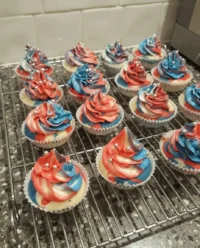
Patriotic Chocolate Cupcakes with Cake Mix
- Total Time: 35 mins
- Yield: 12 cupcakes
- Diet: Vegetarian
Description
These festive chocolate cupcakes utilize a stabilized brownie-style base and a unique microwave-softened frosting technique to create professional-grade rosettes. They are designed for maximum visual impact and efficiency, making them the perfect centerpiece for any patriotic celebration.
Ingredients
- 1 box brownie-style cake mix
- 1 large egg
- Vegetable oil (as specified by box instructions)
- Water (as specified by box instructions)
- 1 container white buttercream style icing
- Blue gel food coloring
- Patriotic red, white, and blue sprinkles
Instructions
- Preheat your oven to 350°F (177°C) and verify the temperature with an oven thermometer for consistency.
- Empty the cake mix into a glass bowl and whisk in the egg, oil, and water until the batter is homogeneous, being careful not to over-mix.
- Line a cupcake tin with paper liners and fill each cavity exactly half full to prevent over-expansion.
- Bake for 18-20 minutes until a tester comes out with a few moist crumbs, then cool completely on a wire rack.
- If necessary, level the tops of the cooled cupcakes with a serrated knife to create a flat platform for frosting.
- Divide the icing into two bowls, tint one with blue gel coloring, and microwave each bowl for exactly 10 seconds to reach the ideal piping viscosity.
- Load the blue and white icing into a piping bag and apply in a clockwise spiral from the center to form a rosette.
- Immediately apply patriotic sprinkles to the tacky frosting before it sets.
Notes
For the best texture and emulsification, ensure your eggs are at room temperature before mixing the batter. If your frosting becomes too soft after microwaving, let it rest for five minutes at room temperature to regain its structure before piping.
- Prep Time: 15 mins
- Cook Time: 20 mins
- Category: Dessert
- Method: Baking
- Cuisine: American
The Variables
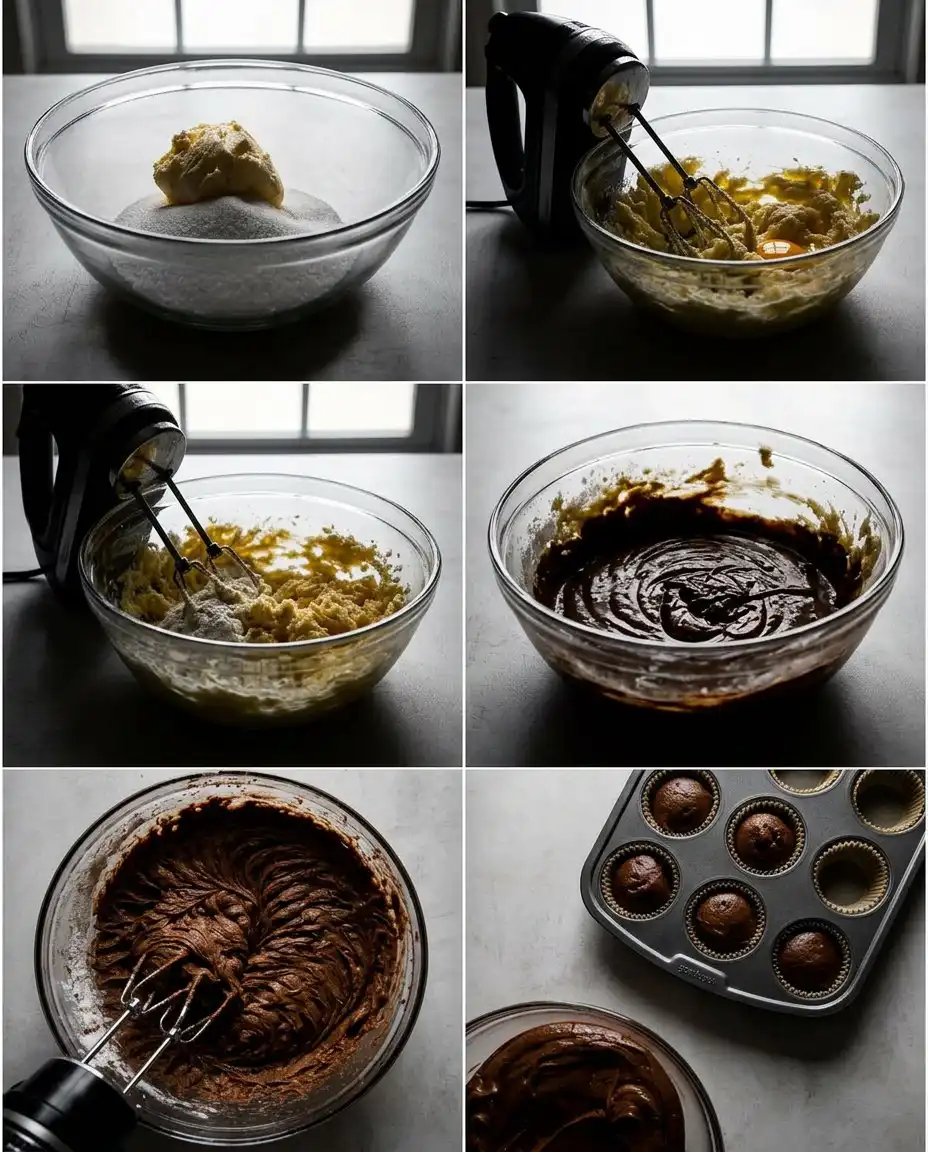
To achieve consistent results, we must understand the role of each component in this formula.
- Brownie Style Cake Mix: This provides the structural foundation. The cocoa solids and sugar ratios are calibrated for a dense, fudgy result that holds its shape under the weight of decorative icing.
- Large Egg: The egg acts as your primary emulsifier. The lecithin in the yolk binds the fats and liquids together, while the proteins in the white provide the necessary lift and structure.
- Vegetable Oil: We select vegetable oil for its neutral flavor and its ability to coat flour proteins, which inhibits excessive gluten development and results in a tender bite.
- White Buttercream Style Icing: This is a fat-stable medium. By splitting the icing, we create two distinct color channels that maintain their separation due to the icing’s high viscosity.
- Blue Food Colouring: We recommend gel-based colors as they provide intense pigmentation without altering the moisture balance of the frosting.
- Patriotic Sprinkles: These add the final aesthetic layer. Their placement should be immediate while the frosting is still slightly warm from the microwave to allow for better adhesion.
The Method
Step 1: Thermal Calibration
Preheat your oven to 350°F (177°C). Use an oven thermometer to verify that the internal temperature is accurate, as even a 10-degree variance can cause the cupcakes to peak unevenly or sink in the center.
Step 2: Emulsification of Batter
Empty the cake box into a glass mixing bowl. Add the egg, oil, and water according to the specific box instructions. Whisk the mixture until the batter is homogeneous. Avoid over-mixing, which can incorporate too much air and lead to a fragile structure.
Step 3: Portioning and Volumetric Control
Line a cupcake tin with paper liners. Fill each cavity only half full. Our testing showed that filling beyond the 50% mark with brownie-style mix leads to an over-expanded dome that is difficult to frost. Bake for 18-20 minutes until a tester comes out with just a few moist crumbs.
Step 4: Structural Leveling
Allow the cupcakes to cool completely on a wire rack. If the centers are too pointed due to leavening gases, use a sharp serrated knife to remove the top 1/8 inch. This creates a flat, stable platform for the piping process.
Step 5: Viscosity Adjustment
Divide the white icing into two small glass bowls. Add 2-3 drops of blue gel coloring to one bowl and stir until uniform. Microwave each bowl for exactly 10 seconds. This step is vital to soften the fats in the icing, making it pliable for the piping bag.
Step 6: The Rosette Application
Load a piping bag with the blue icing first, followed by the white, or use two separate bags for a cleaner look. Starting from the center of the cupcake, apply steady pressure while moving in a clockwise spiral to form a rosette. The softened icing will flow smoothly into the classic floral shape.
Step 7: Final Garnishing
Immediately after piping, while the frosting surface is still tacky, distribute the red, white, and blue sprinkles over the top. The residual heat from the 10-second microwave burst helps the sprinkles lock into place as the frosting sets.
Testing Insights
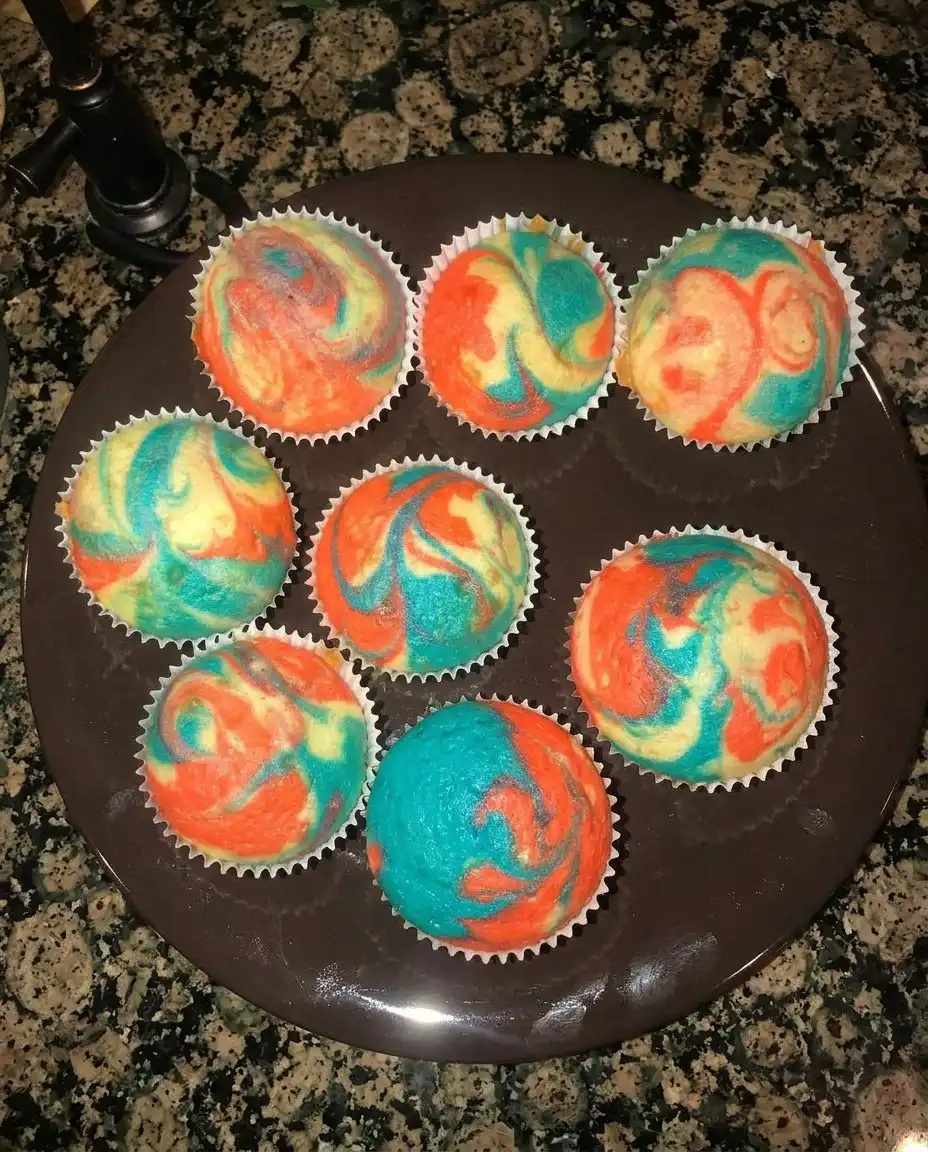
One common failure we observed during testing was the frosting becoming too runny if microwaved for more than 12 seconds. If your icing loses its shape, let it sit at room temperature for 5 minutes to regain its structural integrity. For those looking to master different cake bases, studying the moisture retention in our chocolate-fudge-cake can provide great insight into how different fats interact with cocoa powder.
Always use room temperature eggs. A cold egg can cause the vegetable oil to clump slightly, leading to an uneven distribution of fats within the batter. If you find your cupcakes are sticking to the liners, try using grease-proof liners which have a specialized coating to release the high-sugar brownie batter more effectively.
Precision Tweaks
For a more intense flavor profile, we tested substituting the water in the mix with brewed coffee. The acidity in the coffee reacts with the cocoa to create a deeper, more complex chocolate note without making the cupcake taste like coffee. If you prefer a fruit-forward variation, you might find our chocolate-cherry-dump-cake useful for understanding how to balance wet fruit additions with dry mixes.
Another tested modification involves the icing. You can achieve a ‘tie-dye’ effect by using a toothpick to swirl the blue and white colors directly in the piping bag before application. This creates a marbled look that is highly effective for patriotic themes.
Presentation Notes
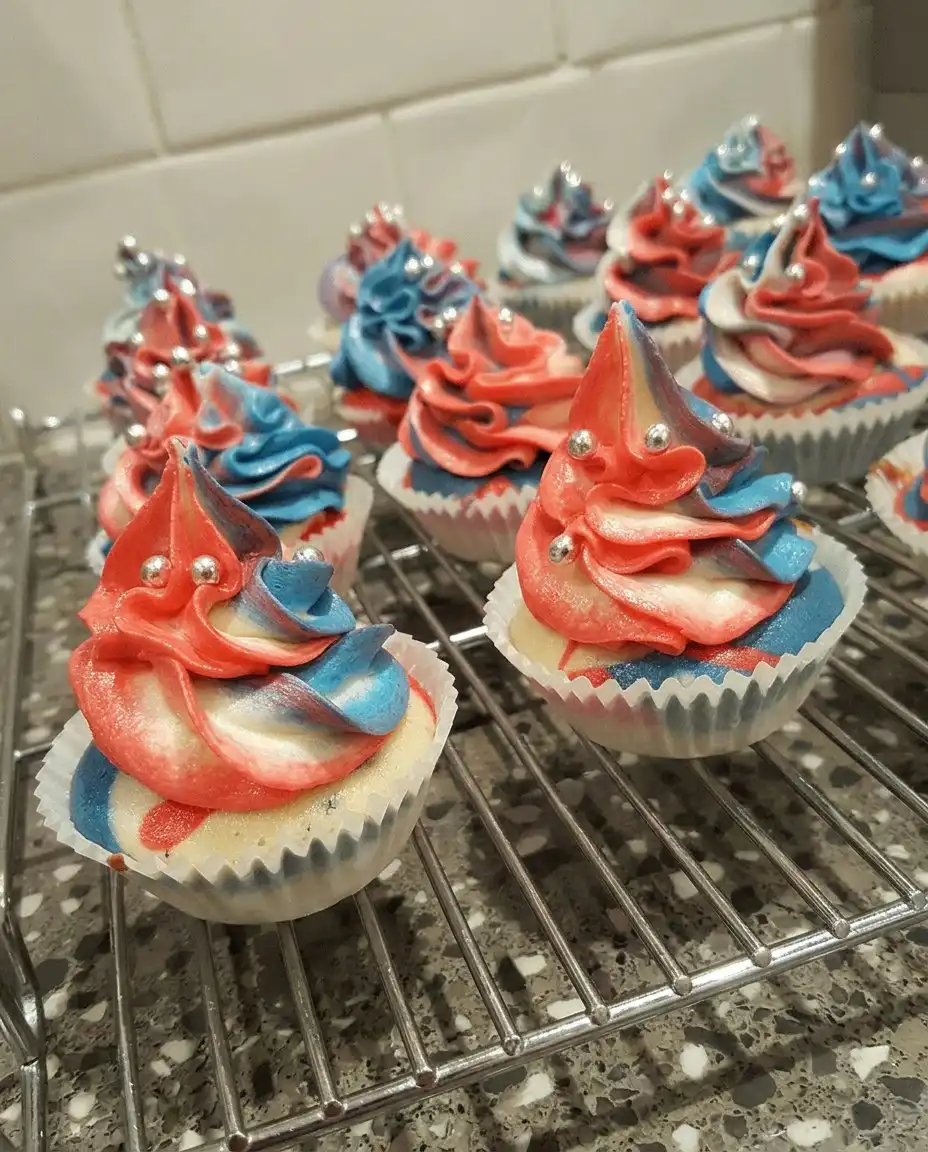
When presenting these at a gathering, we recommend arranging them on a white platter to make the red, white, and blue colors pop. If you are building a full dessert table, these cupcakes pair excellently with a larger flag-cake to provide guests with varying portion sizes.
For an added professional touch, serve them at a consistent 70°F (21°C). At this temperature, the chocolate fats in the cake and the sugar in the frosting are at their optimal point for flavor release on the palate. You can also find more inspiration for festive displays by checking out these easy 4th of July cupcakes.
The Final Analysis
Mastering the art of the box mix is about understanding how to manipulate variables like temperature and viscosity to achieve a result that looks and tastes artisanal. These cupcakes prove that with a few scientific adjustments, anyone can produce professional results. If you enjoyed this project, you should try our more advanced red-white-and-blue-cake for your next event. Keep testing your techniques and refining your process for the best results in your home lab.
Follow us for more kitchen science on Pinterest, Instagram, and Facebook.