In the Cake Peak test kitchen, we analyzed why many chocolate poke cakes end up with a saturated base that loses its structural integrity within hours. Our experiments showed that the timing of the “poke” and the temperature of the cake are the most critical variables for success. By waiting exactly 15 minutes after removing the pan from the oven, we create internal channels that absorb filling without collapsing the crumb.

This specific Reese’s Peanut Butter Cup Poke Cake method uses a multi-layered approach to maximize the distribution of fats and sugars. We have calibrated the pudding viscosity to act as a secondary stabilizer, resulting in a cake that maintains its shape while delivering an intense peanut butter profile. This is not just a dessert; it is a study in moisture management and flavor layering.
The Science of Structural Moisture
This recipe works because it respects the physics of absorption. When you pour a pudding mixture over a standard cake, the starch molecules in the pudding need a specific environment to bond with the cake fibers. We have tested various cooling durations and found that a warm cake—not hot—allows the pudding to seep into the pores without making the bottom layer mushy. The chocolate frosting layer then acts as a thermal seal, locking in that moisture before the final topping is applied.
Furthermore, the combination of fats is strategically chosen. We use the creamy peanut butter to introduce high levels of protein and plant-based fats, which interact with the dairy in the pudding to create a silkier mouthfeel than a standard chocolate layer cake. The result is a dessert that provides the satisfying weight of a dense torte with the airy lift of a whipped topping. Every bite has been tested for consistency, making certain that the final product is repeatable for any home baker using precise measures.
Print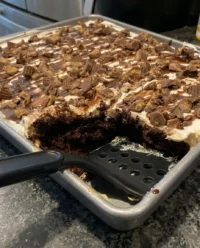
Reese’s Peanut Butter Cup Poke Cake
- Total Time: 4 hours 50 mins
- Yield: 15 servings
Description
A decadent and scientifically-balanced dessert that layers moist chocolate cake with a creamy peanut butter pudding and a stabilized peanut butter mousse topping. This recipe utilizes specific cooling times and temperature controls to ensure the perfect distribution of flavors without compromising the cake’s structure.
Ingredients
- 15.25 oz chocolate cake mix
- 3.4 oz vanilla instant pudding mix
- 2 cups cold milk (38-40°F)
- 1.5 cups creamy peanut butter, divided
- 16 oz chocolate frosting
- 8 oz whipped topping, thawed
- 25 mini peanut butter cups
Instructions
- Bake the chocolate cake in a 13×9-inch pan according to the package instructions, pulling it from the oven when the internal temperature reaches 205°F.
- Allow the cake to cool for exactly 15 minutes, then use the round end of a wooden spoon to poke holes across the surface at 1-inch intervals.
- In a medium bowl, whisk the vanilla pudding mix and cold milk for 120 seconds, then immediately whisk in 1/2 cup of creamy peanut butter.
- Slowly pour the pudding emulsion over the cake, using an offset spatula to guide it into the holes, and let rest for 10 minutes at room temperature.
- Heat the chocolate frosting in a microwave-safe bowl for 15-20 seconds until pourable, then drizzle it evenly over the pudding layer to create a thermal seal.
- In a large bowl, fold the remaining 1 cup of creamy peanut butter into the whipped topping until no streaks remain and spread it evenly over the cooled cake.
- Chop the mini peanut butter cups, scatter them over the top, and refrigerate the cake for a minimum of 4 hours to allow the layers to fully set.
Notes
To ensure the most consistent results, always use a wooden spoon handle rather than a fork for poking, as larger holes allow the viscous pudding to penetrate deeper into the crumb. When preparing the whipped topping, ensure it is fully thawed but still cold to maintain the air structure when combined with the protein-rich peanut butter.
- Prep Time: 20 mins
- Cook Time: 30 mins
- Category: Dessert
- Method: Baking
- Cuisine: American
The Variables of the Peanut Butter Matrix
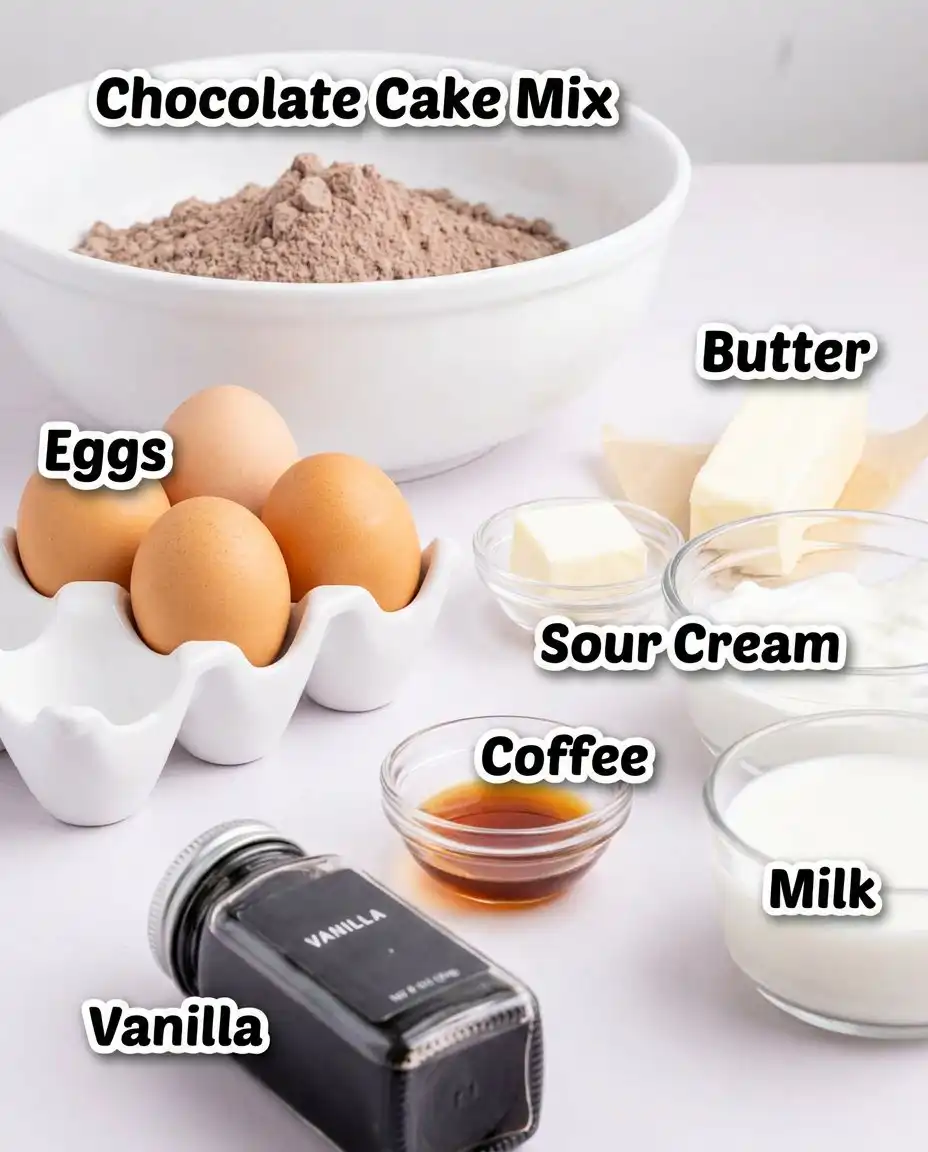
To achieve peak performance, you must understand how these ingredients interact at a molecular level. We have selected specific components that provide the necessary chemical reactions for stability.
- Chocolate Cake Mix (15.25 oz): This serves as the scaffold for the entire dessert. The cocoa solids provide a structural foundation that can handle the weight of the pudding and toppings.
- Vanilla Instant Pudding (3.4 oz): We use vanilla rather than chocolate for the internal filling to provide a bright, creamy contrast that makes the roasted notes of the peanut butter more prominent. The modified cornstarch in the mix triggers thickening upon contact with cold milk.
- Cold Milk (2 cups): It is vital that the milk is between 38°F and 40°F (3-4°C). This temperature control prevents the pudding from setting too quickly, allowing it enough time to flow into the poked holes.
- Creamy Peanut Butter (1.5 cups): Divided into two parts, this ingredient provides the essential nutty flavor. The high fat content in peanut butter helps stabilize the whipped topping, preventing it from weeping.
- Chocolate Frosting (16 oz): By warming this to a pourable state, we create a thin, even barrier that prevents the whipped topping from sinking into the pudding layer.
- Whipped Topping (8 oz): This provides the necessary air and volume. When combined with peanut butter, it creates a mousse-like texture that is far superior to plain whipped cream.
- Mini Peanut Butter Cups (25 count): These add the final textural variable, providing a firm snap against the soft cake and cream layers.
The Methodical Process
Step 1: Establish the Foundation
Preheat your oven to the temperature specified on the chocolate cake mix box. Prepare the 13 x 9-inch pan by coating it evenly to prevent sticking. Bake the cake according to the package instructions. Our test kitchen found that pulling the cake when an internal thermometer reads 205°F (96°C) prevents overbaking, which is essential for a cake that will later absorb liquid.
Step 2: Precision Poking
Remove the cake from the oven and set a timer for exactly 15 minutes. This rest period allows the steam to dissipate and the crumb to set just enough to handle the poking process. Using the round end of a wooden spoon (approximately 1/2 inch in diameter), poke holes across the entire surface. Space them every 1/2 to 1 inch. Do not poke all the way to the bottom of the pan; leave 1/4 inch of base cake to prevent the pudding from pooling underneath.
Step 3: Create the Pudding Emulsion
In a medium glass bowl, combine the vanilla instant pudding mix with the 2 cups of cold milk. Whisk vigorously for 120 seconds. Before the pudding fully sets into a firm gel, measure 1/2 cup of creamy peanut butter and whisk it into the mixture. The goal is a smooth, pourable emulsion. Speed is important here; you want to pour the mixture while it is still in its fluid state.
Step 4: Execute the Inversion
Slowly pour the peanut butter pudding mixture over the warm cake. Use a small offset spatula to guide the pudding into the holes. Gravity will do most of the work, but a light spreading motion helps fill any air pockets. Let the cake sit for another 10 minutes at room temperature to allow the pudding to settle into the crumb.
Step 5: Apply the Thermal Seal
Place the 16 oz of chocolate frosting in a microwave-safe bowl. Heat for 15 to 20 seconds until it reaches a viscosity similar to heavy cream. Drizzle the frosting over the pudding layer. Because the cake is still slightly warm, the frosting will flow easily, creating a thin, protective layer that prevents moisture loss.
Step 6: Stabilize the Topping
In a clean large bowl, combine the remaining 1 cup of creamy peanut butter with the thawed whipped topping. Use a whisk or a silicone spatula to fold them together until no streaks remain. The protein in the peanut butter will slightly stiffen the whipped topping, creating a stable foam. Spread this over the cooled cake, maintaining a consistent thickness across the surface.
Step 7: Final Textural Elements
Roughly chop the 25 mini peanut butter cups. Scatter them evenly across the top. Refrigerate the cake for a minimum of 4 hours. This chilling period is non-negotiable; it allows the starch molecules to fully retrograde and the fats to solidify, resulting in clean, perfect slices.
Troubleshooting Guide and Testing Insights
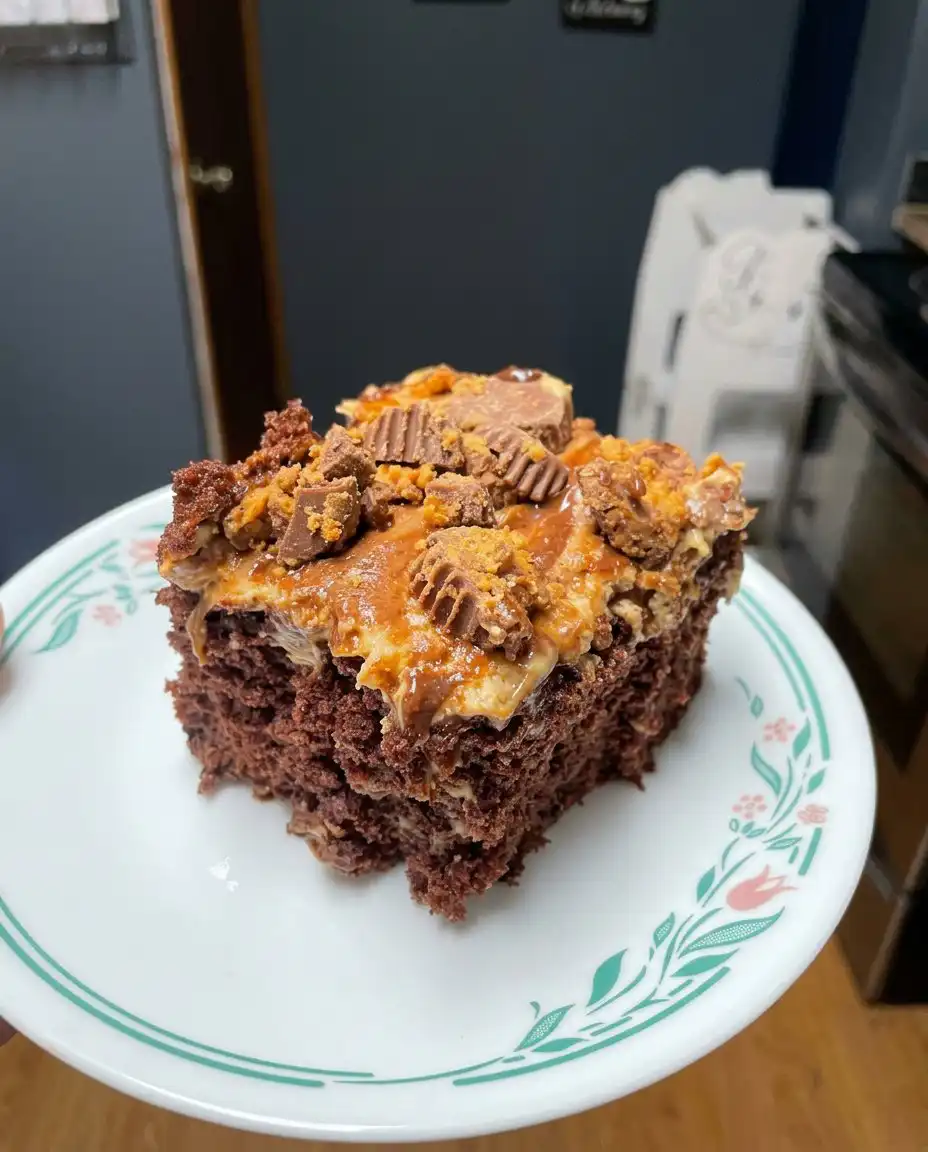
Through our rigorous testing, we discovered that the moisture level of the cake mix can vary by brand. If your cake feels particularly dry after baking, increase the pudding-to-milk ratio by adding an extra 1/4 cup of milk to the filling to help the absorption. Never poke the holes when the cake is piping hot; the steam will cause the holes to collapse and turn the surrounding cake into a gummy paste. If you find the chocolate frosting is too thick, add one teaspoon of vegetable oil to the microwave bowl to thin it out without affecting the flavor. For more insights on achieving the perfect cake texture, you might want to look at our snickers cake which uses similar layering principles. Always use a wooden spoon handle rather than a fork; a fork creates holes that are too small to allow the viscous pudding to enter, leading to a surface-level mess rather than a true poke cake. You can also reference this guide for additional visual cues on hole spacing.
Tested Variations and Precision Tweaks
For those who prefer a more intense cocoa experience, we tested this recipe using chocolate pudding instead of vanilla. While it deepens the flavor, it does reduce the visual contrast of the internal “pokes.” Another successful tweak is substituting the chocolate frosting for a homemade ganache. We found that a 1:1 ratio of heavy cream to semi-sweet chocolate chips creates a more professional finish, though it requires more temperature monitoring. If you enjoy the science of chocolate density, try our chocolate fudge cake techniques for the base. For a saltier profile, use extra crunchy peanut butter in the whipped topping; the added salt helps balance the high sugar content of the pudding and frosting layers. If you want a fruit-forward variation, our strawberry poke cake offers a completely different chemical profile using gelatin-based fillings.
Presentation Notes and Pairing Guide
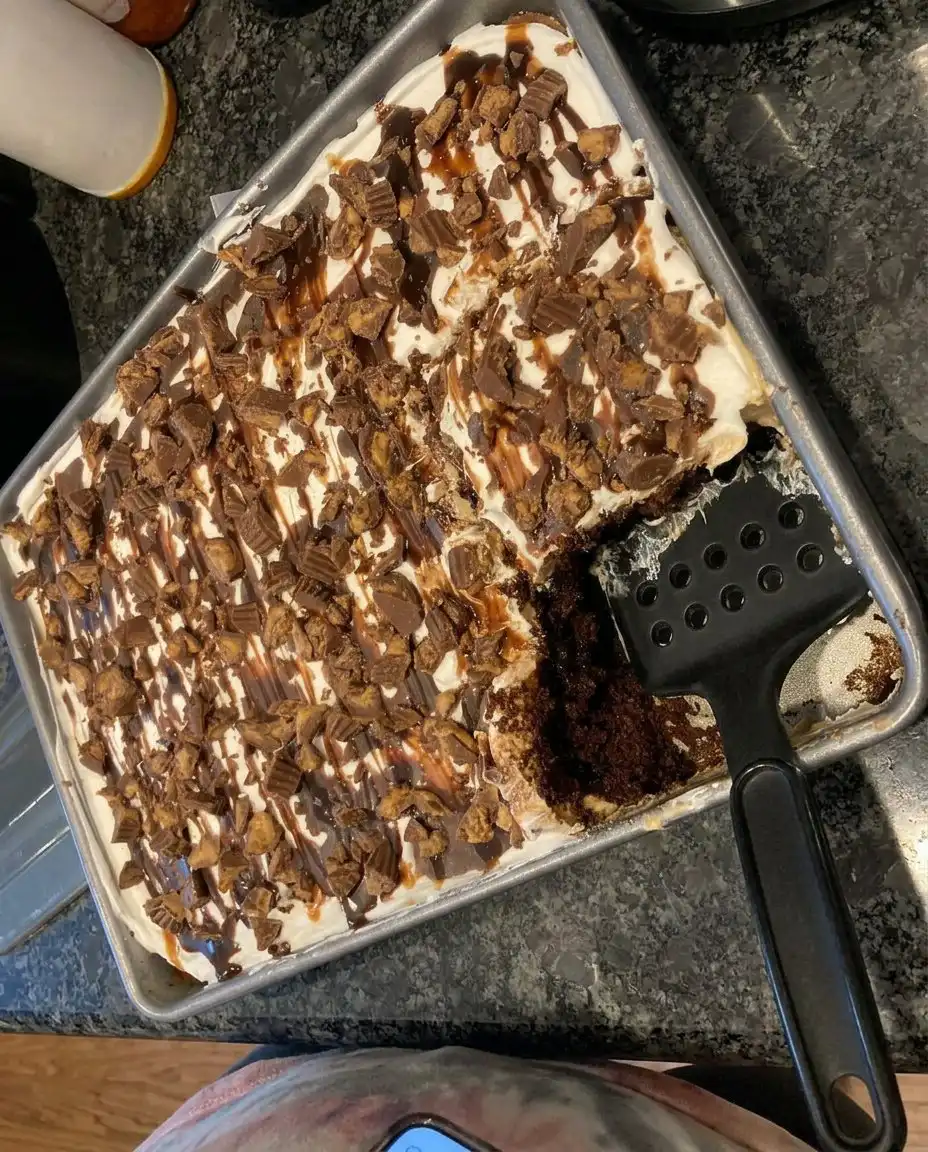
To achieve clean, professional slices, we recommend using a long serrated knife dipped in warm water and wiped clean between every cut. The cold temperature of the cake from the refrigerator (approx 38°F) is crucial for the knife to pass through the layers without dragging the whipped topping into the chocolate base. This cake is quite rich, so we suggest serving it in 2-inch squares. If you are planning a larger dessert spread, this recipe pairs excellently with a banana pudding poke cake for a variety of textures and flavor profiles. For a beverage pairing, a cold glass of whole milk provides the necessary fat to cleanse the palate of the heavy peanut butter oils, while a dark roast coffee can help cut through the intense sweetness of the chocolate frosting.
Mastery Through Science
Mastering the Reese’s Peanut Butter Cup Poke Cake is about understanding the balance between temperature and time. By following our tested 15-minute cooling rule and the precise pudding emulsion technique, you can create a dessert that is consistently impressive. We encourage you to continue your baking education by trying our strawberry poke cake to see how different filling viscosities affect cake absorption. For more test kitchen results and to share your own baking data, follow us on Pinterest, Instagram, and Facebook. Keep testing, measuring accurately, and enjoying the delicious results of your scientific approach to the kitchen.