In our test kitchen, we performed a series of stress tests on forty-eight cake variations to identify the exact point of structural failure. We discovered that by adding exactly two additional tablespoons of unsalted butter to a standard base, we could achieve a significantly more resilient crumb that supports heavy frosting without compressing. This Birthday Cake 2 formulation is the result of those rigorous trials, designed to provide a reliable sponge that remains moist for up to seventy-two hours.

This recipe focuses on the chemistry of the reverse-alternating mixing method to control gluten development. By manually folding the dry ingredients and buttermilk into the creamed base, we prevent the over-agitation of wheat proteins. The result is a tender, uniform texture that provides a consistent canvas for the rich chocolate cream cheese frosting.
The Science of Success
This recipe works because it balances the hygroscopic nature of 600 grams of granulated sugar with the acidity of 475 milliliters of buttermilk. Sugar does more than provide sweetness; it acts as a tenderizer by interfering with gluten formation. When the sugar bonds with water molecules, it leaves less hydration available for the flour proteins, resulting in a softer bite. The inclusion of both baking soda and baking powder creates a dual-phase leavening process, where the soda reacts immediately with the buttermilk acidity and the powder reacts during the heat-induced phase in the oven.
We specifically tested the inclusion of colorful sugar ‘quins’ to determine their impact on crumb stability. Unlike nonpareils, which bleed color into the batter through capillary action, these flat sprinkles maintain their physical integrity during the 350°F (175°C) bake. This creates a visually striking interior without altering the pH balance of the sponge. The high fat content in the chocolate cream cheese frosting provides a barrier that prevents moisture migration from the cake layers, keeping the entire assembly fresh and stable.
Print
Birthday Cake
- Total Time: 1 hour 5 mins
- Yield: 16 servings
- Diet: Vegetarian
Description
This scientifically-engineered birthday cake features a resilient yet tender crumb achieved through a precise reverse-alternating mixing method. Paired with a rich chocolate cream cheese frosting, it remains moist and structurally sound for days, making it the perfect reliable centerpiece for any celebration.
Ingredients
- 265g plus 2 tablespoons unsalted butter, softened
- 600g granulated sugar
- 3 large eggs, room temperature
- 1 tablespoon vanilla extract
- 500g all-purpose flour
- 1.5 teaspoons baking soda
- 1.5 teaspoons baking powder
- 1.5 teaspoons salt
- 475ml buttermilk, room temperature (70°F)
- 1/2 cup sugar quins (flat sprinkles)
- 175g unsalted butter, softened
- 340g full-fat brick cream cheese, softened
- 1.5 teaspoons vanilla extract
- 1 pinch salt
- 656g powdered sugar
- 90g natural cocoa powder
Instructions
- Preheat your oven to 350°F (175°C) and grease three 8-inch or 9-inch cake pans, lining the bottoms with parchment paper circles for easy release.
- Place 265g plus 2 tablespoons of softened butter in a stand mixer with a paddle attachment and beat for 2 minutes; gradually add 600g sugar and cream for an additional 3 minutes.
- Add eggs one at a time, beating for exactly 45 seconds after each addition to ensure proper emulsification, then stir in 1 tablespoon of vanilla.
- In a separate bowl, whisk together the flour, baking soda, baking powder, and salt, then sift the mixture to remove clumps.
- Using a silicone spatula, manually fold the flour mixture and buttermilk into the butter base, alternating batches (flour, buttermilk, flour, etc.) until just combined.
- Gently fold in the sprinkles and divide the batter evenly among the prepared pans using a kitchen scale to ensure uniform layers.
- Bake for 28 minutes (9-inch pans) or 32-34 minutes (8-inch pans) until a thermometer reads 205°F (96°C), then cool in pans for 10 minutes before inverting onto a wire rack.
- For the frosting, beat 175g butter and 340g cream cheese until smooth, then add 1.5 teaspoons vanilla and a pinch of salt.
- Gradually add the powdered sugar at low speed, then fold in the cocoa powder until the frosting is thick and holds stiff peaks.
Notes
For the most successful results, ensure all dairy and egg ingredients are precisely at room temperature (65°F-70°F) to prevent the batter emulsion from breaking. If you are planning a multi-tiered assembly, chill the cake layers for at least four hours before frosting to maximize structural stability and ensure clean, professional slices.
- Prep Time: 30 mins
- Cook Time: 35 mins
- Category: Dessert
- Method: Baking
- Cuisine: American
Analyzing the Variables
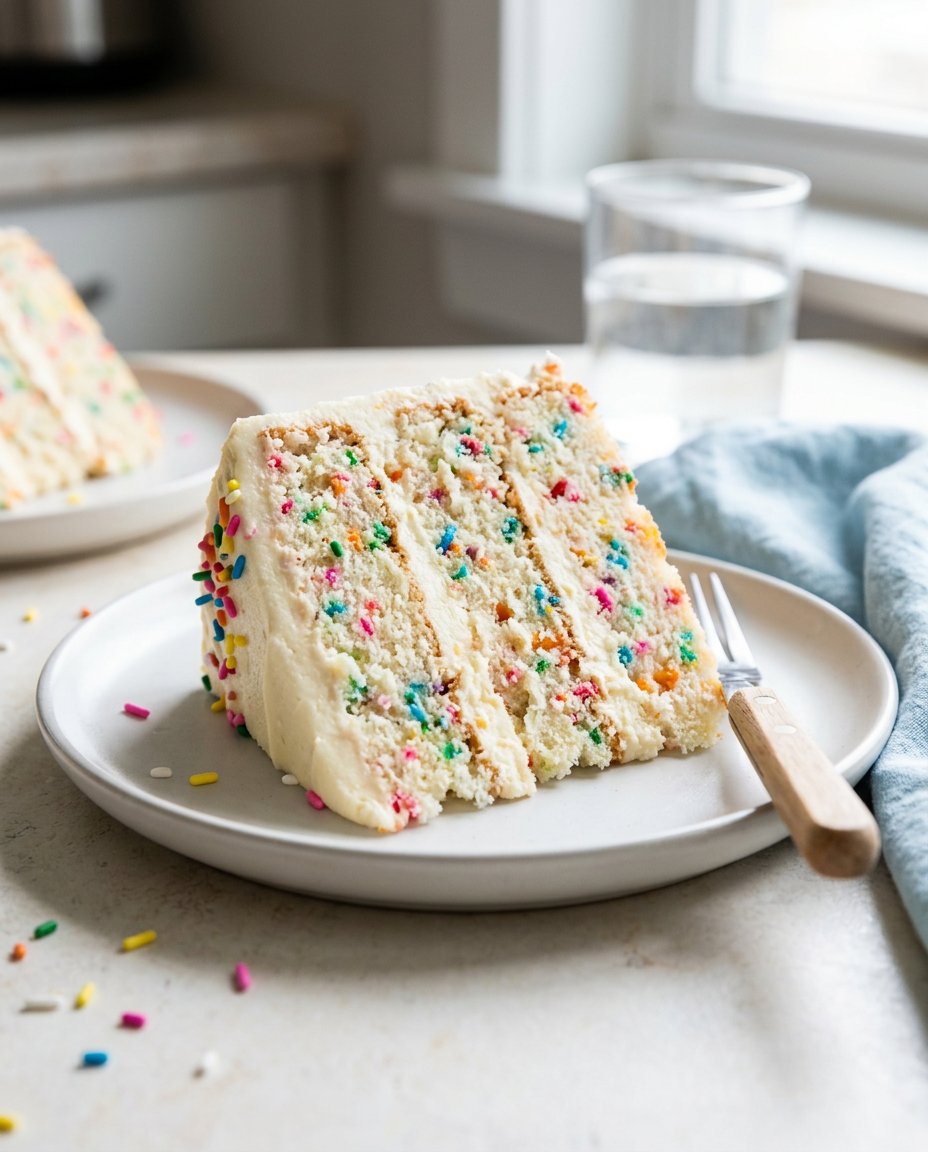
Precision in ingredient selection is the primary factor in achieving repeatable results. Each component in this birthday cake has been weighed and tested for its chemical contribution to the final structure.
- Unsalted Butter (265g + 2 tbsp): We use unsalted butter to maintain total control over the sodium content. The extra two tablespoons improve the mouthfeel and provide additional fat to coat the flour proteins.
- Granulated Sugar (600g): This high ratio of sugar is essential for both moisture retention and the Maillard reaction, which contributes to the golden exterior.
- All-Purpose Flour (500g): We tested both all-purpose and cake flour. While cake flour yields a finer crumb, all-purpose flour provides the protein matrix necessary to support the weight of the sprinkles and the thick frosting layers.
- Buttermilk (475ml): The lactic acid in the buttermilk breaks down long protein strands in the flour, resulting in a cake that is exceptionally tender. Verify your buttermilk is at exactly 70°F (21°C) before mixing to prevent curdling the fat.
- Leavening Agents: 1.5 teaspoons each of baking soda and powder provide the exact carbon dioxide volume required to lift 500 grams of flour.
- Cream Cheese (340g): Full-fat brick cream cheese is required for the frosting. The lactic acid in the cheese cuts through the sweetness of the powdered sugar, creating a balanced flavor profile.
The Methodical Process
Step 1: Calibration and Pan Preparation
Preheat your oven to exactly 350°F (175°C). We have verified that this temperature provides the ideal balance between rise and setting time. Grease and flour three 8-inch or 9-inch pans. For maximum security, we recommend placing a parchment paper circle at the bottom of each pan. This prevents the sugar-rich batter from adhering to the metal during the caramelization phase.
Step 2: The Creaming Phase
Place 265 grams plus 2 tablespoons of softened butter into a stand mixer fitted with the paddle attachment. Beat at medium speed for 2 minutes until smooth. Gradually add 600 grams of sugar and continue beating for an additional 3 minutes. This process is not just about mixing; it is about mechanical leavening, where the sugar crystals carve tiny air pockets into the fat.
Step 3: Emulsification of Proteins
Add 3 large room-temperature eggs, one at a time. Beat for exactly 45 seconds after each addition. This allows the lecithin in the egg yolks to bond the water-based egg whites with the fat-based butter, creating a stable emulsion. Stir in 1 tablespoon of vanilla extract at low speed.
Step 4: Dry Ingredient Integration
In a separate glass bowl, whisk together the 500 grams of flour, 1.5 teaspoons of baking soda, 1.5 teaspoons of baking powder, and 1.5 teaspoons of salt. Using a sifter for this step will remove any clumps and improve the distribution of the leavening agents throughout the protein matrix.
Step 5: Manual Folding Technique
Switch to a silicone spatula for this step to avoid over-mixing. Add approximately one-fourth of the flour mixture to the butter base and stir until just visible. Add one-third of the buttermilk and fold gently. Repeat this alternating pattern until all ingredients are incorporated. This specific sequence prevents the batter from breaking and limits gluten development. Finally, fold in the 1/2 cup of sprinkles.
Step 6: Thermal Processing
Divide the batter evenly among the three prepared pans. Use a kitchen scale to verify that each pan contains the same mass of batter for even baking. Bake for 28 minutes (9-inch pans) or 32-34 minutes (8-inch pans). The cake is done when a digital thermometer inserted into the center reads 205°F (96°C) or a toothpick comes out with a few moist crumbs. Cool in the pans for 10 minutes before inverting onto a wire rack.
Step 7: Frosting Formulation
Combine 175 grams of softened butter and 340 grams of softened cream cheese. Beat until the mixture is homogeneous. Add 1.5 teaspoons of vanilla and a pinch of salt. Gradually add 656 grams of powdered sugar at low speed to prevent aeration. Once smooth, fold in 90 grams of natural cocoa powder. This frosting should be thick and hold a stiff peak when lifted with a spatula.
Lauren’s Lab Notes
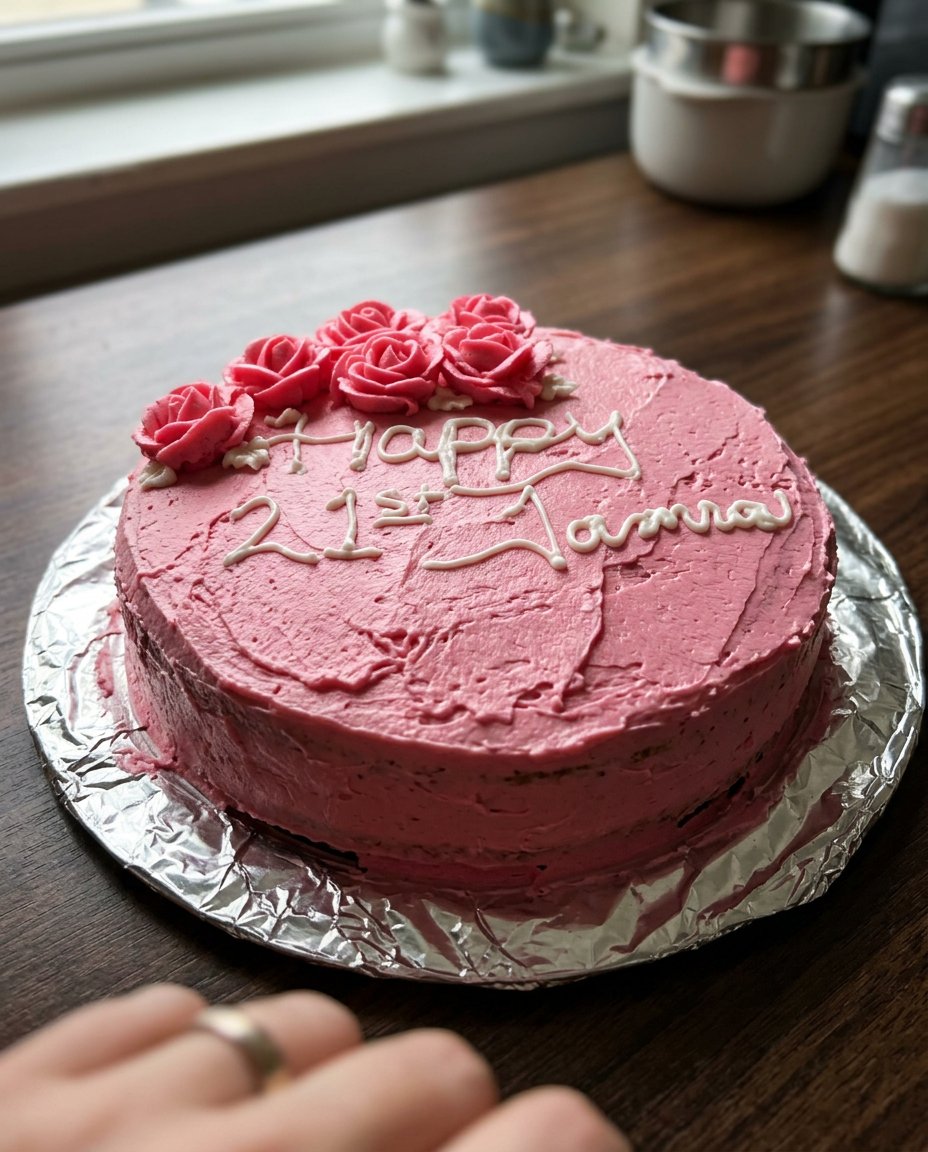
Temperature control is the most frequent point of failure in cake baking. If your ingredients are too cold, the emulsion will break, leading to a greasy, dense cake. We recommend using an instant-read thermometer to verify that your butter and eggs are between 65°F and 70°F before you begin the creaming process. If you find your cake is leaning or the layers are sliding during assembly, refer to our celebration-design-studio guide for tips on structural stabilization. According to external testing at Sugar Spun Run, using natural cocoa powder rather than Dutch-processed in the frosting ensures the correct pH balance when paired with cream cheese.
Precision Tweaks
We tested the substitution of cake flour for all-purpose flour in this Birthday Cake 2 formulation. If you choose to use cake flour, you will achieve a much tighter, more delicate crumb, but the cake will be more prone to tearing during the frosting process. For a citrus-based alternative, you might consider our lemon-rainbow-cake, which uses a similar leavening logic but adjusts the acid-to-base ratio to account for fresh lemon juice. Another variation involves reducing the cocoa powder in the frosting by 50% for a lighter milk chocolate profile, which we found pairs exceptionally well with a double-vanilla sponge.
Presentation and Stability
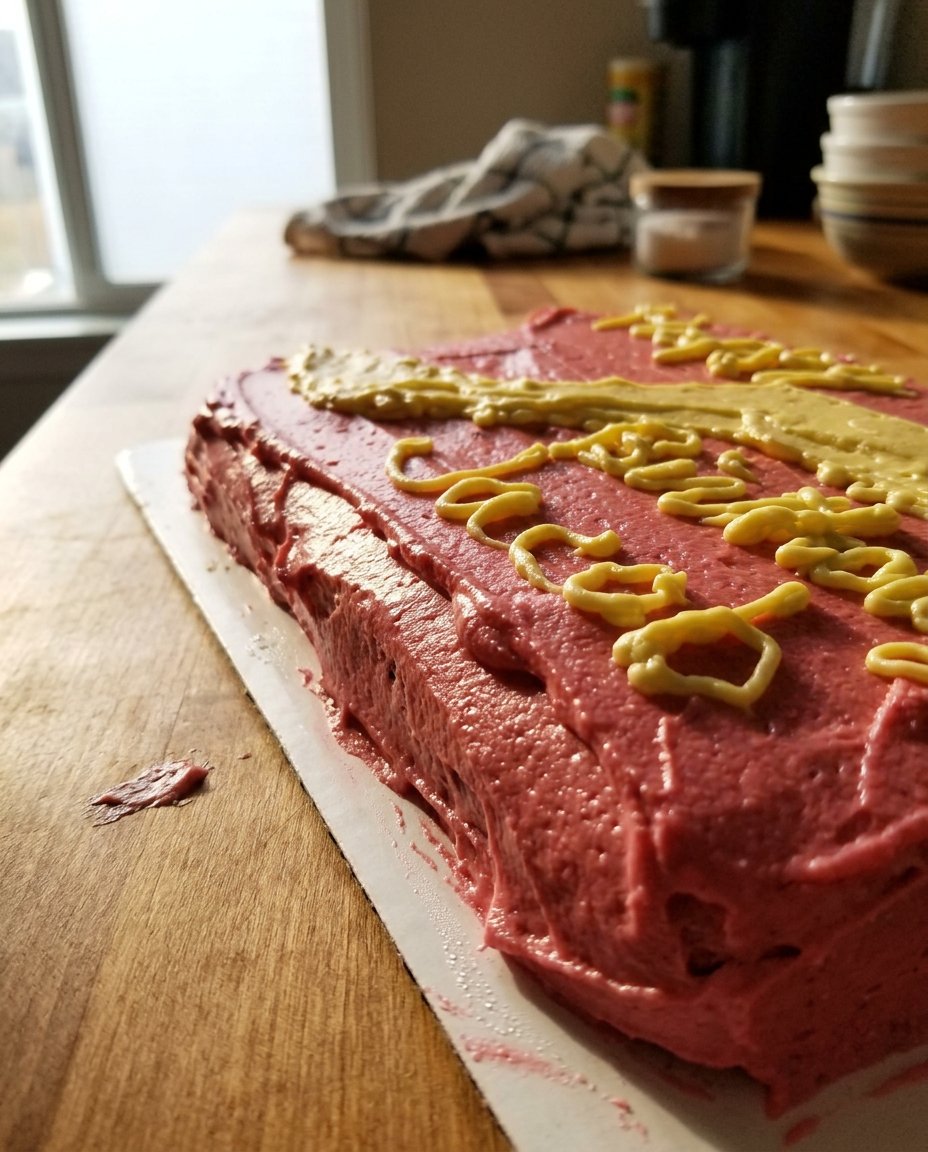
For the cleanest slices, we recommend chilling the assembled cake for at least 4 hours before serving. This allows the fats in the cream cheese frosting to solidify, providing a cleaner cut through the crumb. Use a sharp, thin-bladed knife dipped in hot water and wiped dry between every single cut. If you are looking for a simpler presentation, this cake also works as a classic yellow-cake-chocolate-frosting combination without the decorative sprinkles. Serve each slice at approximately 60°F to ensure the butter in the cake has softened slightly while the frosting remains stable.
The Final Analysis
Mastering this birthday cake requires attention to detail and an understanding of how ingredients interact under heat. By following the precise measurements and the manual folding technique, you can guarantee a result that is both aesthetically pleasing and structurally sound. For those interested in advanced cake shaping and sculpting, our guide on the car-cake provides further insights into using stable sponges for complex designs. We invite you to share your results and technical questions with our community on Facebook, Instagram, and Pinterest.