In the Cake Peak test kitchen, we view cake decorating not merely as an artistic endeavor, but as structural engineering. We tested countless frosting ratios to find the precise balance between pliability for piping and stability for stacking, determining that a high-ratio shortening or butter blend often yields the sharpest edges. By controlling temperature variables and understanding the physics of your ingredients, you can turn a crumbling disaster into a gallery-worthy centerpiece.

This method utilizes a modified WASC (White Almond Sour Cream) base, which we rely on for its tight crumb structure and ability to hold heavy fondant or intricate piping without buckling. Paired with our specific “Easy Buttercream”—a hybrid method using pasteurized egg whites for stability without the fuss of boiling syrup—this recipe offers the consistent, repeatable results necessary for professional-grade design.
The Science of Structural Success
Why does this specific combination work so well for cake decorating? It comes down to density and emulsification. The WASC cake base adds sour cream and flour to a standard mix, increasing the fat and gluten content just enough to create a sturdy lattice that supports heavy decorations. Meanwhile, the buttercream uses pasteurized egg whites to dissolve powdered sugar more effectively than butter alone, resulting in a microscopic crystalline structure that is silky smooth yet sets up firm in the refrigerator.
Print
Cake Decorating
- Total Time: 1 hour 15 mins
- Yield: 12 servings
- Diet: Vegetarian
Description
Master the art of professional cake design with this structurally sound WASC base and silky hybrid buttercream. This method ensures sharp edges and stable layers for intricate piping and stacking.
Ingredients
- 1 box high-quality white cake mix
- 1 cup all-purpose flour
- 1 cup granulated sugar
- 1/4 tsp salt
- 1 cup sour cream, room temperature
- 1/2 cup unsalted butter, melted
- 1 cup water
- 4 large pasteurized egg whites
- 1 tsp almond extract
- 2 lbs powdered sugar
- 1.5 cups unsalted butter, softened to 65°F
- 1/2 cup pasteurized egg whites
Instructions
- Preheat your oven to 350°F (175°C) and verify with an oven thermometer.
- In a large mixer bowl, combine cake mix, flour, sugar, salt, sour cream, melted butter, water, 4 egg whites, and almond extract; mix on medium speed for exactly 2 minutes.
- Divide batter evenly among prepared pans and bake for 30–35 minutes until the internal temperature reaches 205°F–210°F.
- Cool layers completely on a wire rack to prevent the frosting from melting.
- For the buttercream, mix 1/2 cup pasteurized egg whites and powdered sugar on medium speed for 2 minutes until opaque.
- Switch to a whisk attachment and add softened butter one piece at a time on low speed, then whip on high until voluminous and glossy.
- Apply a thin crumb coat of buttercream to the chilled cake, then refrigerate for 20 minutes before applying the final layer of frosting.
Notes
To ensure the most level layers, use bake-even strips around your pans to prevent doming. When working with the hybrid buttercream, if the mixture appears too soft, place the entire bowl in the fridge for 10 minutes before continuing to whip.
- Prep Time: 20 mins
- Cook Time: 35 mins
- Category: Dessert
- Method: Baking
- Cuisine: American
Precision Ingredients
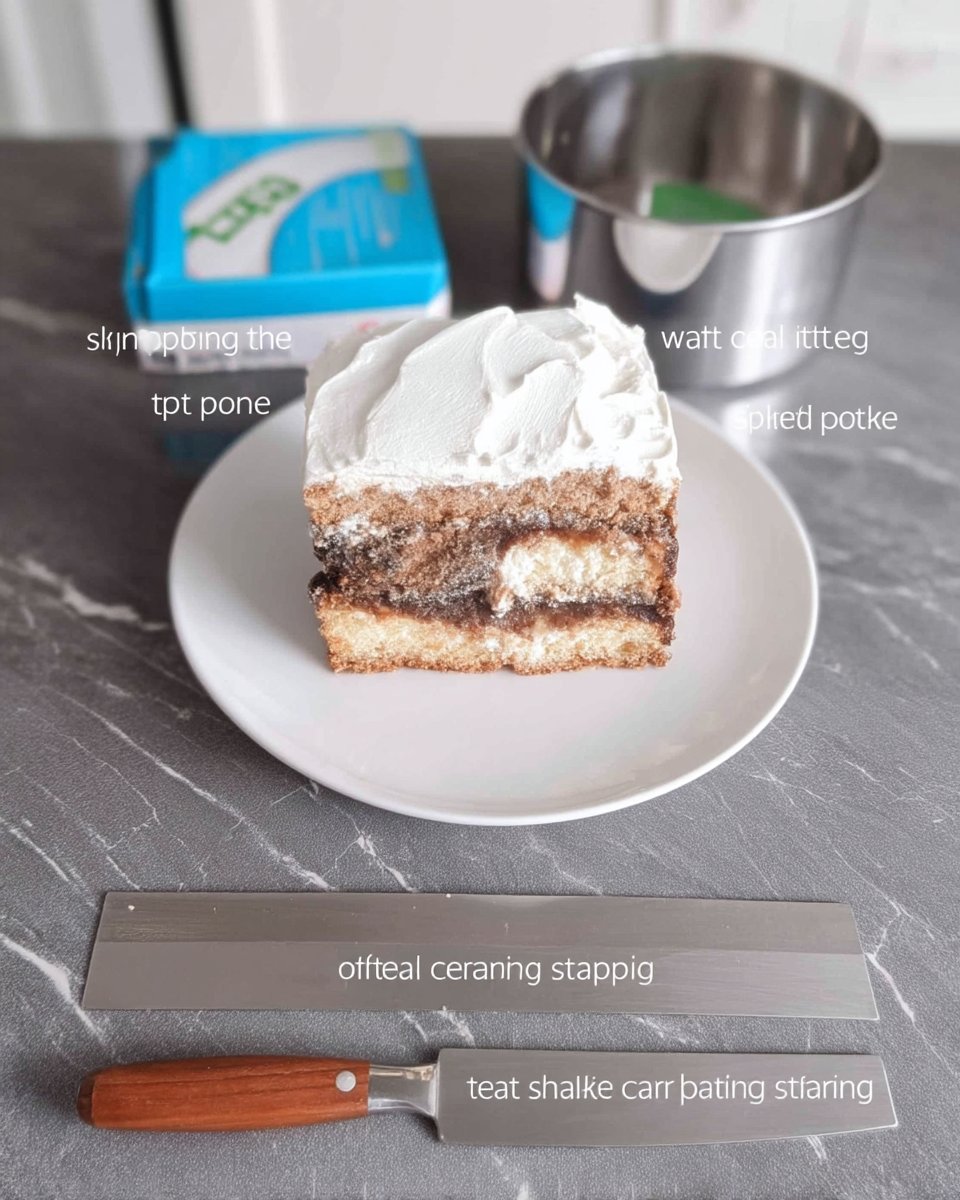
To achieve clean lines and structural integrity, every ingredient plays a specific chemical role.
- Pasteurized Egg Whites: Unlike raw whites, these are safe to consume and provide protein structure. They dissolve the sugar (hygroscopy) before fat is introduced, preventing the gritty texture common in American buttercream.
- Sour Cream (Room Temperature): The acidity in sour cream tenderizes the gluten strands in the WASC cake, while the fat content ensures a moist crumb that doesn’t dry out during the decorating process.
- Unsalted Butter: We use unsalted butter to control the sodium level precisely. It must be softened to exactly 65°F–68°F. If it is too cold, it won’t emulsify; too warm, and the air bubbles will collapse, ruining your piping definition.
- High-Quality Cake Mix: While we often bake from scratch, a commercial mix provides industrial emulsifiers that are difficult to replicate at home, guaranteeing a level cake top essential for stacking.
- Almond Extract: This adds a complex aromatic profile that cuts through the sweetness of the sugar.
Methodical Assembly
Step 1: The WASC Base Formulation
Preheat your oven to 350°F (175°C) exactly. We recommend an oven thermometer to verify accuracy. In a large mixer bowl, combine the cake mix, flour, sugar, salt, sour cream, melted butter, water, egg whites, and almond extract. Mix on medium speed for exactly 2 minutes. This timing is crucial to develop just enough gluten for structure without making the cake tough.
Step 2: Baking for Density
Divide the batter evenly among your prepared pans. We weigh our pans to guarantee equal layers. Bake at 350°F for 30–35 minutes. The cake is done when the internal temperature registers 205°F–210°F or a toothpick comes out with a few moist crumbs. Cool completely on a wire rack before attempting any decoration; warm cakes will melt the butter in your frosting immediately.
Step 3: The Hybrid Buttercream Method
In a clean mixer bowl, combine the pasteurized egg whites and powdered sugar. Mix on medium speed for about 2 minutes until the sugar is fully dissolved and the mixture is opaque. This creates a stable protein-sugar matrix.
Step 4: Emulsifying the Fat
Switch to the whisk attachment. With the mixer on low, add the softened butter one piece at a time. Once all butter is incorporated, increase speed to high and whip until the mixture is white, voluminous, and glossy. This incorporates air bubbles that lighten the texture. If adding flavor or color, fold it in now.
Step 5: The Crumb Coat
Apply a thin layer of buttercream to the sides and top of the chilled cake to trap any loose crumbs. Refrigerate this “crumb coat” for 20 minutes until firm. This step creates a sealed surface, allowing your final layer of frosting to be perfectly smooth and free of debris.
Lauren’s Lab Notes
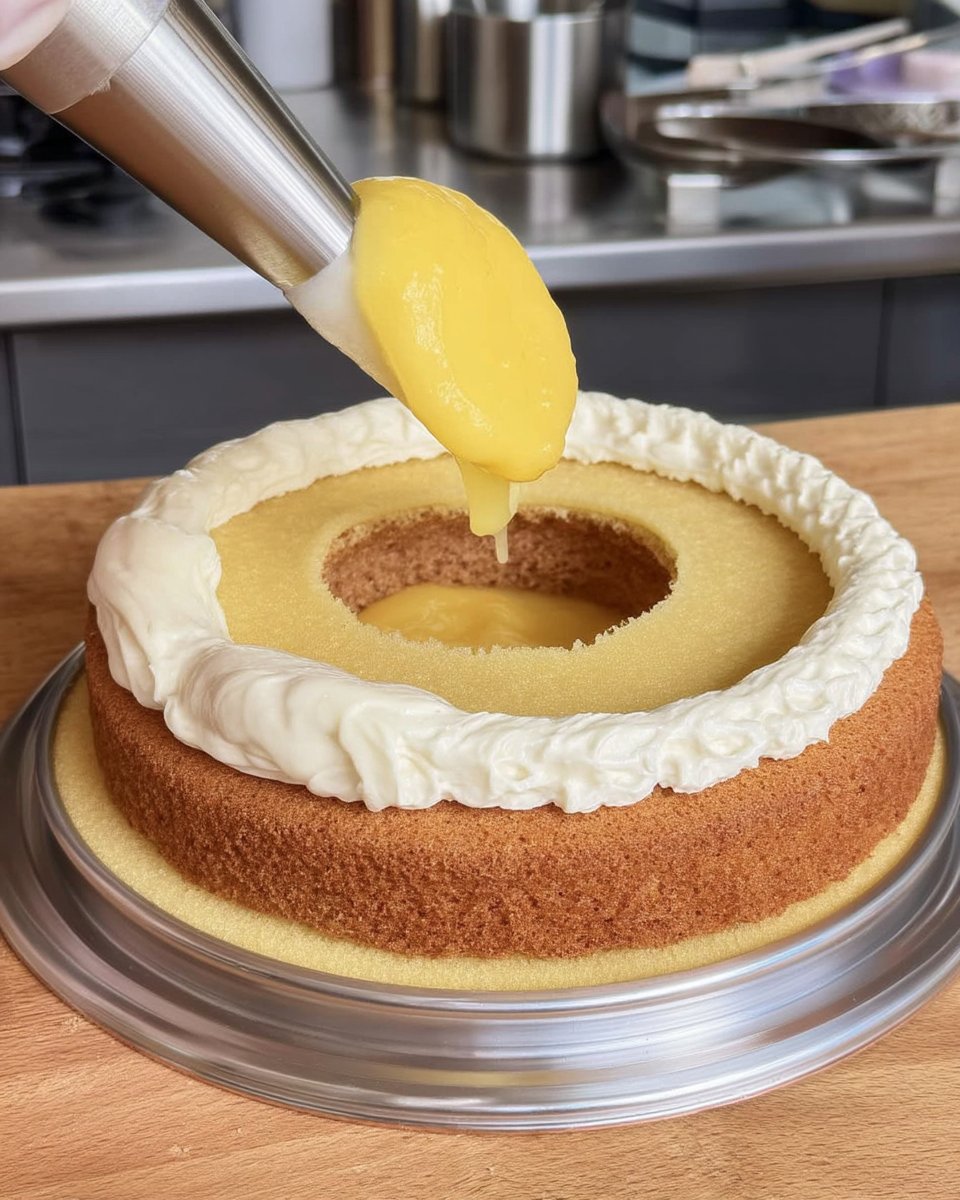
- Temperature is King: If your buttercream looks curdled, the butter was likely too cold. Remove ½ cup of the mixture, melt it in the microwave (about 15 seconds), and pour it back into the whipping mixer. This introduces warm liquid fat that helps re-emulsify the broken suspension.
- Banishing Air Bubbles: For ultra-smooth sides, switch to a paddle attachment for the final 2 minutes of mixing on the lowest speed. This knocks out large air pockets that mar the finish.
- Design Planning: Before you start piping, sketch your design. If you need inspiration for layout and spacing, our guide on the celebration design studio breaks down spacing geometry.
- Levelling: Always trim the domes off your cake layers using a serrated knife or leveler. Flat layers are the only way to achieve a straight, perpendicular side profile.
Tested Variations
- Chocolate Stability: To make this a chocolate frosting, we tested adding 6oz of melted, cooled dark chocolate. It solidifies slightly harder than the vanilla version, making it excellent for warm weather events.
- Vintage Piping: If you are attempting intricate Lambeth-style piping, increase the powdered sugar by ½ cup for stiffer peaks. This holds the definition required for a vintage cake aesthetic.
- Berry Infusion: When using the optional strawberry puree, reduce the liquid egg whites by 1 tablespoon to maintain the correct liquid-to-solid ratio. This prevents the emulsion from breaking.
Presentation Physics
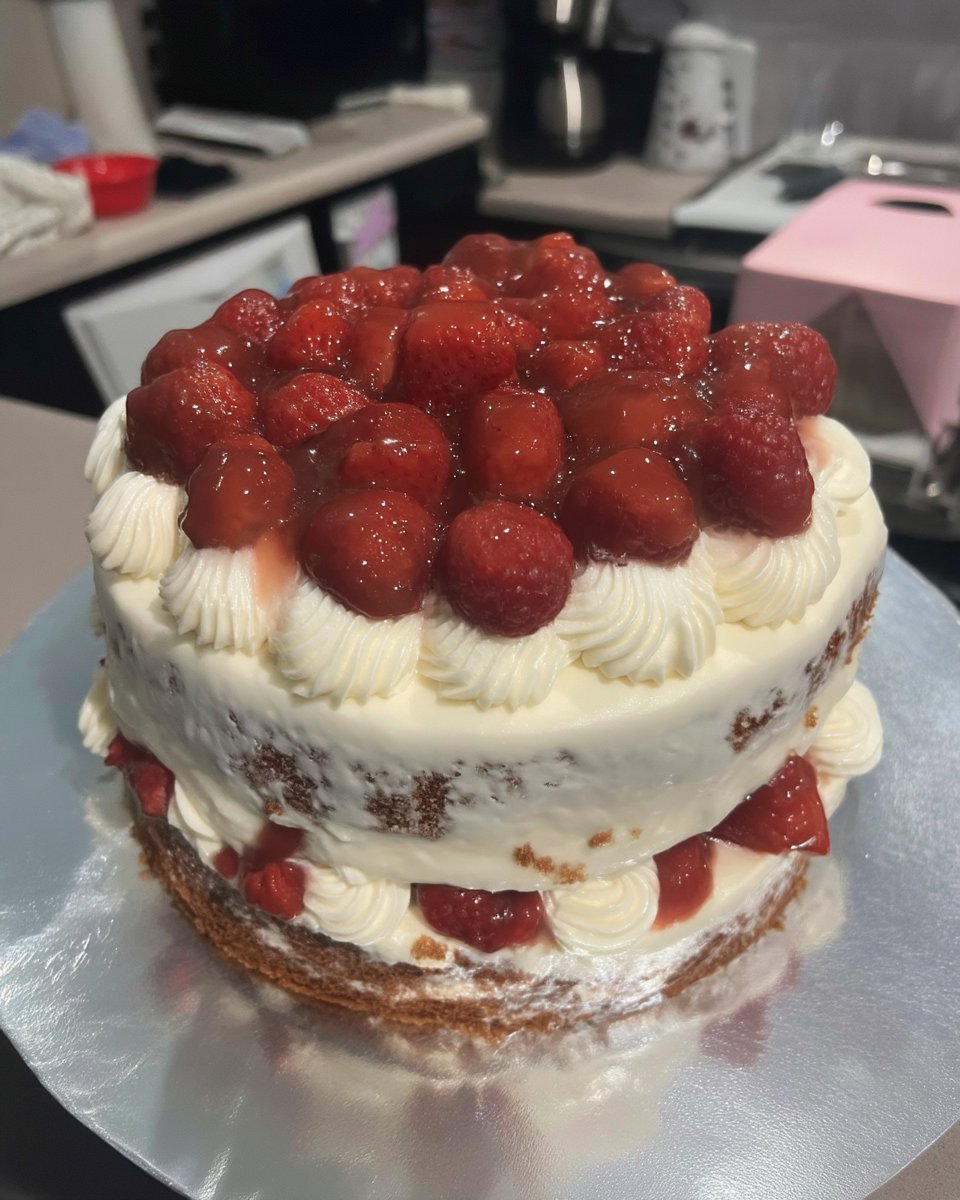
Buttercream is an emulsion of fat and sugar. When cold, butter is hard, meaning your cake will taste solid and waxy directly from the fridge. For the correct mouthfeel and flavor release, this cake must be served at room temperature (around 70°F). Remove it from the refrigerator at least 2–3 hours before serving.
For a visually stunning cut, use a long, hot knife (dipped in hot water and wiped dry) to slice through the cold buttercream and cake layers cleanly. This preserves the definition of your layers. If you are serving this for a romantic occasion, consider shaping the layers themselves, as seen in our heart cake tutorial.
Mastery Through Science
Achieving a bakery-quality finish on your cake isn’t about luck; it’s about controlling your variables. From the precise protein structure of the WASC base to the temperature-sensitive emulsion of the buttercream, understanding the “why” allows you to troubleshoot and perfect your technique. Once you have mastered this stability, you can tackle more complex projects like a sculpted car cake.
For more visual guides on technique, we recommend checking out resources like Preppy Kitchen alongside our own tutorials.
Share your scientific triumphs with us! Tag us on Instagram, Facebook, or Pinterest so we can see your precision in action.