In the Cake Peak test kitchen, we spent significant time investigating why certain dump cakes result in dry, unhydrated flour patches on the surface. Our trials revealed that the specific order of moisture distribution is the primary variable for success. By placing the crushed pineapple—juice and all—at the base, we create a consistent steam environment that hydrates the starches from the bottom up.

This Cherry Dump Cake is a fascinating study in heat transfer and ingredient interaction. It requires no traditional mixing, relying instead on the melting point of butter and the boiling point of fruit juices to form a cohesive, cobbler-like structure. When prepared with precision, the result is a reliable dessert with a complex texture that balances tart fruit and crunchy pecans.
The Science of Success in Every Bite
This recipe works because it utilizes the principles of steam hydration and fat saturation without the mechanical interference of stirring. We tested this method against stirred versions, and the traditional ‘dump’ technique produced a far superior crumb that remains light rather than gummy. The absence of mixing prevents over-developing the gluten in the cake mix, which is a common failure in quick desserts.
Another reason this recipe is a favorite in our lab is the Maillard reaction that occurs on the surface. The pecans and the sugars in the cake mix undergo browning at 350°F (177°C), creating a nutty, toasted flavor profile that contrasts perfectly with the acidic cherry filling. It is a breakthrough in efficiency for the detail-oriented baker who values repeatable results without unnecessary complexity.
Print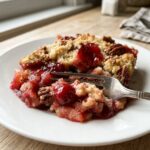
Cherry Dump Cake
- Total Time: 1 hour 10 mins
- Yield: 12 servings
- Diet: Vegetarian
Description
Experience a perfect blend of tart cherries and sweet pineapple with this scientifically tested dump cake that guarantees a moist crumb every time. The addition of toasted pecans and thin butter pats creates a crunchy, golden topping that contrasts beautifully with the warm fruit filling.
Ingredients
- 16 ounces crushed pineapple, undrained
- 20 ounces cherry pie filling
- 1 package yellow cake mix
- 1/2 cup chopped pecans
- 1/2 cup unsalted butter, sliced into thin pats
Instructions
- Preheat the oven to 350°F (177°C) and grease a 9×13 inch baking pan.
- Empty the crushed pineapple with its juice into the pan and spread into a level layer.
- Pour the cherry pie filling over the pineapple layer, spreading evenly without stirring.
- Sprinkle the dry cake mix over the fruit, covering the entire surface to the edges.
- Distribute the pecans over the cake mix, then place the butter pats in a grid across the top.
- Bake for 1 hour until the surface is deep golden-brown and the fruit is bubbling.
Notes
To ensure the cake mix hydrates properly, avoid stirring the layers as the steam from the fruit needs to rise through the dry ingredients. If you prefer a less sweet version, look for a no sugar added cherry pie filling, which still provides the necessary starch for the recipe to set correctly.
- Prep Time: 10 mins
- Cook Time: 1 hour
- Category: Dessert
- Method: Baking
- Cuisine: American
The Variables: Ingredient Science
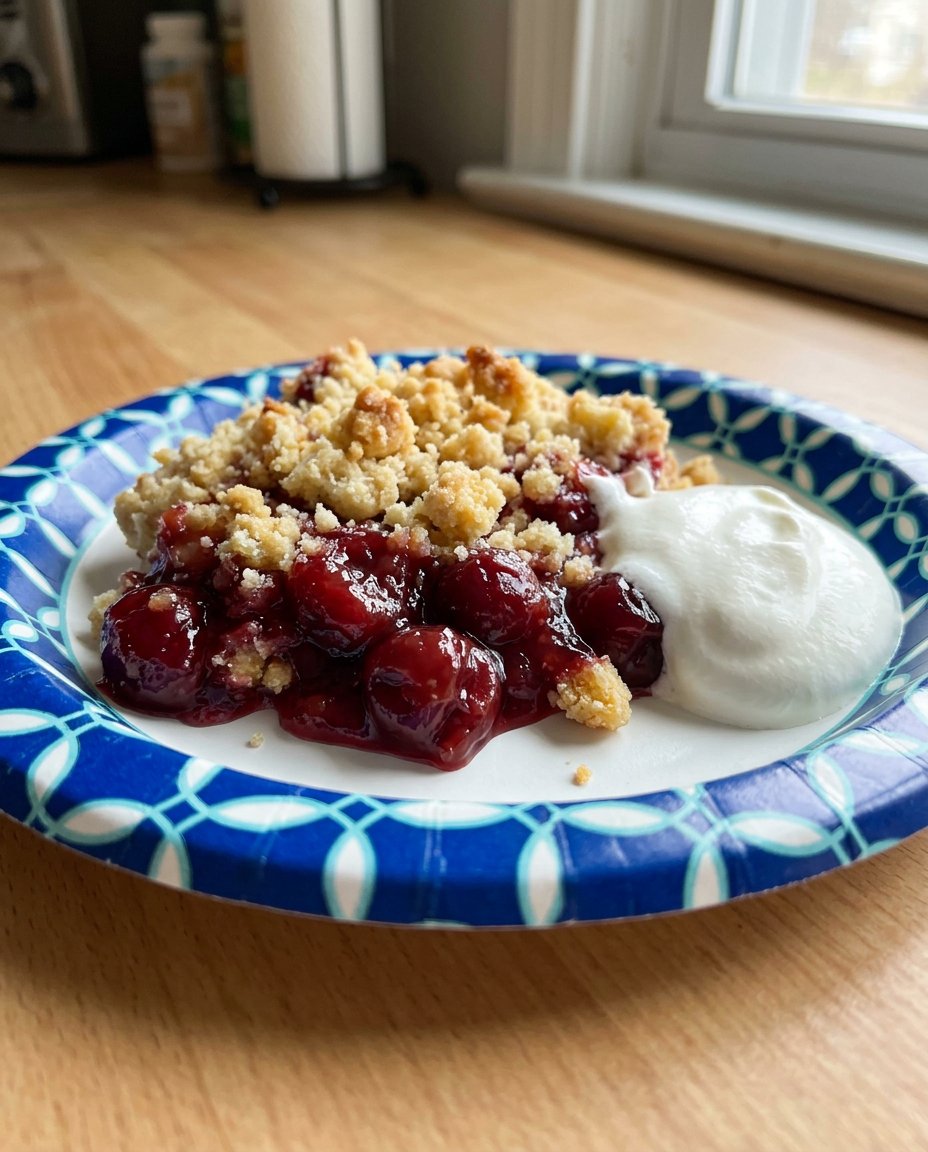
To achieve a perfect result, you must understand the role of each component in this chemical equation. We have verified these specific quantities through multiple test batches.
- Crushed Pineapple (16 ounces): Do not drain this ingredient. The juice is the primary hydrating agent for the dry cake mix. The small surface area of the crushed fruit allows for more even moisture distribution compared to larger tidbits.
- Cherry Pie Filling (20 ounces): This provides the structural body and the primary flavor. The modified food starch used in commercial pie fillings remains stable at high temperatures, preventing the cake from becoming watery.
- Yellow Cake Mix (1 package): This acts as our starch and leavening source. Most standard mixes contain a balance of bleached flour and emulsifiers that react with the fruit juices to create a tender layer.
- Chopped Pecans (1/2 cup): These add necessary lipid content and a structural crunch. Their low moisture content allows them to toast effectively on the top layer.
- Butter (1/2 cup): Use unsalted butter to maintain control over the flavor profile. The butter must be sliced into thin, even squares to cover the surface area, facilitating a uniform melt that saturates the dry mix.
The Method: Step-by-Step Process
Step 1: Pan Preparation
Begin by greasing a standard 9 x 13 inch (23 x 33 cm) baking pan. This step is vital to prevent the sugars in the fruit from caramelizing too deeply and sticking to the sides of the vessel.
Step 2: Establish the Moisture Base
Empty the 16 ounces of crushed pineapple and its accompanying juice into the pan. Use a spatula to spread it into a single, level layer. This layer is the foundation of the steam that will cook the cake mix.
Step 3: Layer the Fruit Body
Pour the 20 ounces of cherry pie filling directly over the pineapple. Distribute it evenly, but do not stir the two fruit layers together. Keeping them distinct helps maintain the vibrant color of the cherries.
Step 4: Apply the Dry Medium
Sprinkle the dry yellow cake mix evenly over the fruit. It is crucial to reach the corners and edges to prevent fruit from bubbling over and burning. Again, do not stir.
Step 5: Add Texture and Fat
Distribute the 1/2 cup of chopped pecans over the cake mix. Finally, slice the 1/2 cup of butter into thin pats and place them across the top. Aim for a grid-like pattern to cover as much of the dry mix as possible.
Step 6: The Thermal Cycle
Bake in a preheated 350°F (177°C) oven for exactly 1 hour. You are looking for a deep golden-brown color on the surface and visible bubbling of the fruit juices around the edges, indicating the center has reached the necessary temperature to set the starches.
Lauren’s Lab Notes and Troubleshooting Guide
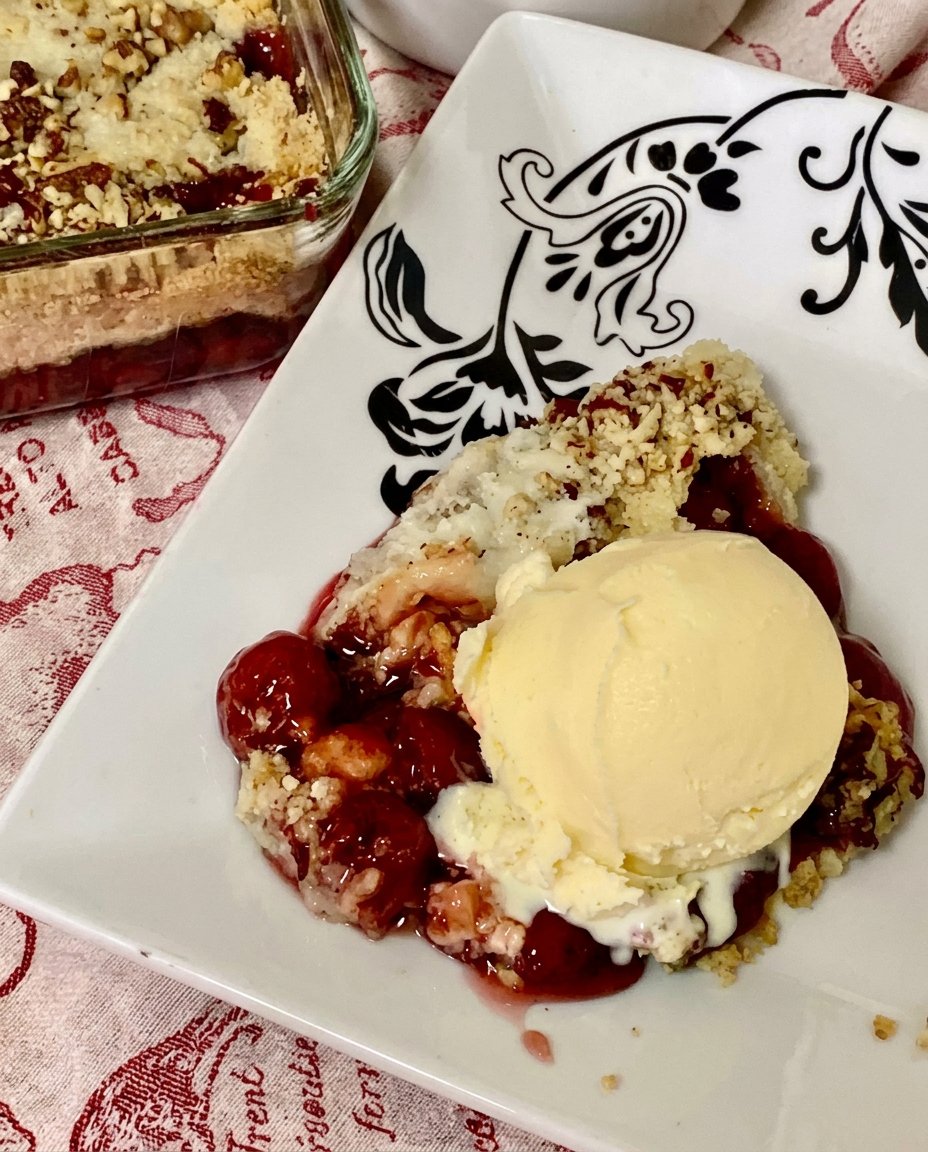
One of the biggest variables in this recipe is the temperature of your butter. While many recipes suggest melting it, our tests show that thin slices of cold butter result in a superior, craggy texture. If you notice dry spots after 45 minutes of baking, you can lightly mist those areas with a small amount of water or additional melted butter to finish the hydration process.
We also recommend using a glass baking dish if you prefer a softer bottom layer, as glass conducts heat more slowly than metal. For those interested in the broader applications of these techniques, our guide on fresh fruit baking explains the interaction between acidity and leavening agents in depth. To verify doneness, an instant-read thermometer should register between 200°F and 210°F in the center of the cake layer.
Tested Precision Tweaks
If you want to experiment with flavor profiles, we have tested several modifications that maintain the structural integrity of the cake. Replacing the yellow cake mix with a chocolate version creates a Black Forest effect that is quite popular. For a detailed look at fruit and chocolate pairings, examine our chocolate fruit cake analysis.
Another successful variation involves replacing the pecans with sliced almonds or walnuts. If you prefer a more spiced profile, use a spice cake mix instead of yellow. You can also look at this chocolate cherry version for a different take on the ingredient ratios. Regardless of the flavor swap, keep the moisture-to-dry-mix ratio constant to avoid a soupy result.
Presentation and Pairing Notes
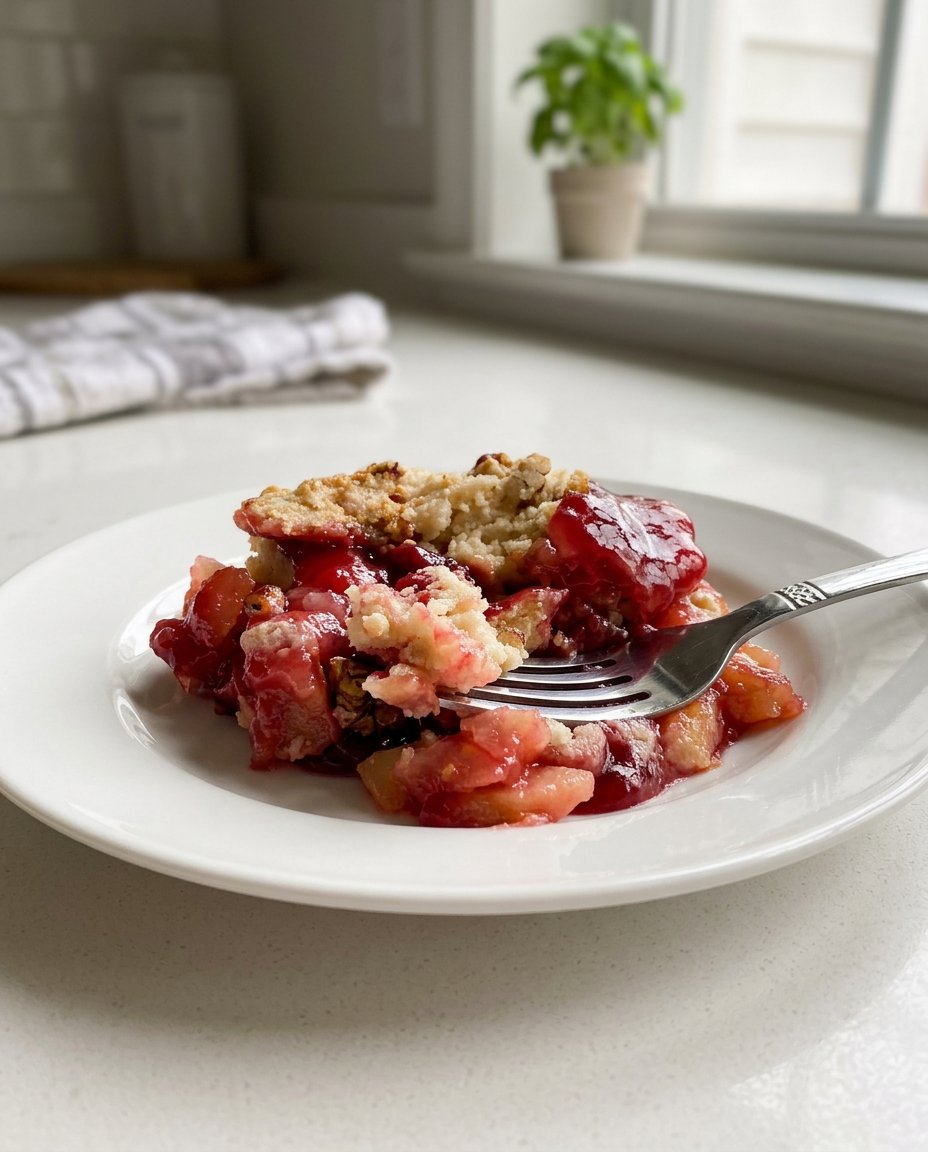
Temperature control is vital when serving this dish. If served too hot, the fruit filling will be runny. We recommend a cooling period of at least 20 minutes to allow the starches to firm up, making the cake easier to portion. This recipe pairs exceptionally well with a high-fat vanilla bean ice cream, which balances the tartness of the cherries.
For a more refined presentation, you can serve individual portions in ramekins. If you enjoy desserts with a similar fruit-forward profile, you might also find our blueberry coffee cake to be a fascinating comparison in terms of crumb density and fruit distribution. Always store leftovers in an airtight container in the refrigerator to prevent the crust from absorbing too much ambient moisture.
The Final Analysis
Mastering the Cherry Dump Cake is about respecting the layers and understanding the thermal process that occurs inside your oven. By following these precise steps, you can achieve a consistent result that bridges the gap between a cobbler and a cake. For those looking to continue their education in fruit-based desserts, I highly recommend our raspberry white chocolate cake for a more advanced look at flavor balancing.
If you have found success with this methodical approach, please share your results with us. You can find more test kitchen insights on Pinterest, Instagram, and Facebook. Keep testing, and remember that baking success is always a result of precision and observation.