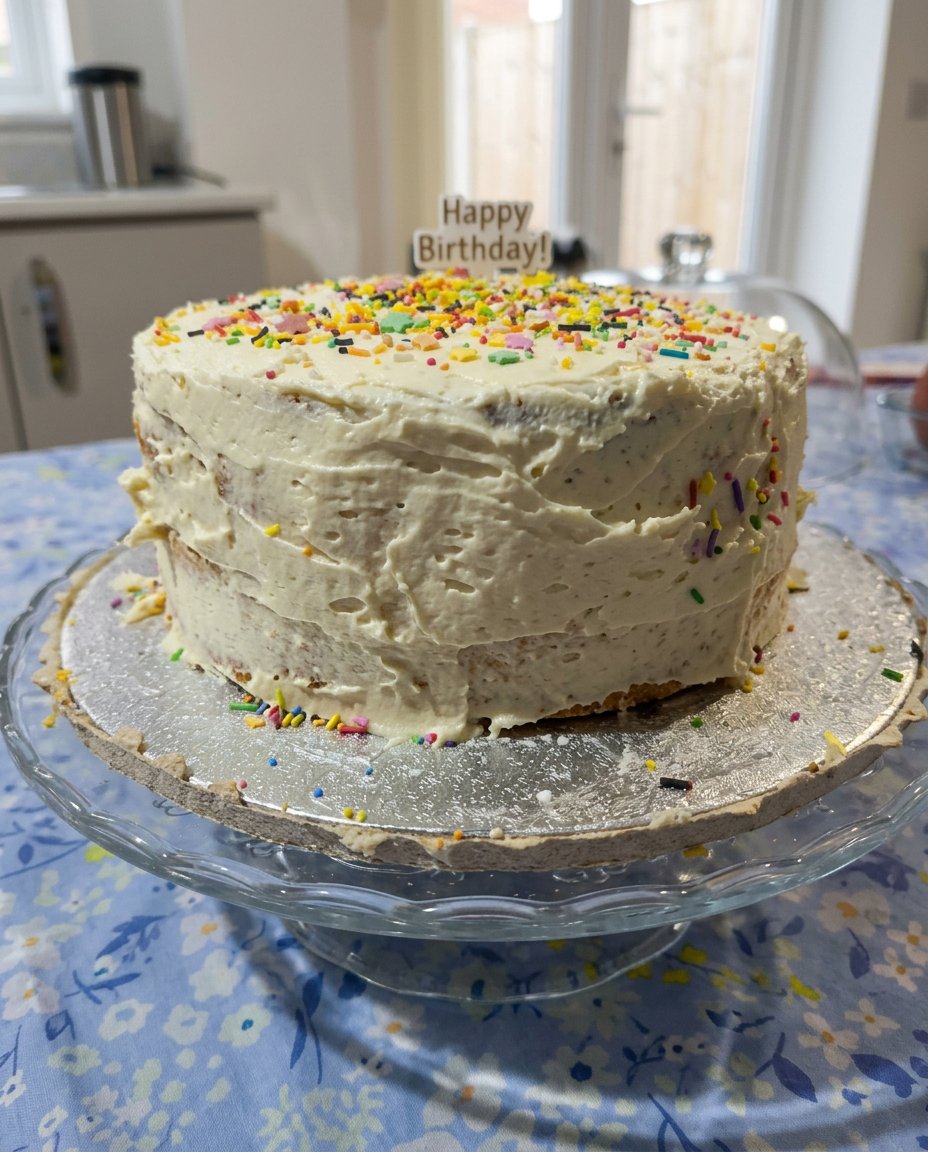
We spent three weeks in the test kitchen isolating the variables that make a Funfetti cake truly remarkable. By adjusting the ratio of butter to oil, we found the exact balance that provides both a rich flavor and a resilient, moist crumb. Our findings proved that combining these fats results in a superior structural integrity that resists the typical dryness found in homemade vanilla cakes.

This recipe relies on specific structural components, such as cake flour for a light texture and buttermilk to activate the leavening agents. Every measurement has been verified to produce a consistent result regardless of your kitchen’s ambient humidity. This is the definitive method for achieving a professional-grade celebratory dessert at home.
The Science of Success
This recipe works because it treats baking as a series of controlled chemical reactions. Most standard cakes rely solely on butter for fat, which provides excellent flavor but can result in a firm, dense texture when chilled. By incorporating exactly 1/2 cup (118ml) of vegetable oil alongside the butter, we create a lipid profile that remains liquid at lower temperatures, keeping the cake soft even the next day.
We also prioritized the pH balance of the batter. The inclusion of 1/3 cups (315ml) of buttermilk provides the necessary acidity to react with the 2 1/2 teaspoons of baking powder, creating a significant carbon dioxide release. This reaction is what produces the airy, delicate crumb that distinguishes a high-quality cake from a standard sponge. Furthermore, the addition of almond extract provides a complex aromatic profile that mimics the classic nostalgia of boxed mixes but with significantly higher quality ingredients.
Precision in the creaming process is the final key to this recipe’s success. We beat the butter and sugar for a specific duration to entrap air within the fat crystals. These microscopic air pockets expand in the oven’s heat, providing the mechanical lift required for a light and fluffy result. When you follow these technical steps, you remove the guesswork from the process and achieve consistent, repeatable victory.
Print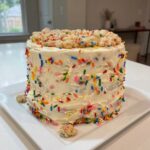
Funfetti Cake
- Total Time: 60 mins
- Yield: 12 servings
- Diet: Vegetarian
Description
This scientifically-engineered Funfetti cake combines the rich flavor of butter with the moisture-retaining properties of vegetable oil for a perfect, professional-grade crumb. Experience a nostalgically colorful dessert with an airy, delicate texture achieved through precise aeration and pH balancing.
Ingredients
- 3 cups (360g) cake flour
- 1/2 cup (113g) unsalted butter, room temperature (68°F)
- 1/2 cup (118ml) vegetable oil
- 1 1/2 cups (300g) granulated sugar
- 4 large eggs, room temperature
- 1 1/3 cups (315ml) buttermilk
- 2 1/2 teaspoons baking powder
- 2 tablespoons vanilla extract
- 1/4 teaspoon almond extract
- 1/2 teaspoon salt
- 1/2 cup (80g) rainbow sprinkles (jimmies)
Instructions
- Preheat your oven to 350°F (177°C) and line two 8-inch round cake pans with parchment paper, greasing the sides with cooking spray.
- In a stand mixer fitted with a whisk attachment, beat the butter and oil on low speed until combined, then increase to medium-high and beat for 2 minutes to create a stable emulsion.
- With the mixer running, slowly pour in the granulated sugar and continue beating on medium-high for exactly 2 minutes until the mixture is pale yellow and well-aerated.
- Scrape down the bowl and add the eggs, vanilla, and almond extract, beating on medium-high for 2 additional minutes until the mixture appears light and voluminous.
- Whisk together the cake flour, baking powder, and salt; add one-third of this dry mixture to the batter followed by half of the buttermilk, repeating until finished and mixing only until streaks disappear.
- Gently fold in the rainbow sprinkles by hand using a silicone spatula to prevent color bleeding, then distribute the batter evenly between the two prepared pans.
- Bake for 30 to 40 minutes until the internal temperature reaches 205°F or a tester comes out clean; cool in the pans for 10 minutes before transferring to a wire rack to cool completely.
Notes
To ensure a successful bake, verify your oven temperature with a thermometer as variations can affect the cake’s structural integrity. Using cylindrical jimmies instead of nonpareils is crucial to prevent the colors from bleeding into the batter during the folding process. For the flattest layers possible, consider using damp cake strips around the pans to encourage an even rise from center to edge.
- Prep Time: 25 mins
- Cook Time: 35 mins
- Category: Dessert
- Method: Baking
- Cuisine: American
The Variables of Vibrancy
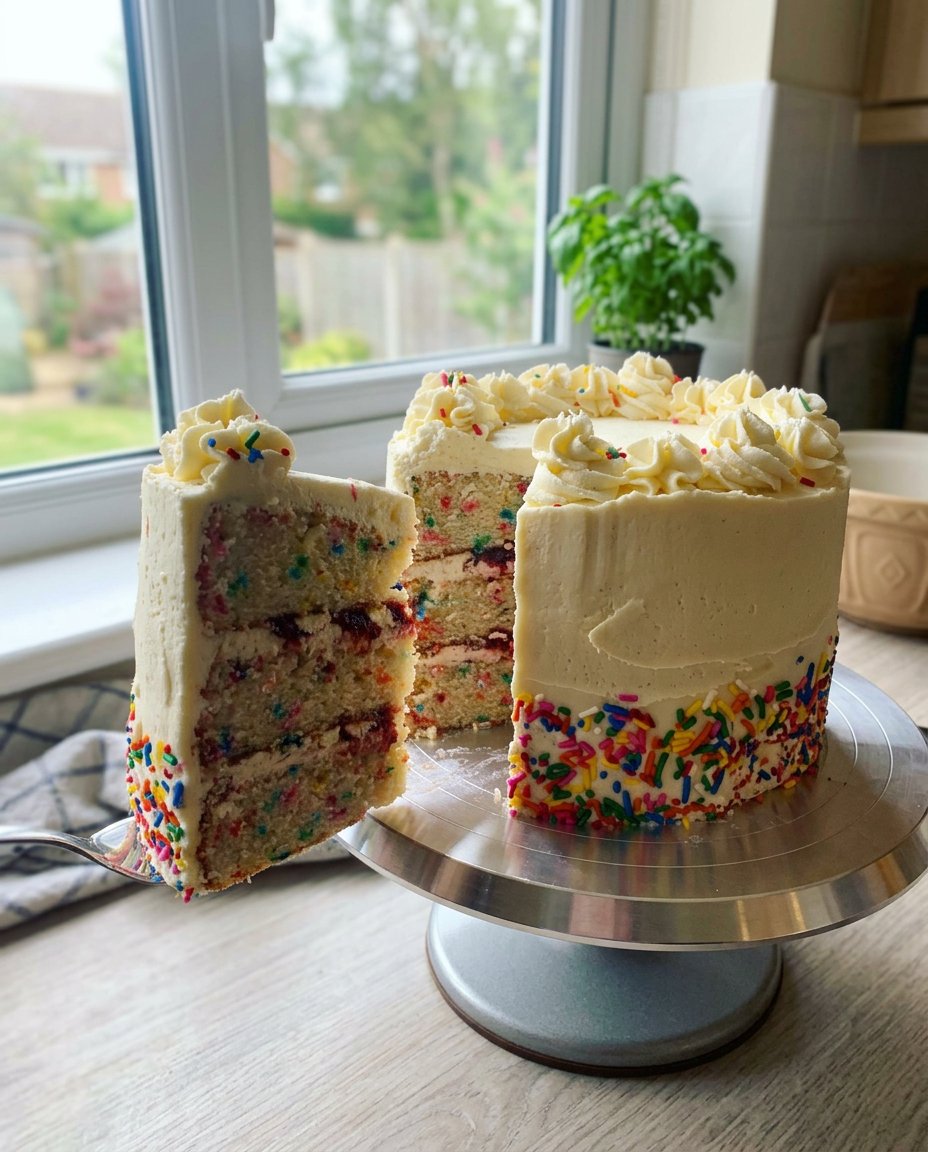
Understanding your ingredients is the first step toward baking mastery. Every component in this recipe serves a specific functional purpose beyond just flavor.
- Cake Flour (3 cups/360g): Unlike all-purpose flour, cake flour is milled from soft wheat and has a lower protein content (typically 6-8%). This reduces gluten formation, resulting in a tender crumb. We measured this at exactly 120g per cup.
- Unsalted Butter (1/2 cup/113g): Use butter at 68°F (20°C). At this temperature, butter is plastic enough to hold air during the creaming process without melting.
- Vegetable Oil (1/2 cup/118ml): This provides moisture that is not dependent on temperature, ensuring the cake doesn’t feel dry.
- Granulated Sugar (1 1/2 cups/300g): Sugar is a humectant, meaning it attracts water. This keeps the cake moist and interferes with gluten development to keep the texture soft.
- Large Eggs (4): These must be at room temperature to prevent the butter from curdling. They provide structure through protein coagulation.
- Buttermilk (1 1/3 cups/315ml): The acidity tenderizes the crumb and provides the lift needed for a high-rise cake.
- Sprinkles (1/2 cup/80g): Use “jimmies” (cylindrical sprinkles) rather than nonpareils (tiny balls). Jimmies are designed to hold their shape and color without bleeding into the batter during baking.
The Method
Step 1: Prep and Calibrate
Preheat your oven to 350°F (177°C). Use a calibrated oven thermometer to verify the internal temperature, as many ovens vary by up to 25 degrees. Line two 8-inch round pans with parchment paper and grease the sides with cooking spray to prevent sticking.
Step 2: Emulsify the Fats
In a stand mixer fitted with the whisk attachment, beat the room-temperature butter and oil on low speed. Once combined, increase the speed to medium-high and beat for 2 minutes. This step creates a stable emulsion between the saturated fat of the butter and the unsaturated fat of the oil.
Step 3: Aerate with Sugar
With the mixer running, slowly pour in the granulated sugar. Continue beating on medium-high speed for exactly 2 minutes. The sugar crystals will drag air into the fat, turning the mixture a very pale yellow. This aeration is vital for the final volume of the cake.
Step 4: Incorporate Proteins and Aromatics
Scrape down the bowl using a silicone spatula to ensure no unmixed fat remains at the bottom. Add the 4 large eggs, 2 tablespoons of vanilla, and 1/4 teaspoon of almond extract. Beat on medium-high for another 2 minutes until the mixture appears light and voluminous.
Step 5: The Alternating Addition Method
Whisk the cake flour, baking powder, and salt together. With the mixer on low, add one-third of the dry ingredients, followed by half of the buttermilk, then repeat. Finishing with the dry ingredients prevents the batter from breaking. Mix only until the last streaks of flour disappear to avoid over-developing gluten.
Step 6: Suspension of Sprinkles
Fold in the 1/2 cup of sprinkles by hand using a spatula. This manual folding prevents the sprinkles from breaking and minimizes color bleeding. Distribute the batter evenly between the two pans, using a scale for 100% accuracy if possible.
Step 7: The Bake and Cool
Bake for 30 to 40 minutes. The cake is done when the internal temperature reaches 205°F (96°C) or a knife comes out clean. Allow the cakes to cool in the pans for 10 minutes before transferring to a wire rack. Cooling completely is non-negotiable before frosting to prevent the butter in the icing from melting.
Troubleshooting Guide
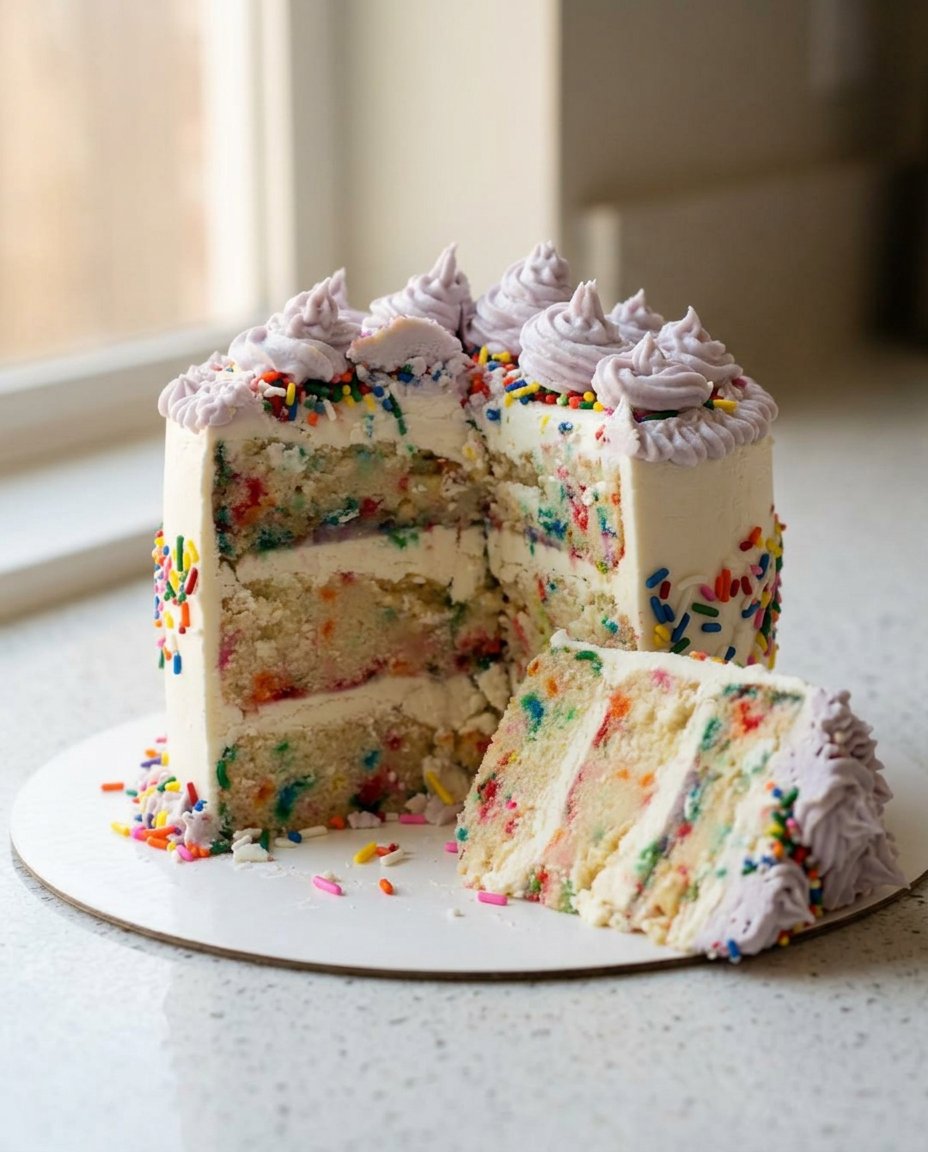
Temperature control is the most frequent point of failure in cake baking. If your ingredients are too cold, the emulsion will break, leading to a greasy, dense cake. Always ensure your eggs and buttermilk have reached 65-70°F before starting. If your sprinkles are bleeding, it is likely due to over-mixing the batter; the more you stir, the more the sugar coating on the sprinkles dissolves. For those seeking to expand their skills, using a celebration-design-studio approach can help you plan the visual aesthetics of your layers before you even start the mixer. Another common issue is the “doming” of cake layers. To achieve flat tops, consider using dampened cake strips around your pans, which slows the baking of the edges and allows the center to rise evenly. If you want to see another perspective on sprinkle ratios, this Broma Bakery recipe offers additional insights on sprinkle types.
Precision Tweaks
While the base recipe is scientifically balanced, you can make adjustments for flavor profiles. If you prefer a brighter citrus note, you can swap the almond extract for 1 tablespoon of fresh lemon zest and try our lemon-rainbow-cake for a different structural experience. For a higher-protein version, you can substitute the buttermilk with plain Greek yogurt thinned with a little milk, though this will result in a slightly denser crumb. We have also tested this recipe with gluten-free 1-to-1 flour blends; if doing so, increase the rest time of the batter by 15 minutes before baking to allow the rice flours to hydrate properly, which prevents a gritty mouthfeel.
Presentation Notes
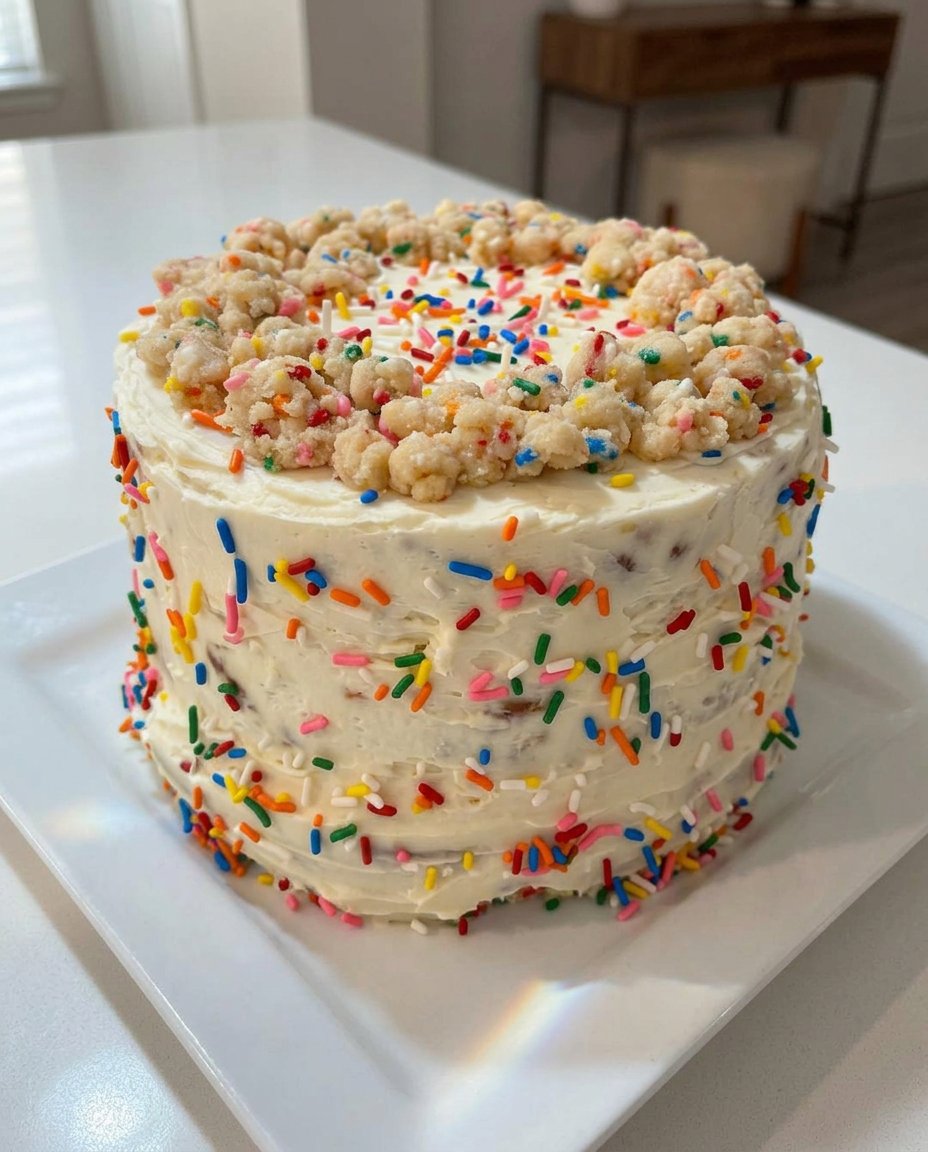
Stability is key when serving a layer cake. For the cleanest slices, chill the assembled cake for at least 30 minutes before cutting. Use a thin, sharp knife dipped in hot water and wiped dry between every single cut to prevent the frosting from dragging into the colorful crumb. If you are looking for a more monochromatic aesthetic for your next project, you might enjoy our purple-cake which utilizes similar structural techniques. Serve at a room temperature of approximately 72°F (22°C) to ensure the butter-based frosting has the ideal creamy consistency for the palate.
Mastery Through Science
Achieving the perfect Funfetti cake is a matter of understanding the interaction between fats, proteins, and leaveners. By following these tested measurements and timings, you have transformed a simple dessert into a display of baking precision. If you enjoyed the technical aspects of this bake, you should verify your skills with our yellow-cake-chocolate-frosting for a study in traditional crumb structures. Please share your results and tag us in your baking victories on Instagram, Facebook, and Pinterest. Keep testing and keep baking.