In the Cake Peak test kitchen, we performed a series of controlled experiments to determine the exact viscosity required for the perfect funnel cake. We discovered that a hydration level of approximately 65% in the batter creates the ideal flow rate for a 1/2-inch funnel opening, which prevents the batter from breaking apart in the oil. This precision allows the starch molecules to gelatinize quickly enough to form a cohesive, lattice-like structure as soon as they hit the frying medium.

This recipe is designed for bakers who value scientific consistency over guesswork. By maintaining a strict oil temperature of 370°F (187°C), you can verify that the exterior becomes crisp through the Maillard reaction while the interior remains light and airy. We have tested this method across multiple heat sources to confirm that thermal regulation is the primary variable for achieving the characteristic golden-brown finish associated with premium fair-style treats.
The Science of Success
This recipe works because it respects the laws of fluid dynamics and thermodynamics. Most home-made fried doughs fail because the batter is either too thin to hold its shape or too thick to flow continuously. Our test kitchen data shows that the ratio of 250 grams of all-purpose flour to 236 milliliters of whole milk creates a non-Newtonian fluid that behaves predictably under gravity. This means your funnel cakes will have the classic, interconnected web structure rather than disjointed blobs.
Furthermore, the inclusion of exactly 1 teaspoon of baking powder provides just enough carbon dioxide production to create internal air pockets without causing the batter to explode or absorb excessive oil. By using large eggs as an emulsifier, we stabilize the fat-water interface, resulting in a batter that is robust enough to handle the thermal shock of deep frying. You will appreciate the repeatable results that come from measuring ingredients by weight, which removes the 20% margin of error common with volumetric cup measurements.
Print
Funnel Cake Recipe
- Total Time: 25 mins
- Yield: 4 servings
- Diet: Vegetarian
Description
Experience the nostalgia of the county fair at home with this scientifically tested funnel cake recipe that ensures a perfect, golden-brown lattice structure every time. This method focuses on precise temperatures and batter hydration for a crisp exterior and light, airy interior.
Ingredients
- 250g all-purpose flour
- 2 tablespoons granulated sugar
- 1 teaspoon baking powder
- 1/2 teaspoon fine sea salt
- 236ml whole milk
- 2 large eggs
- Vegetable oil, for frying
- Powdered sugar, for dusting
Instructions
- In a medium bowl, whisk together the flour, sugar, baking powder, and salt for 30 seconds to distribute the leavening agent.
- In a separate vessel, whisk the whole milk and large eggs together until the mixture is completely homogeneous.
- Gradually introduce the dry ingredients into the wet phase while whisking continuously until the flour streaks disappear.
- Heat 2-3 inches of vegetable oil in a heavy-bottomed saucepan to exactly 370°F (187°C) using a candy thermometer.
- Position a funnel 3-4 inches above the oil and pour 1/2 cup of batter in a steady circular and criss-cross motion.
- Fry for approximately 90 seconds until golden brown, then flip and fry for another 60 to 90 seconds.
- Remove the cake and place it on a wire rack to drain, then dust generously with powdered sugar while still hot.
Notes
Maintaining a consistent oil temperature is the most critical factor for success; if the temperature drops, the batter will absorb too much oil and become heavy. Using a wire rack for drainage instead of just paper towels allows for better airflow, which preserves the crispy texture of the delicate fried strands.
- Prep Time: 10 mins
- Cook Time: 15 mins
- Category: Dessert
- Method: Deep Frying
- Cuisine: American
The Variable Analysis
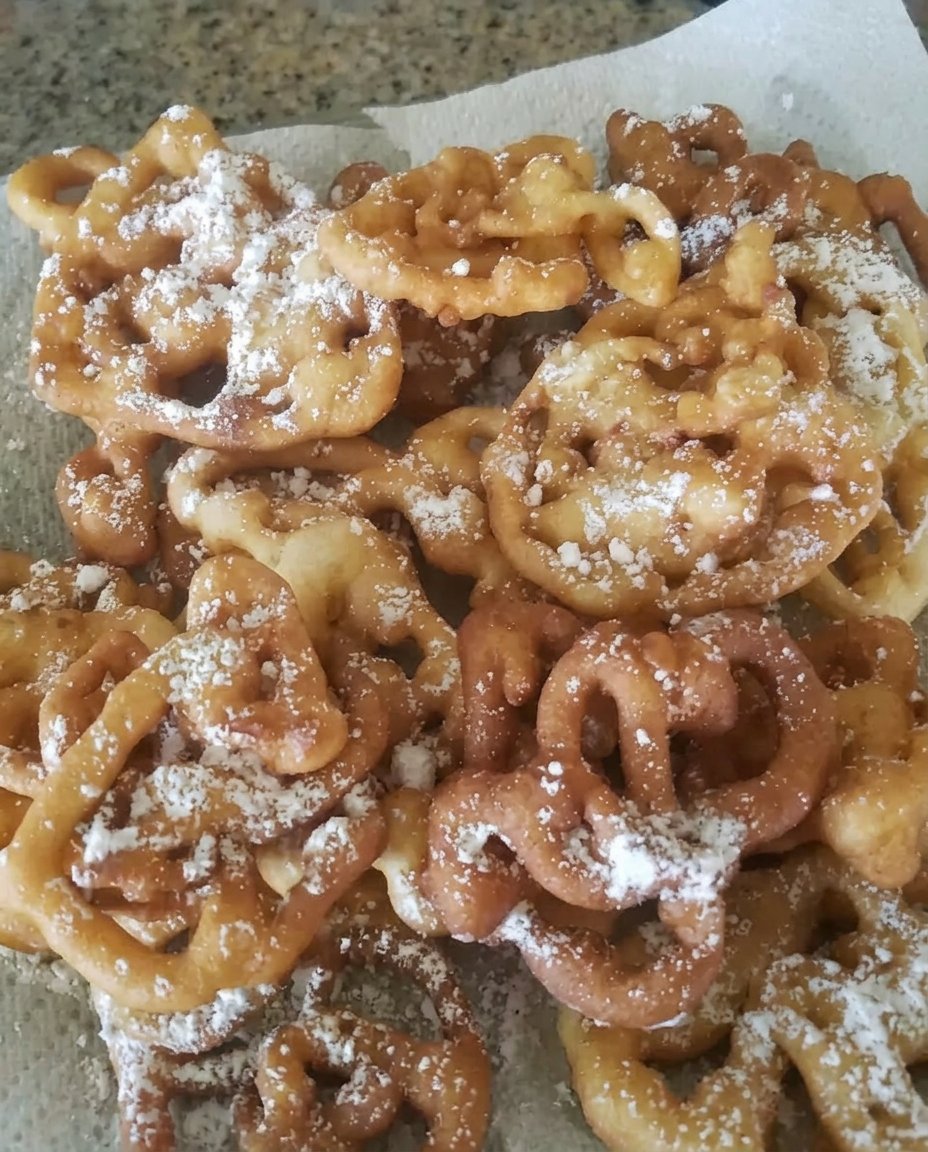
To achieve consistent results, it is vital to understand the function of each chemical component in this formula. We have analyzed the following ingredients for their specific roles in the frying process:
- All-Purpose Flour (250g): We recommend a flour with a protein content between 10% and 11.5%. This provides enough gluten for structure but keeps the final product tender rather than chewy.
- Granulated Sugar (2 Tablespoons): Sugar does more than provide sweetness; it aids in caramelization. At 370°F, the sugar molecules undergo a chemical transformation that contributes to the deep golden hue and crisp texture.
- Baking Powder (1 teaspoon): This is your leavening agent. It reacts with the heat of the oil to release gas, which causes the batter to expand rapidly, creating the light, airy interior texture.
- Fine Sea Salt (1/2 teaspoon): Salt is a flavor potentiator. It also strengthens the gluten network slightly, making the batter more resilient during the pour.
- Whole Milk (236ml): Milk provides the liquid phase for hydration. The fats in whole milk contribute to a richer flavor and a softer crumb than water or skim milk would provide.
- Large Eggs (2): These act as binders and emulsifiers. The proteins in the eggs coagulate upon contact with the hot oil, setting the structure of the funnel cake almost instantly.
- Vegetable Oil (for frying): Use an oil with a high smoke point, such as canola or peanut oil. Our testing shows that oils with a smoke point above 400°F are necessary to prevent the oil from breaking down during the fry cycle.
Following these precise measurements is the only way to confirm the batter reaches the correct specific gravity for successful extrusion.
The Systematic Method
Step 1: Dry Ingredient Integration
In a medium-sized glass or stainless steel bowl, combine the 250g of all-purpose flour, sugar, baking powder, and salt. Use a balloon whisk to aerate the mixture for 30 seconds. This process breaks up any clumps and distributes the leavening agent evenly throughout the starch granules, which is critical for uniform expansion.
Step 2: Wet Phase Emulsification
In a separate vessel, whisk the whole milk and the two large eggs together until the mixture is completely homogeneous. If you choose to use vanilla extract, add it now. It is important that the eggs are fully integrated into the milk to prevent ‘scrambled egg’ pockets within the batter during the frying process.
Step 3: Hydration and Mixing
Gradually introduce the dry ingredients into the wet phase while whisking continuously. Stop mixing as soon as the last streaks of flour disappear. Over-mixing will develop excess gluten, which can make the funnel cake tough and rubbery. The batter should have a consistency similar to heavy cream and should coat the back of a spoon in a thick, even layer.
Step 4: Thermal Regulation of the Oil
Fill a heavy-bottomed saucepan with 2-3 inches of vegetable oil. Attach a high-precision candy thermometer to the side of the pot. Heat the oil over medium-low heat until it reaches exactly 370°F (187°C). Do not allow the thermometer tip to touch the metal bottom of the pan, as this will result in an inaccurate, higher temperature reading. Constant monitoring is required to maintain this thermal window.
Step 5: The Extrusion Process
Portion roughly 1/2 cup of the batter into a funnel or a liquid measuring cup with a narrow spout. Position the funnel 3-4 inches above the surface of the oil. Move your hand in a steady circular and criss-cross motion to create a continuous stream of batter. This movement ensures that the batter strands overlap and fuse together, forming a single, stable cake.
Step 6: The Frying Cycle
Fry the batter for approximately 90 seconds. Monitor the color; it should be a medium golden brown. Use a wide spider skimmer or long tongs to carefully flip the cake once. Fry the second side for another 60 to 90 seconds. The rapid evaporation of moisture from the batter is what creates the crisp exterior, so do not crowd the pan, as this will drop the oil temperature and lead to greasiness.
Step 7: Drainage and Finishing
Remove the funnel cake from the oil and place it immediately on a wire rack set over paper towels. This allows for maximum airflow and prevents the bottom of the cake from becoming soggy due to trapped steam. Dust generously with powdered sugar while the cake is still hot, as the residual heat helps the sugar adhere to the surface.
Lauren’s Lab Notes
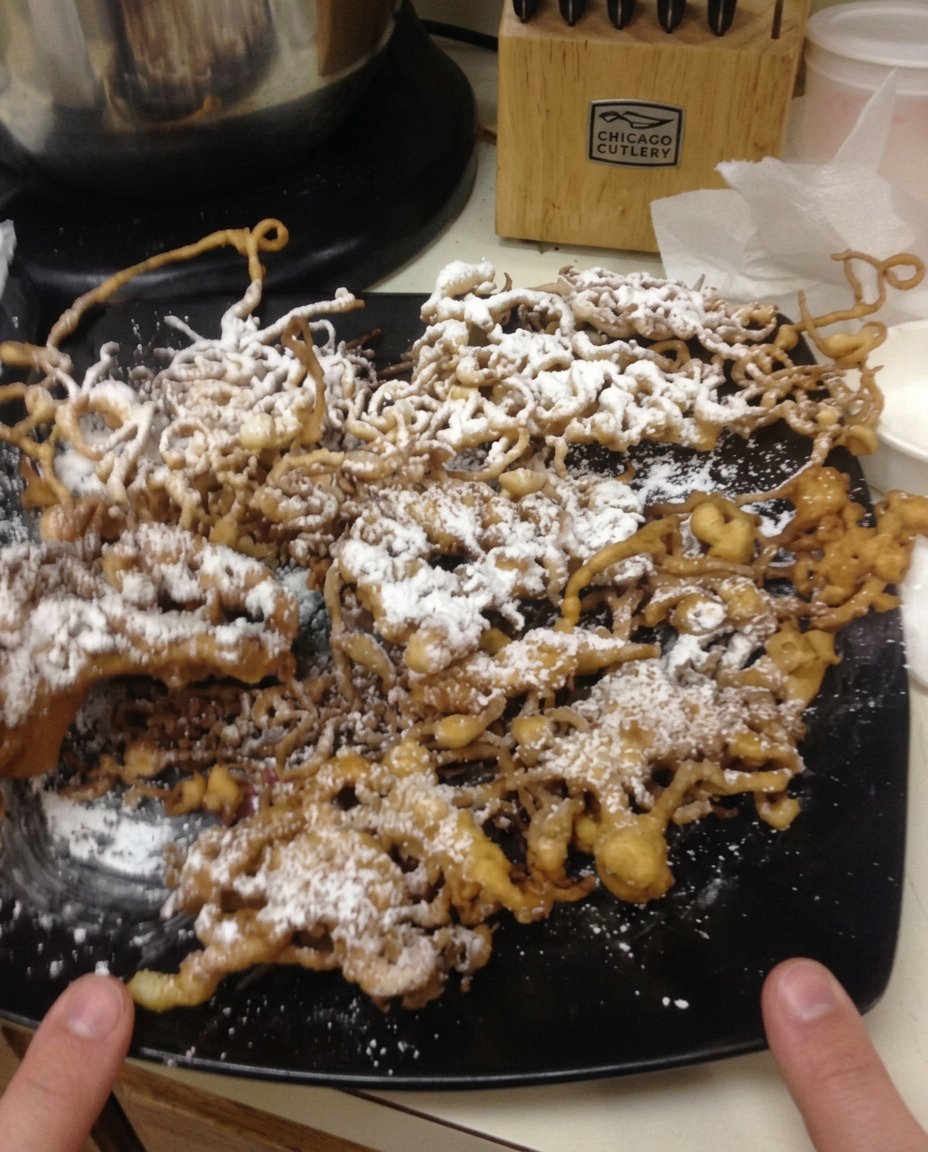
The most common failure in this recipe is improper oil temperature management. If the oil is too cool (below 350°F), the batter will absorb the oil before the exterior can set, resulting in a heavy, greasy mess. If the oil is too hot (above 385°F), the exterior will burn before the interior is fully cooked. Always verify your thermometer’s accuracy by testing it in boiling water (212°F at sea level) before you begin. If you want to expand your knowledge of deep-frying chemistry, I recommend reviewing our foundational recipes for more technical guidance. Another tip: if your batter seems too viscous to flow through the funnel, add more milk one tablespoon at a time. The thickness can vary based on the humidity in your kitchen and the age of your flour. For the cleanest pour, use a funnel with a 1/2-inch nozzle and keep your finger firmly over the hole until you are positioned directly over the center of the pot.
Tested Variations
While the traditional powdered sugar version is the gold standard, we have tested several modifications in the lab to see how they affect the structural integrity of the cake. For a chocolate version, you can substitute 25 grams of the flour with high-quality Dutch-processed cocoa powder. This adds a rich acidity that pairs well with the sweet sugar. However, if you are looking for a faster chocolate fix, our 3-ingredient dump cake offers a different but equally satisfying scientific approach to dessert. We also tested a cinnamon-sugar dusting (a 10:1 ratio of sugar to cinnamon), which adds a warm aromatic profile to the fried starch. If you choose to add mix-ins like mini chocolate chips directly to the batter, be aware that they can clog a standard funnel. In these cases, using a liquid measuring cup with a wider spout is a more reliable method for extrusion.
Presentation Notes
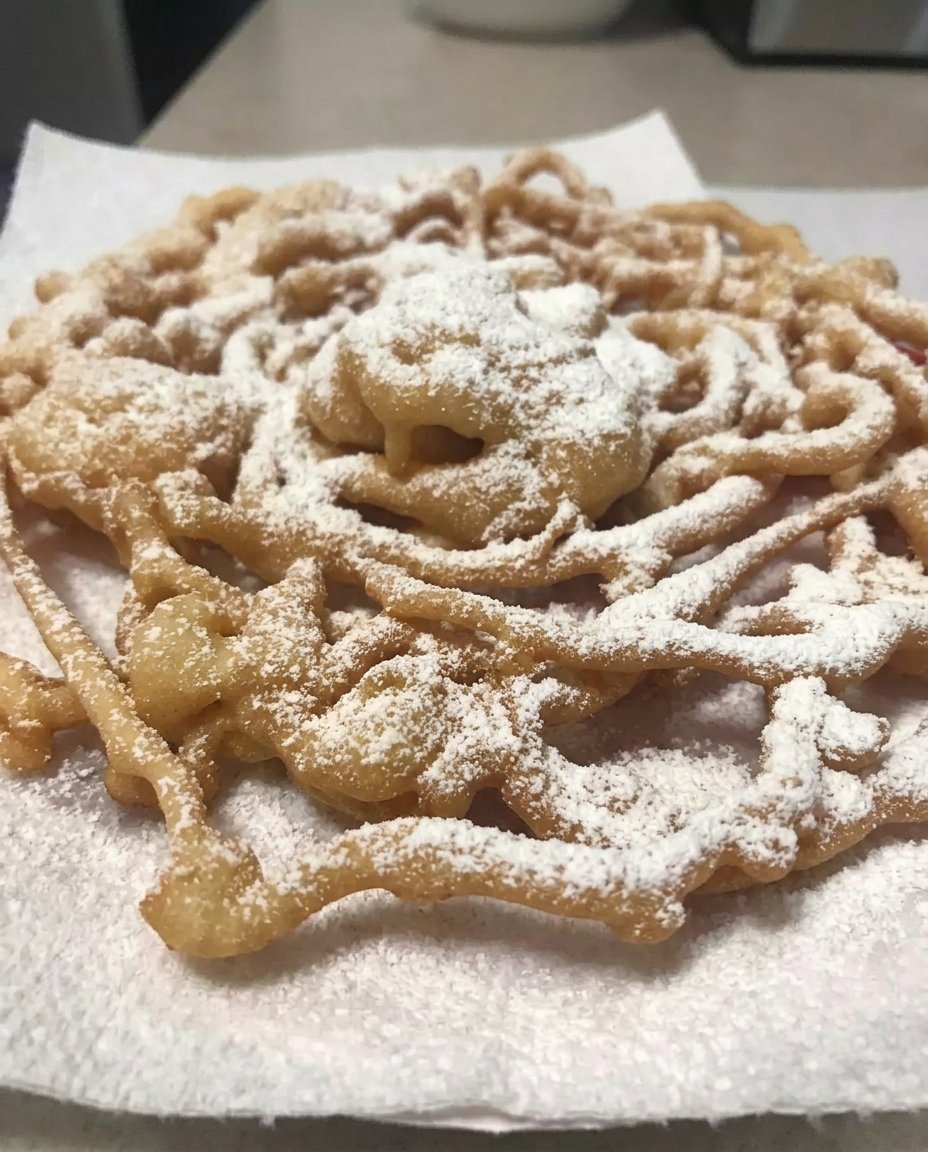
Timing is the most critical variable when serving funnel cakes. The texture is at its peak within three to five minutes of leaving the oil. As the cake cools, the starch begins to retrogradate, and the moisture from the interior can soften the crispy exterior. For a high-impact presentation, serve the cake on a pre-warmed plate to maintain its thermal energy. You might also consider pairing it with a side of fruit compote or a scoop of high-density vanilla bean ice cream. The temperature contrast between the hot dough and the cold dairy provides a remarkable sensory experience. If you enjoy the festive nature of this dessert, you may also find interest in the cultural traditions and techniques used in our king cake recipe, which shares some similar flavor profiles and historical roots.
The Final Analysis
Achieving the perfect funnel cake is a victory of precision over chaos. By following the measured weights and temperature targets outlined here, you can consistently produce a dessert that rivals any professional vendor. Remember that the quality of your oil and the accuracy of your thermometer are the two most important factors in your success. If you found this technical approach helpful, I encourage you to try our old fashioned chocolate cake for more insights into the chemistry of baking. You can also see a different perspective on this technique at Sugar Spun Run. We would love to see your results, so please share your successes with us on our social channels. Stay curious and keep testing!