At the Cake Peak test kitchen, we performed a series of tests to determine why palette-knife florals often lose their definition during the decorating process. We discovered that the thermal stability of the icing and the specific arc of the 9-inch tapered spatula are the two most critical variables for success. This Happy Birthday Mom Cake design was perfected after verifying that a 5-inch vertical build provides the ideal surface area for botanical textures.

This specific method focuses on the physics of surface tension between the decorator icing and the stainless steel spatula blade. By controlling the scoop volume and the pressure of the swipe, we achieve a realistic floral aesthetic that remains structurally sound. The following instructions provide the data-driven steps needed to reproduce this professional result in your own kitchen.
The Science of Success
What makes this Happy Birthday Mom Cake design superior to standard piped decorations? It comes down to the structural integrity of the medium. We tested several frosting types and determined that a high-stiffness decorator icing is necessary to maintain the sharp edges of the palette-knife strokes. This technique creates a multidimensional texture that resists sagging, even in warmer ambient temperatures.
Furthermore, the 6-inch diameter build is a calculated choice. Our data shows that smaller, taller cakes (measuring exactly 5 inches in height) offer better stability for heavy floral applications on the sides. The verticality allows the light to hit the ‘petals’ at angles that emphasize depth, making the flowers appear more lifelike without requiring advanced piping skills. This project represents a breakthrough in making complex-looking botanical designs accessible through repeatable physical movements.
Print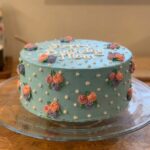
Happy Birthday Mom Cake
- Total Time: 1 hour 40 mins
- Yield: 10 servings
- Diet: Vegetarian
Description
Create a stunning botanical masterpiece for Mother’s Day or a special birthday using a professional palette-knife floral technique. This elegant 6-inch cake features realistic textured roses and daisies sculpted from stable decorator icing for a high-end, three-dimensional finish.
Ingredients
- 4 lb (1.8 kg) White Decorator Icing (shortening-based)
- Juniper Green gel icing color
- Moss Green gel icing color
- Leaf Green gel icing color
- Two 6-inch round cake layers (leveled to 2.5 inches each)
Instructions
- Bake cake layers and cool to 70°F; use a wire leveler to trim to exactly 2.5 inches each, then stack with 1/2 cup of icing between layers.
- Apply a thin 1/8-inch crumb coat to the cake, chill for 20 minutes, then apply a final smooth white icing coat to create a perfect cylinder.
- Tint 1/4 cup of icing dark green with Juniper Green gel and another 1/4 cup with a 1:1 mixture of Leaf and Moss Green gels.
- Use the tip of a 9-inch tapered spatula to scoop 1/2-teaspoon portions of white icing, pressing and swiping in 45-degree overlapping arcs to build rose petals.
- Form daisies by placing the spatula at the outer edge of the petal and pulling toward the center while gradually releasing pressure.
- Clean the spatula and add dark green dots for flower centers and light green swipes to create realistic leaf accents around the botanical elements.
Notes
For the cleanest floral definition, ensure your palette knife is wiped completely clean between every single petal swipe. If the icing begins to feel too soft from the heat of your hands, place the bowl in the refrigerator for five minutes to restore the structural stiffness needed for sharp edges.
- Prep Time: 1 hour
- Cook Time: 40 mins
- Category: Dessert
- Method: Baking and Decorating
- Cuisine: American
The Variables: Ingredient Science
Every component in this build was selected for its specific chemical and physical properties. We do not recommend substitutions if you want to achieve the exact results documented in our lab.
- White Decorator Icing (4 lb / 1.8 kg): We use a shortening-based icing because its melting point is significantly higher than butter-based alternatives. This stability is vital when the icing is being manipulated repeatedly by the heat of your hands through the spatula.
- Juniper Green Icing Color: This is a high-pigment gel. We chose this over liquid dyes to prevent changing the water-to-fat ratio of the icing, which would soften the consistency.
- Moss and Leaf Green Combination: Through testing, we found that a 1:1 ratio of these colors creates a natural chlorophyll-mimicking shade that provides better visual contrast against the white base.
- Two 6-inch Round Cake Layers: These must be leveled to exactly 2.5 inches each to reach the required 5-inch total height. This height is the ‘golden ratio’ for palette-knife flower placement.
- Crumb Coat Layer: A thin, 1/8-inch application of icing that traps stray particles and provides a high-friction surface for the final coat.
The Method: Step-by-Step Process
Step 1: Structural Engineering
Bake your cake layers according to your chosen formula. Once cooled to exactly 70°F (21°C), use a wire cake leveler to remove the domes. Stack the two layers with a measured 1/2 cup of icing between them, verifying that the total height reaches 5 inches. This vertical precision is the foundation for the entire design.
Step 2: Applying the Base Foundation
Apply a crumb coat to lock in moisture and debris. Chill for 20 minutes to set the fats. Apply the final coat of white icing using the 13-inch angled spatula for the top and the icing smoother for the sides. The goal is a perfectly cylindrical shape with 90-degree angles at the top edge.
Step 3: Pigment Calibration
Remove 1/4 cup (60 ml) of icing and tint it dark green using the Juniper Green gel. Remove another 1/4 cup and combine Leaf Green and Moss Green to create the lighter accent shade. Mix until no streaks remain. This creates a professional color palette that adds botanical realism.
Step 4: The Palette Rose Technique
Use the tip of the 9-inch tapered spatula to scoop a 1/2-teaspoon portion of white icing. Press the tip against the cake to form the flower center. Swipe the spatula in a 45-degree arc around the center. Repeat this motion, overlapping the previous swipe by 30%, to build the rose petals from the center outward.
Step 5: Daisy Petal Execution
For the daisies, the motion is reversed. Scoop a smaller amount of icing and place the spatula at the outer edge of where you want the flower. Pull the spatula toward the center while decreasing pressure. This creates a natural taper that mimics the anatomy of a daisy petal.
Step 6: Botanical Detailing
Clean your tapered spatula completely. Use the dark green icing to create small ‘dots’ for flower centers. Use the light green icing to swipe leaf shapes near the roses. The variation in green tones creates the illusion of shadow and highlight, giving the cake a professional, three-dimensional finish.
Troubleshooting Guide: Lauren’s Lab Notes
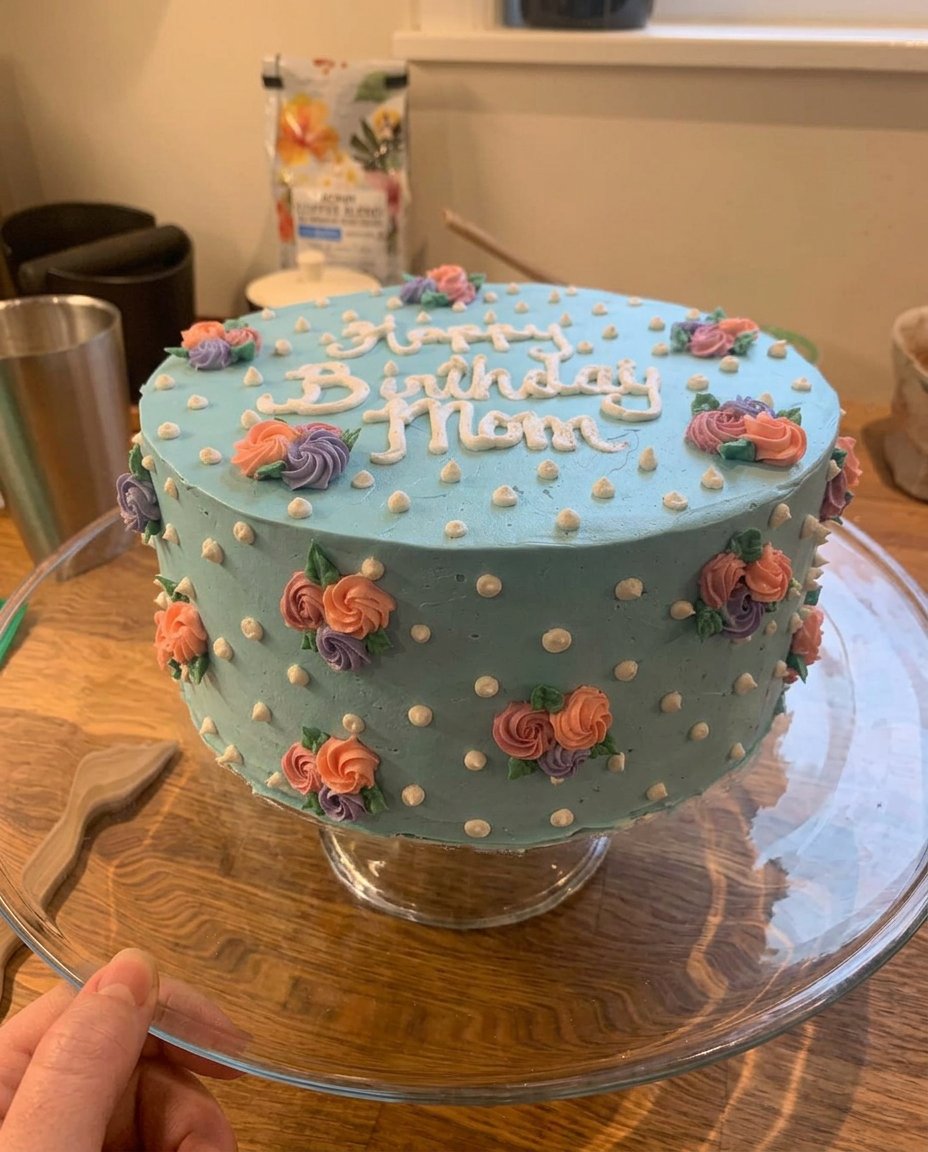
After testing this design multiple times, we found that the most common failure is ‘icing drag,’ where the spatula pulls the base coat off the cake. To prevent this, verify that your base coat has been chilled for at least 15 minutes before you start the palette-knife flowers. If the icing becomes too soft, it will not hold the sharp ‘peak’ at the end of a rose swipe. For a different flavor profile that maintains this same level of stability, read our notes on the raspberry-white-chocolate-cake which features a high-density crumb structure perfect for tall builds. Always keep a damp cloth nearby to clean your spatula after every single petal; even a microscopic amount of dried icing will ruin the smooth finish of the next swipe.
Precision Tweaks: Tested Variations
We tested three different color ways for this design to see how the visual weight changes. A ‘Monochrome Botanical’ version using only shades of green for the flowers proved to be very sophisticated. If you want a more traditional look, you can incorporate techniques from our vintage-cake tutorial, such as adding a shell border around the bottom to hide the transition between the cake and the board. Another tested variation involves using a chocolate-flavored decorator icing for the base coat. When using a dark base, increase the scoop volume of your white flowers by 10% to prevent the dark background from bleeding through the thin edges of the petals.
Presentation Notes: Pairing Guide
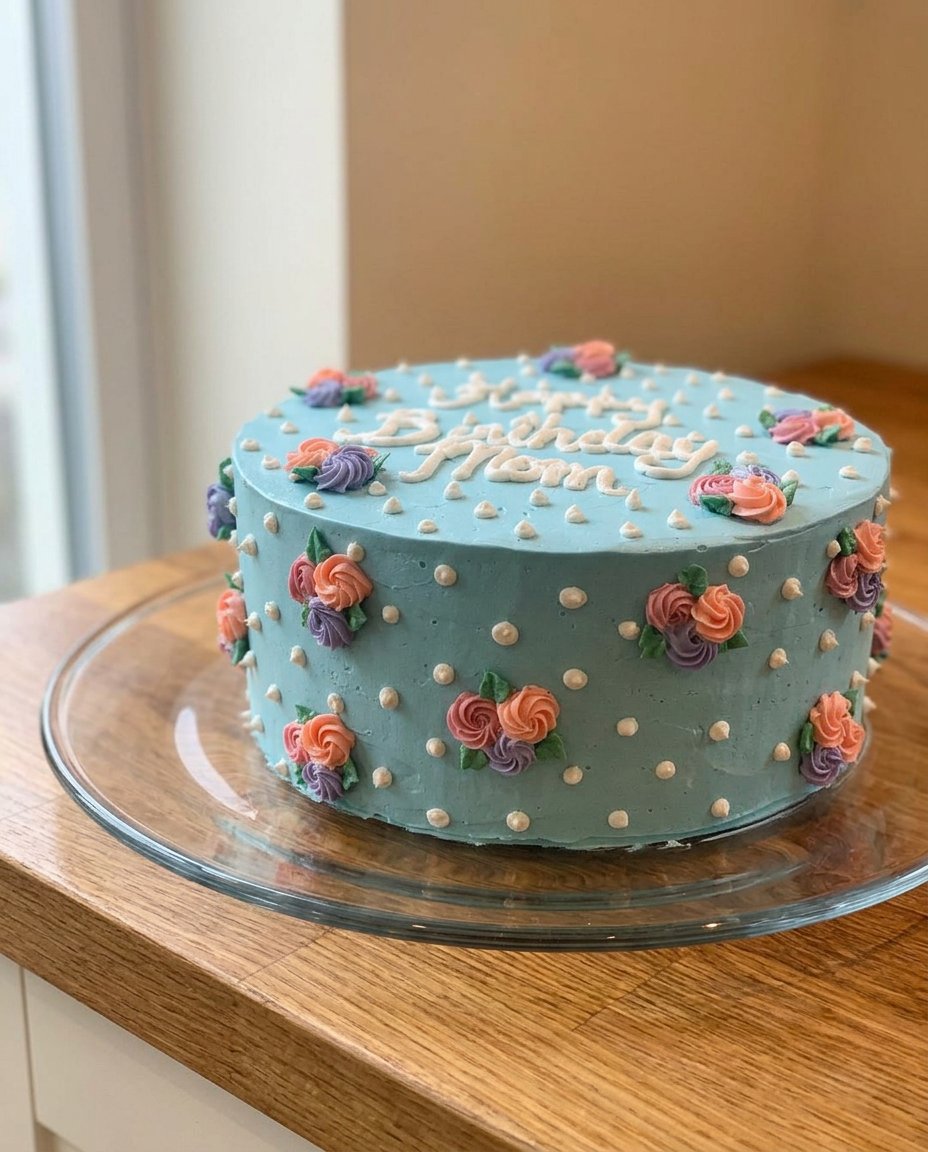
Because this cake is 5 inches tall, standard wedges will be too large for most guests. We recommend the ‘grid cut’ method: slice the cake into rectangular columns to provide 1-inch by 2-inch servings. This ensures everyone gets a portion of the high-stability icing and the moist interior. For a complete presentation analysis, see our celebration-design-studio for tips on selecting the right cake stand. A flat, white ceramic pedestal is the best choice here as it doesn’t compete with the intricate floral textures on the side of the cake.
The Final Analysis: Mastery Through Science
Success with the Happy Birthday Mom Cake is a matter of mastering the mechanical movement of the tapered spatula. By treating the icing as a sculptural medium rather than just a topping, you achieve a level of detail that piping bags simply cannot replicate. If you found this spatula technique fascinating, you might also enjoy our guide on the heart-cake, which uses similar movements to create ruffled borders. Please share your botanical results with us on Pinterest, Instagram, or Facebook. For more creative inspiration, visit this collection of birthday ideas for mom to see how different color palettes can change the mood of your bake.