In the Cake Peak test kitchen, we recently investigated how specific gravity and carbonation levels in non-traditional liquids affect the crumb stability of sheet cakes. We discovered that using an orange-flavored carbonated beverage provides a precise chemical reaction between the citric acid and the baking powder, creating a structural integrity that supports dense decorations without collapsing. This experimentation led us to the most reliable method for creating modular desserts that maintain their geometric shape when sliced into small, precise components.

This Lego Cake construction uses a high-ratio oil base to verify that the moisture remains locked within the crumb even after the cake is divided into sixteen individual bricks. By following our technical guidelines for cooling and portioning, you will achieve clean edges and a flat surface that serves as a perfect canvas for your edible ‘studs.’ This method turns a standard sheet cake into a sophisticated engineering project that is as delicious as it is visually striking.
The Science of Structural Success
This recipe works because we have calculated the exact balance of liquid to dry ingredients to produce a sturdy yet tender crumb. The sunflower oil (7 fluid ounces) provides a lipid barrier that prevents gluten over-development, which is vital when you need to make precise vertical cuts. Unlike butter-based cakes which can become brittle when chilled, this oil-based formula remains flexible, allowing you to handle the individual bricks without fear of edge degradation.
We tested various leavening combinations and found that the 1 tablespoon of baking powder, when triggered by the carbonation of the orange soda, creates a fine-holed crumb. This microscopic structure is essential because it prevents the ‘cement’ icing from soaking into the cake, keeping the surface perfectly level. This precision creates a result that looks professional because the physics of the batter support the weight of the chocolate studs without any sagging or bowing in the center of the bricks.
Print
Lego Cake
- Total Time: 2 hours 30 mins
- Yield: 16 bricks
- Diet: Vegetarian
Description
This technically engineered sheet cake uses orange soda and sunflower oil to create a structural, fine-holed crumb that holds its shape perfectly when sliced. Decorated with a vibrant lemon glaze and candy studs, these modular bricks are as architecturally sound as they are delicious.
Ingredients
- 4 large eggs
- 1.5 cups granulated sugar
- 2 teaspoons vanilla sugar
- 7 fluid ounces sunflower seed oil
- 6.5 fluid ounces orange soda
- 2.75 cups all-purpose flour
- 1 tablespoon baking powder
- 1 pinch salt
- Confectioners’ sugar
- Lemon juice
- Food coloring
- Candy-coated milk chocolate pieces
Instructions
- Preheat oven to 350°F (175°C) and line a 13×18 inch rimmed baking sheet with professional-grade parchment paper.
- In a large bowl, beat the eggs, granulated sugar, and vanilla sugar on medium-high speed for 4 minutes until the mixture reaches a pale, thick ribbon stage.
- Reduce mixer speed to low and slowly pour in the sunflower oil and orange soda, mixing until just combined to preserve carbonation.
- Sift the flour, baking powder, and salt directly over the wet mixture and gently fold with a silicone spatula until no dry streaks remain.
- Pour the batter onto the prepared baking sheet, level with an offset spatula, and bake for approximately 30 minutes until a toothpick comes out clean.
- Cool the cake in the pan for 20 minutes before transferring to a wire rack to reach full room temperature.
- Using a ruler and a sharp serrated knife, cut the cake into precise 1.5 by 3 inch rectangles, chilling the cake briefly if the crumb is too soft for clean edges.
- Whisk confectioners’ sugar and lemon juice into a thick glaze, tint with food coloring, brush onto the bricks, and press eight chocolate pieces into two parallel rows of four.
Notes
To ensure perfectly flat Lego bricks, use a long serrated knife to gently shave off any slight doming from the cake while it is still warm. For the most vibrant colors, match your food coloring precisely to the candy-coated chocolates and ensure the icing is thick enough to hold the weight of the studs without sliding.
- Prep Time: 20 mins
- Cook Time: 30 mins
- Category: Dessert
- Method: Baking
- Cuisine: American
Ingredient Science and Variables
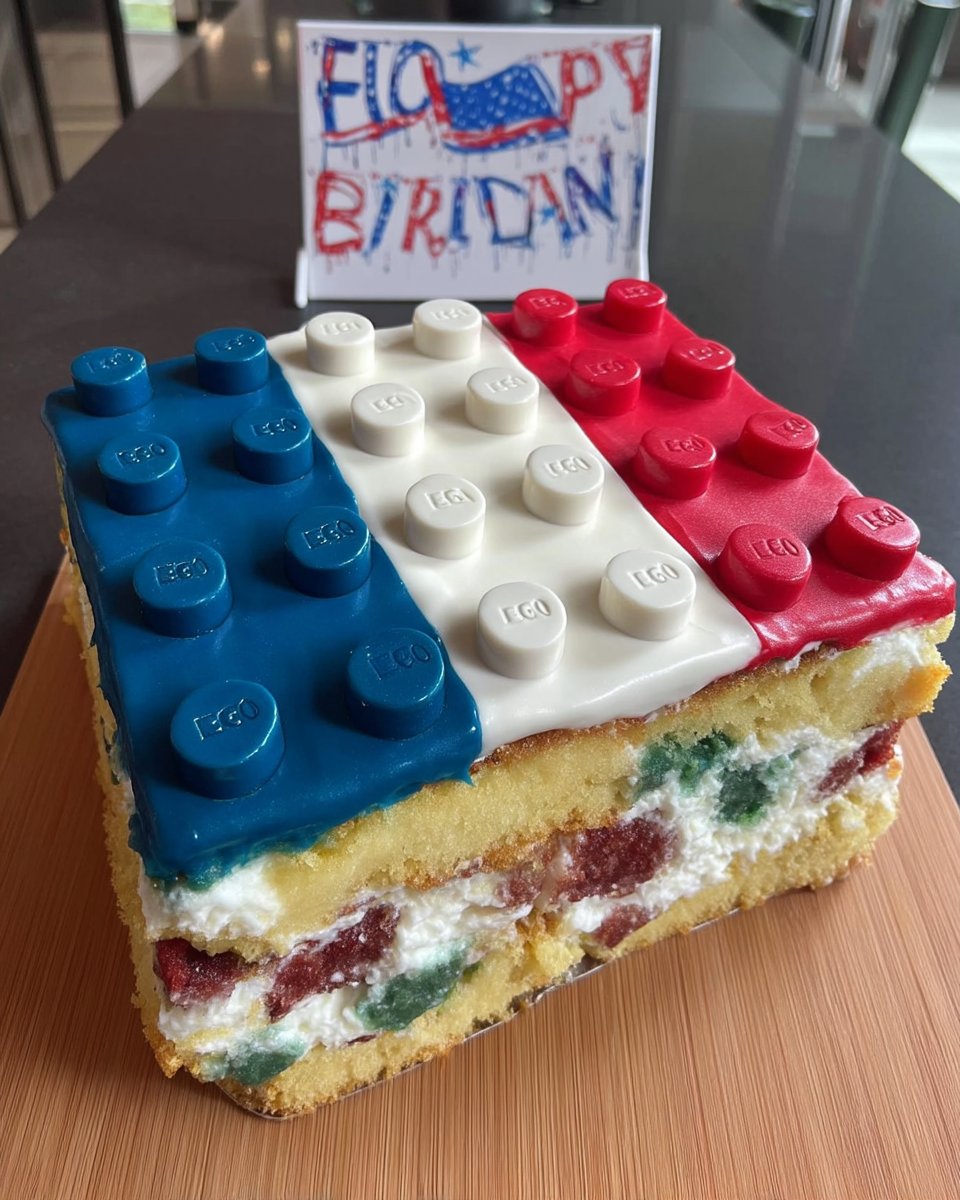
The Leavening Agents
We use a combination of biological and chemical leavening. The 4 large eggs provide the initial protein structure and aeration, while the carbon dioxide in the orange soda provides a secondary lift. It is vital to use a fresh bottle of soda to verify the highest concentration of bubbles.
Liquid Fats and Emulsifiers
- Sunflower Seed Oil: We chose this specifically for its high smoke point and neutral flavor. Its 100% fat content (compared to the 80-82% in butter) means more lubrication for the flour particles, resulting in a silkier texture.
- Granulated Sugar (1.5 cups): Sugar is a tenderizer. It interferes with the bond between water and flour proteins, preventing the cake from becoming bread-like.
The Structural Foundation
- All-Purpose Flour (2.75 cups): We recommend a flour with a protein content between 10% and 11.5%. This provides enough strength to hold the rectangular shape after cutting but remains soft enough for a delicate palate.
- Candy-Coated Milk Chocolate Pieces: These function as the functional ‘studs’ of our Lego bricks. Sorting them by color beforehand is a requirement for visual consistency.
The Edible Cement
- Confectioners’ Sugar and Lemon Juice: By using lemon juice instead of water or milk, the acidity helps the icing set faster and provides a sharp flavor contrast to the sweet cake base.
The Step-by-Step Process
Step 1: Thermal Preparation and Base Layering
Preheat your oven to exactly 350°F (175°C). Line a 13×18 inch rimmed baking sheet with professional-grade parchment paper. This allows for a clean release, which is critical for maintaining the sharp corners of your modular pieces later in the process.
Step 2: Aerating the Protein Base
Combine the 4 eggs, 1.5 cups of white sugar, and 2 teaspoons of vanilla sugar in a large glass bowl. Use an electric mixer on medium-high speed for exactly 4 minutes. You are looking for the ‘ribbon stage,’ where the mixture is pale, foamy, and falls from the beaters in a thick, slow-dissolving trail.
Step 3: Emulsifying the Liquids
With the mixer on low speed, slowly pour in the 7 fluid ounces of sunflower oil and 6.5 fluid ounces of orange soda. Do not over-mix at this stage; you want to maintain as much of the carbonation as possible to assist with the rise.
Step 4: Integrating the Dry Sift
Sift the 2.75 cups of flour, 1 tablespoon of baking powder, and a pinch of salt directly over the wet ingredients. Fold gently using a silicone spatula until no streaks of white remain. The batter should look uniform and slightly aerated. Pour the batter onto the prepared sheet and use an offset spatula to level the surface completely.
Step 5: The Baking Phase
Bake for approximately 30 minutes. Verify the internal structure by inserting a toothpick into the geometric center; it should come out clean. The internal temperature should register between 205°F and 210°F on a digital thermometer. Allow the cake to cool in the pan for 20 minutes, then transfer to a wire rack for at least 1 hour to reach room temperature (approx 70°F).
Step 6: Geometric Precision Slicing
Once cooled, use a ruler to mark out rectangles that are exactly 1.5 inches by 3 inches. Use a sharp serrated knife to cut the cake into these modular bricks. If the crumb feels too soft, place the cake in the freezer for 15 minutes to firm up the fats before slicing.
Step 7: Application of the Decorative Studs
Whisk the confectioners’ sugar with lemon juice to create a thick, viscous glaze. Divide into bowls and add food coloring to match your sorted chocolate pieces. Brush the glaze onto a brick, then place 8 chocolate pieces in two parallel rows of four. Allow the icing to fully dehydrate and set for 30 minutes before moving the pieces.
Troubleshooting Guide and Lab Notes
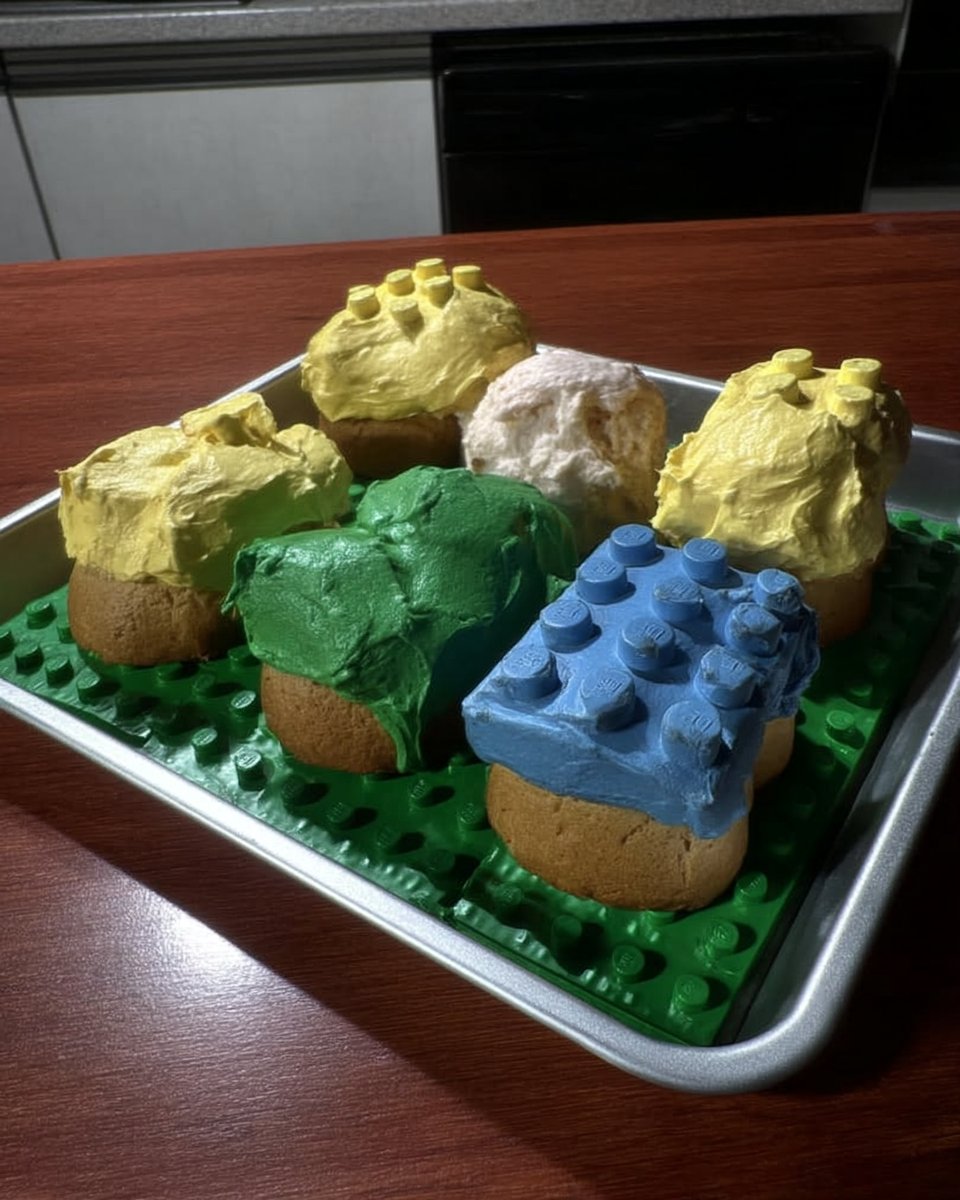
One common failure point is the ‘doming’ of the cake, which makes the Lego bricks sit at an angle. To avoid this, use bake-even strips or verify your oven temperature with a secondary thermometer. If your cake still domes, use a long serrated knife to level the top while the cake is still slightly warm. For those looking to expand their technical skills in shaped cakes, our car cake guide offers advanced insights into 3D structural carving.
Another technical detail is the viscosity of the icing. If the icing is too thin, it will run down the sides of the brick; if it is too thick, it won’t create a smooth surface for the studs. The icing should coat the back of a spoon and hold its shape for 3 seconds before melting back into the bowl. If you find the lemon juice makes the color bleed from the chocolate pieces, decrease the moisture content of your icing slightly.
Tested Variations and Precision Tweaks
We tested this recipe with different soda bases to see how flavor profiles changed. Using a lemon-lime soda creates a brighter, more acidic crumb that pairs beautifully with a berry-flavored icing. For a more traditional flavor profile that still maintains the modular strength, you might consider adapting the base from our yellow cake with chocolate frosting, though you must adjust the liquid ratios to account for the lack of carbonation.
For a gluten-free modification, we verified that a high-quality 1:1 flour replacement works well, provided you add 1/4 teaspoon of xanthan gum to the mix to support the weight of the candy studs. We also tested a ‘duplo’ version by doubling the size of the rectangles to 3 x 6 inches, which requires a slightly longer set time for the icing due to the increased surface area.
Presentation and Pairing Guide
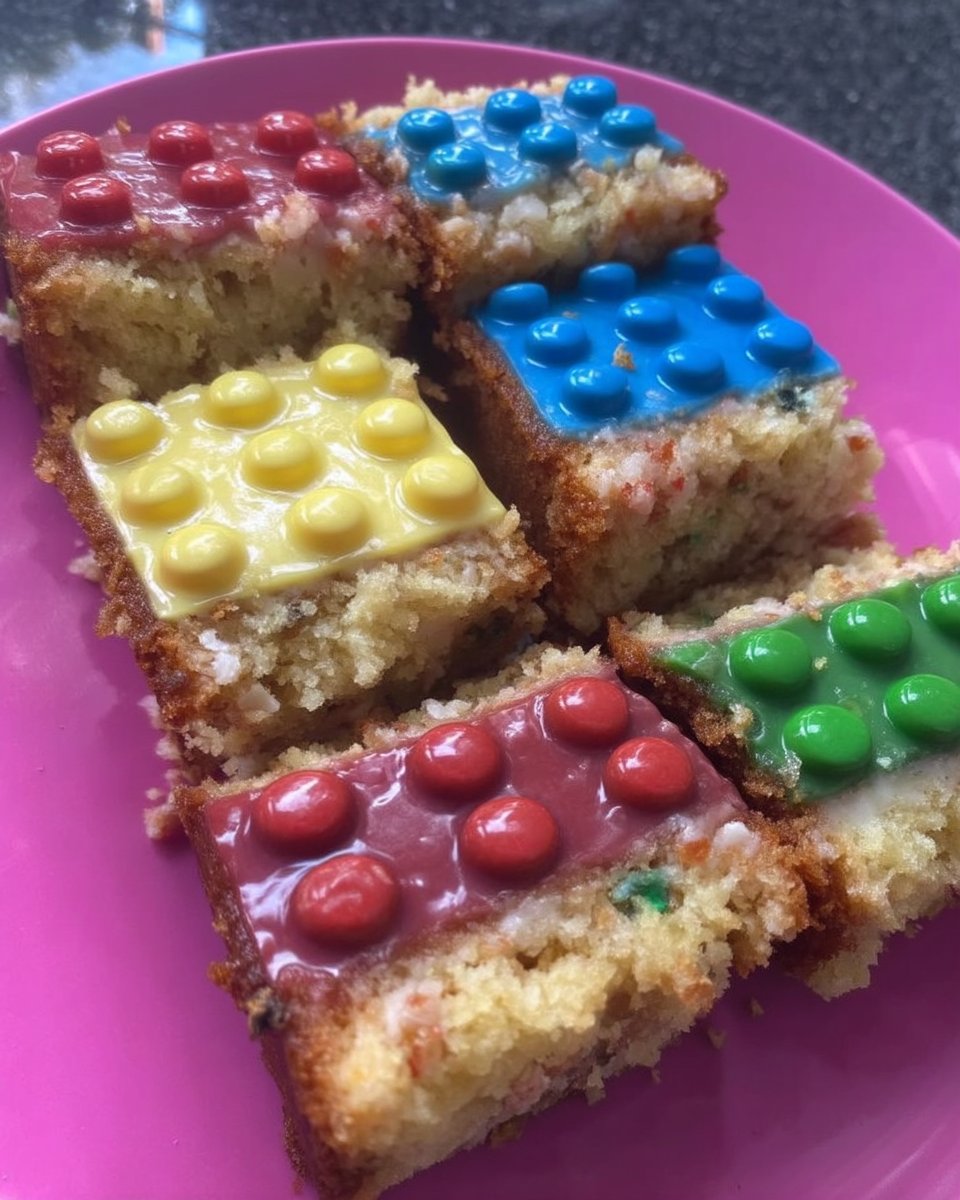
For the best visual impact, arrange the finished bricks on a clean, white rectangular platter to mimic a building baseplate. If you are preparing for a larger event, you can use our celebration design studio to plan the spatial arrangement of multiple colors. These cakes are best served at room temperature, which maintains the optimal texture of both the oil-based crumb and the chocolate coating.
Pair these citrus-noted treats with a cold glass of milk or a tart lemonade to balance the sweetness of the confectioners’ sugar. Because of their modular nature, they are excellent for ‘build-your-own’ dessert stations where guests can choose their favorite colors.
The Final Analysis and Mastery
Mastering the Lego Cake requires a disciplined approach to measurement and a clear understanding of how carbonation interacts with flour proteins. Once you have perfected the modular cutting technique, you can apply these principles to more complex designs, such as our lemon rainbow cake, which uses similar color-theory applications. For further inspiration on color schemes and assembly, refer to this easy lego cake idea from our colleagues in the field.
We invite you to share your technical results with our community of precision bakers. Follow us and tag your builds on Pinterest, Instagram, Facebook, and YouTube to show us your architectural achievements.