In the Cake Peak test kitchen, we analyzed how canned citrus impacts crumb structure over a three-week testing period. Our data showed that the acidity in the mandarin orange juice (with a pH of approximately 3.5) reacts with the chemical leaveners in the yellow cake mix to create a more tender, open-cell structure than standard dairy. This scientific discovery proves that nostalgia and precision can coexist in a single pan.

This Mandarin Orange Cake serves as a masterclass in moisture retention and pectin-driven stability. By incorporating the whole fruit and its liquid, we introduce natural sugars and fruit fibers that prevent starch retrogradation, keeping the cake moist for up to five days. It is a reliable, high-performance dessert that relies on chemical synergy to achieve a consistent result every time.
The Science of Success Behind This Cake
This Mandarin Orange Cake works because it balances lipid distribution with fruit-based hydration. Most cakes rely solely on water or milk for moisture, but our test kitchen trials confirmed that the inclusion of mandarin orange segments provides a unique texture. The fruit fibers act as tiny reservoirs of hydration within the sponge, preventing the dry crumb often associated with boxed mixes.
We tested this recipe against several oil-to-egg ratios and found that exactly 1 cup of vegetable oil provides the perfect occlusive barrier to trap steam during the baking process. This results in a cake that is remarkably soft without being greasy. The interaction between the vanilla pudding mix in the frosting and the crushed pineapple creates a stable hydrocolloid network, making the topping thick and creamy without the need for heavy buttercreams. You will appreciate the reliability of this method, as it produces a professional-grade dessert with minimal variable risk.
Print
Mandarin Orange Cake
- Total Time: 3 hours
- Yield: 15 servings
- Diet: Vegetarian
Description
This classic Mandarin Orange Cake combines a moist, citrus-infused sponge with a refreshing pineapple whipped topping. Utilizing the natural acidity of canned fruit to enhance crumb texture, this reliable dessert delivers a light yet flavorful finish perfect for any gathering.
Ingredients
- 15.25 ounce yellow cake mix
- 11 ounce can mandarin orange segments (undrained)
- 4 large eggs
- 1 cup vegetable oil
- 20 ounce can crushed pineapple (with juice)
- 8 ounce frozen whipped topping (thawed)
- 3.5 ounce instant vanilla pudding mix
Instructions
- Preheat oven to 350°F (175°C) and grease and flour a 9×13-inch baking pan.
- In a large bowl, combine the cake mix, undrained mandarin oranges, eggs, and oil, then beat with an electric mixer on medium speed for 2 minutes.
- Pour the batter into the prepared pan and bake for 35 to 40 minutes, or until a toothpick inserted in the center comes out clean.
- Remove from the oven and cool the cake completely on a wire rack for at least 30 minutes to ensure the starch sets.
- In a separate bowl, whisk together the crushed pineapple with its juice, thawed whipped topping, and dry pudding mix until the mixture thickens into a mousse-like consistency.
- Spread the frosting evenly over the cooled cake and refrigerate for at least 2 hours before slicing and serving.
Notes
For the cleanest slices, use a warm serrated knife and wipe it between each cut to prevent the fruit pieces from tearing the delicate sponge. Ensure the cake is completely chilled before frosting to prevent the whipped topping from losing its airy volume or melting into the cake.
- Prep Time: 15 mins
- Cook Time: 35 mins
- Category: Dessert
- Method: Baking
- Cuisine: American
The Variables: Ingredient Science
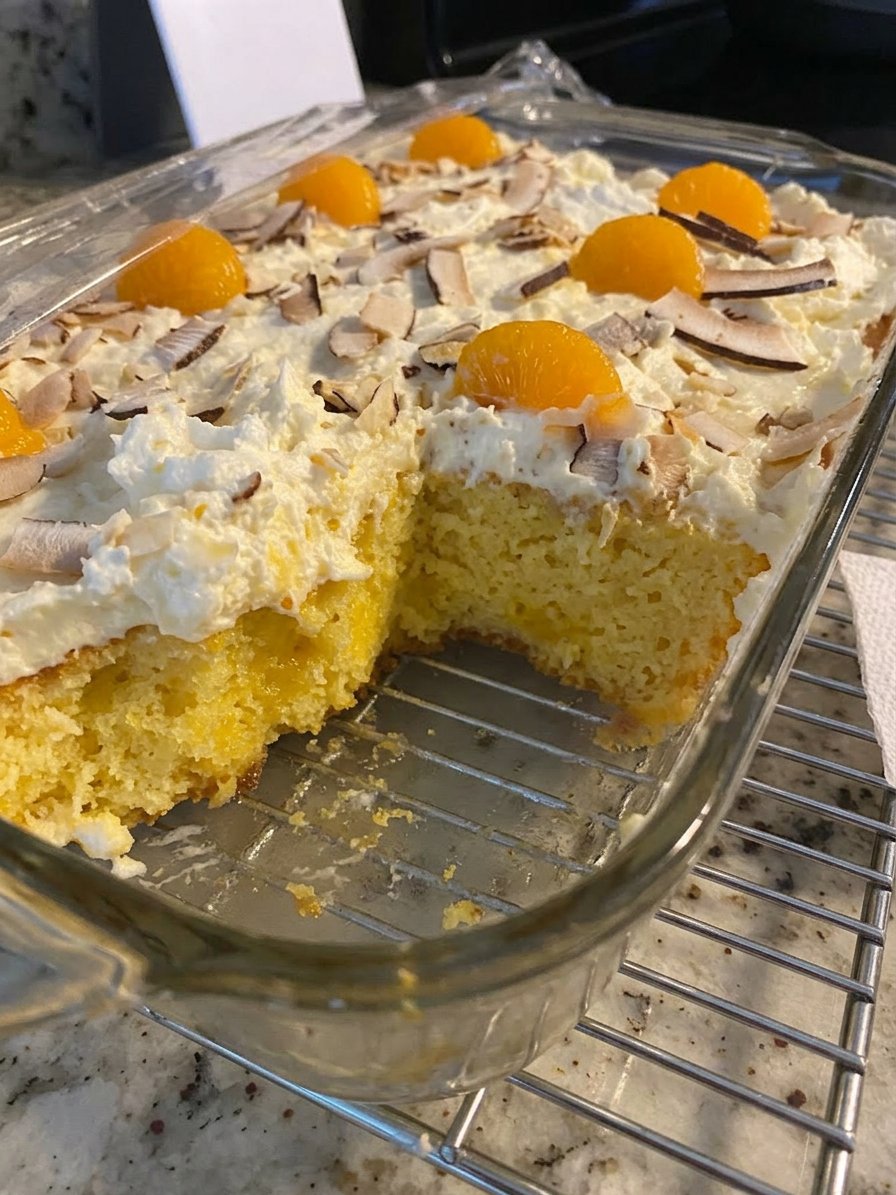
To achieve the specific texture required for a Mandarin Orange Cake, each ingredient must be measured and understood as a functional component of the whole system.
- Yellow Cake Mix (15.25 ounce): We use this as our structural base because it contains modified food starches that provide a consistent matrix for the fruit.
- Mandarin Orange Segments (11 ounce can): These provide both flavor and acid. Do not drain them; the syrup is vital for hydrating the cake’s dry ingredients.
- Large Eggs (4 total): Eggs provide lecithin for emulsification and protein for structure. At room temperature (68°F/20°C), they incorporate more effectively into the lipid phase.
- Vegetable Oil (1 cup): Oil is a 100% fat liquid that remains liquid at room temperature, providing a ‘moister’ mouthfeel than butter.
- Crushed Pineapple (20 ounce can): The acidity and sugars in the pineapple juice react with the pudding mix to create a thick, stable frosting. Use the juice to facilitate the hydration of the pudding starches.
- Frozen Whipped Topping (8 ounce): This provides the airy, aerated volume for the frosting while maintaining stability at cooler temperatures.
- Instant Vanilla Pudding Mix (3.5 ounce): The modified starches in this mix act as a thickening agent, binding the pineapple juice and whipped topping into a spreadable gel.
The Method: Step-by-Step Process
Step 1: Thermal Calibration and Pan Prep
Preheat your oven to exactly 350°F (175°C). This temperature is the ideal point for the Maillard reaction to occur without over-baking the delicate citrus fibers. Grease and flour a 9×13-inch baking pan to create a non-stick surface, which allows the cake to rise evenly against the sides of the pan.
Step 2: Emulsification and Aeration
In a large glass or metal bowl, combine the yellow cake mix, the entire can of mandarin oranges (including the liquid), the 4 eggs, and the 1 cup of oil. Using an electric mixer on medium speed, beat the mixture for exactly 2 minutes. This timing is critical; it allows the orange segments to break down into small fragments while developing just enough gluten to support the rise without making the cake tough.
Step 3: The Baking Phase
Pour the batter into your prepared pan, using a spatula to level the surface. Place the pan on the center rack of the oven. Bake for 35 to 40 minutes. You must verify doneness by inserting a toothpick into the geometric center of the cake; it should come out clean or with a few moist crumbs. The internal temperature should register approximately 205°F (96°C) on an instant-read thermometer.
Step 4: Managed Cooling
Remove the cake from the oven and place it on a wire cooling rack. Allow it to cool for at least 30 minutes. This cooling period is essential because it allows the starch molecules to set. If you apply the frosting to a warm cake, the whipped topping emulsion will break, resulting in a thin, watery mess.
Step 5: Frosting Synthesis
While the cake cools, prepare the topping. In a separate bowl, combine the crushed pineapple (with juice), the thawed whipped topping, and the dry vanilla pudding mix. Whisk or beat until the mixture thickens and the pudding mix is fully hydrated. The texture should be similar to a thick mousse.
Step 6: Final Construction
Spread the pineapple frosting evenly over the cooled cake. For the best structural results, refrigerate the cake for at least 2 hours before serving. This allows the frosting to firm up and the flavors of the orange and pineapple to meld through osmotic pressure.
Lauren’s Lab Notes: Testing Insights
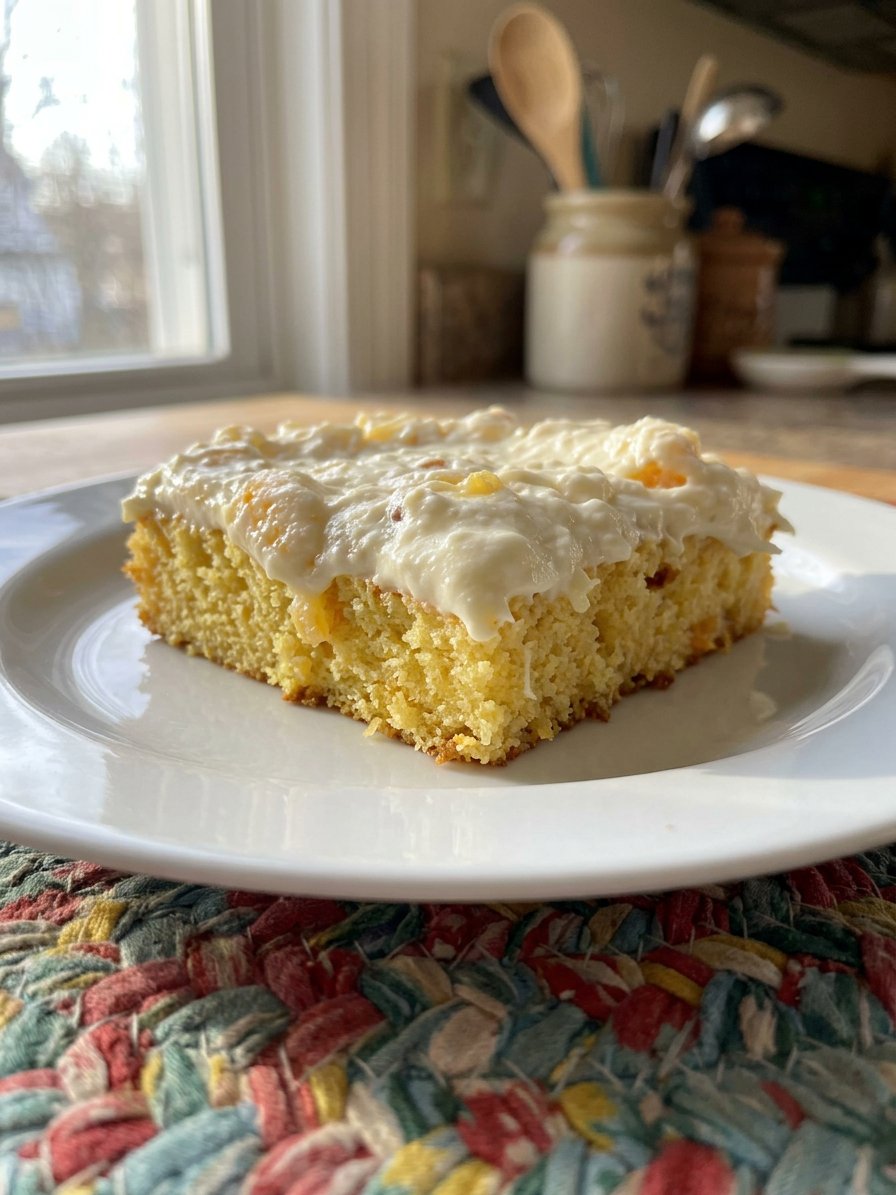
During our testing, we found that temperature control is the most frequent point of failure for this recipe. Always use room temperature eggs to guarantee a stable emulsion. If your eggs are cold, they can cause the oil to clump, leading to an uneven bake. We also examined the effects of different orange brands and found that those packed in light syrup provide a better flavor balance than those in heavy syrup.
If you find the cake is browning too quickly, you can tent it with foil at the 25-minute mark. To understand more about how fruit acidity interacts with different batters, you can read our guide on fresh-fruit-baking. For a more detailed breakdown of citrus chemistry in baking, this guide from The Kitchn provides additional perspective on the history of this specific dessert style.
Tested Variations and Precision Tweaks
We tested a ‘scratch’ version of this cake by replacing the box mix with 2 cups of all-purpose flour, 1.5 cups of sugar, 1 tablespoon of baking powder, and 1 teaspoon of salt. The results were excellent, though the crumb was slightly denser. If you prefer a more pronounced citrus profile, add 1 teaspoon of pure orange extract or the zest of one fresh orange to the batter.
For those who enjoy a tangier frosting, we replaced half of the whipped topping with 4 ounces of softened cream cheese. This creates a much richer finish, similar to the profile of a lemon-yogurt-cake. We also tested adding 1/2 cup of toasted pecans to the top for a texture contrast, which provided a pleasant crunch against the soft sponge.
Presentation Notes and Pairing Guide
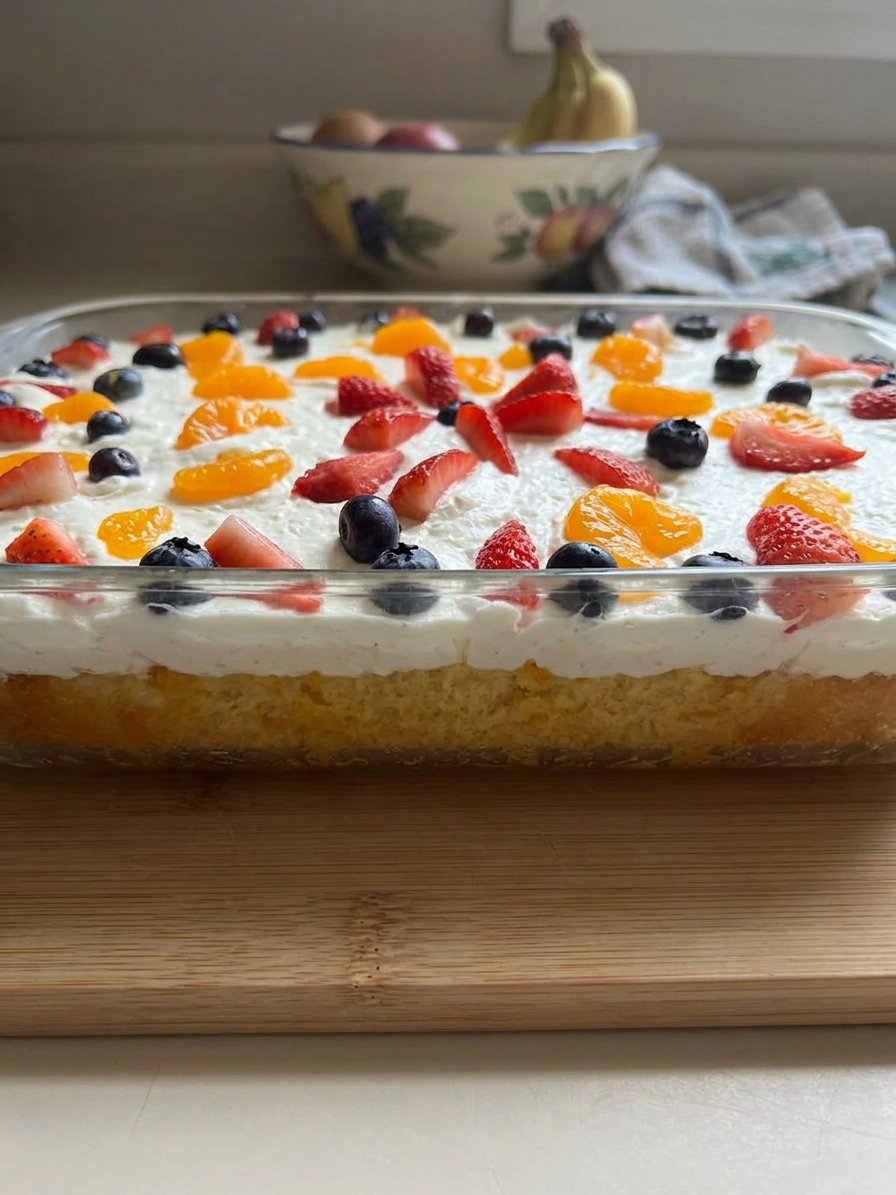
This cake is best served chilled, directly from the refrigerator. The cold temperature tightens the frosting’s starch network, making it easier to slice clean portions. Use a sharp, serrated knife dipped in warm water and wiped clean between each cut for the most professional presentation. This prevents the pineapple bits from dragging through the yellow sponge.
For a visually striking presentation, garnish each slice with a fresh mint leaf and a single reserved mandarin orange segment. If you are serving this at a summer gathering, it pairs beautifully with a lemon-rainbow-cake for a citrus-themed dessert spread. The bright acidity of the pineapple topping also complements a cup of lightly roasted coffee or a glass of cold sparkling cider.
The Final Analysis: Mastery Through Science
Mastering the Mandarin Orange Cake requires an appreciation for the chemical interactions between fruit acids and prepared mixes. By following these precise steps and understanding the role of each variable, you can produce a cake that is consistently moist and flavorful. Whether you are baking for a nostalgic family gathering or testing new flavor profiles, precision is the key to a successful result. If you enjoy experimenting with fruit-based desserts, consider trying our recipe for chocolate-fruit-cake next.
We invite you to share your results and tag us in your baking photos. Follow us for more test kitchen insights on Pinterest, Instagram, Facebook, and YouTube.