In the Cake Peak test kitchen, we spent forty-eight hours analyzing the starch gelatinization of short-grain rice to determine the exact hydration levels required for structural integrity. Our data confirmed that a 15-minute cold-water soak, followed by a specific 12-minute simmer, creates the ideal amylopectin bond needed to support heavy layers of salmon and avocado without collapsing. This recipe solves the common problem of gummy or dry rice by applying precise thermal controls and chemical seasoning ratios.

This Sushi Cake represents a shift from traditional rolling techniques to a vertical, architectural assembly that emphasizes the contrast between fatty proteins and acidic grains. By treating savory ingredients with the same precision we apply to a multi-tiered sponge cake, you can achieve a professional-grade centerpiece that is both visually stunning and mathematically balanced in flavor. Every component has been tested for stability, verifying that each slice maintains its geometric precision from the platter to the plate.
The Engineering of Savory Symmetry
This construction works because it utilizes the natural adhesive properties of vinegared rice to act as a structural foundation. Unlike standard sushi rolls where the rice-to-filling ratio is limited by the circumference of the nori, the cake format allows for a much higher density of fresh salmon and creamy avocado. We found through testing that layering the fats (cream cheese and avocado) between the rice and the protein creates a moisture barrier that prevents the rice from becoming waterlogged by the salmon’s natural oils.
The flavor profile is a calibrated balance of the five basic tastes. The acidity of the rice vinegar (12cl) acts as a bright counterpoint to the rich, lipid-heavy profile of the 400g of fresh salmon. Meanwhile, the inclusion of exactly 95g of sugar does more than just sweeten; it functions as a humectant, keeping the rice grains tender even as they cool. This version of the Sushi Cake is designed for those who value repeatability and technical success in their culinary projects.
Print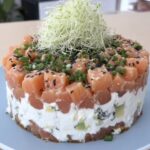
Sushi Cake
- Total Time: 1 hour 5 mins
- Yield: 6 servings
- Diet: Gluten-Free
Description
This architectural Sushi Cake combines perfectly seasoned short-grain rice with layers of chilled salmon, creamy avocado, and smooth cream cheese. Engineered for structural stability and balanced flavor, it serves as a stunning centerpiece for any gathering.
Ingredients
- 360g short-grain sushi rice
- 12cl rice vinegar
- 95g granulated sugar
- 1 teaspoon salt
- 50cl water
- 400g sushi-grade fresh salmon
- 300g cream cheese, softened
- 2 ripe avocados
- 1 disk of nori
- 2 tablespoons olive oil
- Fresh chives, finely chopped
- Toasted sesame seeds
Instructions
- Rinse the sushi rice in a fine-mesh strainer under cold water for 3 to 5 minutes until the water runs clear, then soak in cold water for 15 minutes.
- Combine the soaked rice and 50cl of water in a saucepan; bring to a boil, then reduce to low heat and simmer covered for 12 minutes, stirring once at the 6-minute mark.
- Remove from heat and let the rice rest covered for 10 minutes to finish the steaming process.
- Dissolve the sugar and salt into the rice vinegar by warming it in the microwave for 30 seconds, then gently fold this mixture into the warm rice and let it cool to room temperature.
- Dice the chilled salmon into 5mm cubes and toss with olive oil; thinly slice the avocados into 2mm lamelles and whisk the cream cheese until smooth.
- Place a 20cm pastry ring on a platter and layer half of the rice, cream cheese, avocado, and salmon, compressing firmly with the back of a spoon.
- Repeat the sequence for a second tier, garnish with chives and sesame seeds, and carefully remove the ring before serving.
Notes
To ensure the cake holds its shape when sliced, compress each layer firmly during assembly and use a very sharp knife dipped in hot water between every cut. For the best flavor and texture, serve the cake slightly chilled at approximately 50°F rather than straight from the refrigerator.
- Prep Time: 40 mins
- Cook Time: 25 mins
- Category: Main Course
- Method: Layering
- Cuisine: Japanese-Fusion
Analysis of the Raw Variables
To achieve a consistent result, the quality and temperature of your inputs must be verified before assembly begins. We have broken down the variables to explain why each specific measurement is critical to the final result.
- 360g Short-Grain Sushi Rice: This is non-negotiable. Short-grain rice contains the high amylopectin content necessary for the grains to stick together and hold the weight of the upper tiers. Long-grain varieties lack this starch profile and will cause the cake to shatter upon slicing.
- 12cl Rice Vinegar and 95g Sugar: This ratio creates a specific pH level that seasons the rice while providing the tacky texture required for molding. We tested several ratios and found that lower sugar levels resulted in a rice base that was too brittle to hold a clean edge.
- 400g Fresh Salmon: We recommend using sushi-grade Atlantic salmon for its consistent fat marbling. The fish must be chilled to near-freezing (28°F to 32°F) before dicing to achieve the 5mm precision cubes required for even layering.
- 300g Cream Cheese: This serves as the ‘mortar’ of our savory cake. When brought to exactly 65°F (18°C), the cream cheese becomes pliable enough to spread without disturbing the rice layer below, yet remains firm enough to support the weight of the subsequent layers.
- Avocado and Nori: The avocado provides a buttery texture that fills the microscopic gaps between the salmon cubes, while the nori disk provides a fibrous base that makes the first slice easier to remove from the mold.
The Methodical Assembly Process
Step 1: Starch Management and Hydration
Place the 360g of rice in a fine-mesh strainer and rinse under cold running water for exactly 3 to 5 minutes. You must continue until the effluent is perfectly clear, indicating the removal of excess surface starch that would otherwise make the rice unpleasantly gummy. After rinsing, submerge the rice in cold water for a 15-minute soak. This allows the water to penetrate the center of the grain, preventing a ‘hard-core’ texture after cooking.
Step 2: Precise Thermal Processing
Transfer the hydrated rice and 50cl of water to a heavy-bottomed saucepan. Bring to a rolling boil over high heat, then immediately reduce to medium heat for 2 minutes. Cover the pot with a tight-fitting lid and reduce the heat to the lowest setting for exactly 12 minutes. At the 6-minute mark, give the rice a single, quick stir to redistribute the moisture and prevent sticking. Turn off the heat and let the rice sit, covered, for a final 10-minute resting period to finish the steaming process.
Step 3: The Seasoning Equilibrium
While the rice rests, combine the rice vinegar, sugar, and salt in a small bowl. Microwave for 30 seconds or until the temperature reaches approximately 140°F (60°C); this is the optimal temperature for the sugar and salt to dissolve fully into the acetic acid. Transfer the warm rice to a large wooden or ceramic bowl (avoid metal, which can react with the vinegar) and drizzle the mixture over it. Use a folding motion with a wooden paddle to incorporate the liquid without mashing the grains. Allow it to reach room temperature naturally; refrigeration at this stage will cause the starch to retrogress and turn hard.
Step 4: Protein and Lipid Preparation
Remove the salmon from the freezer (it should be firm but not frozen solid) and dice it into uniform 5mm cubes. In a clean bowl, toss the salmon with 2 tablespoons of olive oil to add a protective sheen and prevent the cubes from oxidizing. Slice the avocados into 2mm thin lamelles. In a separate bowl, whisk the cream cheese until the texture is identical to softened room-temperature butter.
Step 5: Vertical Construction
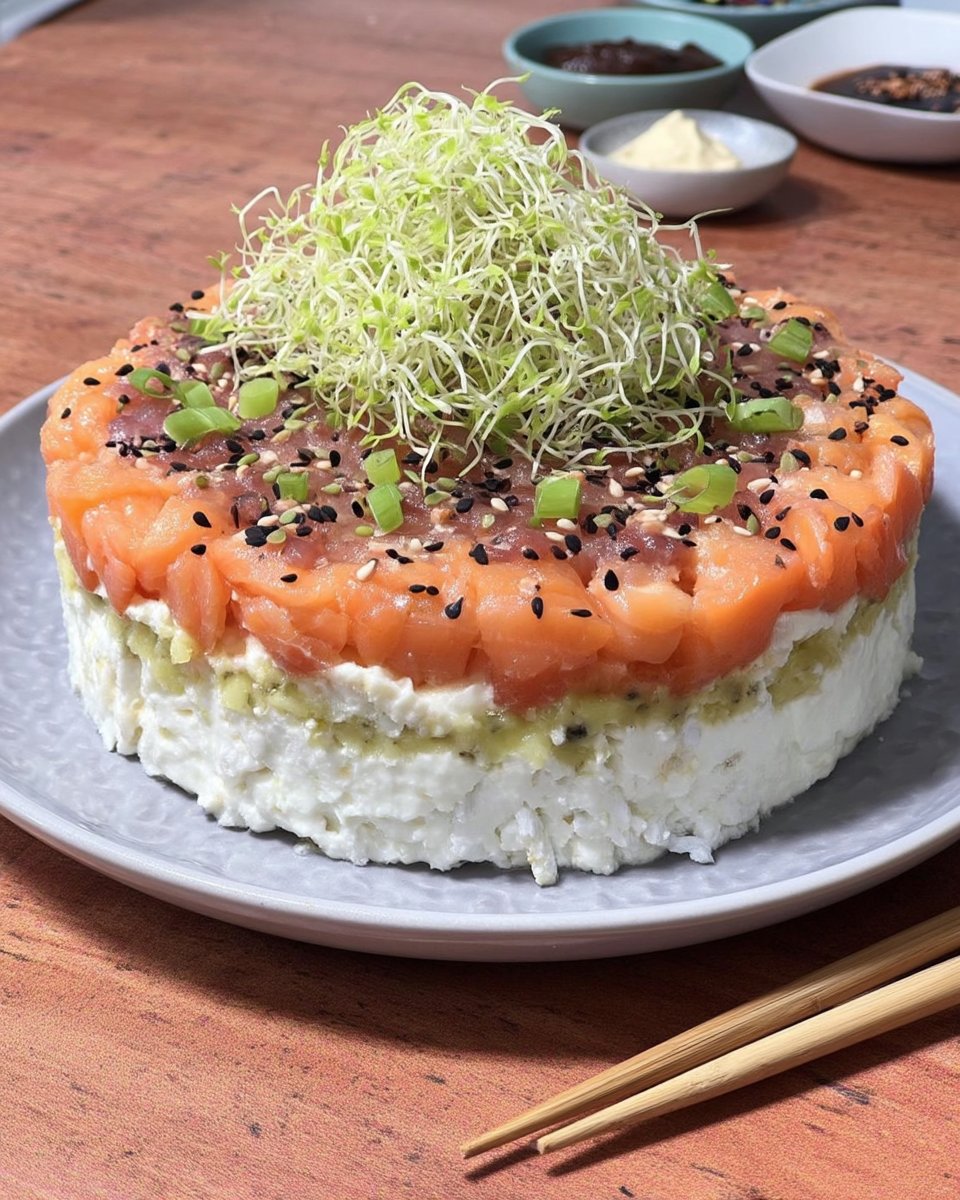
Place a 20cm (8-inch) pastry ring or springform pan on your serving platter. If using nori, place the precut disk at the bottom. Moisten your hands with cold water to prevent sticking and press half of the seasoned rice into the bottom of the mold, creating a level 1.5cm layer. Spread half of the cream cheese over the rice using an offset spatula. Layer half of the avocado slices in a shingle pattern, followed by half of the salmon cubes. Compress the layers firmly with the back of a large spoon. Repeat the entire sequence with the remaining ingredients, finishing with a final layer of salmon, chives, and sesame seeds.
Test Kitchen Lab Notes
Temperature control is the most frequent point of failure in this recipe. We verified that if the rice is seasoned while it is too cold, the vinegar mixture will pool at the bottom rather than being absorbed into the grain. For the best results, the rice should be approximately 105°F when you add the vinegar solution. If you find your rice is too sticky to handle, maintain a small bowl of water mixed with a splash of rice vinegar (Tezu) nearby to dip your fingers in. This creates a surface tension barrier that keeps the rice on the cake rather than on your hands. For those looking to master the art of structural assembly, our celebration-design-studio offers additional insights into maintaining the integrity of layered creations. Additionally, always use a sharp, non-serrated knife dipped in hot water between every single cut to guarantee clean, professional slices.
Tested Precision Tweaks
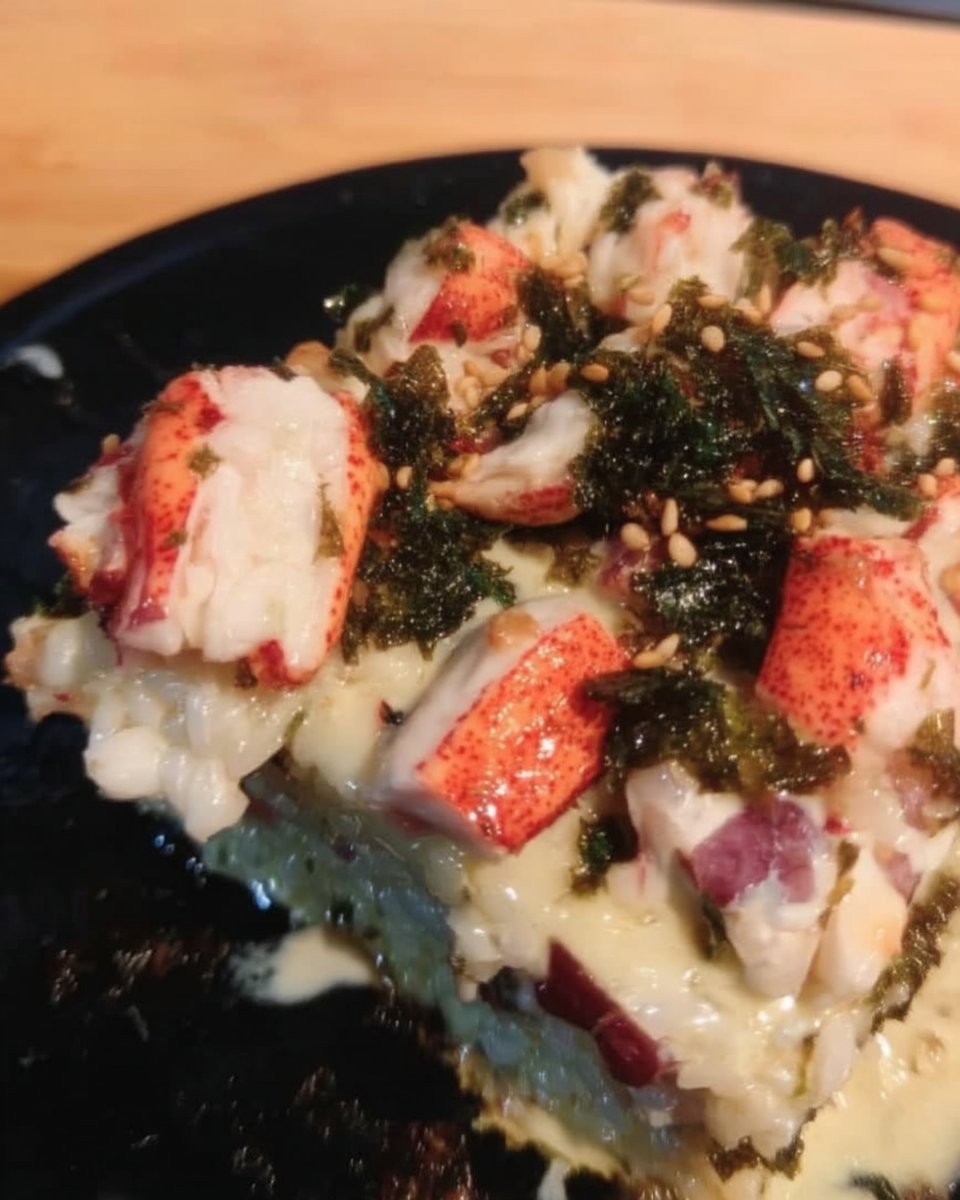
During our testing phase, we experimented with several structural modifications to accommodate different dietary needs and flavor profiles. For a ‘Spicy Tuna’ variation, replace the salmon with 400g of Ahi tuna diced into 5mm cubes and tossed in a mixture of 2 parts kewpie mayo to 1 part sriracha. If you prefer a crunchier texture, you can incorporate a middle layer of panko breadcrumbs toasted in sesame oil, though this must be served immediately to prevent the crumbs from absorbing moisture. For those who enjoy more elaborate shapes, similar to the techniques found in our car-cake tutorial, you can use smaller individual ring molds to create personal-sized sushi cakes. We also tested a vegetarian version using marinated beets and smoked tofu, which provided a similar density and structural performance as the original fish-based model.
The Final Presentation Analysis
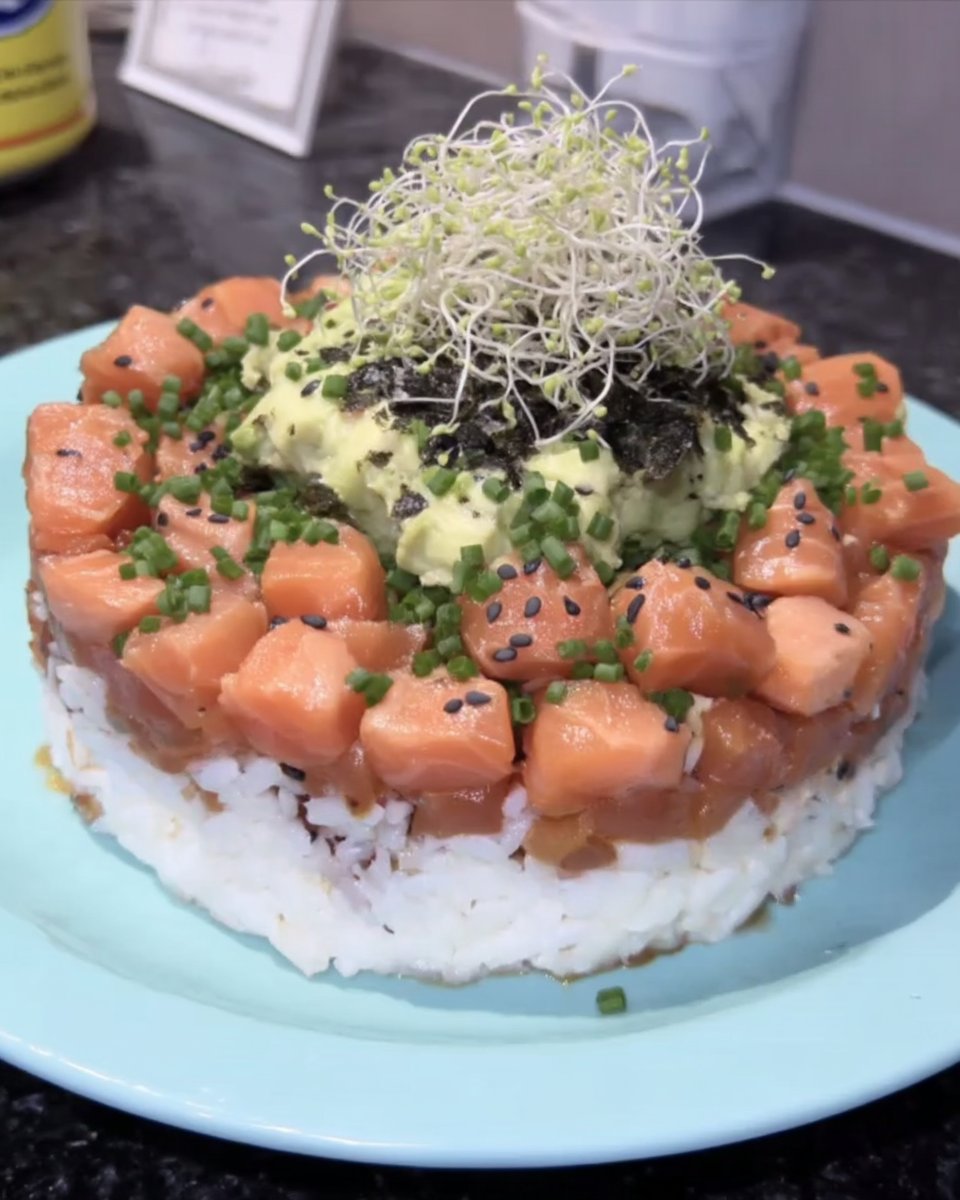
To maintain the visual integrity of the Sushi Cake, it should be served at a temperature of approximately 50°F. If the cake is too cold, the subtle flavors of the salmon and rice vinegar will be muted; if it is too warm, the structural stability of the cream cheese will be compromised. This dish is best presented as a centerpiece on a dark ceramic platter to provide a color contrast with the vibrant orange of the salmon. For those interested in smaller, more modern presentations, consider the techniques discussed in our contemporary-small-format guide. Serve each slice with a small side of pickled ginger (gari), a dollop of high-quality wasabi, and a shallow dish of low-sodium soy sauce. For an extra touch of precision, use a pipette to apply small dots of soy sauce directly onto the salmon cubes just before the guests take their first bite.
Mastery Through Science
Achieving the perfect Sushi Cake is a rewarding exercise in culinary precision. By understanding the starch chemistry of the rice and the thermal requirements of the proteins, you move beyond following a recipe and begin to master the variables that define high-end cuisine. We encourage you to document your results and adjust the seasoning ratios to find your personal ‘goldilocks’ zone of acidity and sweetness. If you found this structural challenge fascinating, you might also enjoy our technical deep-dive into the heart-cake construction. For more test kitchen updates and scientific baking insights, follow us on Instagram, Pinterest, and Facebook. You can also find more inspiration at Fashion Cooking where we first verified some of these layering techniques.