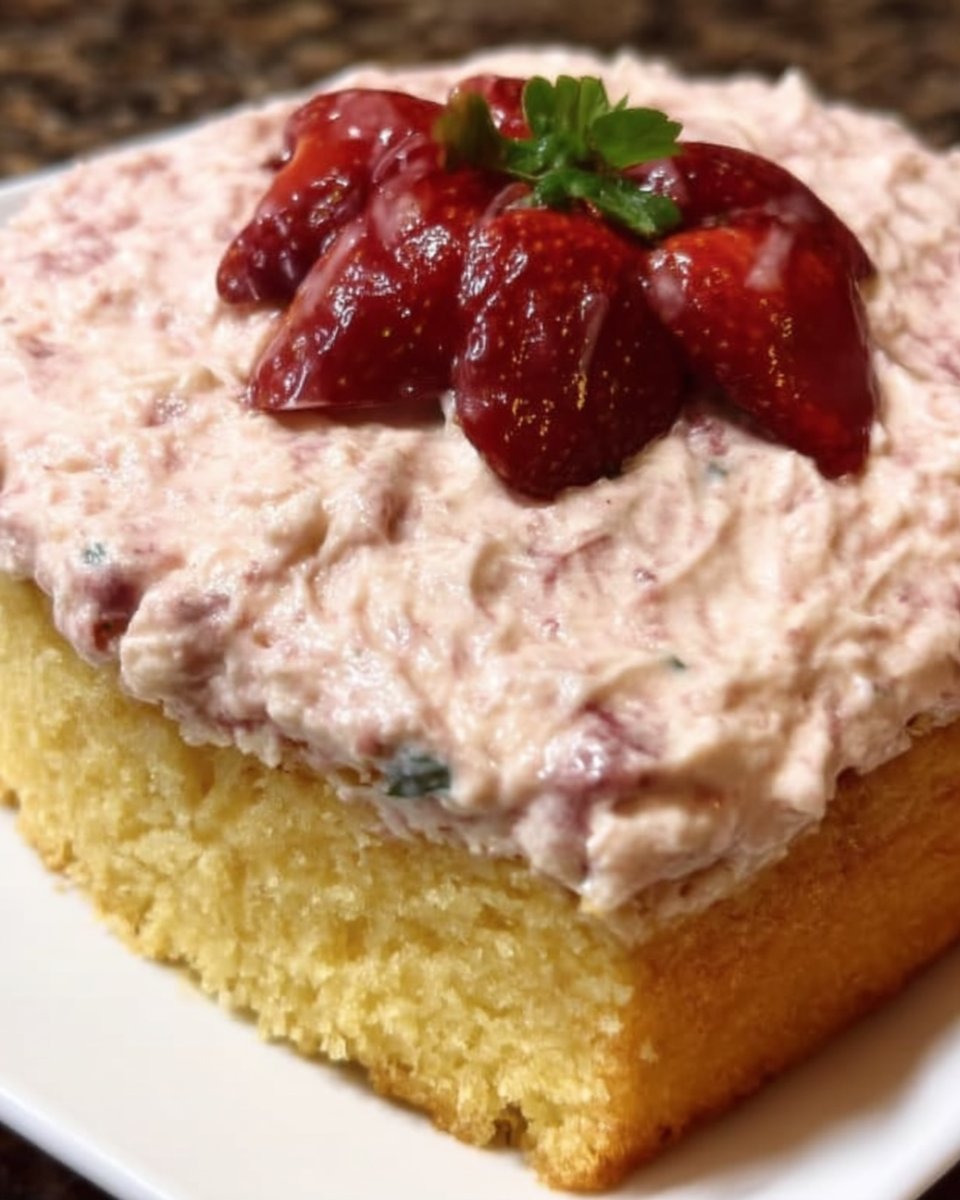
On many mornings, I find myself wandering through the quiet rows of the local farmers market, admiring the deep gold of the fresh pasture-raised eggs and the creamy weight of local butter. There is a profound, honest satisfaction in gathering these basic elements to create something as timeless as a homemade cake. This yellow cake recipe is my way of bringing that sun-drenched farmhouse warmth into your own kitchen, celebrating the simple beauty of ingredients handled with care.

This particular version of a classic is a true treasure in my collection because it avoids the heaviness often found in traditional recipes. By gently folding in whipped egg whites, we achieve a crumb that is remarkably light yet stays moist and sturdy enough to hold its own against a thick swirl of chocolate frosting. It is the kind of cake that sits proudly on a wooden table, inviting everyone to slow down and enjoy a genuine, handcrafted treat.
Why You’ll Love This Recipe
You will fall in love with this recipe because it prioritizes authentic flavor over complicated techniques. This yellow cake recipe delivers that nostalgic, buttery taste we all crave from a classic birthday dessert but with a refined texture that comes from using high-quality buttermilk and fresh yolks. It is a reliable, sturdy base that doesn’t crumble under the weight of rich frosting, making it perfect for celebrations or a simple Sunday tea. The rustic charm of the golden crumb paired with the deep, dark cocoa notes of the buttercream creates a balance that is both comforting and deeply satisfying. Unlike box mixes that rely on artificial stabilizers, this cake uses the natural power of whipped whites to create a lift that is airy and honest. It is a testament to the fact that when you start with the best seasonal ingredients, the results speak for themselves.
Print
Yellow Cake Recipe
- Total Time: 1 hour
- Yield: 12 servings
- Diet: Vegetarian
Description
Experience the timeless charm of a homemade yellow cake that pairs a sun-kissed, buttery crumb with a luscious chocolate frosting. This recipe uses whipped egg whites for a light, airy texture that remains sturdy enough for any festive occasion.
Ingredients
- 3 cups cake flour
- 1 1/2 tsp baking powder
- 1/2 tsp baking soda
- 1 tsp salt
- 1 cup unsalted butter, softened
- 2 cups granulated sugar
- 4 large egg yolks
- 2 large egg whites
- 1/4 tsp cream of tartar
- 2 tsp pure vanilla extract
- 1 1/2 cups buttermilk
- 1 cup unsalted butter (for frosting)
- 1/2 cup unsweetened cocoa powder
- 4 cups confectioners’ sugar
- 3 tbsp heavy cream
- 1 pinch salt
- 1 tsp vanilla extract
Instructions
- Preheat oven to 350°F (177°C) and grease two 9-inch round cake pans, lining the bottoms with parchment paper.
- Whisk together cake flour, baking powder, baking soda, and salt in a large bowl.
- Beat softened butter and granulated sugar on high for 3 minutes until pale, then add egg yolks and vanilla extract.
- Alternately add the flour mixture and buttermilk to the butter mixture, beginning and ending with the flour.
- Whip 2 egg whites and cream of tartar to stiff peaks in a separate bowl, then gently fold into the batter.
- Divide batter between pans and bake for 27 to 31 minutes, tenting with foil at 18 minutes; cool completely on a wire rack.
- Beat frosting ingredients (butter, cocoa, sugar, cream, salt, and vanilla) until smooth and luscious.
- Level the cake tops with a serrated knife, stack with a layer of frosting, and frost the exterior with rustic swirls.
Notes
To ensure the most tender crumb, avoid over-mixing the batter once the flour is added. Using room temperature buttermilk and eggs will prevent the batter from breaking and ensure a smooth emulsification. If your kitchen is warm, chill the cake layers for 20 minutes before frosting to make the assembly process easier.
- Prep Time: 30 mins
- Cook Time: 30 mins
- Category: Dessert
- Method: Baking
- Cuisine: American
The Farmhouse Pantry
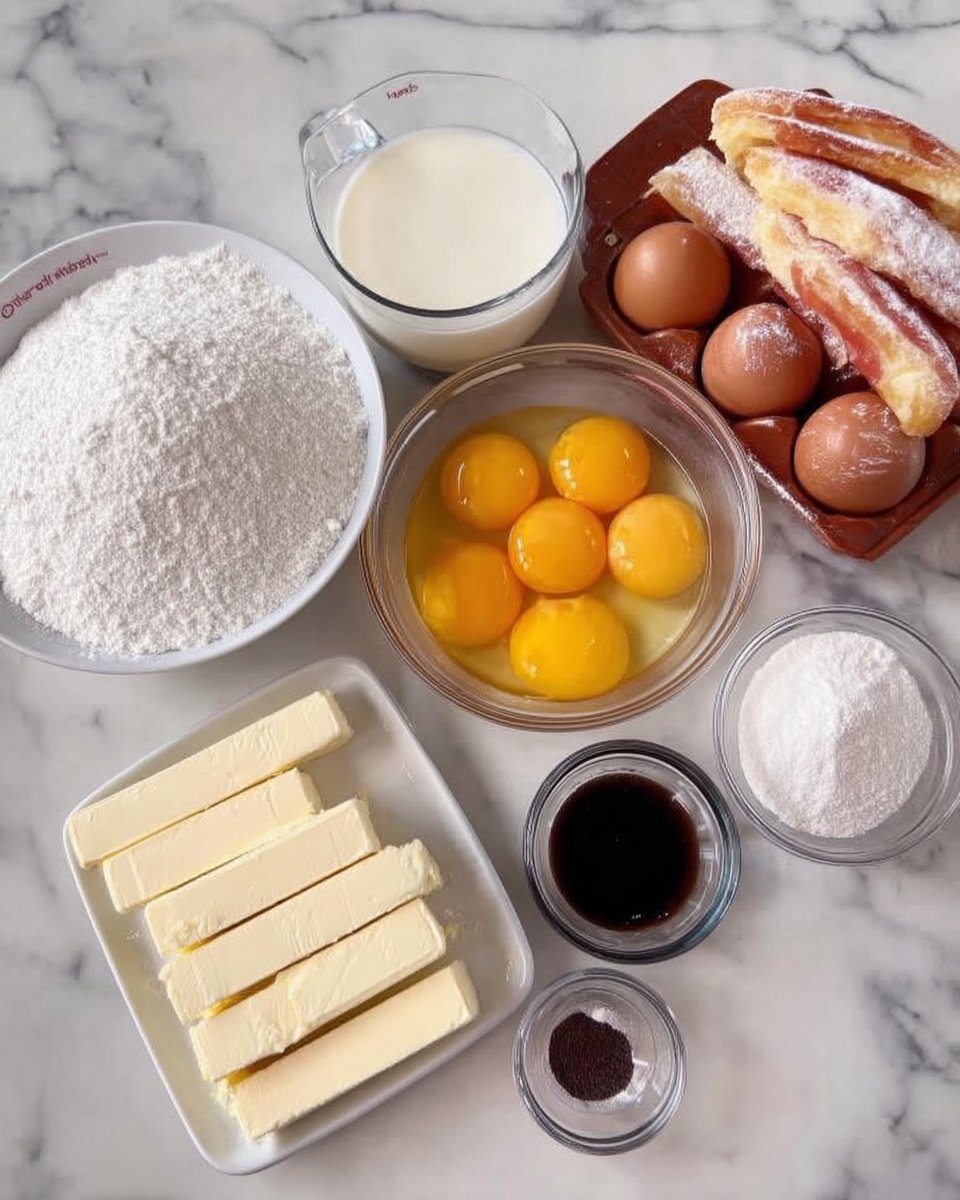
To achieve the best results with this yellow cake recipe, I always suggest looking for the freshest dairy and eggs you can find. These staples are the backbone of the cake’s flavor and color.
- Cake Flour: This is essential for a soft, fine crumb. It has less protein than all-purpose flour, which prevents the cake from becoming tough or bread-like.
- Unsalted Butter: Use a high-quality butter and ensure it is softened to room temperature. This allows it to cream properly with the sugar, trapping the air needed for a light bake.
- Egg Yolks & Whites: We use four large yolks for that signature sun-kissed color and richness, while the whites are whipped separately to provide a delicate structure.
- Buttermilk: This brings a subtle tang and a lot of moisture. The acidity helps tenderize the gluten in the flour for a melt-in-your-mouth experience.
- Granulated Sugar: This provides sweetness and helps in the creaming process to create a stable structure.
- Pure Vanilla Extract: A good, strong vanilla is the secret to making the buttery flavors really sing.
- Leavening Agents: A combination of baking powder and a touch of baking soda ensures the cake rises beautifully in the oven.
- Chocolate Buttercream Ingredients: You will need more unsalted butter, unsweetened cocoa powder, confectioners’ sugar, and a splash of heavy cream to create that iconic, fudgy finish.
How to Make It
Step 1: Prep Your Ingredients
Start by preheating your oven to 350°F (177°C). Prepare two 9-inch round cake pans by greasing them thoroughly and lining the bottoms with parchment paper. This step is vital for making sure your golden layers release from the pans without any sticking or tearing. I like to use a simple nonstick spray or a bit of softened butter for this.
Step 2: Combine the Dry Goods
In a large, sturdy bowl, whisk together the cake flour, baking powder, baking soda, and salt. Spend a moment making sure there are no large clumps; a uniform mixture here ensures an even rise throughout the cake. Set this aside while you focus on the creamed components.
Step 3: Cream Butter and Sugar
Using a stand mixer or a handheld mixer, beat the softened butter and granulated sugar together on high speed for at least 3 minutes. You want the mixture to look pale and feel light. Scrape down the bowl occasionally to make sure every bit is incorporated. Then, lower the speed and add the egg yolks one by one, followed by the vanilla extract.
Step 4: Alternate the Batter
With the mixer on low, add about a third of your flour mixture, then half of the buttermilk. Repeat this process, ending with the final third of the flour. This method prevents the batter from breaking and helps maintain a smooth, thick consistency. If you see any lumps at the bottom, give it a quick, gentle stir by hand with a spatula.
Step 5: The Whipped Egg Whites
In a clean, grease-free bowl, beat the two egg whites and the cream of tartar until you see fluffy, stiff peaks. This is the secret to the cake’s airy texture. Slowly and very gently fold these whites into your thick batter using a wide spatula. Be careful not to stir too vigorously, as you want to keep as much air in the batter as possible.
Step 6: Bake and Cool
Distribute the batter evenly between your two prepared pans. Bake for 27 to 31 minutes. After about 18 minutes, I recommend tenting the pans with foil to prevent the tops from getting too dark. When a toothpick inserted into the center comes out clean, remove them from the oven and let them cool completely in the pans on a wire rack.
Step 7: Mix the Buttercream
While the cakes cool, prepare the frosting. Beat the butter until it is creamy and smooth. Add the confectioners’ sugar, cocoa powder, cream, salt, and vanilla. Start on low speed to avoid a sugar cloud, then whip on high for a full minute until it is luscious and spreadable. Adjust the consistency with a little more cream or sugar if needed.
Step 8: Assembly
If your cakes have a slight dome, use a serrated knife to level the tops. Place one layer on your stand, cover with a generous layer of frosting, and top with the second layer. Frost the top and sides with a rustic touch, leaving beautiful swirls in the buttercream for that authentic farmhouse look.
Christine’s Tips
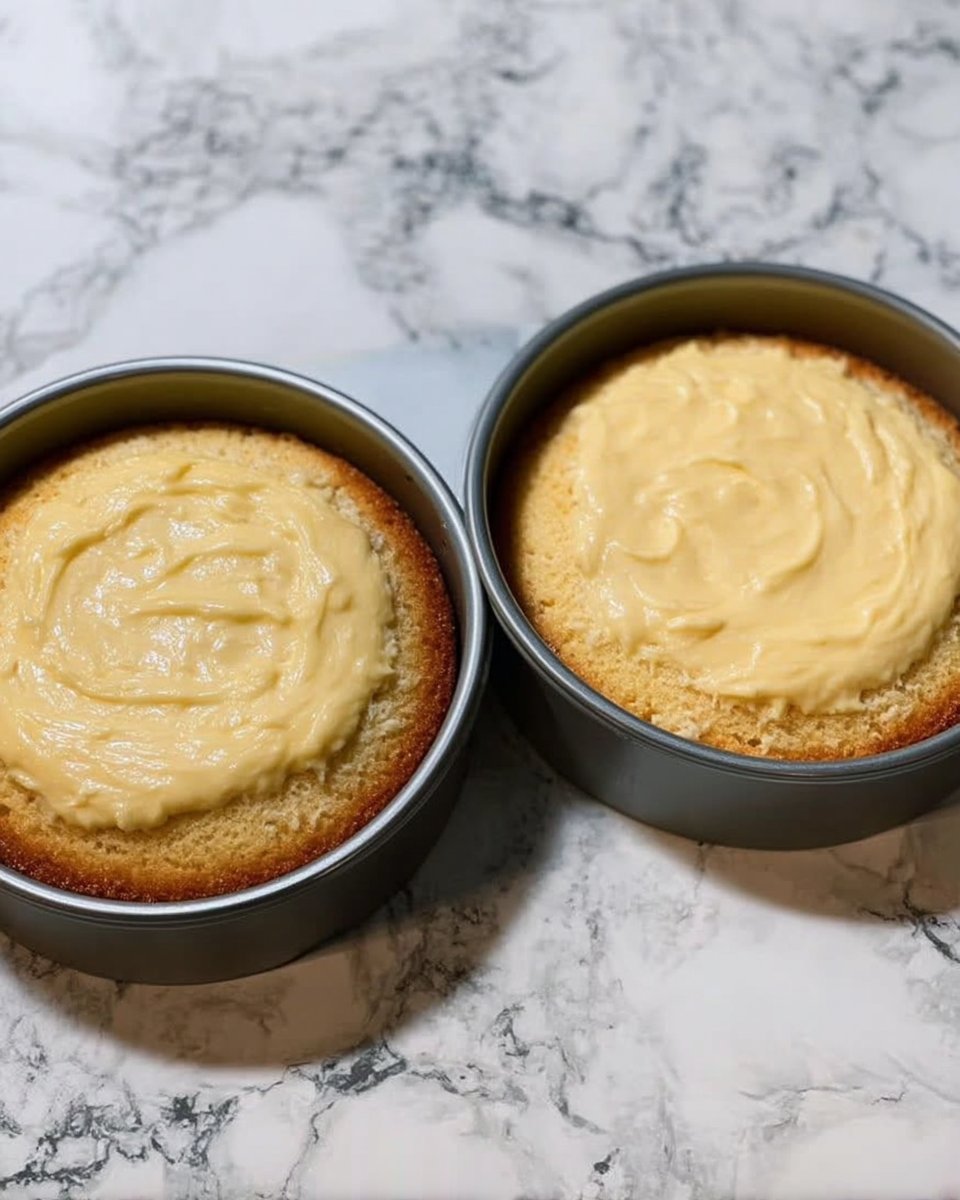
To make this the best yellow cake recipe you’ve ever baked, always ensure your buttermilk and eggs are at room temperature before you begin. Cold ingredients can cause the batter to curdle, resulting in a dense, uneven crumb. If you find your cakes are often dry, it might be due to over-baking; start checking for doneness a few minutes early. For those looking to master more foundational recipes, learning the nuances of your specific oven is a great place to start. If you want a truly moist result every time, you can also look at this moist yellow cake guide for extra inspiration on liquid ratios. Finally, always spoon and level your flour rather than scooping it directly with the measuring cup to avoid using too much and making the cake heavy.
Seasonal Swaps
This recipe is incredibly versatile and can be adapted for any time of year. While the chocolate buttercream is a classic choice for this yellow-cake-chocolate-frosting, you might try a bright lemon zest frosting in the spring or a rich caramel glaze during the autumn harvest. You can also replace the vanilla extract with almond or even a hint of orange blossom water for a different floral profile. For a lighter summer version, skip the heavy frosting and serve the layers with fresh macerated berries and a dollop of whipped cream. If you prefer a more traditional dark cake, you might enjoy our old-fashioned-chocolate-cake as well.
At the Table
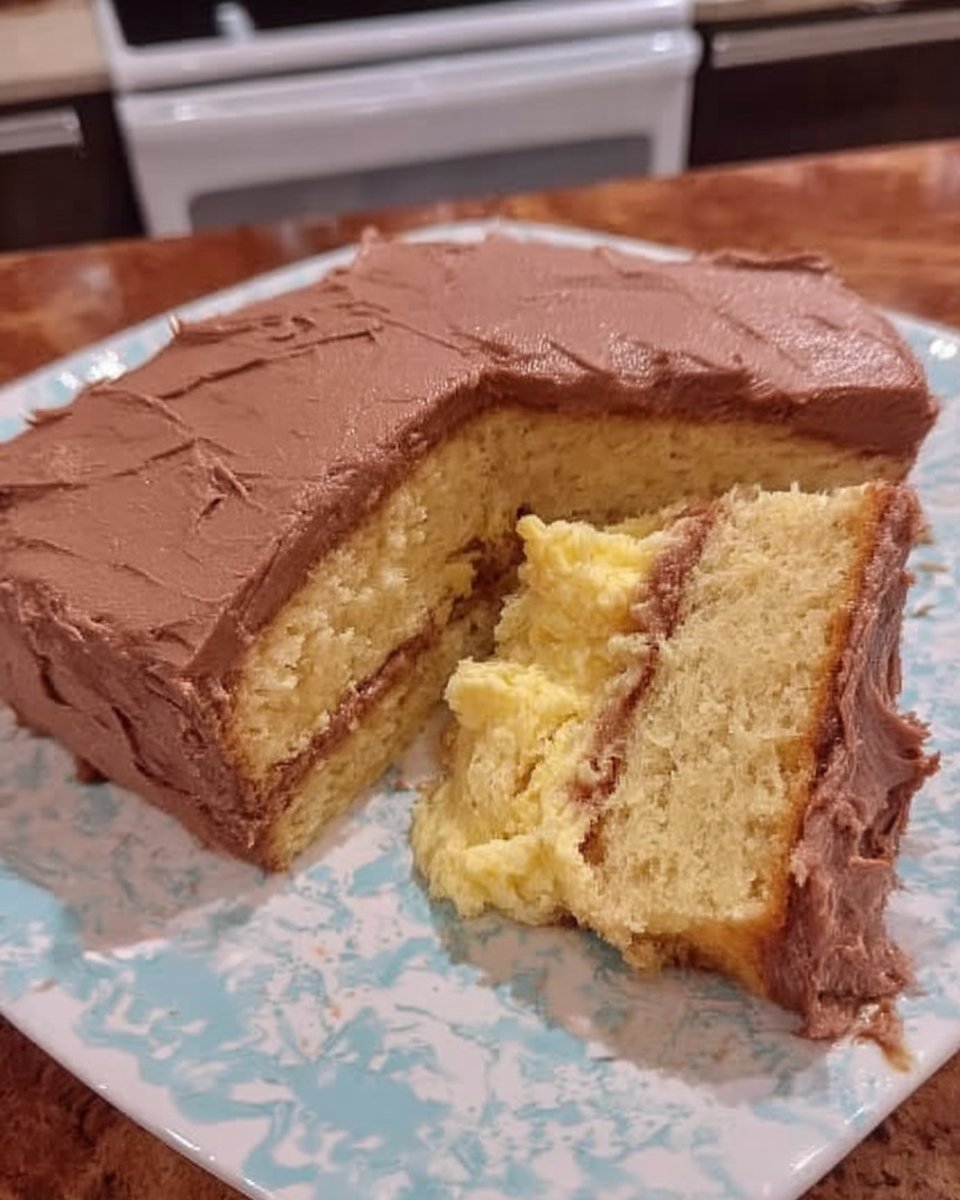
When it comes to serving this beautiful yellow cake, I believe in keeping things simple and rustic. A plain white ceramic platter or a heavy wooden cake stand allows the golden layers to be the star of the show. To make the presentation even more special, you might consider serving it with a side of seasonal fruit or a small pitcher of fresh cream. This cake feels right at home in a vintage cake setting, perhaps on a porch during a summer afternoon. For the neatest slices, use a sharp knife dipped in warm water and wiped dry between each cut. This ensures the chocolate frosting stays clean and the tender crumb remains intact.
The Simple Truth
There is nothing quite like the smell of a yellow cake cooling on a wire rack to make a house feel like a home. This recipe is a reminder that you don’t need fancy ingredients or complicated gadgets to create something truly memorable—just fresh eggs, good butter, and a little bit of time. If you found this helpful, you might also want to try our old-fashioned-chocolate-cake for your next gathering. I would love to see your farmhouse bakes, so please share your photos with us on Pinterest, Instagram, or Facebook. Happy baking, from my kitchen to yours!