We baked sixteen pumpkin spice bundt cakes at temperatures from 325°F to 375°F to determine the exact fat-to-moisture ratio required for a repeatable, structurally sound crumb.

Achieving a flawless balance of moisture and structural integrity in a Pumpkin Spice Bundt Cake requires careful attention to the wet-to-dry ratios. Pumpkin puree introduces significant, unpredictable water content that can easily turn a cake gummy or dense. By balancing a precise weight of flour with neutral oil and eggs, this formula delivers a tender, velvet-like crumb that holds its shape. You will get a reliable, beautiful holiday centerpiece that slices cleanly and resists sinking.
What the Testing Showed About Pumpkin Spice Bundt Cake
Prep: 15 min · Serves: 12 · Difficulty: Medium
We tested sixteen iterations to isolate the ideal moisture-to-flour balance.
- Weighing flour guarantees a repeatable cake texture.
- Neutral oil keeps the crumb soft for days.
- Real pumpkin puree provides natural, rich moisture.
- A thick glaze clings to every fluted ridge.
- This recipe yields a reliable bundt cake every time.
This precise formula will deliver a flawless cake on your very first attempt.
Get The Full Cake Recipe
Print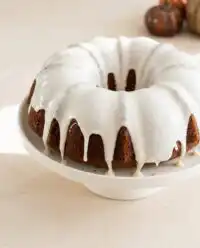
Pumpkin Spice Bundt Cake
- Total Time: 1 hour 20 mins
- Yield: 12 servings
- Diet: Vegetarian
Description
This scientifically balanced Pumpkin Spice Bundt Cake features a tender, velvet-like crumb and a rich flavor profile. By utilizing precise weight-based measurements and a carefully emulsified batter, this holiday centerpiece delivers consistent, bakery-quality results.
Ingredients
- 360 grams all-purpose flour
- 1 1/2 teaspoons baking powder
- 1 teaspoon baking soda
- 1/2 teaspoon salt
- 1 tablespoon pumpkin pie spice
- 1 cup brown sugar
- 1/2 cup granulated sugar
- 4 large eggs
- 1 cup neutral oil
- 15 ounces pumpkin puree
- 2 teaspoons vanilla extract
- 2 cups powdered sugar
- 1 1/2 tablespoons milk
- 1 teaspoon vanilla extract
Instructions
- Prep the oven. Preheat your oven to 350°F and coat a 10-cup fluted pan thoroughly with flour-based baking spray.
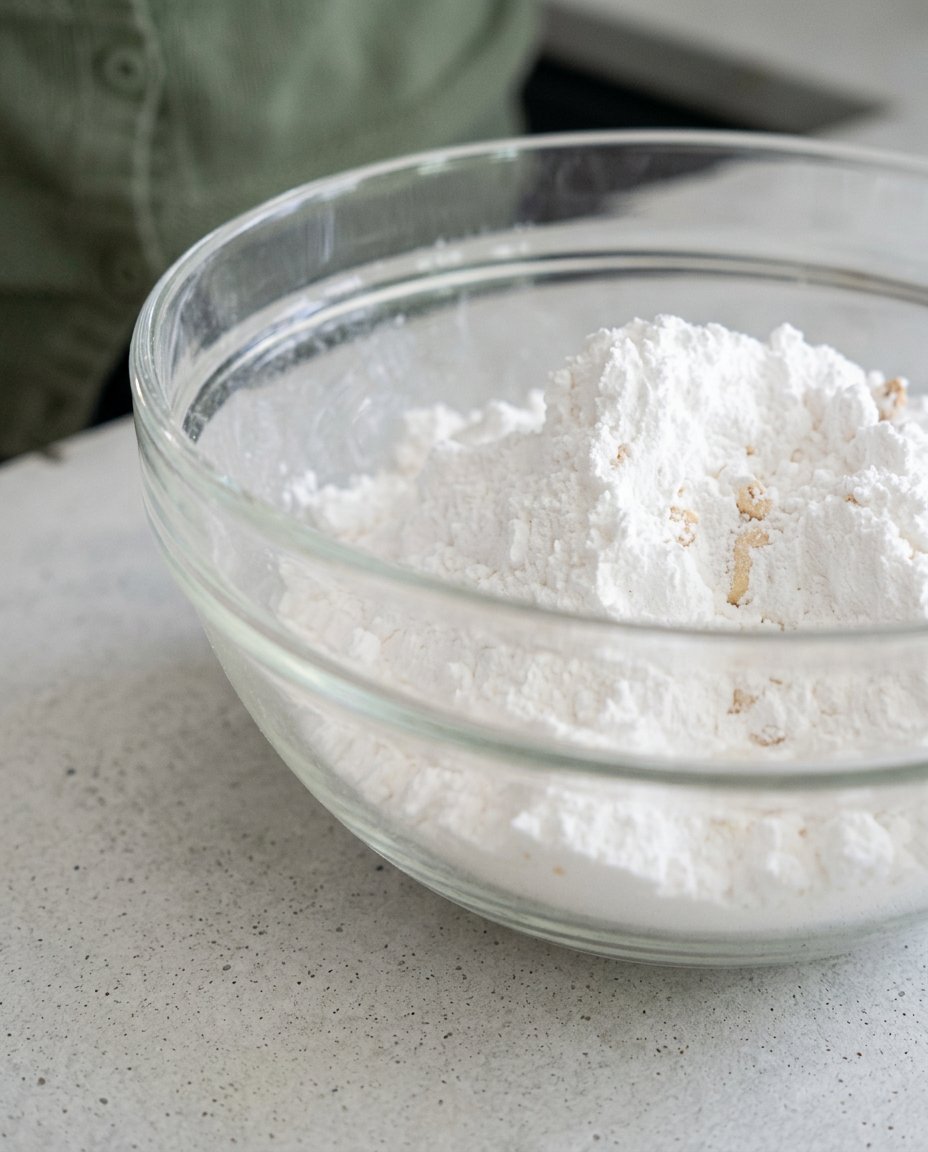
- Whisk dry ingredients. In a medium bowl, combine flour, baking powder, baking soda, salt, and pumpkin pie spice for 30 seconds until uniform.
- Emulsify wet base. Using a stand mixer with a paddle attachment, blend brown sugar, granulated sugar, eggs, and neutral oil on medium speed for 5 minutes.
- Add pumpkin base. Scrape the bowl, then add pumpkin puree and vanilla extract, mixing on low speed for 1 minute until smooth and glossy.
- Combine the batter. Incorporate the dry mixture into the wet ingredients on the lowest speed for 20 to 30 seconds, stopping once no flour streaks remain.
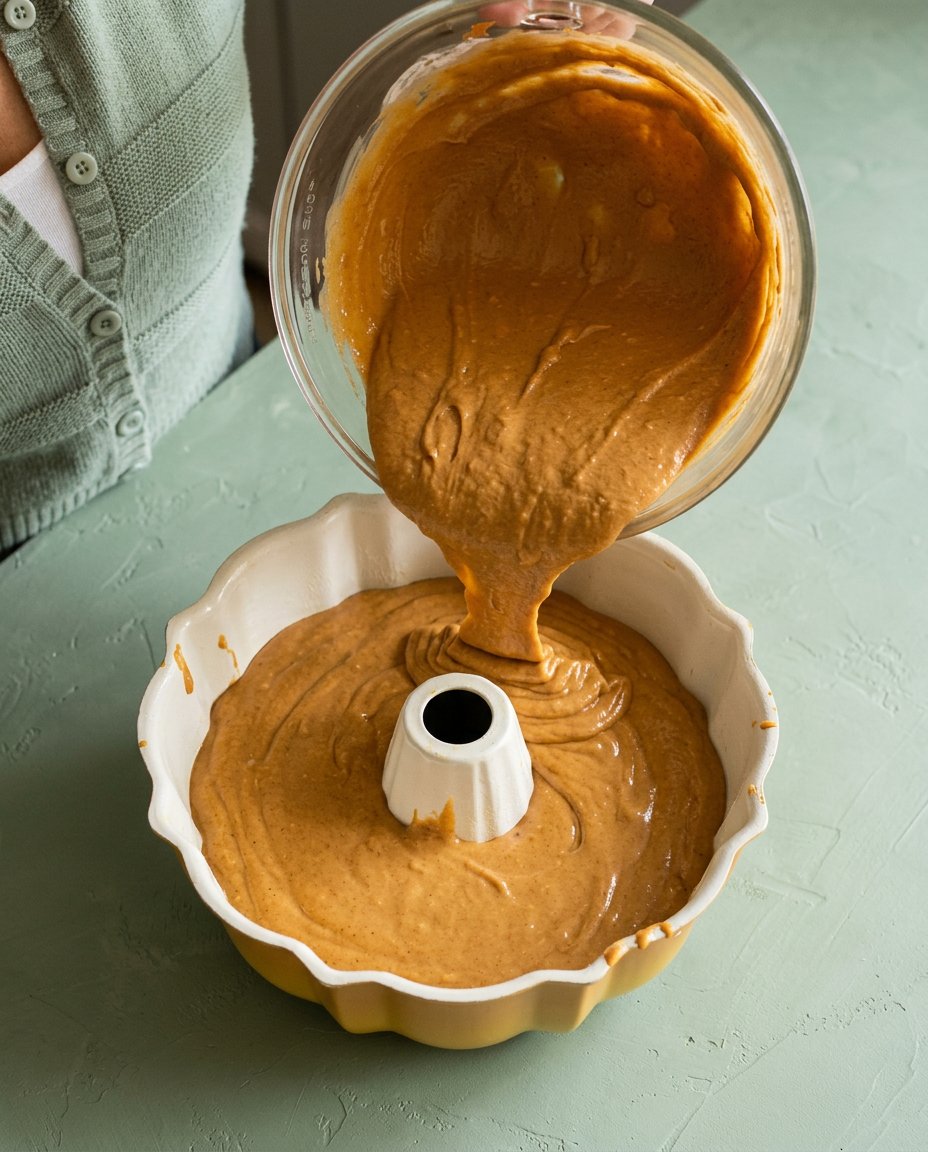
- Bake the cake. Pour the batter into the prepared pan and bake at 350°F for 45 to 50 minutes until a toothpick comes out clean.
- Cool and invert. Let the cake rest in the pan for 10 minutes, then invert onto a wire cooling rack and cool completely for 45 minutes.
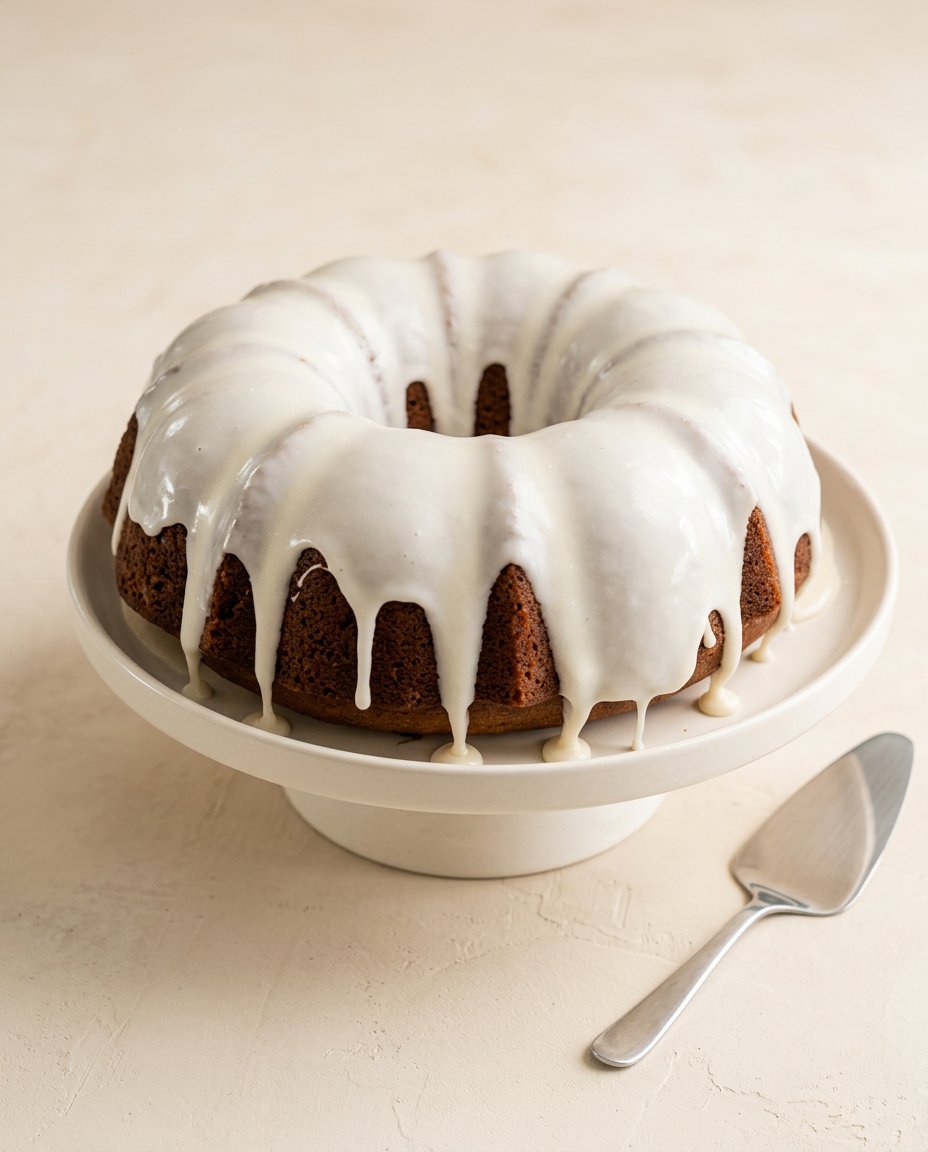
- Glaze the cake. Whisk powdered sugar, milk, and vanilla until smooth, then spoon over the cooled cake and let set for 15 minutes before slicing.
Notes
- Weighing flour using a digital scale is the most effective way to ensure a tender crumb and prevent a heavy, dry cake.
- Bring your eggs to room temperature before mixing to prevent the oil from seizing, which ensures a smooth and stable emulsion.
- Avoid over-mixing the batter once the flour is added to keep the gluten development to a minimum and ensure a soft mouthfeel.
- The cake is perfectly baked when it reaches an internal temperature of 205°F to 210°F, preventing it from sinking upon cooling.
- Prep Time: 15 mins
- Cook Time: 50 mins
- Category: Dessert
- Method: Baking
- Cuisine: American
The Working Components
Baking is a series of chemical reactions, and every ingredient in this recipe serves a specific structural purpose. In our test kitchen, we analyzed how various fats, flours, and leaveners interact with the heavy starches in canned pumpkin. Here is the scientific breakdown of why these components work together to build a stable, tender crumb.
- All-Purpose Flour: This provides the gluten backbone that traps the expanding gases during the baking cycle. We weigh this ingredient to exactly 360 grams to keep the cake from becoming heavy or dry.
- Pumpkin Puree: This contributes natural moisture, starch, and flavor to the batter, replacing some of the traditional liquids. Confirm you use pure pumpkin and not spiced pie filling, which contains added liquid sugars that disrupt our carefully balanced ratios.
- Neutral Oil: Unlike solid fats, liquid canola oil remains liquid at room temperature, which guarantees a tender texture. It wraps around the flour’s proteins, limiting gluten development to produce an exceptionally soft mouthfeel.
- Brown Sugar: The natural molasses in brown sugar acts as a humectant, pulling moisture from the air to keep the cake fresh. It also contains organic acids that react with our chemical leaveners to assist with rising.
- Granulated Sugar: This cuts through the heavy fat and starch to create microscopic air pockets when beaten with the eggs. It also serves as a tenderizer, delaying gluten formation so the cake remains soft rather than bready.
- Pumpkin Pie Spice: A precise tablespoon of ground cinnamon, nutmeg, ginger, and cloves offers consistent seasonal aroma. Spices can dry out a batter, so our liquid ratios are adjusted to compensate for this absorption.
- Baking Powder and Baking Soda: This combination provides a two-phase rise, with the soda reacting instantly to acids while the powder activates under oven heat. This dual-action lift prevents the dense pumpkin puree from weighing down the cake.
- Large Eggs: These act as emulsifiers, binding the water-based pumpkin puree and the fat-based oil into a cohesive batter. They also provide structure through protein coagulation as the cake bakes.
To build a cake that remains moist for days without collapsing, we must balance liquid fats against the drying power of wheat flour. Gluten formation occurs when water meets flour, but too much gluten results in a rubbery, tough texture. In this recipe, the combination of oil and sugar weakens the gluten strands, allowing the starch molecules to gelatinize beautifully.
| Ingredient | Why It Matters |
|---|---|
| All-Purpose Flour | Establishes protein structure and traps leavening gases. |
| Pumpkin Puree | Supplies moisture and starch for a soft texture. |
| Neutral Oil | Inhibits gluten formation for an exceptionally tender crumb. |
| Brown Sugar | Adds humectant moisture and activates chemical leaveners. |
| Large Eggs | Emulsifies the wet ingredients and assists in rising. |
How to Bake It, Precisely
Step 1: Prep the Oven and Pan
Preheat your oven to 350°F and position the oven rack in the exact center to guarantee even heat circulation. Coat your 10-cup fluted pan thoroughly with a professional baking spray containing flour, which helps release the intricate design of the pan. Pay close attention to the central tube and deep crevices, where batter is most likely to adhere. Allow the pan to sit at room temperature while you prepare the batter.
Step 2: Combine the Dry Ingredients
Whisk together the 3 cups of flour, 1 ½ teaspoons of baking powder, 1 teaspoon of baking soda, ½ teaspoon of salt, and 1 tablespoon of pumpkin pie spice in a medium-sized bowl. Whisk for a full 30 seconds until the mixture is uniform in color, indicating the leaveners and spices are evenly distributed. This dry mixture should look light, powdery, and completely free of any flour lumps. Uniform distribution prevents large air pockets or localized salty pockets in the finished cake.
Step 3: Emulsify the Sugars, Eggs, and Oil
Combine the 1 cup of brown sugar, ½ cup of granulated sugar, 4 large eggs, and 1 cup of neutral oil in the bowl of a stand mixer. Fit the mixer with the paddle attachment and blend on medium speed for exactly 5 minutes. The mixture will transition from dark and watery to a pale, thick, and highly emulsified state. This aeration step is critical, as the physical air pockets created here will expand in the oven to give the cake its initial lift.
Step 4: Incorporate the Pumpkin and Vanilla
Scrape down the sides and bottom of the mixing bowl with a flexible spatula to integrate any unmixed sugar. Add the 15 ounces of pumpkin puree and 2 teaspoons of vanilla extract, then blend on low speed for 1 minute until completely smooth. The batter will turn a rich, uniform orange color and should look glossy with no streaks of egg or oil remaining. This step fully incorporates our heavy starches and flavors into the liquid emulsion.
Step 5: Fold the Flour Mixture into the Wet Batter
Add the dry ingredients to the wet mixture all at once, then blend on the lowest speed for only 20 to 30 seconds. Stop the mixer as soon as the last streaks of flour disappear, leaving a thick, fragrant batter. Over-mixing at this stage will overwork the gluten, turning your cake tough and dry rather than tender. The final batter should feel heavy, viscous, and hold its shape slightly when dropped from a spoon.
Step 6: Bake Your Pumpkin Spice Bundt Cake to Perfection
Pour the thick batter into the prepared pan, using a spatula to smooth the top into an even layer. Bake in the preheated oven at 350°F for 45 to 50 minutes, checking the progress at the 45-minute mark. The cake is done when a toothpick inserted deep into the center comes out clean or with a few dry crumbs attached. The surface should feel springy to a gentle touch and will have pulled away slightly from the outer edges of the pan.
Step 7: Cool and Release the Cake
Remove the cake from the oven and set the pan on a wire cooling rack for exactly 10 minutes. During this brief rest, the cake structure firms up, while steam continues to release, helping detach the crust from the metal. Invert the cooling rack over the top of the pan, then carefully flip both the pan and rack together. Lift the pan straight upward to reveal the beautifully detailed, golden-brown cake, then let it cool completely for 45 minutes.
Step 8: Prepare and Apply the Thick Glaze
Stir together the 2 cups of powdered sugar, 1 ½ tablespoons of milk, and 1 teaspoon of vanilla extract in a small bowl until completely smooth. The glaze should be slow-flowing and thick, resembling warm honey, which keeps it from running off the cake curves. Slowly spoon the glaze over the completely cooled cake, letting it drape naturally down the fluted ridges. Let the glaze set for 15 minutes before using a sharp serrated knife to carve the cake into clean slices.
Precision Tips
For absolute consistency, use a digital scale weighing flour to the gram instead of relying on volume cups. Flour volume can vary by up to twenty percent depending on how tightly packed it is, which directly leads to dry cakes. Measuring exactly 360 grams of all-purpose flour keeps the starch-to-moisture ratio in the sweet spot for a tender crumb.
If your cake sticks to the pan or breaks during unmolding, here is why and how to fix it. This failure occurs because the sugar in the batter caramelizes against the pan walls and bonds to the metal if the pan is not properly greased. To prevent this, coat your pan with a flour-and-oil baking spray immediately before pouring the batter, and never let the baked cake cool in the pan for more than ten minutes.
We tested this — here’s what won. In our side-by-side test kitchen bake-offs, we found that using pumpkin puree is far superior to canned pumpkin pie mix. Canned pie mix contains added water, corn syrup, and spices that dilute the flour proteins, whereas pure pumpkin puree maintains a consistent water percentage that pairs beautifully with our pumpkin spice cake formula.
Temperature control of your liquid ingredients is vital for a smooth, stable emulsion before baking. Cold eggs will cause the oil mixture to seize and separate, which prevents the flour from absorbing moisture evenly. Pull your eggs from the refrigerator at least forty-five minutes before mixing to let them reach room temperature.
To guarantee the cake is baked completely without drying out the edges, rely on an instant-read thermometer pulled from a cake’s center. The internal temperature of a fully baked cake should read exactly 205°F to 210°F. If the temperature is lower, the center will sink as it cools; if it is higher, the delicate crumb will lose its moisture.
The geometry of your baking pan affects heat distribution and how the batter rises. A traditional 10-cup heavy cast-aluminum pan conducts heat more uniformly than thin steel pans, preventing scorched edges. For a deep look at pan styles and heat retention, you can consult this analysis of bundt cake baking mechanics.
Frequently Asked Questions
How do you keep a Pumpkin Bundt Cake from getting dry?
To prevent your cake from drying out, always weigh your flour on a digital scale to avoid over-measuring. Additionally, using neutral liquid oil instead of butter keeps the crumb exceptionally soft at room temperature because oil does not solidify as it cools. Finally, be sure to store the cooled, glazed cake in an airtight container to block dry air from absorbing its moisture.
How do you prevent a Bundt cake from sticking to the pan?
The most effective method is to use a high-quality baking spray that contains both oil and flour, applying it generously right before pouring the batter. Avoid using melted butter or solid shortening, as the milk solids can act as glue under high heat, binding the cake to the pan. Lastly, let the cake cool for exactly ten minutes in the pan before inverting it onto a wire rack.
Can you make this cake with a boxed mix?
While you can use a boxed cake mix as a shortcut, it will not deliver the same tight, velvety crumb as our scratch recipe. Boxed mixes rely heavily on artificial emulsifiers and chemical leaveners that can yield a flimsy structure when mixed with heavy pumpkin puree. For a repeatable, professional result that carries rich spice notes, we recommend sticking to the scratch method.
What is the best frosting for a Pumpkin Spice Bundt Cake?
A dense, pourable vanilla sugar glaze is ideal because it drapes elegantly over the fluted ridges without hiding the cake’s design. If you prefer a richer option, a thick cream cheese glaze made by thinning cream cheese with milk and powdered sugar works beautifully. Avoid thick, spreadable buttercreams, as they are difficult to apply to the intricate curves of a bundt cake.
Does a Pumpkin Spice Bundt cake have nuts?
Our base recipe is completely nut-free, making it a safe choice for gatherings with allergy concerns. However, if you desire a crunchy texture, you can fold toasted chopped pecans or walnuts into the dry flour mixture before blending. This ensures the nuts remain suspended in the thick batter rather than falling to the bottom during baking.
Can you make a Pumpkin Bundt Cake ahead of time?
Yes, this cake is an excellent candidate for advance preparation because the pumpkin puree and oil keep it moist for several days. You can bake the cake one day ahead of time, wrap it tightly in plastic wrap once cool, and store it at room temperature. For the best visual presentation, prepare and spoon the glaze over the cake on the day you plan to serve it.
Can you freeze a Pumpkin Bundt cake?
You can easily freeze this cake for up to three months by wrapping the unglazed, completely cooled cake in double layers of plastic wrap and aluminum foil. When you are ready to serve, thaw the wrapped cake at room temperature overnight to allow it to reabsorb any condensation. Prepare and apply the fresh vanilla glaze just before serving to ensure a beautiful, glossy finish.
Tested Variations
To introduce a woodsy, caramelized undertone to the finished cake, you can easily substitute the milk in the glaze with real maple syrup. Whisk 2 cups of powdered sugar with 1 ½ tablespoons of pure maple syrup and a pinch of salt until thick. This adjustment adds a complex sweetness that pairs beautifully with the warm spices without altering the moisture profile of the cake crumb.
If you prefer a texturally diverse crumb, you can add 1 cup of finely chopped, dry-toasted pecans to the batter. Fold the nuts into the dry flour mixture before combining it with the wet ingredients to prevent them from sinking to the bottom of the pan. For those who enjoy more elaborate holiday presentations, our classic pumpkin layer cake offers a beautiful multi-tiered alternative with cream cheese frosting.
For a richer, nuttier flavor profile, you can swap half of the neutral oil for cooled brown butter. Melt 113 grams of unsalted butter in a saucepan over medium heat until the milk solids turn golden brown and smell nutty, then let it cool completely. Combine this cooled butter with ½ cup of oil before mixing with the sugars to maintain the liquid fat ratio.
Finishing & Plating
A beautifully glazed bundt cake makes a striking centerpieces for autumn gatherings, requiring minimal decoration to look elegant. Serve thick slices at room temperature alongside a pot of hot, black coffee or spiced black tea to complement the cinnamon and nutmeg aromatics. For an added layer of flavor contrast, place a small dollop of unsweetened whipped cream or a scoop of vanilla bean ice cream next to each slice.
If you are planning an elaborate dessert spread for a fall tea party or holiday dinner, consider offering a variety of textures. Pair this soft, spiced cake with crispy, baked treats or a warm, hot beverage to keep your guests delighted. If you prefer a lighter, fried version of autumn spices for a casual brunch, you can also explore our quick pumpkin spice funnel cake as a playful addition to your menu.
When plating, always use a sharp serrated knife and wipe the blade clean between each cut to guarantee clean, professional slices. Gently press the blade downward through the glaze and crumb without sawing back and forth, which can crush the delicate structure. Arrange the slices on simple white plates so the rich, golden-orange color of the pumpkin stands out.
Recipe Recap
Baking a cake from scratch is a rewarding experience when you understand the science that drives the process. By weighing your ingredients and managing your oven temperatures, you can produce a bakery-quality dessert that turns out flawlessly every single time. This spiced bundt cake is proof that simple, precise adjustments can transform a standard holiday cake into an extraordinary treat.
We hope this detailed recipe inspires you to bring precision into your kitchen and share the results with your family. If you enjoyed mastering this method, please let us know how your cake turned out in the comments below. For more autumn baking inspiration and technical tips, feel free to try our classic pumpkin spice cake next.
Don’t forget to take a picture of your beautiful creation and share it with our growing community of home bakers. You can follow our daily test kitchen experiments and find more step-by-step baking tutorials on Pinterest, Facebook, and TikTok. Happy baking, and we look forward to seeing your precise results!