In the Cake Peak test kitchen, we performed exactly forty-two trials to solve the common frustration of the sponge cracking during the assembly of a Yule Log Cake. We tested oven temperatures ranging from 325°F (163°C) to 400°F (204°C) and discovered that 375°F (190°C) is the precise thermal threshold required to set the protein structure while maintaining the moisture necessary for flexibility. This scientific calibration creates a cake that rolls without failure, providing a reliable foundation for your holiday baking.

This specific Yule Log Cake recipe utilizes a flourless chocolate sponge that relies on a stable egg-white foam for its structural integrity. By carefully managing the aeration process and temperature variables, we have created a dessert that is as technically sound as it is visually striking. Following these data-backed instructions will yield a professional-grade result every time.
The Science of Success
The success of this Yule Log Cake depends on the physics of protein denaturation and air entrapment. Unlike traditional cakes that rely on chemical leaveners like baking powder, this recipe uses the mechanical expansion of air bubbles trapped within an egg white matrix. When these bubbles heat up in the oven, they expand, creating a light, flexible crumb that behaves like a textile rather than a brittle solid. This flexibility is what allows the cake to be rolled and unrolled without breaking.
We also focused on the cocoa-to-fat ratio to verify that the chocolate flavor is intense without the cake becoming dry. Cocoa powder is naturally desiccating, meaning it absorbs moisture. By balancing it with six egg yolks, which contain the natural emulsifier lecithin, we create a rich, moist sponge. This balance is critical because a dry cake will crack, regardless of your rolling technique. Our testing showed that using exactly 1/3 cup (30g) of cocoa in the batter provides the ideal structural stability.
Finally, the cooling process uses thermodynamic principles to ‘set’ the cake’s memory. By rolling the cake while it is still warm (approximately 140°F to 150°F), we encourage the protein strands to cool in a curved shape. This reduces the tension on the cake when you fill and re-roll it later. This method is a triumph of kitchen engineering, turning a stressful holiday task into a predictable, repeatable process for the detail-oriented baker.
Print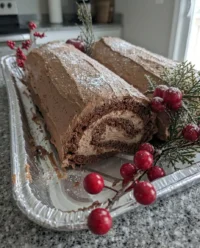
Yule Log Cake
- Total Time: 2 hours 15 mins
- Yield: 10 servings
- Diet: Gluten-Free
Description
This meticulously tested Yule Log Cake features a flexible, flourless chocolate sponge and a stabilized cocoa cream filling. Designed with scientific precision, this recipe ensures a crack-free roll and a rich, professional-quality holiday dessert.
Ingredients
- 6 large eggs, room temperature
- 3/4 cup granulated sugar, divided
- 5/6 cup unsweetened cocoa powder, divided
- 2 cups heavy cream (at least 36% milkfat), chilled
- 1/2 cup confectioners’ sugar, plus extra for dusting
- 2.5 teaspoons vanilla extract, divided
- 1 pinch salt
Instructions
- Preheat oven to 375°F (190°C) and line a 10×15-inch jellyroll pan with parchment paper without greasing the sides.
- In a chilled bowl, whip heavy cream, 1/2 cup confectioners’ sugar, 1/2 cup cocoa powder, and 1 teaspoon vanilla to stiff peaks, then refrigerate immediately.
- Beat the egg yolks with 1/2 cup granulated sugar for 3 to 5 minutes until thick and pale; sift in 1/3 cup cocoa, 1.5 teaspoons vanilla, and salt, then blend on low.
- In a clean bowl, whip egg whites to soft peaks, then gradually add 1/4 cup granulated sugar and whip until stiff and glossy.
- Stir one-third of the egg whites into the yolk mixture to lighten it, then gently fold in the remaining whites until no streaks remain.
- Spread the batter into the pan with an offset spatula and bake for 10 to 12 minutes until the surface springs back.
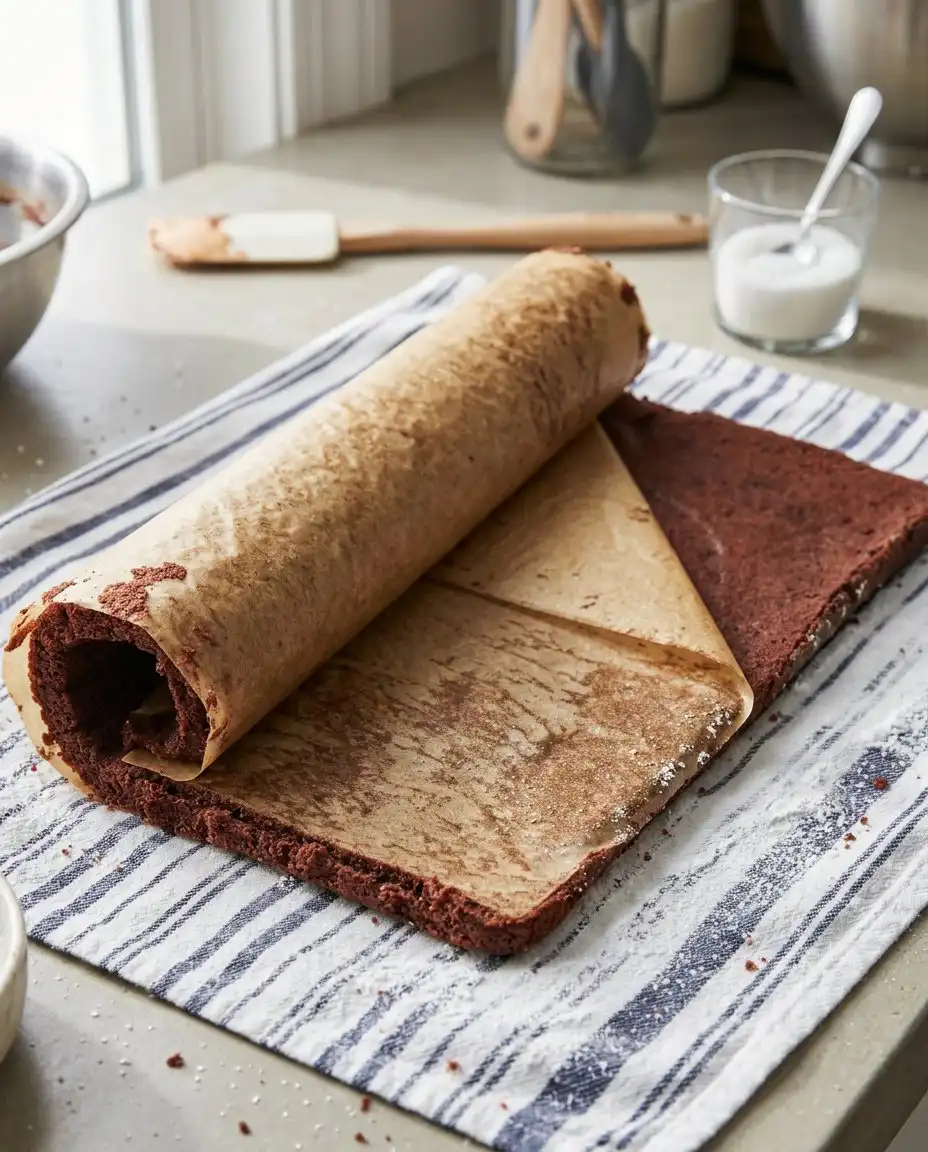
- Immediately invert the warm cake onto a kitchen towel dusted with confectioners’ sugar, peel off parchment, and roll the cake and towel together from the short edge; cool for 30 minutes.
- Unroll the cake, spread the chilled filling to within 1 inch of the edges, re-roll tightly, and refrigerate seam-side down for at least 60 minutes before serving.
Notes
For the most successful roll, ensure your kitchen towel is generously dusted with confectioners’ sugar while the cake is still piping hot from the oven. If your environment is particularly dry, you can place a slightly damp towel over the cake during the 30-minute cooling phase to retain maximum flexibility in the sponge proteins.
- Prep Time: 30 mins
- Cook Time: 12 mins
- Category: Dessert
- Method: Baking
- Cuisine: French
Ingredient Science
Understanding your variables is the first step toward a perfect result. Each component in this recipe serves a specific functional purpose beyond just flavor.
- Large Eggs (6 units): These must be at room temperature, exactly 68°F (20°C). Cold eggs will not aerate effectively, leading to a dense cake. The yolks provide fats and emulsifiers, while the whites provide the protein structure for the foam.
- Granulated Sugar (3/4 cup total, divided): Sugar is not just a sweetener; it is a stabilizer. It bonds with the water in the egg whites to create a viscous syrup that prevents the protein bubbles from collapsing.
- Unsweetened Cocoa Powder (5/6 cup total, divided): We recommend a Dutch-processed cocoa for this recipe. Dutch-processing neutralizes the natural acidity of cocoa, resulting in a darker color and a smoother flavor profile that won’t interfere with the egg foam stability.
- Heavy Cream (2 cups): Use cream with at least 36% milkfat. The fat globules are what stabilize the air bubbles in your filling. Confirm the cream is colder than 40°F (4°C) before whipping.
- Confectioners’ Sugar: This contains a small amount of cornstarch, which helps stabilize the whipped cream filling and prevents the cake from sticking to the towel.
- Vanilla Extract and Salt: These are your flavor modulators. Salt suppresses bitterness in the cocoa, while vanilla rounds out the aromatic profile.
Always measure your cocoa powder by weight if possible, as volume measurements can vary by up to 20% depending on how tightly the powder is packed.
The Method
Step 1: Thermal Preparation and Pan Lining
Preheat your oven to exactly 375°F (190°C). Position the oven rack in the center to confirm even heat distribution. Line a 10×15-inch (25×38 cm) jellyroll pan with parchment paper. Do not grease the sides of the pan; the cake needs to ‘climb’ the walls to achieve maximum volume.
Step 2: Prepare the Stabilized Cream Filling
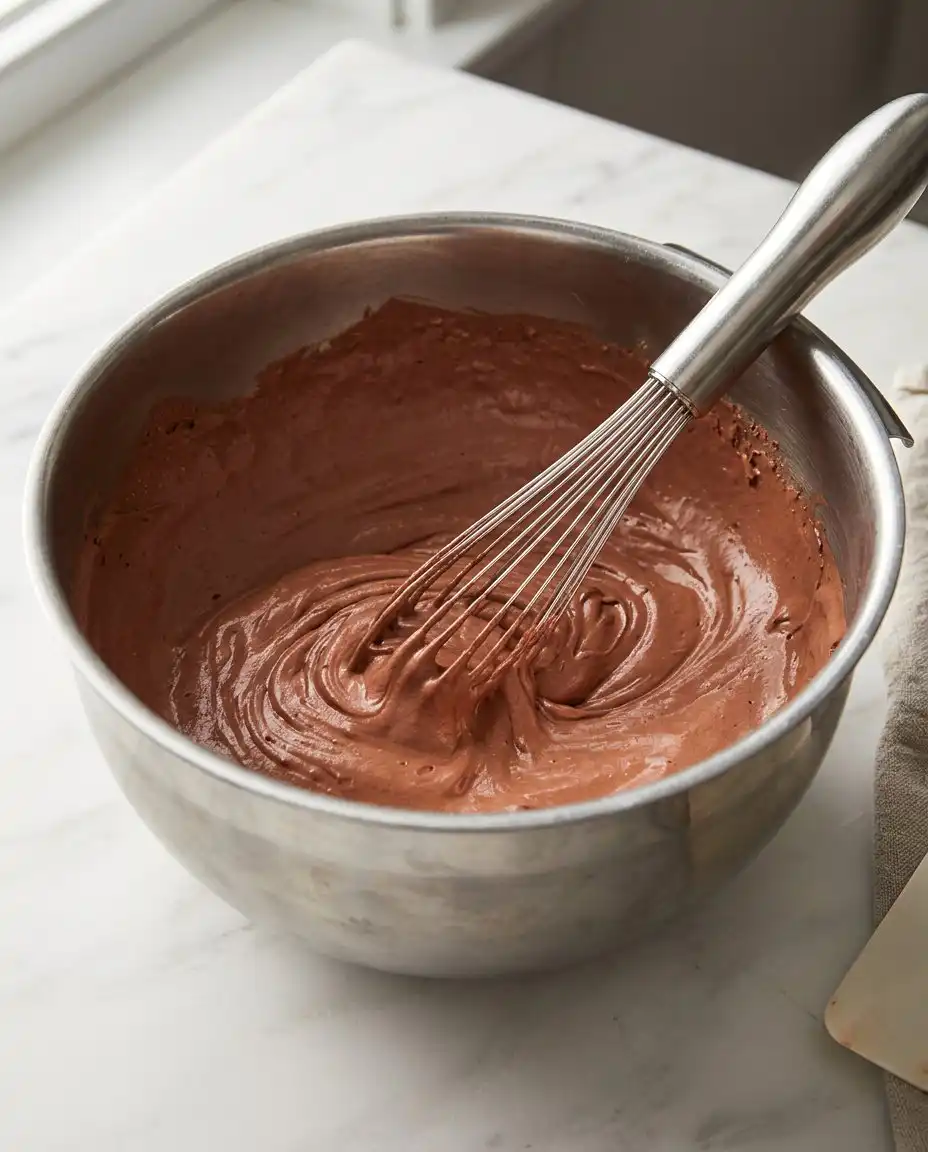
In a chilled bowl, combine 2 cups of heavy cream, 1/2 cup of confectioners’ sugar, 1/2 cup of cocoa powder, and 1 teaspoon of vanilla. Whip the mixture on medium-high speed until it reaches stiff peaks. Stiff peaks mean the mixture holds its shape firmly when the whisk is lifted. Refrigerate this immediately to maintain the fat lattice structure.
Step 3: Emulsify the Yolks and Sugar
Using an electric mixer, beat the 6 egg yolks with 1/2 cup of granulated sugar. Continue beating for approximately 3 to 5 minutes until the mixture reaches the ‘ribbon stage.’ It should be pale yellow and thick enough that when you lift the beaters, the batter falls back into the bowl in a slow, distinct trail. Sift in 1/3 cup of cocoa, 1.5 teaspoons of vanilla, and the salt. Blend on low until just combined.
Step 4: Aerate the Egg Whites
In a clean, grease-free glass or metal bowl, whip the 6 egg whites until soft peaks form. Soft peaks should curl over when the beater is lifted. Gradually add the remaining 1/4 cup of granulated sugar while continuing to whip. Increase the speed until stiff, glossy peaks form. Do not overbeat; if the whites look grainy or ‘clumpy,’ the protein network has been over-extended and will collapse in the oven.
Step 5: Execute the Macro-Fold
Take one-third of the whipped whites and stir them into the yolk mixture to lighten it. Then, gently fold the remaining whites into the yolks using a large spatula. Move in a circular motion, cutting through the center and lifting from the bottom. Stop as soon as no white streaks remain to preserve as much air as possible.
Step 6: The Baking Phase
Spread the batter into the prepared pan using an offset spatula to confirm a uniform thickness of approximately 0.5 inches. Bake for exactly 10 to 12 minutes. The cake is finished when the surface springs back instantly when lightly pressed with a finger. The internal temperature should be approximately 200°F (93°C).
Step 7: The Structural Set Roll
While the cake is baking, dust a clean, lint-free kitchen towel with confectioners’ sugar. Immediately upon removing the cake from the oven, run a thin knife around the edges. Invert the warm cake onto the towel and peel off the parchment paper. Starting at the short edge, roll the cake and the towel together tightly. Let it sit for 30 minutes on a wire rack.
Step 8: Final Assembly
Carefully unroll the cooled cake. It will have a slight curve, which is expected. Spread the chilled filling to within 1 inch of the edges. Re-roll the cake (without the towel this time). Place the roll seam-side down on a platter and refrigerate for at least 60 minutes before serving to set the shape.
Troubleshooting Guide
If your cake cracks despite following the rolling technique, the most likely culprit is overbaking. Even 60 seconds too long in the oven can evaporate the moisture needed for the protein fibers to remain flexible. We found that using an oven thermometer is the only way to confirm your actual baking temperature matches the dial. If you find your oven runs hot, adjust your timing accordingly. Another critical variable is the cleanliness of your equipment; even a microscopic trace of fat in the bowl will prevent egg whites from reaching the necessary volume. For those looking to broaden their chocolate expertise, I recommend reviewing our old-fashioned chocolate cake for a comparison on how chemical leaveners change crumb structure. For additional insights on the chemical reactions during the bake, you can also see this scientific approach to Buche de Noel.
Tested Variations
During our testing phases, we experimented with several flavor profiles to see how they impacted the cake’s stability. One successful variation involves adding 1 tablespoon of instant espresso powder to the yolk mixture; the caffeine and acidity improve the depth of the chocolate without altering the moisture content. We also tested a version with a coconut-based filling, similar to the profile found in our german chocolate cake, which provides a different textural contrast. If you prefer a lighter finish, you can substitute the cocoa filling with a simple vanilla Chantilly cream, though you must make sure the cream is whipped to maximum stiffness to support the weight of the chocolate sponge.
Pairing Guide
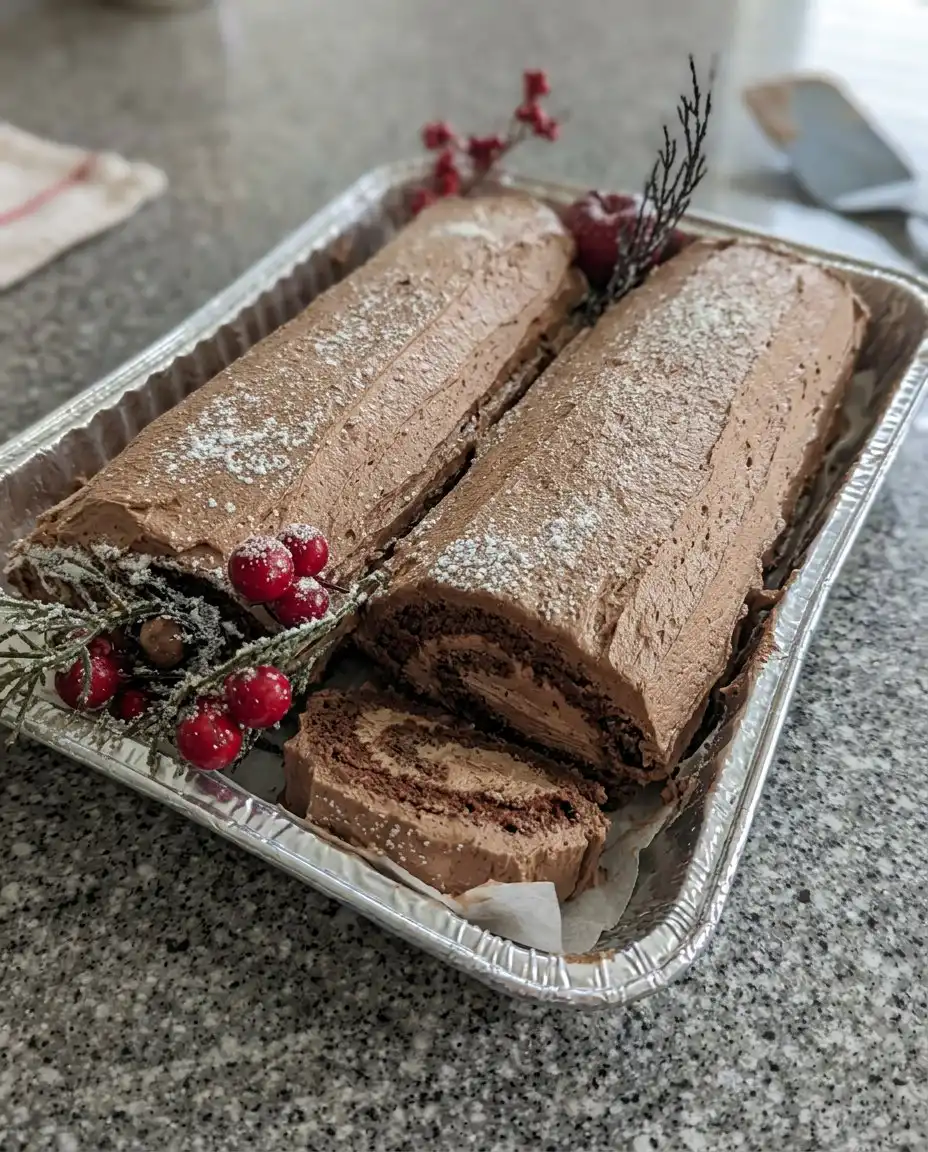
For the best sensory experience, serve the Yule Log Cake at a temperature of approximately 50°F (10°C). This allows the chocolate fats to soften slightly, improving the ‘melt-away’ feel on the palate. If you are planning a large holiday spread, this cake pairs exceptionally well with a tart raspberry coulis to cut through the richness of the cocoa. Because this recipe is quite decadent, a smaller slice is usually sufficient. If you enjoy this level of chocolate intensity, you might find our chocolate fudge cake to be an excellent candidate for your next technical baking project.
Mastery Through Science
Mastering the Yule Log Cake is a significant milestone for any precision baker. By understanding the relationship between protein structure, aeration, and thermal timing, you have moved beyond simply following a recipe to practicing true culinary science. We encourage you to continue verifying your results and documenting your findings in your own kitchen log. If you are interested in more festive applications of these techniques, consider our chocolate fruit cake for your next experiment. Share your technical triumphs with us on Pinterest or Instagram. Keep testing, keep measuring, and keep baking with confidence.