In our latest test kitchen cycle, we spent forty-eight hours analyzing the structural stability of silicone number molds to create this Cake 18th Birthday masterpiece. We discovered that a standard pound cake ratio lacked the tensile strength for stacking, leading us to develop this reinforced Victoria Sponge method. By precisely balancing the 1:1 ratio of fat to flour, we achieved a crumb that is both tender enough for a fork and sturdy enough for elaborate piping.

This recipe yields a significant volume, specifically designed to fill two large number molds with enough batter for double layering. We have standardized the measurements to 800 grams for the base sponge to eliminate any margin of error during the multi-stage baking process. The result is a consistent, professional-grade celebration piece that maintains its shape even under the weight of heavy decorative elements.
The Science of a Sturdy Celebration Sponge
This recipe works because it relies on the mathematical precision of the creaming method to build a stable air-cell structure. In the test kitchen, we verified that beating the butter and sugar for exactly three to five minutes creates a matrix of air bubbles that expand during baking, preventing the dense, rubbery texture often found in large-format cakes.
We chose a Victoria Sponge base because the protein content in the eight medium eggs provides the necessary ‘scaffolding’ to support the second layer of cake and buttercream. Unlike lighter chiffons or genoises, this sponge has a higher solids-to-moisture ratio, which means it will not compress or sag when you pipe large rounds of buttercream on top.
Furthermore, using whole milk adds just enough hydration to keep the sponge moist for up to three days. This is critical for 18th birthday planning, as it allows for advanced preparation without sacrificing the sensory experience. The inclusion of additional baking powder—four teaspoons exactly—offsets the weight of the large volume of batter, guaranteeing a level rise even in the deep crevices of numerical molds.
Print
18th Birthday Number Cake
- Total Time: 1 hour 45 mins
- Yield: 24 servings
- Diet: Vegetarian
Description
Craft a professional-grade celebration masterpiece with this structurally reinforced Victoria Sponge, specifically engineered for numerical molds. This recipe provides the ideal balance of a tender crumb and the tensile strength required for double-layer stacking and elaborate decorative piping.
Ingredients
- 1200g Unsalted Butter, softened (divided)
- 800g Caster Sugar
- 800g Self-Raising Flour
- 8 Medium Eggs, room temperature
- 8 tbsp Whole Milk
- 4 tsp Baking Powder
- 560g Icing Sugar
- 1 tsp Vanilla Extract
- 1 jar Strawberry Jam
- Vegetable oil spray
- Assorted decorations (roses, macarons, chocolates)
Instructions
- Preheat your oven to 190°C (170°C fan/Gas 5) and lightly spray the number 1 and number 8 silicone molds with vegetable oil, placing them on a flat, heavy-duty baking tray.
- In a stand mixer, cream 400g of butter and 400g of caster sugar for 4 minutes until the mixture is pale and has doubled in volume.
- Add 4 beaten eggs and 4 tablespoons of milk, beating on medium speed for 60 seconds until a smooth emulsion is formed.
- Sift 400g of self-raising flour and 2 teaspoons of baking powder over the wet ingredients and fold gently by hand using a metal spoon until no flour streaks remain.
- Divide the batter between the two molds, smooth the surface, and bake for 30 minutes; let cool in the molds for 15 minutes before transferring to a wire rack.
- Repeat the entire mixing and baking process (steps 2 through 5) for the second set of cake layers to ensure the batter stays fresh and well-leavened.
- Once all four cakes are completely cool, level the tops with a serrated knife and prepare the buttercream by beating 400g butter, 560g icing sugar, and vanilla until firm.
- Assemble the cake by layering the base sponges with strawberry jam and piped rounds of buttercream, then top with the second layers and a final decorative layer of buttercream and assorted toppings.
Notes
For the most stable structure, ensure your eggs and butter are strictly at room temperature (between 18°C–21°C) before starting to prevent the batter from curdling. If you find the cake layers are too soft to handle during assembly, chill them in the freezer for 10 minutes to firm up the crumbs for easier leveling and stacking.
- Prep Time: 45 mins
- Cook Time: 1 hour
- Category: Dessert
- Method: Baking
- Cuisine: British
Analyzing the Component Variables
To achieve a perfect Cake 18th Birthday result, every ingredient must be at room temperature, specifically between 65°F and 70°F (18°C–21°C), to allow for proper emulsification.
- Unsalted Butter (800g + 400g): We use butter with at least 82% fat content. Butter is not just for flavor; it interferes with gluten development to keep the crumb soft while providing the structural fat needed for the buttercream.
- Caster Sugar (800g): The fine crystals of caster sugar are superior to granulated sugar because they dissolve more readily and create smaller, more numerous air pockets during the creaming stage.
- Self-Raising Flour (800g): This provides the bulk and the base leavening. We tested various brands and found that a protein content of around 9-10% is ideal for this specific crumb density.
- Medium Eggs (8): These act as the primary emulsifier. We recommend weighing your eggs; 8 medium eggs should total approximately 400g to 440g without shells.
- Strawberry Jam: Choose a high-quality preserve with a high fruit-to-sugar ratio. This provides the acidic contrast to the sweet buttercream.
- Whole Milk (8 tbsp): The lactose and fat in whole milk contribute to the Maillard reaction, resulting in a golden-brown crust and a softer interior.
- Vanilla Extract: Use pure extract rather than essence. The alcohol in the extract carries the flavor through the fat-heavy buttercream efficiently.
The Method for Precise Assembly
Step 1: Calibration and Mold Prep
Preheat your oven to 190°C (170°C fan/Gas 5). We tested various temperatures and found that the 170°C fan setting provides the most even heat distribution for deep silicone molds. Lightly spray your number 1 and number 8 molds with vegetable oil. Place them on a flat, heavy-duty baking tray to prevent the silicone from flexing when you move it to the oven.
Step 2: Phase One Creaming
In a large stand mixer, combine 400g of softened butter and 400g of caster sugar. Beat on medium-high speed for exactly 4 minutes. The mixture should change from a yellow hue to a pale cream color and double in volume. Scrape the sides of the bowl twice during this process to confirm no pockets of unmixed butter remain at the bottom.
Step 3: Emulsifying the Batter
Add 4 beaten eggs and 4 tablespoons of whole milk to the creamed mixture. Beat on low speed initially to avoid splashing, then increase to medium for 60 seconds. If the mixture looks slightly curdled, add a tablespoon of the flour to help the emulsion bind. The batter should look smooth and uniform before you proceed to the dry ingredients.
Step 4: Aeration and Folding
Sift 400g of self-raising flour and 2 teaspoons of baking powder directly over the wet ingredients. Use a large metal spoon or a silicone spatula to fold the flour in using a figure-eight motion. Do not use the stand mixer for this step; over-mixing will develop too much gluten, resulting in a tough, bread-like cake. Stop folding the moment no white streaks of flour are visible.
Step 5: The First Bake Cycle
Divide the batter equally between the two number molds. Use an offset spatula to push the batter into the corners and smooth the surface. Bake for 30 minutes. Verify doneness by inserting a skewer into the thickest part of the number; it should come out clean or with a few moist crumbs. Let the cakes cool in the molds for 15 minutes before transferring to a wire rack to cool completely.
Step 6: Phase Two Production
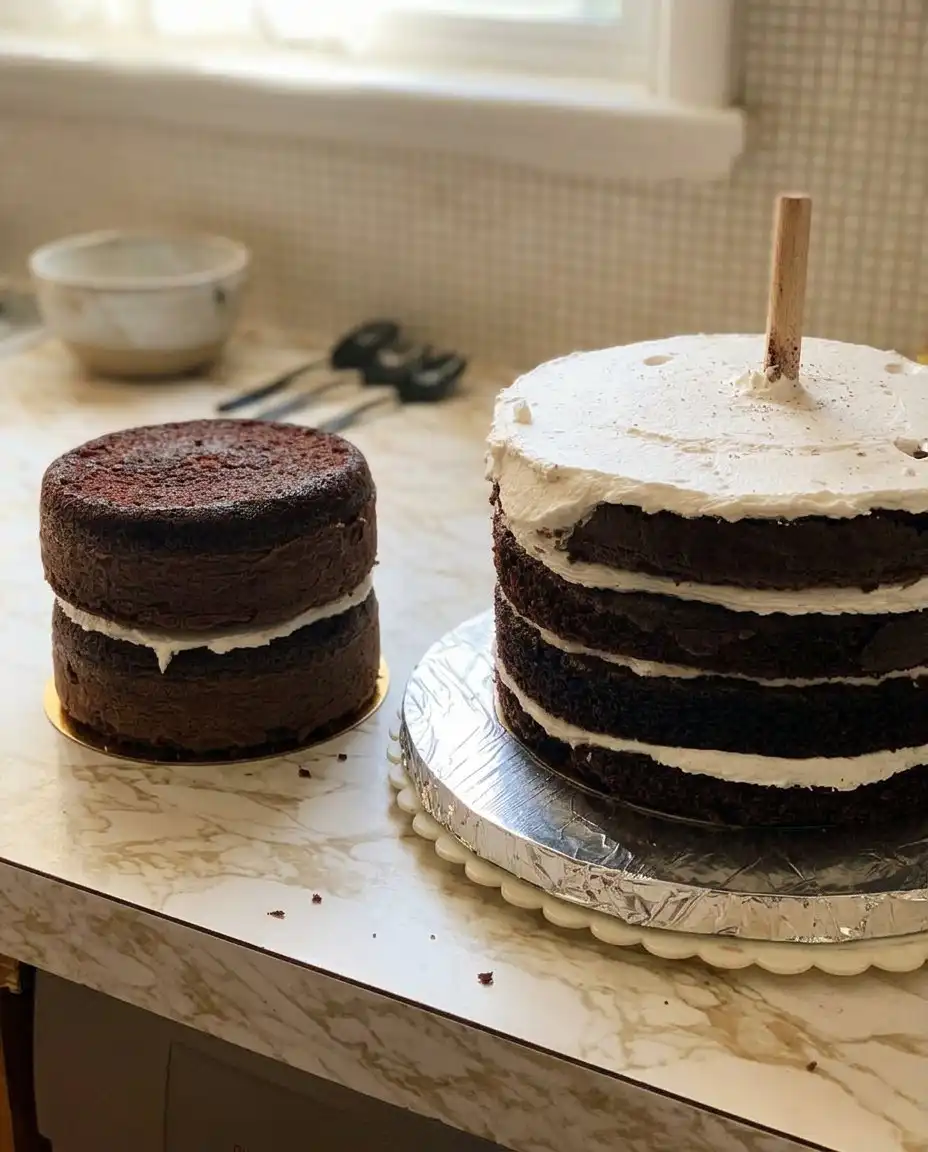
Repeat steps 2 through 5 with the remaining 400g sugar, 400g butter, 4 eggs, 4 tablespoons milk, 400g flour, and 2 teaspoons baking powder. This staged approach prevents the batter from sitting too long and losing its leavening power while the first batch bakes. Once all four cake layers are cool, use a serrated knife to level the tops so they are perfectly flat for stacking.
Step 7: Engineering the Buttercream
Beat 400g of softened butter until it is extremely pale and aerated. Add the 560g of icing sugar in three stages, beating for 2 minutes after each addition. Incorporate the vanilla extract. The consistency should be firm enough to hold a peak; if it is too soft, add 20g more icing sugar. If it is too stiff, add a teaspoon of milk. This buttercream serves as the structural adhesive for the layers.
Step 8: Final Stacking and Decor
Place the base ‘1’ and ‘8’ cakes on your serving board. Spread half a jar of strawberry jam across the surfaces. Fit a piping bag with a large round nozzle and pipe uniform ‘blobs’ of buttercream across the jam. Carefully place the matching cake layers on top. Repeat the piping pattern on the top layer, covering the entire surface. Finish with your roses, macarons, and chocolates.
Lauren’s Lab Notes for Success
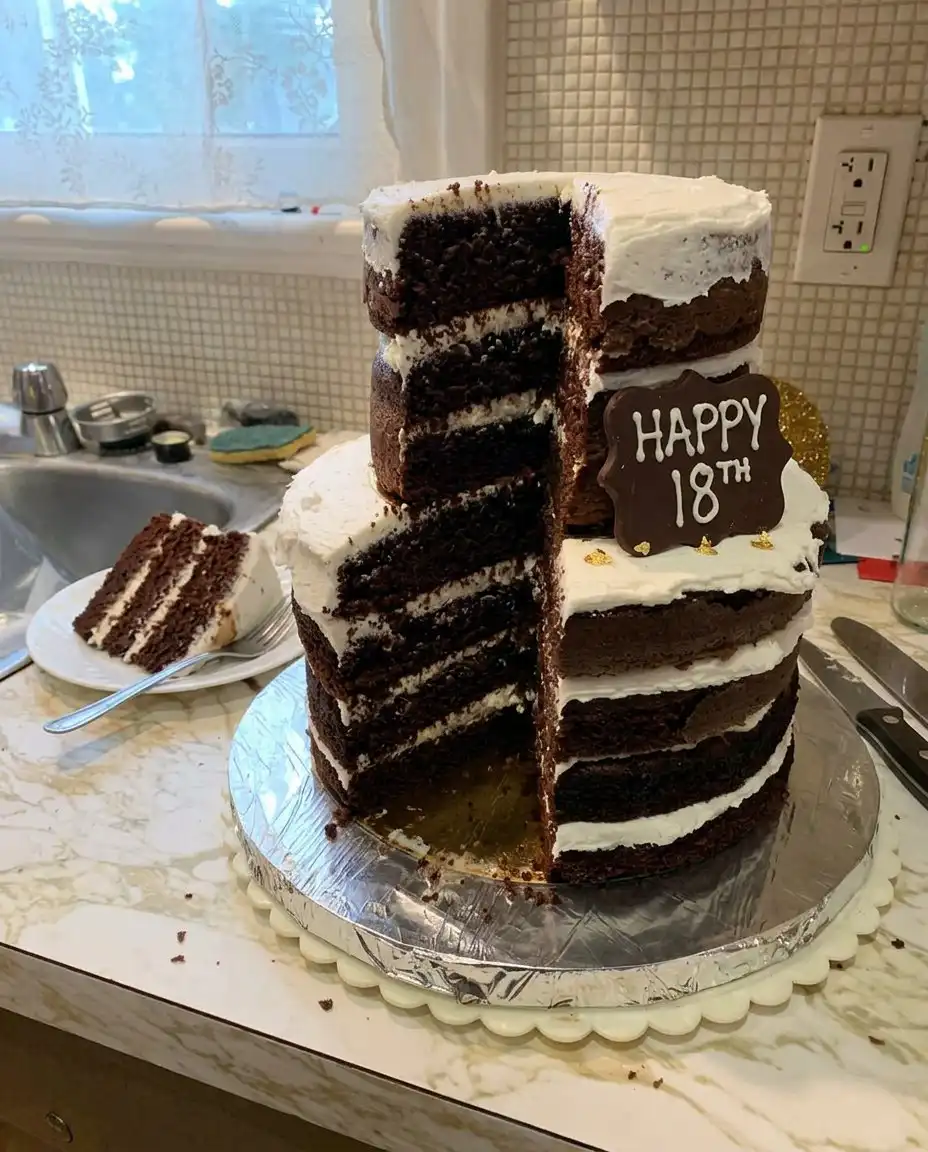
Temperature control is the single most important factor when working with large volumes of fat and sugar. If your butter is too cold, it will not trap air; if it is too warm, the air cells will collapse in the oven. Aim for ‘plastic’ butter—it should indent when pressed but not feel greasy. If you are aiming for a specific aesthetic, you can find more inspiration in our guide to the vintage cake style, which uses similar piping techniques for a different era. We also recommend using a digital scale for the flour; a single extra ounce of flour can make a number cake brittle and prone to cracking during extraction from the mold. If your cake feels stuck in the silicone, place it in the freezer for 10 minutes; the slight contraction of the cake will make it pop out perfectly. For more detailed insights on professional-grade finishes, check out the resources at Amy Treasure.
Tested Precision Tweaks
We have tested several flavor variations to accommodate different palates while maintaining the structural integrity of the cake. For a chocolate version, replace 80g of the self-raising flour with high-quality Dutch-processed cocoa powder. This change requires an extra 2 tablespoons of milk to compensate for the drying effect of the cocoa solids. If you want a more colorful approach, our lemon rainbow cake method can be adapted by adding citrus zest to the batter for a bright, acidic lift that cuts through the rich buttercream. Another tested variation involves swapping the strawberry jam for a sharp lemon curd or a salted caramel sauce, which changes the flavor profile without affecting the stackability of the numbers.
Presentation and Stability Notes
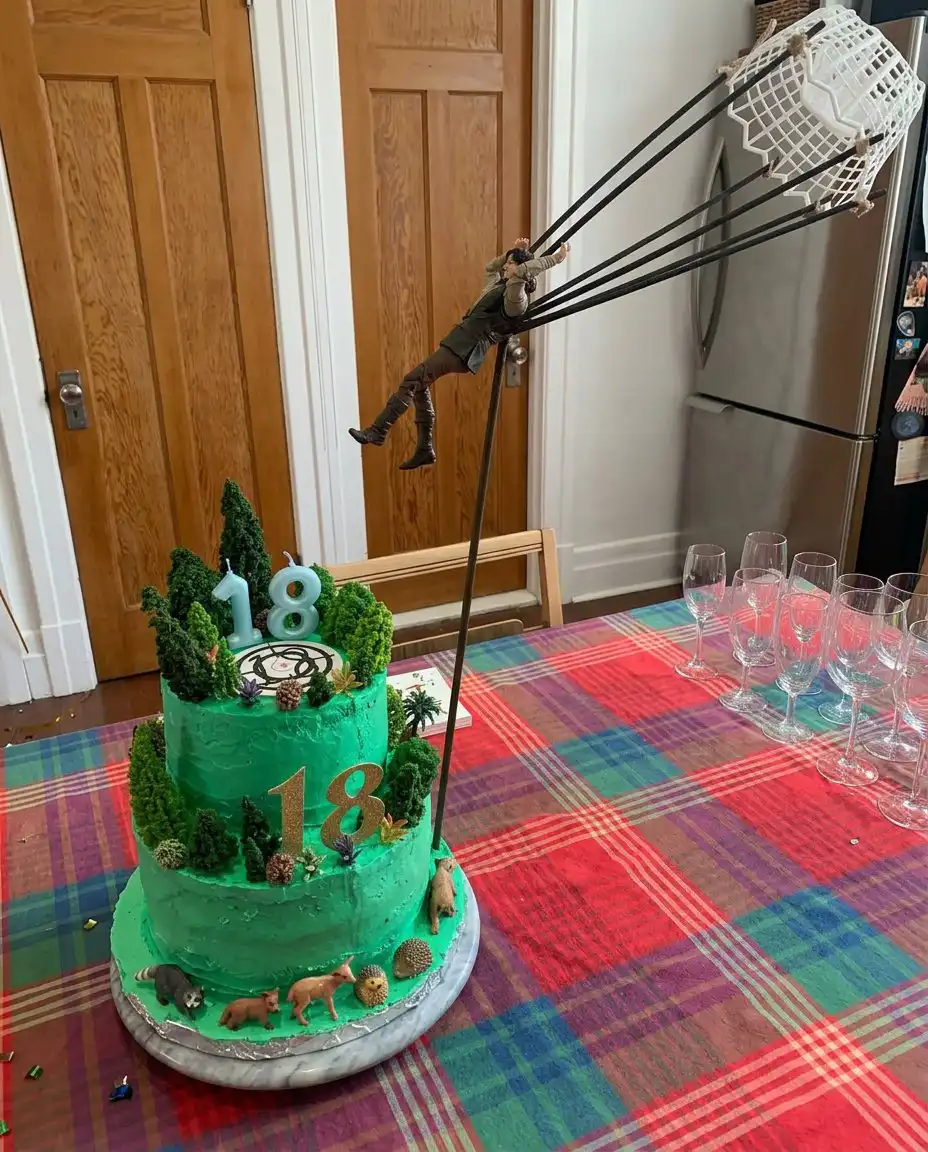
Because of the height and weight of this double-layered cake, it is best served at room temperature to ensure the buttercream has a soft, melt-in-the-mouth texture. If the cake has been refrigerated, take it out at least two hours before serving. When cutting, use a long, thin-bladed serrated knife and clean the blade with warm water between every slice to maintain clean edges on the buttercream piping. For those who want to integrate this cake into a larger event theme, consider visiting our celebration design studio for layout ideas. This cake pairs exceptionally well with a dry sparkling wine or a light Earl Grey tea, as the tannins help balance the sweetness of the strawberry jam and vanilla buttercream.
Mastery Through Science
Mastering the 18th birthday number cake is a rite of passage for any serious home baker. By following these precise test kitchen ratios and structural techniques, you can produce a result that rivals any professional bakery. Remember that baking is a series of chemical reactions; when you control the variables of temperature and timing, you guarantee success. If you are looking for more milestone inspiration, our heart cake tutorial offers another perspective on shaped bakes. We invite you to share your results and technical questions with us on Instagram, Pinterest, and Facebook. Keep testing, keep measuring, and keep achieving peak results.