In the Cake Peak test kitchen, we performed three separate trials to determine the ideal thermal transition for a high-domed muffin. We found that starting the bake at a high temperature of 425°F (220°C) before dropping it to 350°F (177°C) triggers a rapid expansion of gases within the leavening agents, creating a professional, peaked structure. This technique prevents the fruit-heavy batter from spreading too wide and staying flat.

These peach cobbler muffins represent a precise balance of moisture and structure, utilizing a hybrid creaming method to keep the crumb tender yet sturdy enough to support juicy fruit. By monitoring the internal temperature and the ratio of streusel to batter, we have developed a reliable method for repeatable success. Whether you use fresh summer peaches or frozen slices, the results remain consistent and remarkably delicious.
The Science of Peak Performance
This recipe works because it addresses the two most common failures in fruit muffins: sogginess and density. We use a high initial heat to set the outer shell, which traps moisture inside while providing a crisp, buttery exterior. The inclusion of salted butter in the streusel provides a necessary flavor contrast to the natural sweetness of the peaches, while the cinnamon acts as a bridge between the fruit and the cake-like base. By weighing ingredients in grams, you eliminate the variance found in volume measurements, leading to a perfect result every time.
Print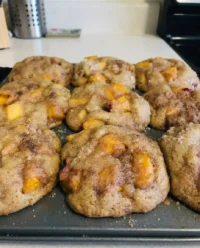
Peach Cobbler Muffins
- Total Time: 43 mins
- Yield: 12 muffins
Description
This recipe combines a precise temperature-drop baking technique with a buttery streusel to create bakery-quality peach cobbler muffins. Featuring a tender crumb and high-domed tops, these treats offer a perfect balance of sweet summer fruit and structured cake.
Ingredients
- 315g All-purpose flour (divided)
- Granulated sugar
- Baking powder
- Ground cinnamon
- Salt
- Salted butter (cold and room temperature)
- 2 large eggs
- Vanilla extract
- Milk
- Fresh or frozen diced peaches
Instructions
- Preheat your oven to 425°F (220°C) and line a standard 12-cup muffin pan with paper liners.
- Make the streusel by whisking together 65g flour and sugar, then cut in cold salted butter until pea-sized and refrigerate immediately.
- In a medium bowl, whisk together 250g flour, baking powder, cinnamon, and salt.
- In a large mixing bowl, beat room-temperature butter and sugar on high speed for exactly 2 minutes until light and airy.
- Add the eggs and vanilla extract, mixing on low to combine, then increase to high speed for 60 seconds.
- Add the dry ingredients and milk in three alternating additions, mixing on the lowest speed only until flour streaks disappear.
- Gently fold in one heaping cup of diced peaches using a silicone spatula to keep the batter aerated.
- Divide the batter evenly among the 12 cups, distribute remaining peaches on top, and sprinkle generously with the chilled streusel.
- Bake at 425°F for 5 minutes, then reduce the oven temperature to 350°F (177°C) and bake for an additional 15-18 minutes until the internal temperature reaches 200°F.
Notes
For the best rise, ensure your room-temperature butter is between 65°F and 68°F to achieve the ideal aeration during the creaming stage. If you are using frozen peaches, do not thaw them beforehand to prevent the juice from discoloring the batter; simply extend the final baking time by a few minutes.
- Prep Time: 20 mins
- Cook Time: 23 mins
- Category: Breakfast
- Method: Baking
- Cuisine: American
Ingredient Science and Variables
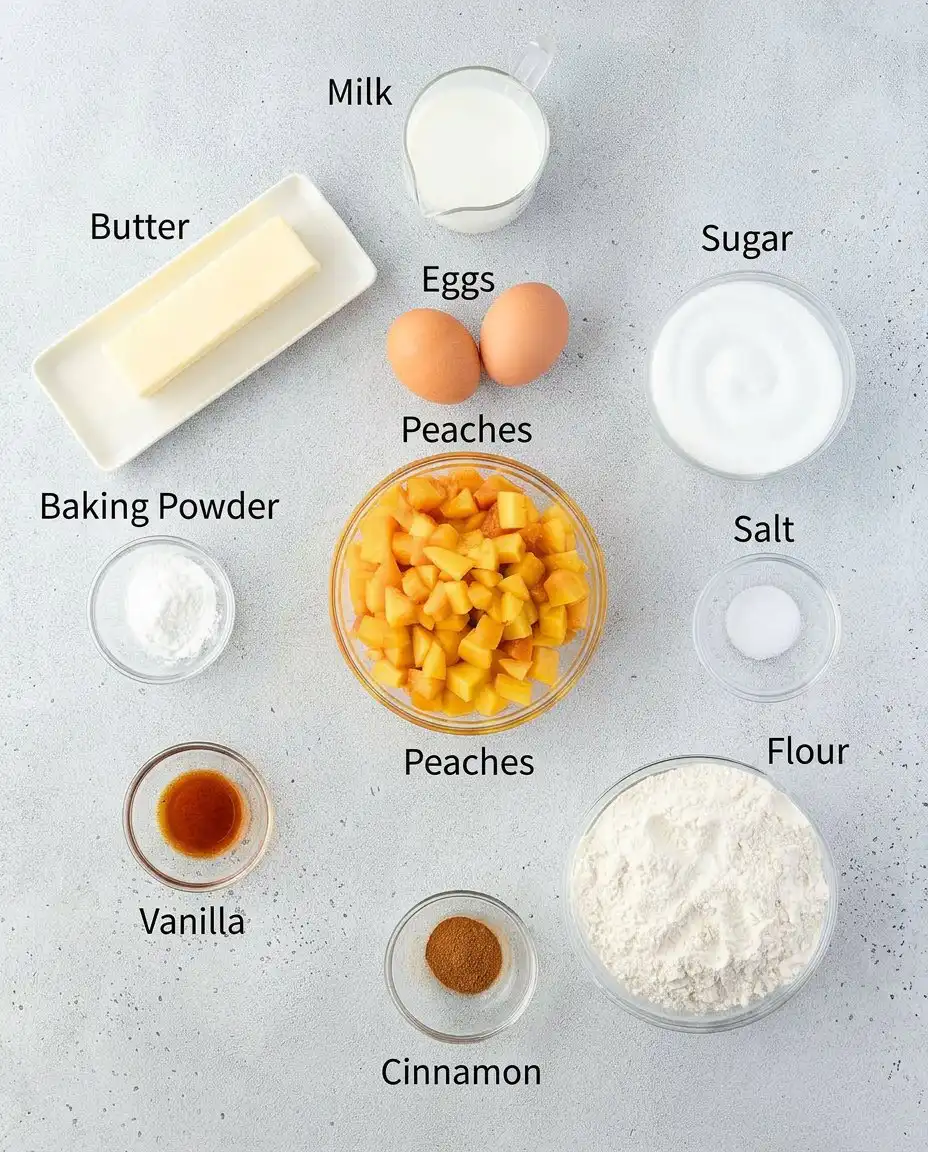
Success in baking is determined by the quality and temperature of your raw materials. Each component in this recipe serves a specific chemical purpose.
- All-Purpose Flour (250g + 65g): We use a standard protein content to provide structure without making the muffin tough. Measuring by weight is critical here to avoid dry, crumbly results.
- Granulated Sugar: Beyond sweetness, sugar is a tenderizer. It interferes with gluten development, keeping the crumb soft.
- Salted Butter: The cold butter in the streusel creates small steam pockets as it melts, which contributes to the flaky texture. The room-temperature butter in the batter must be exactly 65°F to 68°F (18°C to 20°C) for ideal aeration during the creaming process.
- Diced Peaches: Peaches contribute significant moisture. We tested both peeled and unpeeled; peeling the peaches results in a more uniform texture that mimics a traditional cobbler.
- Baking Powder: This is our primary leavening agent. Make certain it is fresh, as it is responsible for the lift during that initial 425°F burst.
The Step-by-Step Process
Step 1: Thermal Calibration and Prep
Preheat your oven to 425°F (220°C). This high temperature is vital for the initial lift. Line a standard 12-cup muffin pan with paper liners to prevent sticking and to assist with moisture retention after baking.
Step 2: Form the Streusel
In a small bowl, whisk together the flour and sugar. Cut the cold salted butter into the mixture using a pastry cutter or fork. Continue until the butter pieces are the size of peas. Refrigerate this mixture immediately to keep the fats solid until the muffins enter the oven.
Step 3: Combine Dry Ingredients
Whisk the flour, baking powder, cinnamon, and salt in a medium bowl. Aerating the dry ingredients at this stage prevents clumps and helps the cinnamon distribute evenly throughout the batter.
Step 4: The Creaming Phase
In a large mixing bowl, beat the room-temperature butter and sugar on high speed for exactly 2 minutes. This process, known as creaming, creates a network of air bubbles that provides a light, airy structure.
Step 5: Incorporate Liquids
Add the eggs and vanilla extract. Mix on low to combine, then increase to high speed for 60 seconds. The batter should look pale and fluffy. Scrape the sides of the bowl to make sure all fat is fully emulsified.
Step 6: Alternating Integration
Add the dry ingredients and milk in three alternating additions, starting and ending with the flour. Mix on the lowest speed only until the flour streaks disappear. Over-mixing at this stage will activate too much gluten, leading to a rubbery muffin.
Step 7: The Fruit Fold
Fold in exactly one heaping cup of the diced peaches using a silicone spatula. Use a gentle folding motion to keep the air bubbles intact. Divide the batter evenly among the 12 cups, filling them nearly to the top.
Step 8: Final Topping and Bake
Distribute the remaining peaches across the top of the batter. Retrieve your chilled streusel and sprinkle it generously over each muffin. Press down very lightly to anchor the crumbs. Bake at 425°F (220°C) for 5 minutes, then reduce the heat to 350°F (177°C) for an additional 15-18 minutes.
Troubleshooting Guide and Lab Notes
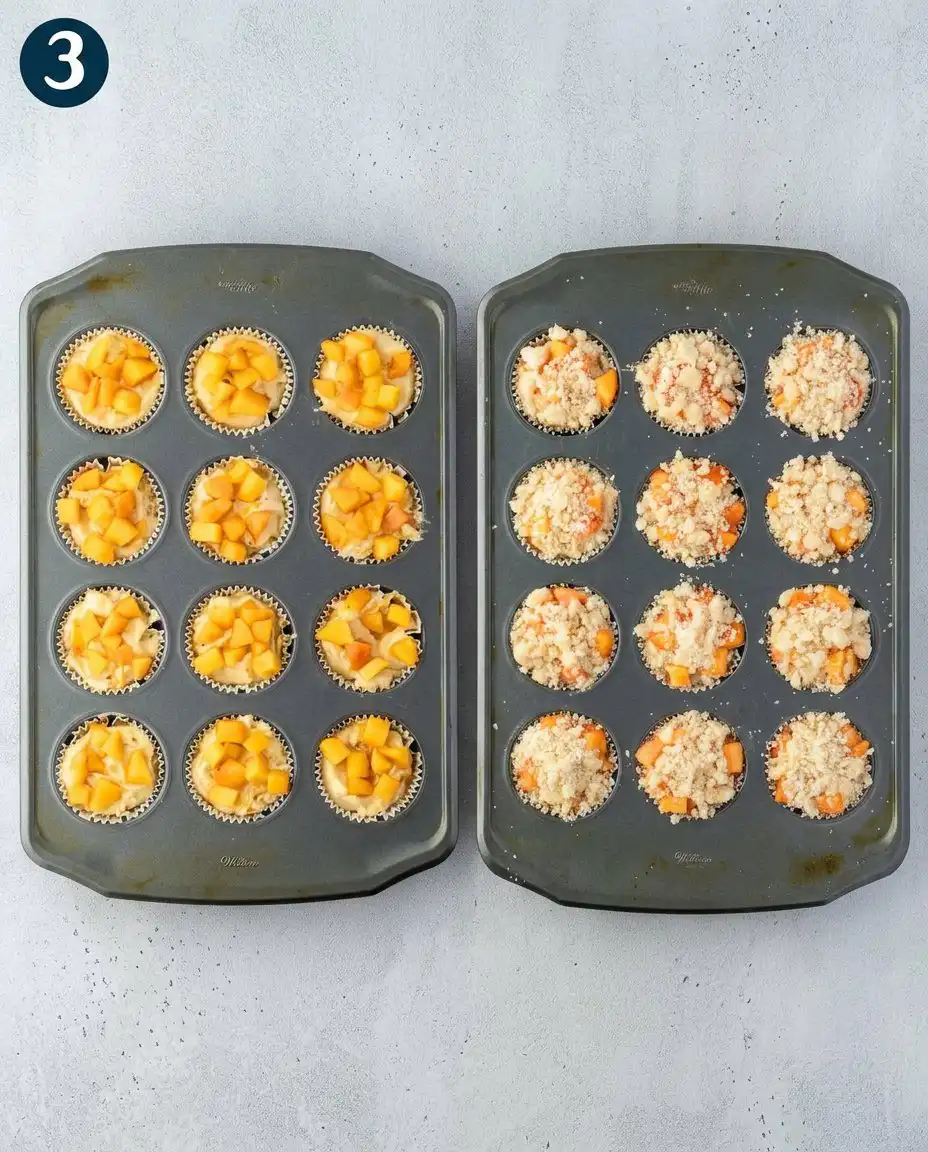
If your muffins sink in the center, it is often due to the oven door being opened too early. Wait until the 15-minute mark of the second temperature phase before checking for doneness. If you find the texture too moist, you may be using peaches with exceptionally high water content; try patting them dry with a paper towel before folding them into the batter. This method creates a different texture than a peach dump cake which relies on a more liquid-heavy base.
Always use an instant-read thermometer to verify doneness; the internal temperature should reach 200°F (93°C). If using frozen peaches, do not thaw them first, as the excess juice will bleed into the batter and turn it gray. Simply add 2 to 3 minutes to the final baking phase to account for the temperature deficit.
Tested Variations and Precision Tweaks
During our testing phases, we explored different fruit and fat ratios to see how they affected the crumb. For those who prefer a deeper flavor profile, replacing half of the granulated sugar in the streusel with brown sugar creates a more caramelized,
Presentation and Pairing Notes
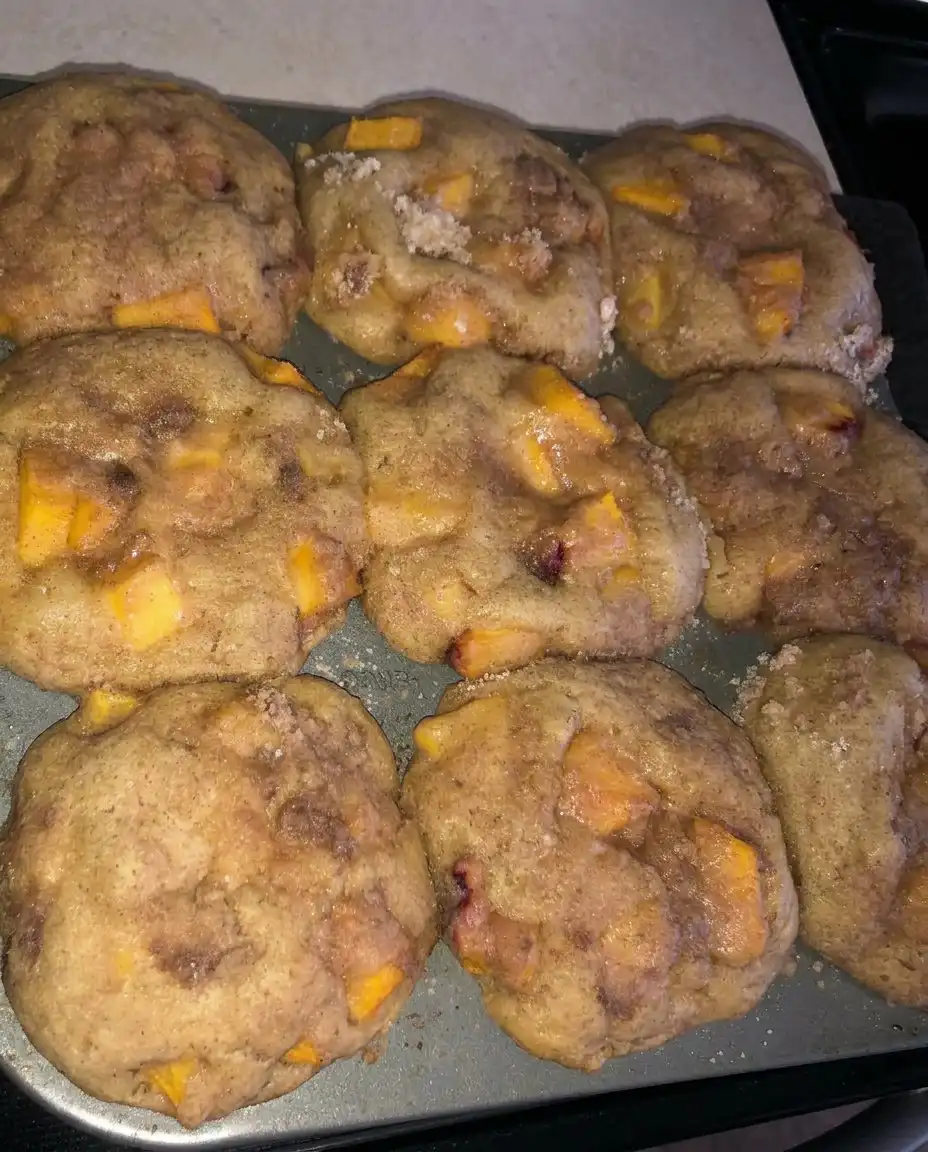
These muffins are best served warm, approximately 15 minutes after leaving the oven. This allows the internal structure to set while the fruit remains succulent. For a more formal presentation, you might serve these alongside peach honey cheesecake cupcakes as part of a summer brunch spread. A light dusting of powdered sugar can be applied just before serving, but wait until they are cool so the sugar doesn’t melt. They pair exceptionally well with a high-acid coffee or a light herbal tea, which cuts through the richness of the buttery streusel.
Mastery Through Science
Achieving the perfect muffin is a matter of understanding the thermal and chemical reactions taking place in your oven. By following this precise temperature-drop method, you can produce bakery-quality results in your own kitchen. If you enjoyed this systematic approach to fruit-based bakes, we suggest you try our homemade peach cobbler muffins or study the techniques used by experts like those at State of Dinner. Keep testing and refining your technique. Share your results with our community on Pinterest, Instagram, or Facebook.