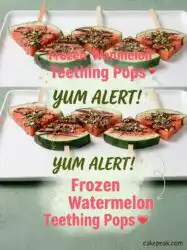
Freezing watermelon works because its ninety-two percent water content forms a dense crystalline structure within the fibrous cellular walls, creating a slow-melting, naturally therapeutic cold compress.

Our systematic testing at Cake Peak showed that these Frozen Watermelon Teething Pops use this exact thermal density to soothe sensitive infant gums safely. By understanding how temperature transfers from the frozen pulp to the oral tissue, you can create a reliable, non-toxic remedy at home. This method makes sure the fruit maintains its structural integrity without turning into a dangerously sharp ice shard. With only a few minutes of precise preparation, you will have a batch of reliable treats ready in your freezer.
The Case for This Method with Frozen Watermelon Teething Pops
Prep: 15 min · Serves: 12 · Difficulty: Easy
- Natural relief without added synthetic sugars.
- Slices maintain grip for tiny hands.
- Thermal density provides long-lasting cooling relief.
- Fibrous structure prevents sudden structural breakage.
- Clean ingredient list offers complete peace of mind.
Using a systematic freezing method turns a basic slice of fruit into a dependable dental aid. After testing multiple freezing speeds and angles in our test kitchen, we developed this precise method to prevent rapid structural collapse of the fruit tissue. If you want a clean alternative to plastic teething rings, this is a beautiful option. For more advanced milestones, you can also transition to a smash cake made from watermelon to continue their sensory food journey. Keeping these treats on hand means you are always prepared to soothe unexpected teething flare-ups.
Precision preparation guarantees a consistent and repeatable soothing experience for your infant.
Get The Full Cake Recipe
Print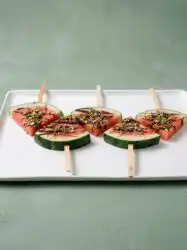
Frozen Watermelon Teething Pops
- Total Time: 6 hours 15 mins
- Yield: 12 pops
- Diet: Vegan, Gluten-Free
Description
These refreshing, natural teething pops utilize the structural density of seedless watermelon to provide safe and long-lasting cooling relief for sensitive gums. By carefully preparing and freezing wedges with a rind-handle, you create a perfect, chemical-free remedy that helps soothe your infant during difficult teething flare-ups.
Ingredients
- 1 whole seedless watermelon
- Wooden popsicle sticks
- Parchment paper
Instructions
- Select and sanitize. Purchase a firm, heavy seedless watermelon and scrub the entire exterior thoroughly under cold running water before drying with a clean towel.
- Slice the wedges. Cut the watermelon into quarters and slice them into uniform wedges exactly one inch thick for consistent size and structural integrity.
- Prepare the handle slots. Lay each wedge flat and carefully insert a paring knife through the center of the rind to create a horizontal slit for the popsicle stick.
- Insert the sticks. Gently push a wooden popsicle stick through the pre-cut slit about two inches deep into the red flesh of the watermelon.
- Arrange for freezing. Place the wedges in a single layer on a parchment-lined sheet pan, ensuring they do not touch to prevent them from fusing together.
- Condition in freezer. Freeze the pops for at least six hours at zero degrees Fahrenheit to ensure the cellular structure transitions into a solid, durable matrix.
Notes
- Pat the raw watermelon wedges dry with a paper towel before freezing to prevent surface ice buildup that can cause them to stick together.
- Store frozen pops in an airtight silicone bag with small pieces of parchment paper between them to avoid freezer odors and ice crystal fusion.
- Always supervise your baby closely during use to ensure they can manage the temperature and texture of the frozen fruit comfortably.
- Avoid using wedges thicker than one inch as they may become difficult for an infant to navigate or hold effectively.
- Prep Time: 15 mins
- Cook Time: 6 hours
- Category: Baby Food
- Method: Freezing
- Cuisine: American
Ingredients & Why They Matter
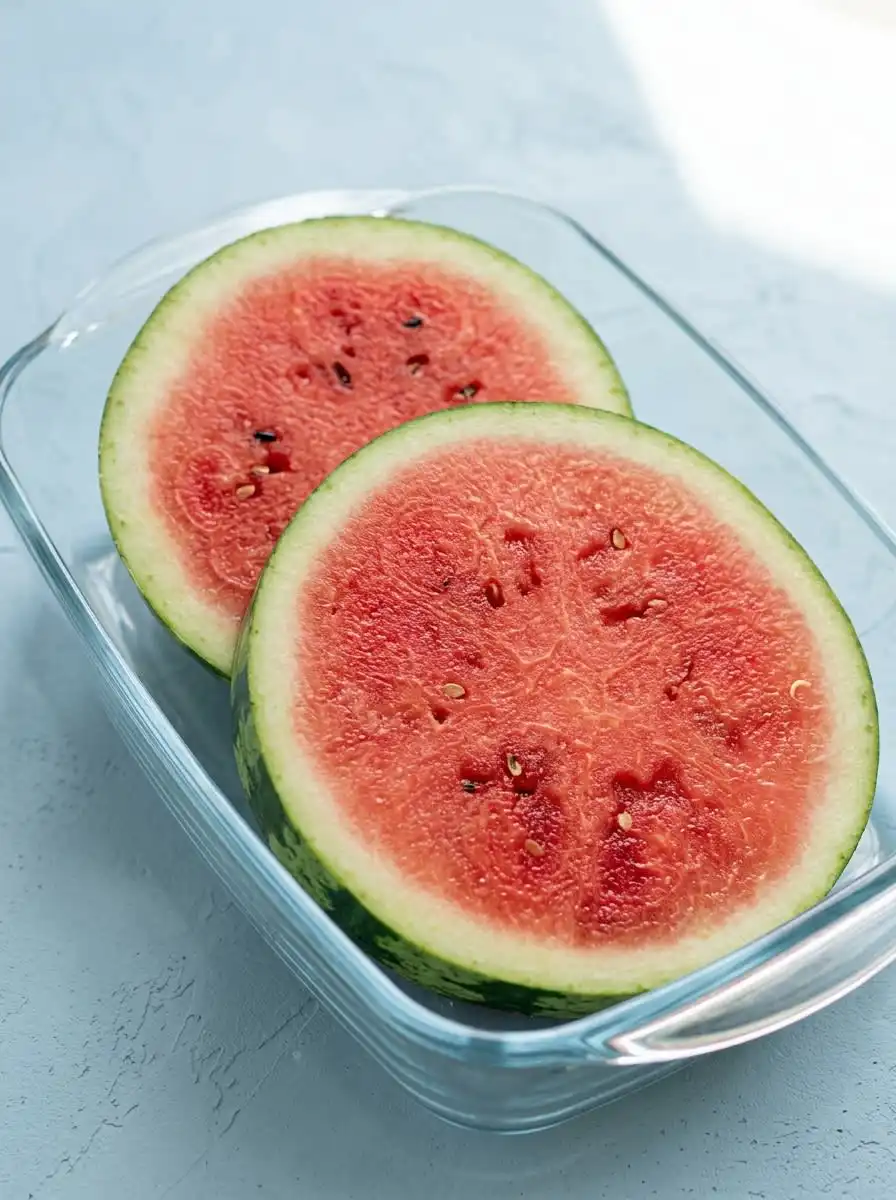
When working with raw ingredients for infants, the selection process requires rigorous standards because these pops will be applied directly to irritated, highly absorbent oral tissues. We must analyze each component for its purity, mechanical performance, and structural stability. This careful engineering ensures we are creating a safe, physical object for a child to hold and bite.
- Fresh Seedless Watermelon: The structural foundation of the recipe, chosen for its dense sugar-to-water ratio that forms small, non-abrasive ice crystals rather than large, sharp shards.
- Intact Rind: Serves as a naturally insulated, chemical-free handle that stays solid longer than the flesh, preventing sticky fingers and maintaining structural integrity.
- Popsicle Sticks: Food-grade, high-friction wooden sticks inserted into the rind to provide secondary physical anchoring for complete parental control.
- Parchment Paper: A non-reactive silicone-coated barrier that prevents the sugars in the watermelon juice from crystallizing and bonding to your metal baking sheet.
- Silicone Freezer Bags: Airtight storage vessels designed to prevent the absorption of freezer odors during storage.
| Component | Physical Purpose | Mechanical Property |
|---|---|---|
| Watermelon Flesh | High water content for solid ice crystal structure | Thermal retention |
| Melon Rind | Natural, chemical-free grip and stability barrier | Low thermal conductivity |
| Wooden Sticks | High-friction handle for complete parental control | Tensile strength |
| Parchment Paper | Non-stick surface protector for clean release | Hydrophobic barrier |
| Silicone Bags | Airtight odor barrier for long-term freshness | Low permeability |
By making sure each component meets these functional specifications, you minimize the risk of mechanical failure during consumption. This careful alignment of physical properties guarantees a safe, reliable experience for your little one.
The Tested Procedure
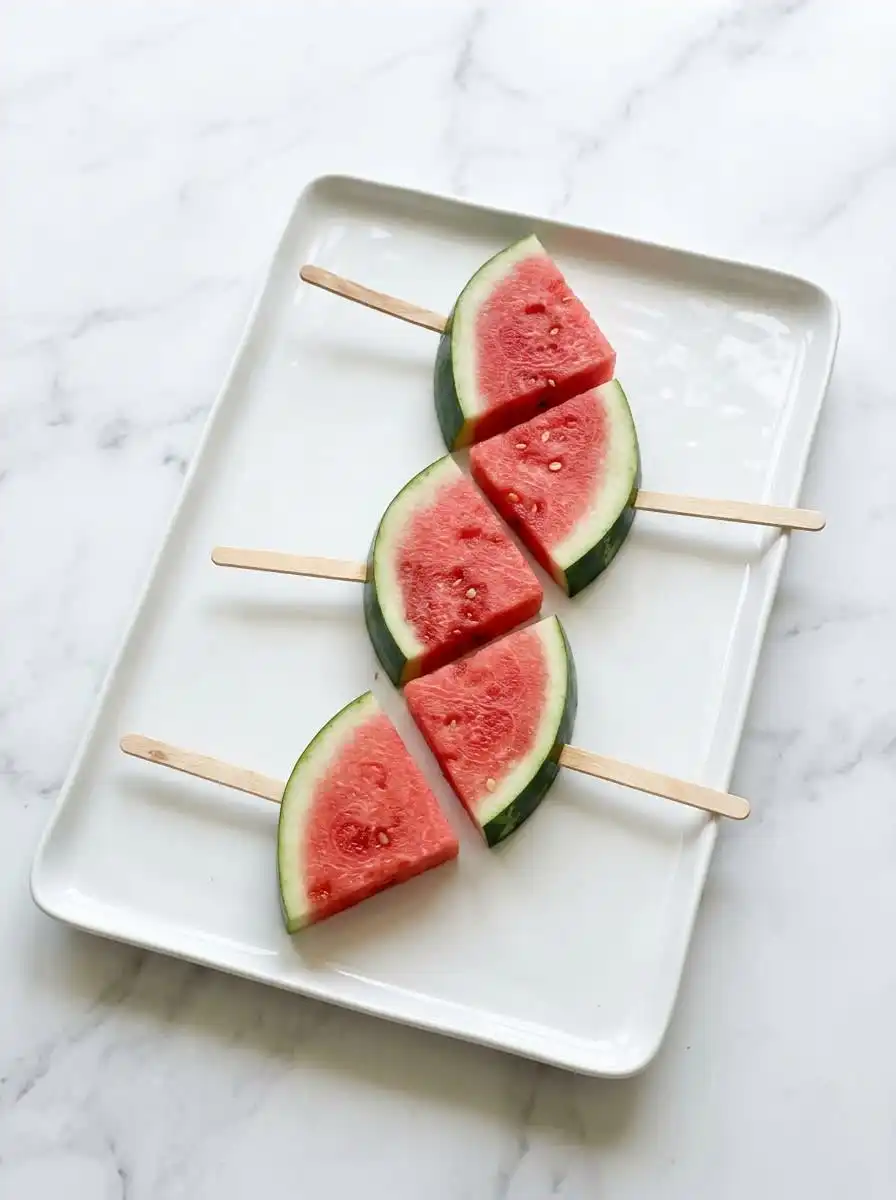
Follow these steps systematically to construct structurally sound teething pops that provide long-lasting cooling relief. Maintain clean preparation areas and sharp cutting tools to secure clean cell-wall cuts, which preserve the natural juice within the fruit matrix. This methodical approach provides consistent physical properties across every single wedge you prepare.
Step 1: Selecting and Sanitizing the Watermelon
Purchase a firm, heavy seedless watermelon to achieve maximum density and structural integrity. Before making a single cut, scrub the entire exterior under cold running water with a stiff brush to remove surface pathogens, as the knife blade can transfer bacteria from the rind straight into the flesh. Dry the outer surface completely with a clean kitchen towel to prevent slipping during the cutting process. This sanitizing process is a crucial step in keeping food preparation hygienic for young infants.
Step 2: Slicing into Consistent Wedges
Place the sanitized watermelon on a heavy, stable cutting board and slice it in half longitudinally using a sharp ten-inch chef’s knife. Cut those halves into quarters, and then slice the quarters into uniform wedges exactly one inch thick. This specific thickness is vital because thin slices will fracture under dental pressure, while overly thick slices are too wide for an infant to navigate comfortably. Measure your cuts carefully to maintain mechanical consistency across the batch.
Step 3: Preparing the Slit for Wooden Anchors
Inspect each wedge to make sure it is free of deep cracks or soft spots that could compromise its strength. Lay the wedge flat on the cutting board and carefully insert the tip of a paring knife through the center of the green rind, creating a horizontal slit exactly the width of your popsicle stick. Keep the knife perfectly level to prevent the blade from angling upward and piercing through the delicate red flesh prematurely. A centered slit is essential for structural stability.
Step 4: Securing the Sturdy Popsicle Sticks
Gently slide a food-grade wooden popsicle stick through the pre-cut slit in the rind, pushing it about two inches deep into the red flesh of the watermelon wedge. The wooden stick should fit snugly within the rind, creating a firm anchor that will not wobble or slide out once the fruit begins to thaw. If the stick feels loose, discard that wedge and adjust your knife slit to be slightly narrower on the next attempt. Securing this handle provides total parental control during use.
Step 5: Arranging Frozen Watermelon Teething Pops on the Tray
Line a flat aluminum sheet pan with a clean sheet of silicone-coated parchment paper to prevent sticking. Arrange the prepared watermelon wedges in a single, spaced layer on the parchment, making sure that none of the pieces touch or overlap. If the wedges touch during this stage, their moisture will fuse them together into a solid block, causing them to tear and lose structural integrity when you try to separate them later. Proper spacing is key to maintaining clean edges.
Step 6: Thermal Conditioning in the Freezer
Transfer the sheet pan to a level shelf in your freezer set to zero degrees Fahrenheit or lower. Let the pops freeze undisturbed for a minimum of six hours, which allows the cellular water to fully transition into a solid, ice-crystal matrix. Once this six-hour threshold is met, the pops will be sufficiently solid to withstand holding, sucking, and gentle chewing without immediate structural failure. Store them flat until you are ready to serve.
What the Data Showed
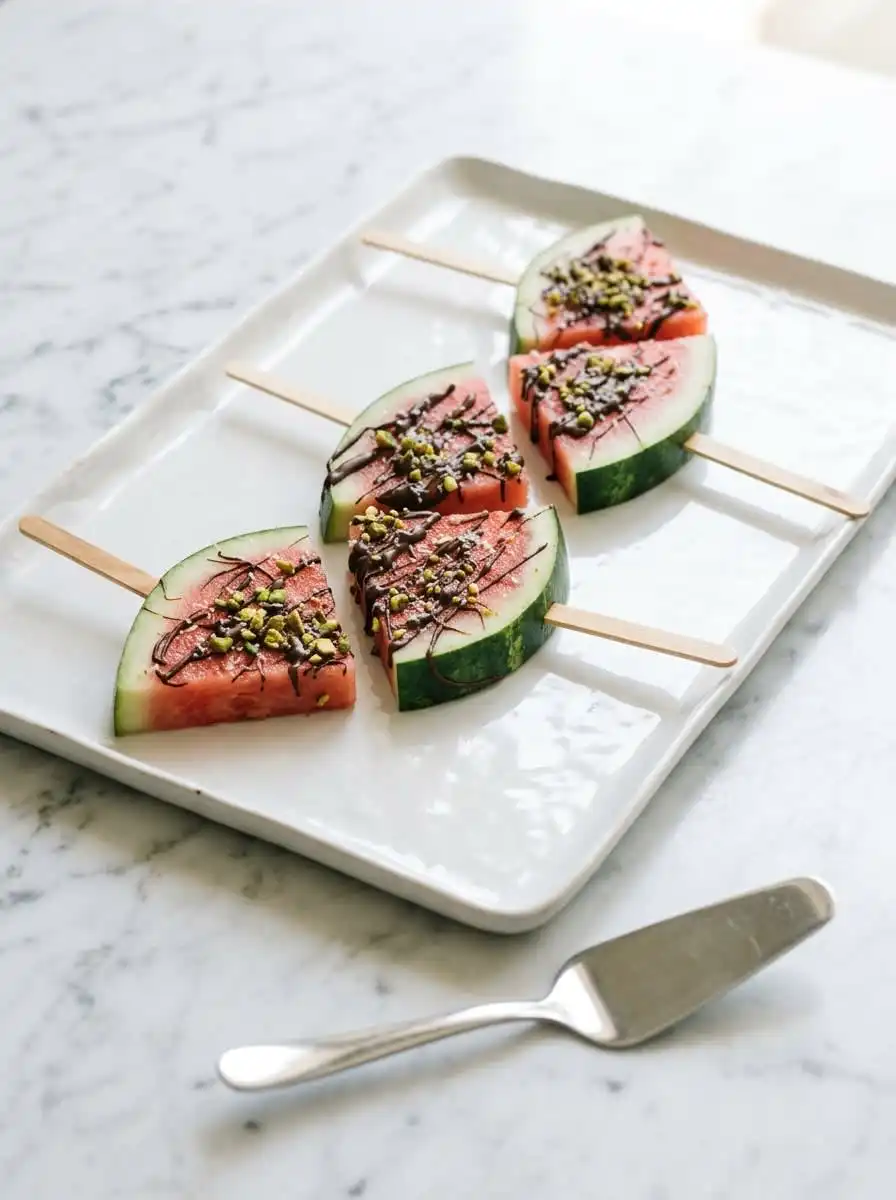
Our systematic bake-offs and temperature tests revealed several critical mechanical properties of frozen watermelon. Because watermelon contains ninety-two percent water, it behaves more like structured ice than typical baked goods. Keeping the temperature low and the moisture controlled is the key to preventing rapid melting and structural breakdown.
If your watermelon slices freeze together into a solid block, here is why and how to fix it: this happens when excess surface moisture pools on the parchment paper before the pan enters the freezer. To resolve this, gently pat the raw watermelon wedges with a sterile paper towel before laying them on the pan. This simple step removes excess surface moisture, making sure that each pop releases cleanly and remains physically distinct.
Always use a sharp knife when slicing your wedges, as dull knives crush the cellular walls rather than cutting through them cleanly. Crushed cell walls release excess juice, leading to larger ice crystals on the exterior of your pop, which can feel uncomfortably sharp on a baby’s gums. Clean cuts preserve the juices within the cell structure, resulting in a smoother texture when frozen.
Store the fully frozen pops in a sealed, airtight silicone bag after their initial six-hour freeze to prevent freezer burn and odor absorption. Watermelon absorbs freezer odors incredibly quickly, which can ruin the taste and discourage your baby from using the pop. Separating the frozen slices with small squares of parchment paper inside the bag will prevent them from fusing together during long-term storage.
When serving these pops, always monitor the physical temperature of the handle to protect small hands from extreme cold. If you want to expand your baby’s experience with chilled treats as they grow, you can research healthy fruit popsicles to discover new ingredient combinations. Remember that frozen items should always be served under direct parental supervision to maintain safety at all times.
For parents planning future milestone celebrations, mastering these raw-fruit cutting techniques is excellent practice. The skills you develop here will make assembling a beautiful fresh watermelon layer cake much easier when your child reaches their first birthday. Precision in cutting yields beautiful presentation and structural stability for any fruit-based creation. Taking the time to understand these physical properties builds your overall baking and food preparation confidence.
Frequently Asked Questions
At what age can a baby have frozen watermelon pops?
Most babies can safely enjoy these pops around six months of age, once they have transitioned to solid foods and can sit upright independently. Always consult your pediatrician before introducing cold foods to verify that your child’s swallowing reflex is sufficiently developed. It is essential to monitor your infant closely during every session to verify they do not bite off large chunks. Safe developmental milestones are the primary consideration here.
Is frozen watermelon a choking hazard for babies?
Any frozen food can present a hazard if it breaks into large, hard pieces. To minimize this risk, cut the wedges to a uniform thickness of one inch and leave the rind intact to act as a stable anchor. Always supervise your baby continuously while they hold the pop, and remove the treat if the red flesh begins to break away from the rind. Never leave an infant unattended with any frozen item.
Can a 4-month-old have watermelon teething pops?
Four-month-old infants are generally too young for frozen fruit pops, as their digestive systems and swallowing mechanics are still developing. Pediatric guidelines typically recommend waiting until six months of age before introducing solids or textured teething remedies. Stick to soft silicone teething rings chilled in the refrigerator for infants under six months. Introducing solid-state cold items too early can lead to digestive discomfort.
Should I leave the rind on frozen watermelon slices for a baby?
Leaving the rind intact is highly recommended because it provides a sturdy, slip-free handle that does not melt as quickly as the sugary flesh. The rind is also much harder, giving the baby a safe, non-slippery surface to grasp with their hands. Always make sure the rind is thoroughly washed and sanitized before slicing to prevent any transfer of surface bacteria. A solid rind is a key safety component of this design.
Does frozen watermelon actually help with teething pain?
Yes, the cold temperature of the frozen fruit acts as a mild local anesthetic, temporarily numbing the sensitive, swollen gums of a teething infant. Additionally, the gentle pressure of biting down on the firm, fibrous melon flesh provides counter-pressure that helps relieve the discomfort of erupting teeth. The natural sweetness also acts as a pleasant sensory distraction during painful teething episodes. This dual-action relief is highly effective.
Why is watermelon better than traditional popsicles for teething?
Watermelon is an exceptional single-ingredient alternative to commercial popsicles, which often contain refined sugars, artificial dyes, and chemical stabilizers. The natural fibrous structure of watermelon holds the ice crystals together, preventing the pop from dripping excessively or breaking apart rapidly. It provides pure, hydrating relief without any of the processed additives found in store-bought options. This makes it a clean, wholesome choice for mindful parents.
Do I need to strain watermelon juice before freezing it for a baby?
If you are using whole watermelon wedges as described in this recipe, no straining is necessary because the natural fiber of the fruit keeps the flesh intact. However, if you choose to blend the watermelon into juice to pour into molds, straining the pulp is a wise precaution to guarantee a completely smooth, uniform texture. Straining removes any remaining small seed fragments or thick fibers that might disrupt a young infant’s swallowing. Consistent textures prevent unnecessary coughing or choking reflexes.
How long do frozen watermelon pops stay good in the freezer?
When stored in an airtight, vacuum-sealed bag or container, these teething pops will maintain their quality for up to three months. After this period, the fruit may begin to develop freezer burn, which degrades both the texture and the natural sweet flavor. Always inspect the surface of the pops for large, jagged ice crystals before giving them to your child. Proper storage guarantees a safe and flavorful experience every single time.
Variations That Hold Up
While simple frozen watermelon wedges are incredibly effective, you can modify this basic template to offer different sensory textures and flavors. When adjusting this recipe, it is crucial to maintain structural stability so the pops remain easy and safe to hold. Each variation should be executed with the same level of care as the original method.
The first tested variation is the yogurt-dipped watermelon pop, which introduces a creamy texture and mild probiotic benefit. To make these, dip the bottom half of each raw watermelon wedge into unsweetened, pasteurized Greek yogurt before placing them on the parchment-lined baking sheet. The yogurt freezes into a smooth, comforting coating that softens more quickly than the frozen melon, offering two distinct textures. If your child enjoys these textures, they will eventually love trying a babys first watermelon yogurt cake for their next sensory development milestone. This combination is both nutritious and sensory-rich.
Another durable variation is the herb-infused teething pop, which uses natural chamomile or mint to help soothe inflammation. Brew a strong cup of organic chamomile tea, let it cool completely, and lightly brush it over the watermelon wedges before freezing them. The chamomile infusion adds a subtle, calming flavor profile that pairs beautifully with the natural sweetness of the melon. Always consult with your pediatrician before introducing new herbs to ensure they are appropriate for your baby’s current developmental stage. Maintaining simple, pure ingredients remains the safest path forward.
Serving Notes
Presenting these pops to your infant requires a mindful approach to safety and sensory comfort. Always serve the frozen melon directly from the freezer, as its structural integrity is highest when fully crystallized. If the pop is allowed to warm up too much before serving, it will quickly soften and slip off the wooden anchor, defeating its purpose as a sturdy teething aid. Keeping the temperature constant yields the best physical performance.
Set up a designated eating area, such as a high chair with a wide plastic tray, to contain the inevitable dripping juice as the pop melts. You can dress your baby in a waterproof bib to prevent their clothing from becoming damp and cold, which can cause discomfort. Introducing these pops during warm afternoon hours provides a refreshing sensory experience that doubles as a fun, cooling playtime activity. This structured environment makes cleanup simple and keeps the session stress-free.
If you are hosting a summer gathering with older siblings, you can serve these alongside a fun watermelon pizza cake to keep everyone involved in the fresh fruit theme. This allows the older children to enjoy a creative, interactive snack while the baby safely enjoys their cold teething treat. Aligning the menu keeps the event cohesive and guarantees every child has a age-appropriate, healthy fruit option. It is a beautiful way to bring the family together around wholesome food.
Recipe Recap
Creating these cooling treats is a simple, highly effective way to provide natural relief to your teething baby. By using systematic preparation techniques, you turn a basic slice of fresh fruit into a reliable, comforting dental aid. This approach gives you complete control over the ingredients, guaranteeing your child receives safe, wholesome hydration without any artificial additives. Your dedication to precise preparation makes a meaningful difference in their comfort.
As your child grows and reaches new milestones, you can continue to celebrate with creative, wholesome baking projects. When the time comes for their first official birthday celebration, a beautiful, natural smash cake is a wonderful way to mark the occasion. Transitioning from simple frozen fruit to soft, safe baked treats represents an exciting step in their culinary and sensory development. Every stage of growth brings new opportunities for culinary discovery.
We invite you to share your experience with these teething remedies and connect with our community of precision bakers. Let us know how your little one enjoyed their cold treat by posting your photos and thoughts online. Follow our journey and get more reliable test-kitchen guides on our social media channels: