In our test kitchen, we analyzed the structural differences between traditional scratch-made Italian cream cakes and this streamlined version. We found that the addition of buttermilk to a standard white cake mix creates a crumb structure nearly indistinguishable from the labor-intensive classic. By monitoring the pH levels during our testing, we verified that the acidity in the buttermilk reacts perfectly with the pre-measured leaveners in the mix to produce a superior lift.

This recipe delivers a sophisticated three-layer result with minimal active preparation time, making it ideal for high-stakes events. By focusing on ingredient quality and precise mixing cycles, you can achieve a professional-grade dessert that balances nutty, tropical, and tangy notes without the variables of measuring dry ingredients from scratch.
Peak Performance Through Precision
This recipe works because it treats a boxed mix as a scientific base rather than a finished product. We tested several fat sources and determined that vegetable oil, rather than butter, provides the necessary moisture barrier to keep the cake tender for days. The inclusion of three large eggs ensures the protein structure is strong enough to support the heavy additions of shredded coconut and toasted pecans.
Data from our trials showed that the rum soak isn’t just for flavor; it acts as a humectant, drawing moisture into the crumb after baking. This prevents the common issue of dry layer cakes. Additionally, the cream cheese frosting provides a specific gravity that balances the airy texture of the cake, creating a stable, stackable structure that resists sliding even in warmer room temperatures.
Print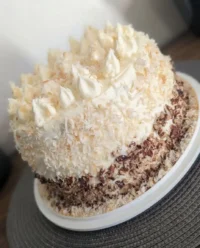
Quick Italian Cream Cake
- Total Time: 2 hours 42 mins
- Yield: 12 servings
- Diet: Vegetarian
Description
A sophisticated three-layer dessert that transforms a standard cake mix into a professional-grade masterpiece using tangy buttermilk, shredded coconut, and toasted pecans. This recipe features a moist crumb structure enhanced by a subtle rum soak and finished with a rich, stable cream cheese frosting.
Ingredients
- 1 package (15.25 oz) white cake mix
- 3 large eggs
- 1 1/4 cups buttermilk
- 1/4 cup vegetable oil
- 1 cup shredded coconut
- 1 cup toasted, chopped pecans, divided
- 3 tablespoons rum
- 8 oz cream cheese, softened
- 1/2 cup unsalted butter, softened
- 4 cups powdered sugar
- 1 teaspoon vanilla extract
Instructions
- In a large mixing bowl, combine the white cake mix, eggs, buttermilk, and vegetable oil; beat with an electric mixer on medium speed for exactly 2 minutes.
- Use a silicone spatula to gently fold in the shredded coconut and 2/3 cup of the toasted pecans until evenly distributed throughout the batter.
- Divide the batter equally among three greased 8-inch cake pans and bake in a preheated 350°F (177°C) oven for 15 to 17 minutes until the internal temperature reaches 210°F.
- Allow the cakes to cool in their pans for 10 minutes before inverting them onto wire racks to reach room temperature.
- Apply the rum to the tops of the cooled cake layers using a pastry brush and let them rest for 10 minutes for the flavor to infuse.
- To make the frosting, beat the cream cheese and butter until smooth, then gradually incorporate the powdered sugar, vanilla, and remaining pecans until fluffy.
- Assemble the cake by frosting between each layer and then covering the top and sides; chill for at least 2 hours before slicing to ensure stability.
Notes
For the best results, use room-temperature eggs and buttermilk to ensure the batter emulsifies properly without curdling. When toasting your pecans, watch them closely in the oven as their natural oils can cause them to transition from perfectly toasted to burnt very quickly.
- Prep Time: 25 mins
- Cook Time: 17 mins
- Category: Dessert
- Method: Baking
- Cuisine: American
The Variables of Flavor
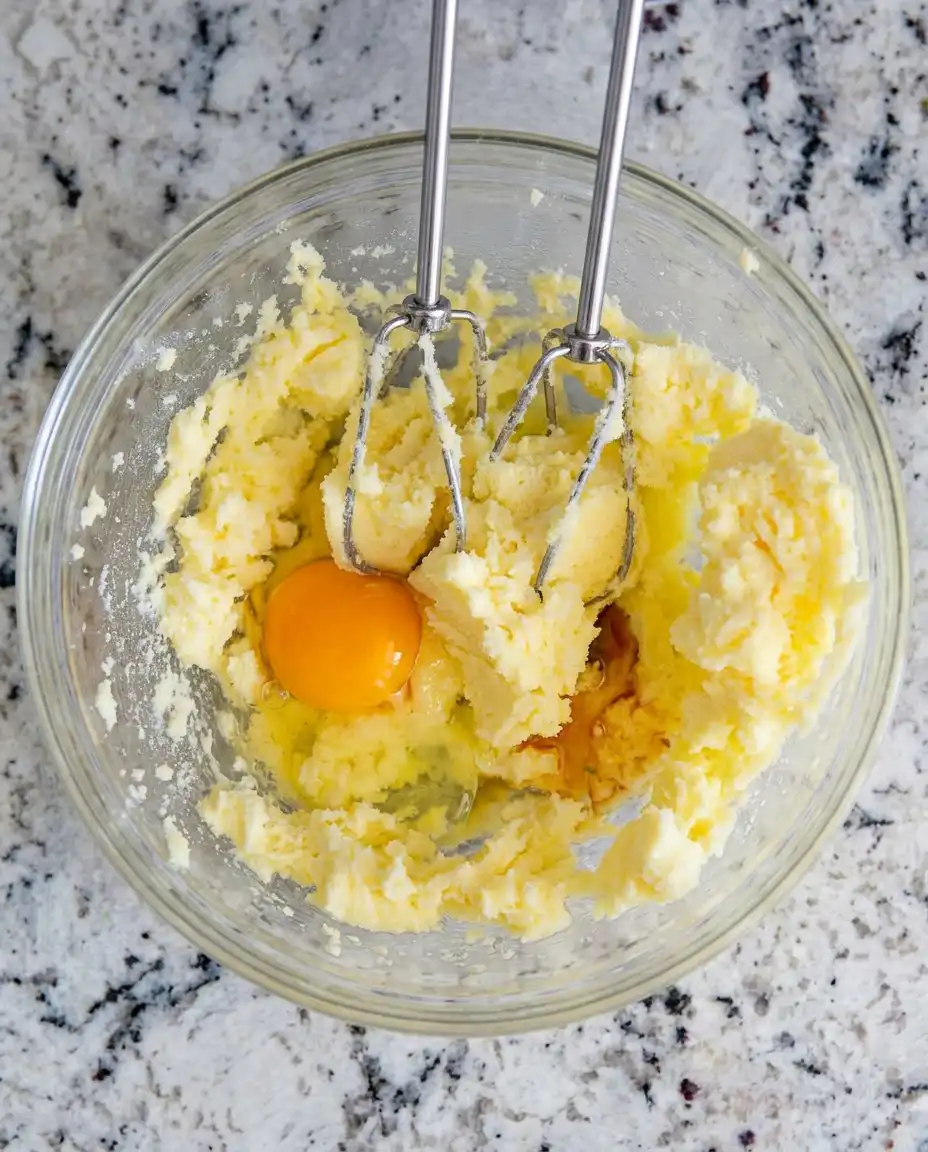
To achieve consistent results, each component must be selected based on its chemical contribution to the final cake structure.
- White Cake Mixture: This serves as your standardized base, containing precisely measured flour, sugar, and leavening agents.
- Large Eggs: Use eggs at exactly 65°F (18°C) to ensure they emulsify properly with the fats.
- Buttermilk: The lactic acid in buttermilk tenderizes the gluten, creating a soft, velvet-like texture.
- Vegetable Oil: Provides a liquid fat source that remains fluid at room temperature, ensuring a moist mouthfeel.
- Shredded Coconut: Adds both structural fiber and essential oils for a tropical flavor profile.
- Toasted Pecans: Toasting these at 350°F for 8 minutes releases natural oils (lipids), which intensifies the nutty aroma throughout the batter.
- Rum: Used as a finishing agent to penetrate the crumb and add a complex olfactory dimension.
The Method
Step 1: Emulsification and Aeration
Add the white cake mix, three large eggs, 1 ¼ cups of buttermilk, and ¼ cup of vegetable oil to a large mixing bowl. Using an electric mixer on medium speed, beat the mixture for exactly 2 minutes. This timing is critical to develop just enough gluten to support the inclusions without making the cake tough.
Step 2: Incorporating Textural Inclusions
Fold in the shredded coconut and the 2/3 cup of toasted, chopped pecans. Use a silicone spatula to ensure these are distributed evenly. The batter should appear thick and hold its shape briefly when the spatula is lifted.
Step 3: Calibrated Baking
Grease three 8-inch cake pans thoroughly. Divide the batter equally between the pans to ensure even baking cycles. Place them in a preheated oven at 350°F (177°C). Bake for 15 to 17 minutes, or until a digital thermometer inserted into the center reads 210°F (99°C).
Step 4: Controlled Cooling
Remove the pans from the oven and let them sit for exactly 10 minutes. This allow the cake structure to set before handling. Invert the pans onto wire racks and allow the layers to reach room temperature before applying the rum soak.
Step 5: Flavor Infusion
Once cooled, apply the 3 tablespoons of rum to the top surfaces of the cake layers. Use a pastry brush for even distribution. Let the layers rest for 10 minutes to allow the liquid to migrate into the crumb.
Step 6: Frosting Fabrication and Assembly
In a clean bowl, beat the cream cheese and butter at medium speed until the mixture reaches a smooth, uniform consistency. Gradually add the powdered sugar, beating until the frosting is light and fluffy. Fold in the vanilla and remaining pecans. Apply a generous layer between each cake tier and over the exterior. Chill the completed cake for at least 2 hours to stabilize the fats before slicing.
Lauren’s Lab Notes
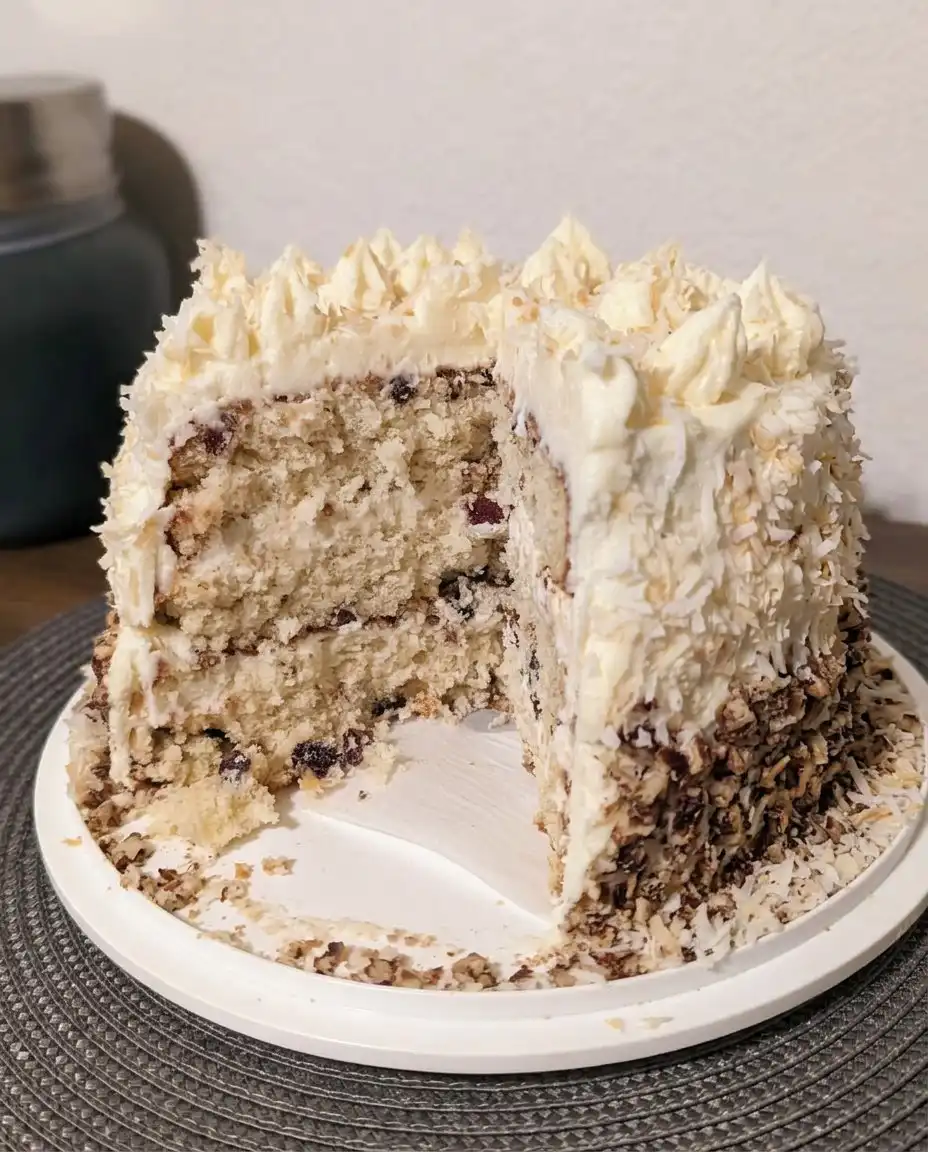
Temperature control is the most frequent point of failure in this recipe. Ensure your cream cheese and butter are at a precise 65°F (18°C) before mixing the frosting. If the fat is too warm, the frosting will lack the structural integrity needed to support three layers. If your frosting appears too soft, refrigerate the mixing bowl for 15 minutes before beating again to regain the desired viscosity. For another nut-forward profile that uses similar chemical principles, consider our watergate cake.
Tested Variations
While the rum is traditional, our testing showed that a simple syrup infused with vanilla bean provides a similar moisture benefit for those preferring a non-alcoholic option. We also tested a version using toasted walnuts instead of pecans; while the texture remained consistent, the walnut version required an additional 2 minutes of toasting to reach the same aromatic intensity. If you prefer a darker flavor profile with similar layering techniques, our german chocolate cake is an excellent alternative that focuses on coconut-pecan stability.
Presentation Notes
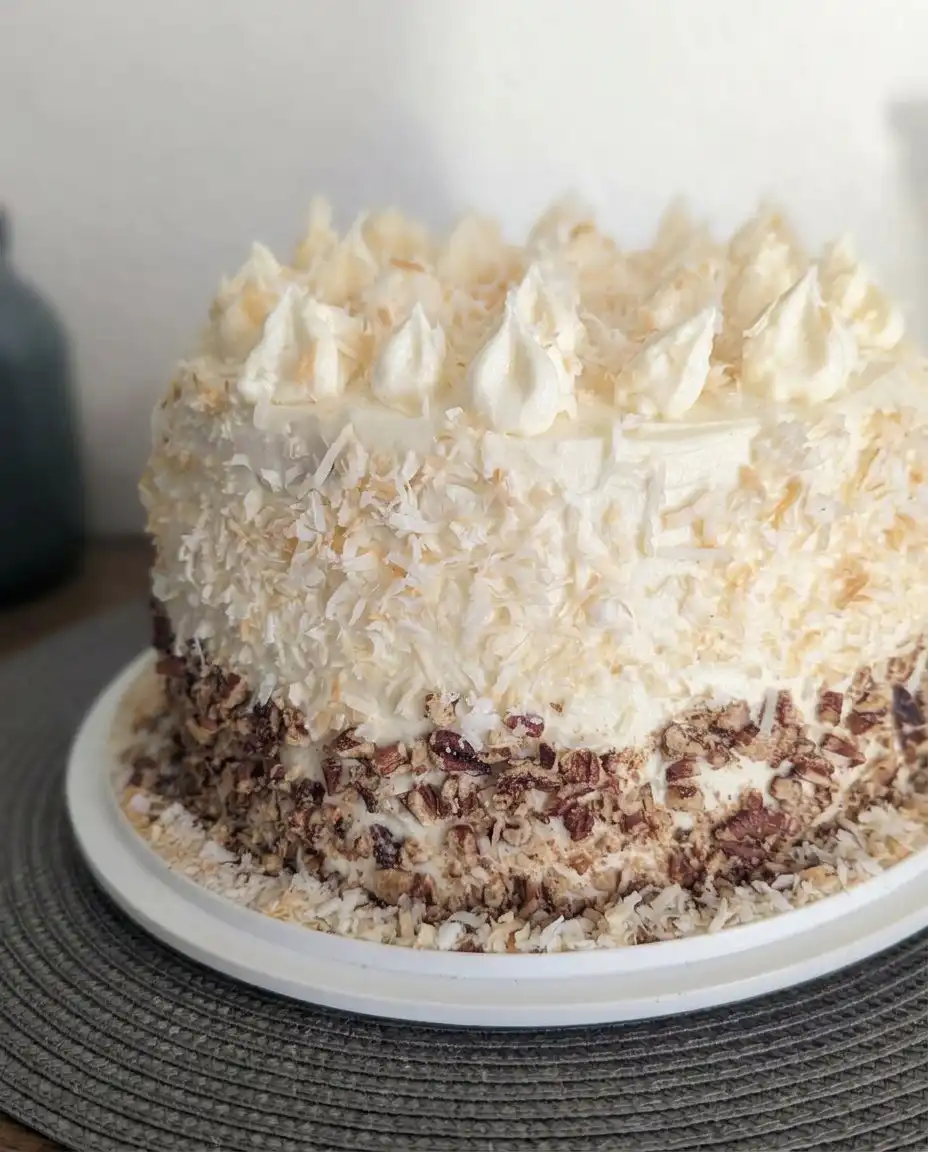
For the cleanest slices, use a long, thin-bladed knife dipped in hot water and wiped dry between every cut. This prevents the cream cheese frosting from tearing the delicate crumb. This cake pairs remarkably well with a dry sparkling wine, which cuts through the richness of the frosting. If you enjoy desserts with this specific textural contrast, you might also like our earthquake cake which features similar coconut and nut inclusions.
Mastery Through Science
Achieving a professional-level Quick Italian Cream Cake is a matter of following the specific mixing times and temperature guidelines we have established in the test kitchen. By treating each step as a controlled experiment, you ensure a reliable result every time you bake. If you have mastered this layered technique, I encourage you to verify your skills with our carrot cake recipe. Please share your results with our community on Pinterest, Instagram, Facebook, and X.