In our test kitchen, we analyzed how various cocoa-to-strawberry ratios affect crumb stability. This strawberry chocolate cake emerged as the definitive winner for texture and flavor balance.

This recipe uses a precise scientific approach to create a moist, structured chocolate sponge paired with a stable strawberry cream cheese frosting. It is a masterclass in flavor chemistry.
The Science of Flavor Balance
This Strawberry Chocolate Cake works because it addresses the fundamental challenge of pairing dense chocolate with high-moisture fruit. Most chocolate cakes are either too dry to support fruit or too fragile to hold layers. Our testing proved that using a combination of melted butter and light oil provides the ideal fat profile: butter contributes a rich, traditional flavor and structural stability at room temperature, while oil guarantees a moist crumb that remains tender even after refrigeration.
Furthermore, the addition of a cooked strawberry reduction rather than raw fruit in the frosting prevents the cream cheese from breaking down. Raw strawberries contain enzymes and excessive water that can liquefy frosting. By reducing 500g of berries down to a concentrated jam, we manage the water activity (aw), resulting in a stable, pipeable frosting that carries an intense berry profile without compromising structural integrity.
Print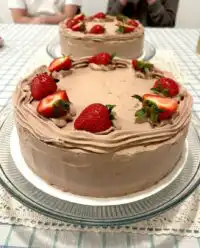
Strawberry Chocolate Cake
- Total Time: 2 hours 10 mins (Active)
- Yield: 12 servings (four-layer 6-inch cake)
Description
This scientifically formulated Strawberry Chocolate Cake guarantees success by managing moisture and temperature for a perfect bake. It features a rich, moist chocolate sponge made with a precise blend of fats, layered with a structurally stable cream cheese frosting enhanced by a concentrated strawberry reduction.
Ingredients
- All-Purpose Flour (190g)
- Natural Cocoa Powder (75g)
- Granulated Sugar (including 50g for jam)
- Brown Sugar
- Eggs (room temperature)
- Milk (room temperature)
- Melted Butter
- Light Oil
- Baking Powder
- Baking Soda
- Salt
- Fresh or Frozen Strawberries (500g for jam reduction, plus fresh diced and halved berries for filling and decoration)
- Water (1 tablespoon)
- Softened Butter (for frosting)
- Cream Cheese
- Powdered Sugar
- Vanilla
Instructions
- In a small pot, combine 500g strawberries, 50g granulated sugar, and 1 tablespoon of water. Cook over medium-high heat until it reaches a boil. Reduce the heat and simmer until the mixture reaches a jammy consistency, passing the “spatula test.” Transfer to a bowl and chill to at least 40°F (4°C) before use.
- Preheat your oven to 350°F (175°C). Line the bottoms of two 6-inch round pans with parchment paper.
- Whisk together the flour, cocoa powder, baking powder, baking soda, and salt. Sifting the cocoa powder is highly recommended.
- In a separate large bowl, whisk the melted butter, oil, and sugars. Add the room temperature eggs one at a time, whisking vigorously to create a smooth, homogenous emulsion.
- Alternate adding the dry ingredients and the milk in two stages. Start with half the dry mix, then half the milk, and repeat. Mix only until the last streak of flour disappears.
- Divide the batter evenly (approximately 540g per pan). Bake for 40-45 minutes until the internal temperature reaches 205°F (96°C). Let the cakes cool in the pan for exactly 10 minutes before transferring them to a wire rack for total cooling.
- For the frosting, beat the softened butter until creamy, then incorporate the cream cheese. Gradually add the powdered sugar, followed by 70g of your chilled strawberry reduction and vanilla until the frosting is thick enough to hold a stiff peak.
- Level your cakes and slice each in half to create four layers. Pipe a frosting ring around the edge of the first layer to act as a dam. Fill the center with 4 tablespoons of jam and a layer of diced strawberries. Repeat this for each layer. Apply a thin crumb coat, refrigerate for 20 minutes to set the structure, then finish with a final coat of frosting and halved strawberries.
Notes
For the absolute best texture and flavor development, ensure that your milk, eggs, and all frosting ingredients (butter, cream cheese, jam) are at the specified temperatures. Using cold ingredients is the primary cause of seized batters and lumpy frostings. Remember to remove the finished cake from the refrigerator about an hour before serving so the chocolate sponge can soften and the flavors can fully express themselves.
- Prep Time: 40 mins
- Cook Time: 60 mins
- Category: Dessert
- Method: Baking (Modified Creaming)
- Cuisine: American
The Variables: Ingredient Science
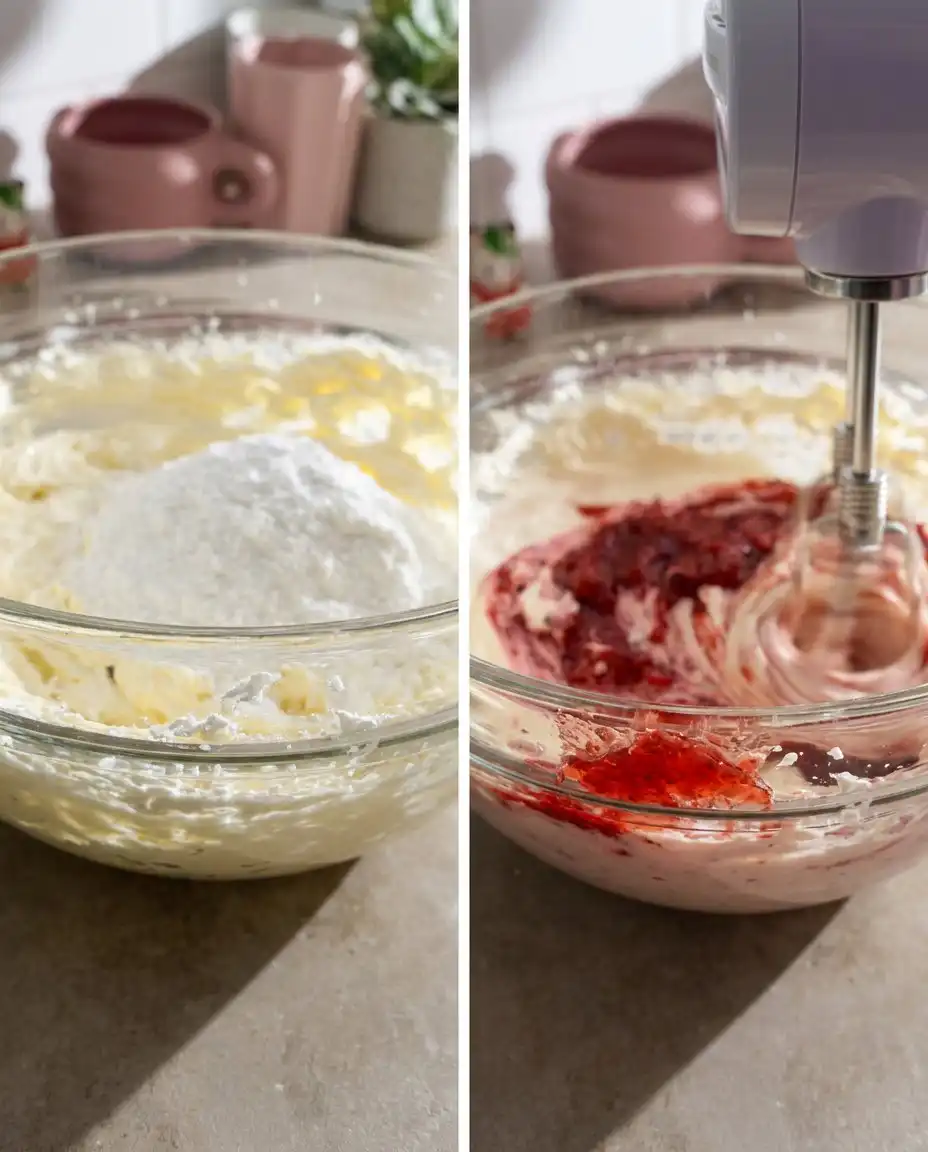
Understanding your ingredients is the first step toward repeatable success. In the test kitchen, we verified that the quality and temperature of these components dictate the final result.
- All-Purpose Flour (190g): We selected a standard all-purpose flour to provide enough gluten for structure without making the cake tough. Weighing this is critical; an extra 20g of flour can result in a dry, crumbly cake.
- Natural Cocoa Powder (75g): We use natural cocoa here because its acidity reacts with the baking soda to create lift and a bright chocolate flavor. If you substitute Dutch-processed cocoa, the pH balance will shift, and the cake may not rise properly.
- Granulated and Brown Sugar: Sugar is more than a sweetener; it is a humectant. The brown sugar adds moisture and a subtle molasses note that complements the strawberries, while granulated sugar aids in the browning process via the Maillard reaction.
- Room Temperature Eggs and Milk: We tested this with cold ingredients vs. room temperature. Cold milk and eggs will cause the melted butter to seize, resulting in an uneven emulsion and a coarse crumb. Verify your liquids are at 70°F (21°C) before mixing.
- Fresh or Frozen Strawberries: Both work for the jam reduction because the cooking process standardizes the moisture content. For the diced filling, however, fresh strawberries are preferred for their superior texture and structural firmness.
The Method: Step-by-Step Process
Step 1: Reduce the Strawberry Jam
In a small pot, combine 500g strawberries, 50g granulated sugar, and 1 tablespoon of water. Cook over medium-high heat until it reaches a boil. Reduce the heat and simmer until the mixture reaches a jammy consistency. The scientific marker for success is the “spatula test”: when you drag a spatula through the pot, the jam should stay parted for several seconds before slowly closing. Transfer to a bowl and chill to at least 40°F (4°C) before use.
Step 2: Prepare the Baking Environment
Preheat your oven to 350°F (175°C). We tested these cakes at various temperatures, and 350°F provided the best balance of rise and even baking. Line the bottoms of two 6-inch round pans with parchment paper. This is a non-negotiable step for clean release; do not rely on grease and flour alone for a layer cake of this precision.
Step 3: Aerate the Dry Ingredients
Whisk together the flour, cocoa powder, baking powder, baking soda, and salt. Sifting the cocoa powder is highly recommended as it tends to clump. This step guarantees even distribution of the leavening agents, preventing large air pockets or localized salty spots in the final sponge.
Step 4: Create the Emulsion
In a separate large bowl, whisk the melted butter, oil, and sugars. Add the room temperature eggs one at a time, whisking vigorously. We are looking for a smooth, homogenous emulsion. If the mixture looks curdled, your ingredients were likely too cold.
Step 5: Incorporate the Batter
Alternate adding the dry ingredients and the milk in two stages. Start with half the dry mix, then half the milk, and repeat. Mix only until the last streak of flour disappears. Over-mixing at this stage develops excess gluten, which will turn your delicate Strawberry Chocolate Cake into a rubbery loaf.
Step 6: The Bake and Cool
Divide the batter evenly (approximately 540g per pan). Bake for 40-45 minutes. The internal temperature should reach 205°F (96°C) on an instant-read thermometer. Let the cakes cool in the pan for exactly 10 minutes to allow the structure to set before transferring them to a wire rack. Total cooling is required before frosting, or the butter-based cream cheese will melt upon contact.
Step 7: Formulate the Frosting
Beat the softened butter until creamy, then incorporate the cream cheese. If the cream cheese is too cold, you will have lumps that cannot be removed later. Gradually add the powdered sugar, followed by 70g of your chilled strawberry reduction and vanilla. The frosting should be thick enough to hold a stiff peak.
Step 8: Assembly and Decoration
Level your cakes and slice each in half to create four layers. Pipe a frosting ring around the edge of the first layer to act as a dam. Fill the center with 4 tablespoons of jam and a layer of diced strawberries. Repeat this for each layer. Apply a thin crumb coat, refrigerate for 20 minutes to set the structure, then finish with a final coat of frosting and halved strawberries.
Lauren’s Lab Notes: Testing Insights
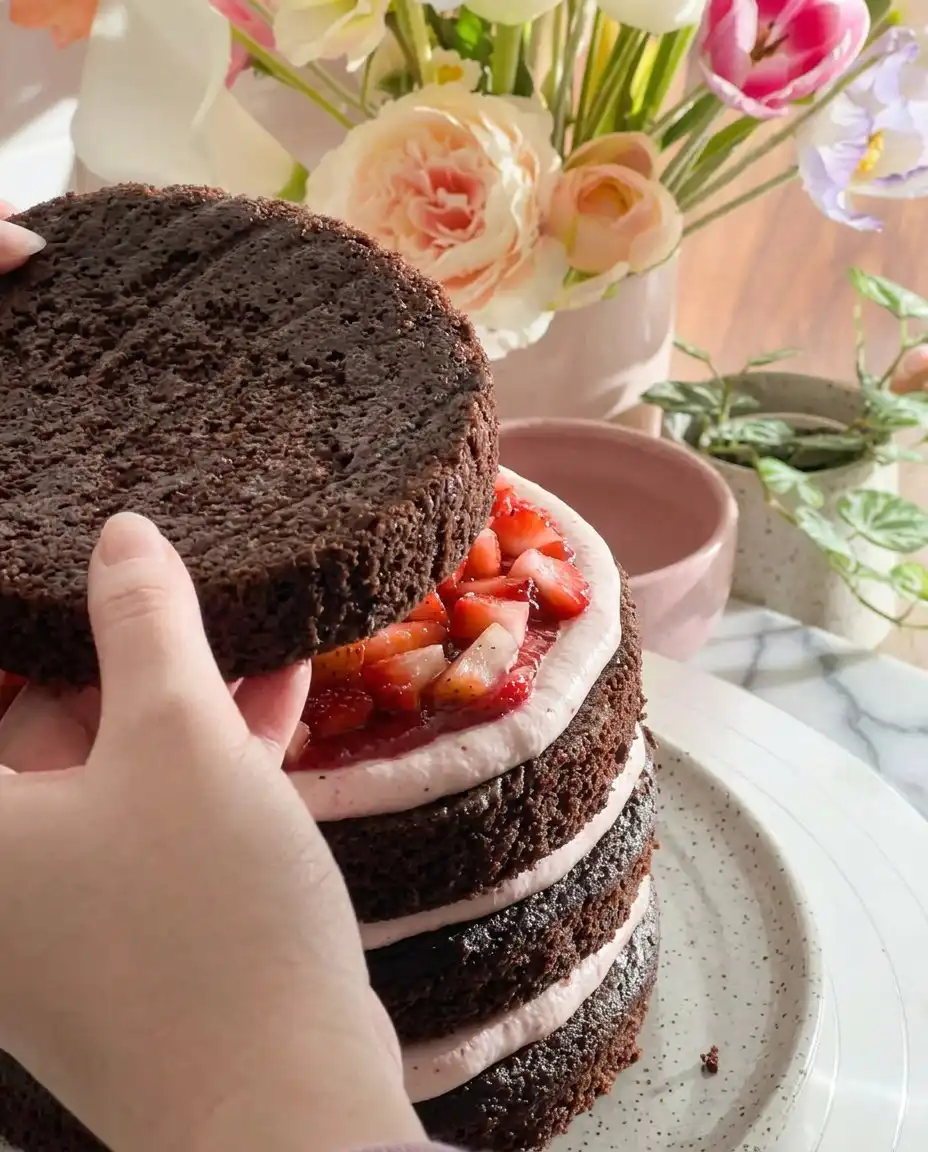
One of the most common failures in layer cakes is structural collapse due to improper filling. To prevent this, always pipe a sturdy dam of frosting around the perimeter of each layer. This mechanical barrier keeps the moist strawberry jam from leaking out and causing the layers to slide. If you find your cake is unstable during assembly, chill it for 30 minutes mid-process. For those looking to broaden their skills, the techniques used here are similar to those found in our fresh-strawberry-cake guide.
Furthermore, precision in temperature is everything. Ensure your butter is at exactly 65°F (18°C) for the frosting; if it is too warm, the frosting will lack the viscosity needed to hold the weight of the chocolate layers. I also recommend checking out teakandthyme.com for additional visual inspiration on strawberry decoration techniques.
Precision Tweaks: Tested Variations
We tested several modifications to this Strawberry Chocolate Cake to determine how they affect the chemistry of the bake. If you prefer a more intense berry flavor, you can replace the milk in the cake batter with an equal weight of pureed strawberries, though this will result in a denser crumb. For a profile shift, you might consider our chocolate-raspberry-cake which uses a similar chocolate base but adjusts the acidity levels for tart raspberries.
Another tested variation involves swapping natural cocoa for black cocoa. While this provides a striking dark color, we found it required an additional 1/4 teaspoon of baking powder to account for the lack of acidity in the black cocoa. If you want a smaller yield, this recipe can be halved and baked in 4-inch pans for 25-30 minutes, creating a charming mini layer cake.
Presentation Notes: Pairing Guide
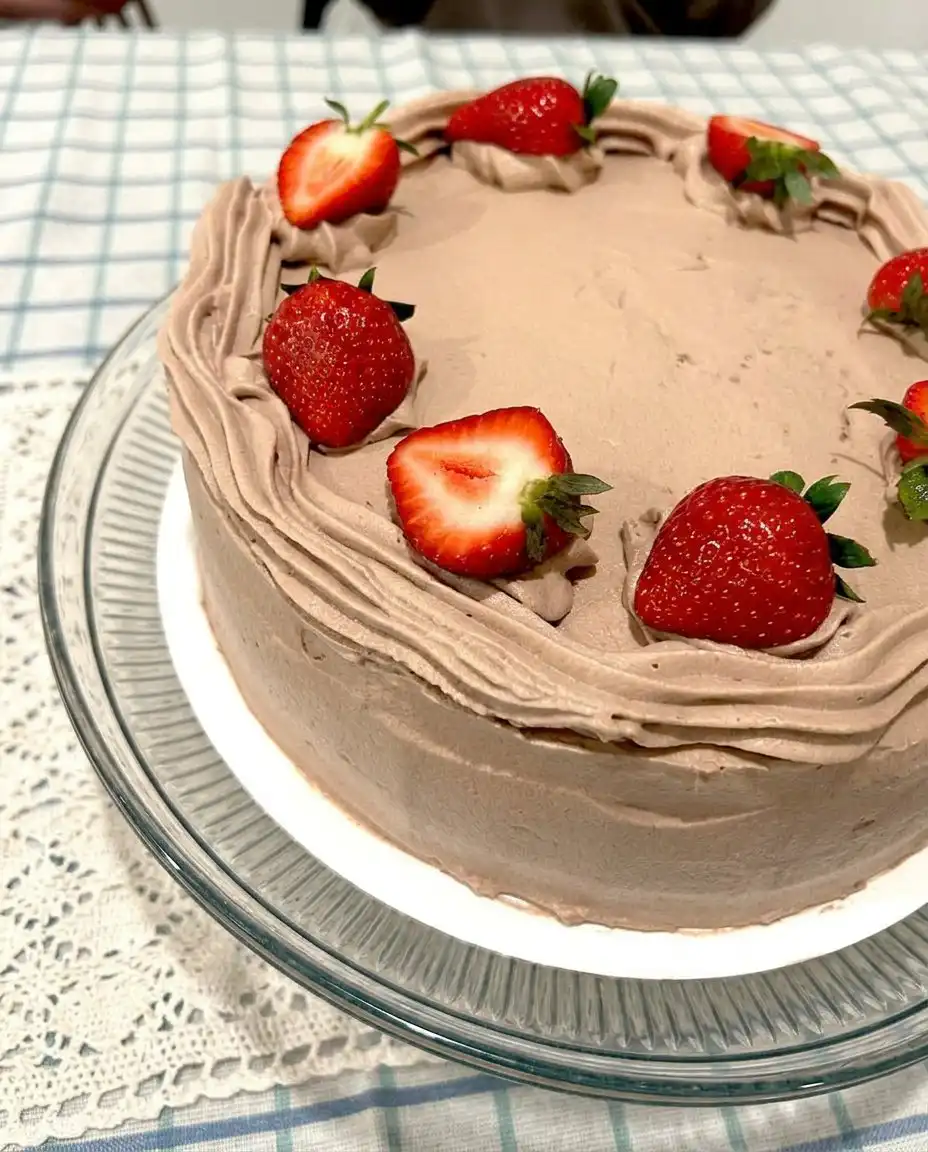
For the best sensory experience, serve this cake at room temperature. While the cake must be stored in the refrigerator due to the cream cheese frosting, the chocolate fats in the sponge firm up when cold. Remove the cake from the fridge 60 minutes before serving to allow the crumb to soften. This temperature transition is vital for the chocolate flavors to fully express themselves. For more tips on chocolate storage, refer to our chocolate-strawberry-cake article.
When slicing, use a long serrated knife dipped in hot water and wiped dry between every cut. This melts through the frosting and jam layers, providing the clean, professional cross-sections you see in high-end bakeries. Pair a slice with a glass of cold milk or a dry sparkling wine to contrast the richness of the cocoa.
The Final Analysis: Mastery Through Science
Achieving the perfect Strawberry Chocolate Cake is a matter of managing moisture and temperature. By reducing the strawberry hydration and emulsifying the fats properly, you create a dessert that is both structurally sound and intensely flavorful. We hope this data-driven approach gives you the confidence to tackle this technical bake. If you enjoyed this project, try our base strawberry-chocolate-cake for more variations. Don’t forget to share your results with us on Pinterest, Instagram, or Facebook. Keep testing and keep baking.