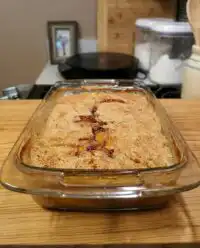
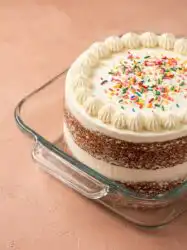
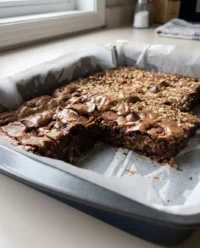
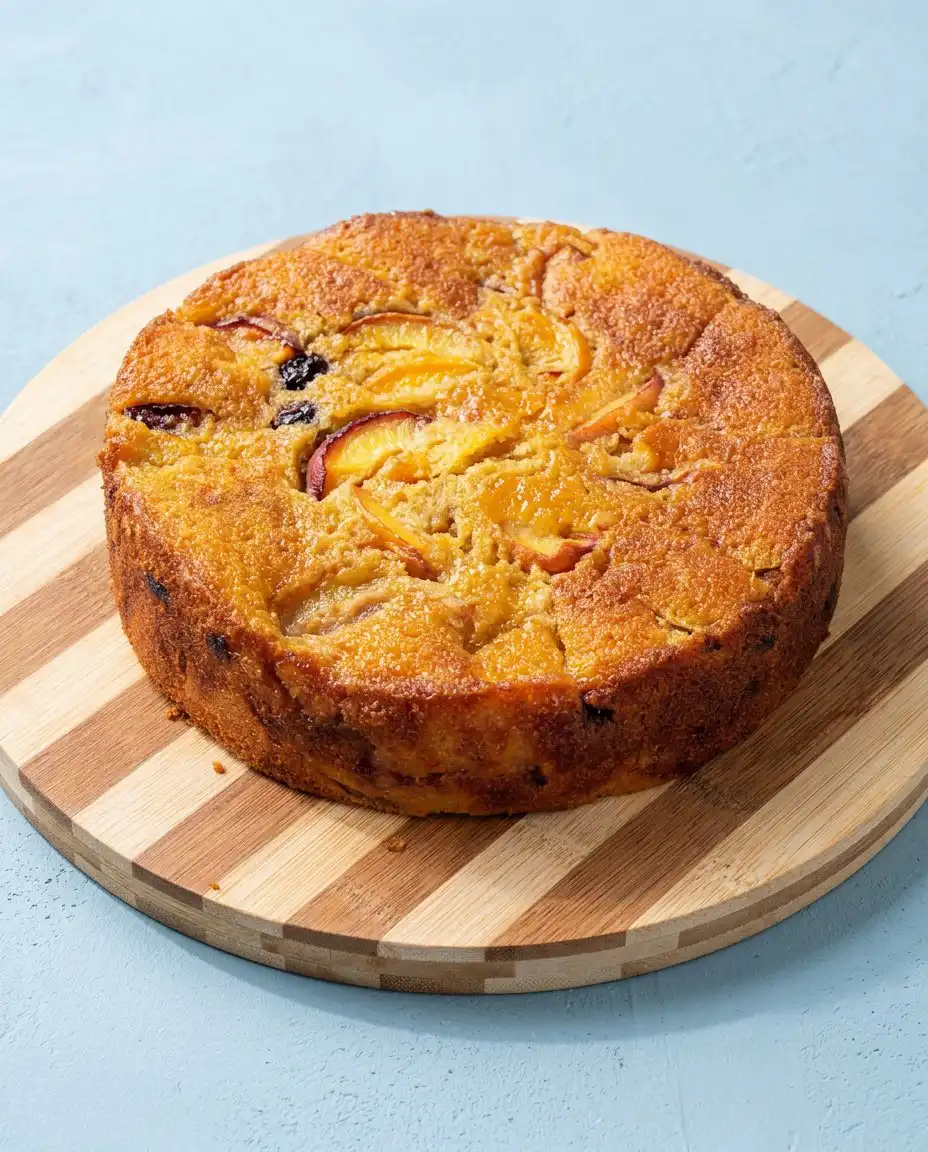
This Brown Butter Fresh Peach Cake delivers a consistent crumb and repeatable depth of flavor through precise browning and measured moisture control in every batch of test kitchen testing.

Achieving a stable, tender cake with seasonal fruit requires more than mixing ingredients; it requires understanding the interaction between fat and sugar. We formulated this Brown Butter Fresh Peach Cake to resolve common issues such as fruit-heavy batters becoming soggy or collapsing during the cooling process. By utilizing brown butter and a specific crumb-to-batter ratio, this method ensures a reliable result for every meticulous home baker.
The Case for This Method
Prep: 15 min · Serves: 12 · Difficulty: Medium
- Brown butter adds nutty depth and complex aroma.
- Fresh peaches provide natural acidity and moisture balance.
- A double-layered topping creates structural crunch.
- Precision ratios prevent fruit from sinking downwards.
- Standardized measurements ensure a repeatable success rate.
This Brown Butter Fresh Peach Cake produces a reliable crumb that remains moist for three days when stored correctly, unlike the classic peach pound cake which relies on different fat densities. Precision creates consistency.
Get The Full Cake Recipe
Print
Brown Butter Fresh Peach Cake
- Total Time: 1 hour 5 mins
- Yield: 12 servings
- Diet: Vegetarian
Description
This elevated peach cake uses brown butter and precise ingredient ratios to create a tender, moist crumb that balances fresh fruit with a nutty, caramelized depth. Perfect for summer gatherings, this reliable recipe ensures a stable structure that prevents fruit from sinking.
Ingredients
- 190g all-purpose flour (for cake base)
- 105g all-purpose flour (for topping)
- 16g all-purpose flour (for tossing peaches)
- 110g light brown sugar (for batter)
- 45g light brown sugar (for topping)
- 30g light brown sugar (for tossing peaches)
- 50g granulated sugar
- 25g granulated sugar (for topping)
- 84g unsalted butter (for browning)
- 70g melted butter (for topping)
- 2 large eggs
- 95ml whole milk
- 420g fresh peaches, chopped
- 1.5 tsp baking powder
- 0.5g salt (for topping)
- 0.25 tsp salt (for batter)
- 5ml pure vanilla extract
Instructions
- Prepare the oven. Preheat to 350°F (175°C) and line a 9×9-inch pan with parchment paper with a generous overhang.
- Mix crumb topping. Combine 105g flour, 25g granulated sugar, 45g light brown sugar, 0.5g salt, and 70g melted butter until clumpy.
- Brown the butter. Heat 84g butter in a light-colored saucepan over medium until browned and nutty, then cool in a separate bowl.
- Emulsify fats and sugars. Whisk browned butter with 110g brown sugar, 50g granulated sugar, and vanilla, then beat in eggs one at a time.
- Add dry ingredients. Sift and fold in 190g flour, baking powder, and salt until just combined to maintain a tender structure.
- Incorporate the milk. Gently fold in the milk until the batter is smooth, then spread evenly into the prepared baking pan.
- Toss the peaches. Coat chopped peaches with 16g flour and 30g brown sugar before arranging them across the top of the batter.
- Apply and bake. Sprinkle with prepared crumb topping and bake for 40 to 50 minutes until the internal temperature reaches 210°F.
- Cool the cake. Allow to set on a wire rack for 30 minutes before removing from the pan to ensure the crumb structure is firm.
Notes
- Use a digital kitchen scale for all measurements to ensure the specific batter density is achieved.
- Avoid using overripe fruit, as the excess moisture can result in a soggy base despite the flour coating.
- Ensure the oven rack is centered to allow for uniform heat distribution and consistent crust development.
- Wait for the cake to cool fully on a rack to allow starch structures to stabilize before slicing.
- Prep Time: 15 mins
- Cook Time: 50 mins
- Category: Dessert
- Method: Baking
- Cuisine: American
Measured & Ready
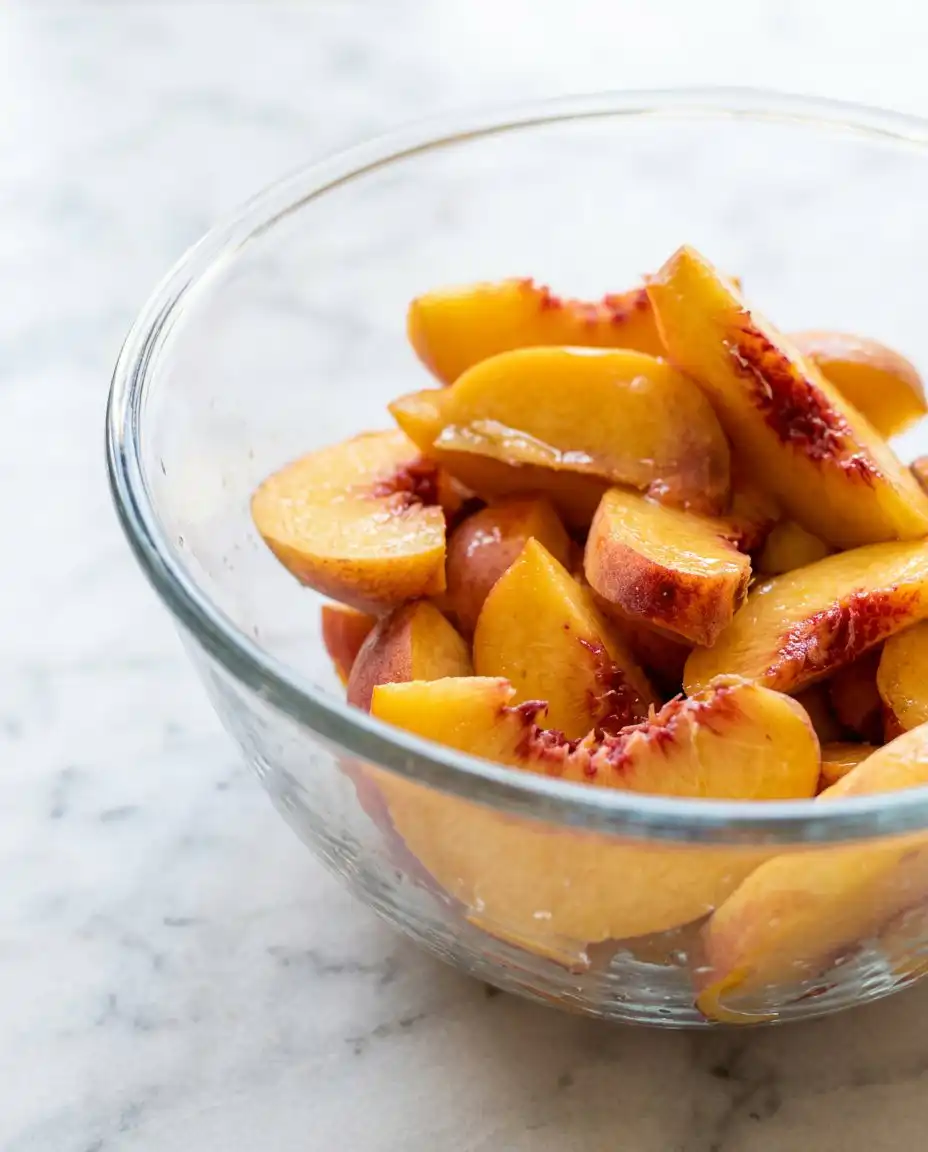
Successful baking is rooted in the chemical properties of your components, where every gram of flour and milliliter of fat serves a specific structural purpose. Using a digital scale to measure these items prevents the density variances that occur with volume-based measuring cups.
- Unsalted Browned Butter: This provides the foundational flavor profile through the Maillard reaction, removing water content to concentrate the milk solids.
- Full Fat Yogurt: The lactic acid in yogurt weakens gluten strands, resulting in a more tender crumb while providing necessary acidity to react with the leavening agents.
- Fresh Chopped Peaches: These provide moisture and pectin, which helps the fruit maintain some structure even after the cell walls break down during the heat of the bake.
- All-Purpose Flour: With a protein content of approximately 10-12%, this flour provides enough structure to support the fruit without becoming tough or chewy.
- Light Brown Sugar: The presence of molasses adds moisture and a slight acidity that complements the stone fruit while encouraging browning.
- Pure Vanilla Extract: This serves as a flavor enhancer, bridging the gap between the nutty butter and the floral notes of the peaches.
| Ingredient | Why It Matters |
|---|---|
| Browned Butter | Concentrated flavor and reduced water content for a tighter crumb. |
| Full Fat Yogurt | Provides acidity and fat for a soft, tender texture. |
| Fresh Peaches | Adds natural sweetness and moisture to the center of the cake. |
| Baking Powder | The primary leavening agent responsible for the lift and aeration. |
| Light Brown Sugar | Humectant properties that keep the cake moist over several days. |
The Tested Procedure
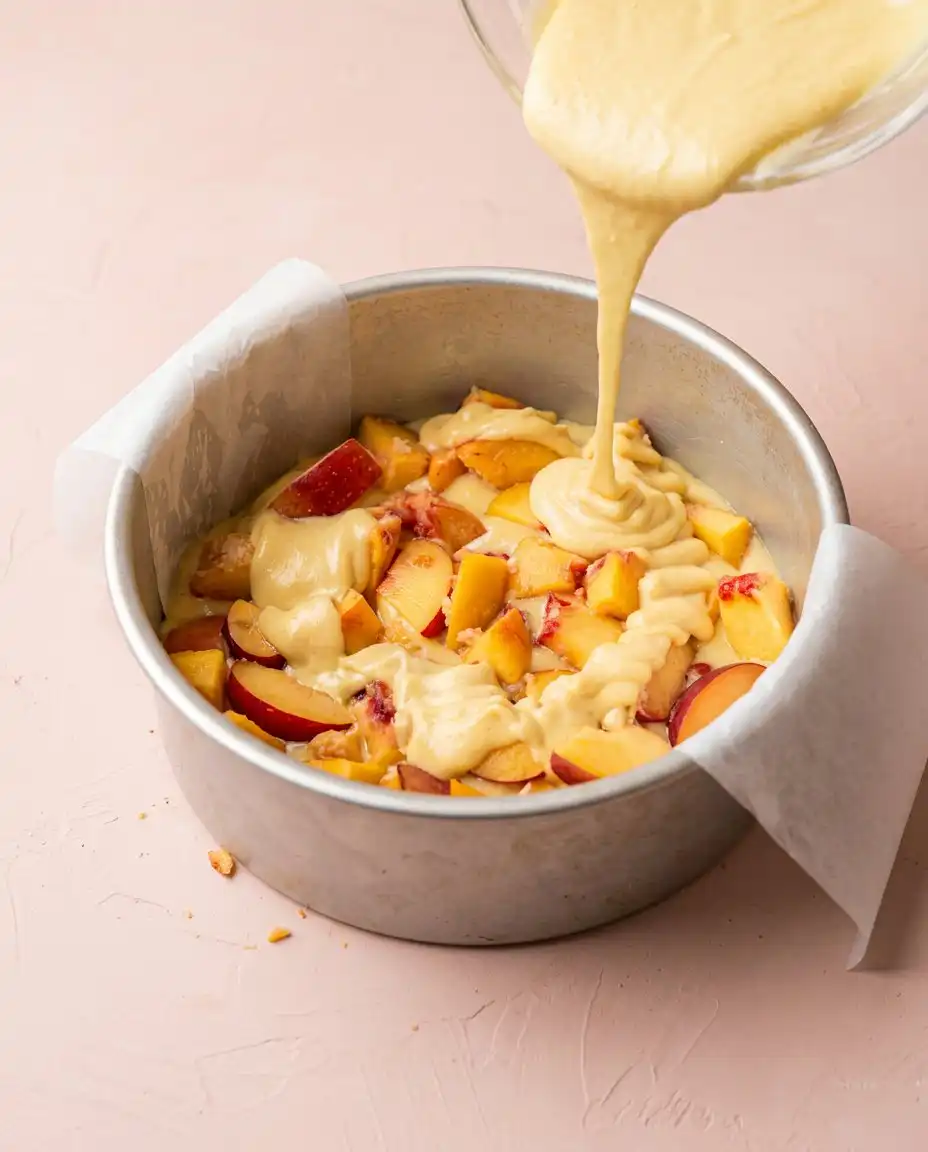
Step 1: Pan Preparation and Preheating
Preheat your oven to 350°F (175°C) and ensure the rack is positioned in the center for even heat distribution. Line a 9×9-inch baking pan with parchment paper, leaving a 2-inch overhang on the sides to facilitate easy removal after baking. This physical barrier prevents the sugars in the peaches from sticking to the pan walls.
Step 2: Construct the Crumb Topping
Combine 105g of all-purpose flour, 25g of granulated sugar, 45g of light brown sugar, and 0.5g of salt in a medium bowl. Whisk these dry components until the brown sugar lumps are fully integrated into the flour. Add 70g of melted butter and stir with a spoon until the mixture resembles wet sand, then use your fingertips to press it into large clumps.
Step 3: Browning the Butter
Place 84g of unsalted butter in a light-colored saucepan over medium heat to monitor the color change accurately. Swirl the pan as the butter foams and the milk solids turn a toasted hazelnut brown, which typically takes 5 to 7 minutes. Immediately transfer the butter to a heat-proof bowl to stop the cooking process and prevent the solids from burning.
Step 4: Emulsify the Sugars and Fats
Whisk the browned butter with 110g of light brown sugar, 50g of granulated sugar, and 5ml of vanilla extract until the mixture appears pale and slightly aerated. Add the room temperature eggs one at a time, whisking vigorously for 60 seconds after each addition. This step builds the protein structure needed to hold the air pockets created during the creaming process.
Step 5: Incorporate the Dry Base
Sift 190g of all-purpose flour, 1.5 teaspoons of baking powder, and 0.25 teaspoons of salt into a separate bowl to remove clumps. Gently fold the dry ingredients into the butter mixture using a silicone spatula until only a few streaks of flour remain visible. Avoid over-mixing at this stage, as excessive agitation will develop too much gluten and result in a tough texture.
Step 6: Final Folding of the Brown Butter Fresh Peach Cake Batter
Pour 95ml of whole milk into the mixture and fold it gently until the batter is homogenous and smooth. Spread the thick batter into the prepared 9×9-inch pan, using an offset spatula to ensure the corners are filled and the surface is level. A level base is critical for supporting the weight of the fruit and crumb layers that follow.
Step 7: Prepare and Layer the Peaches
Toss 420g of chopped fresh peaches with 16g of flour and 30g of light brown sugar until each piece is lightly coated. Scatter the fruit evenly across the surface of the batter, ensuring there are no large gaps. The flour coating on the peaches acts as an absorbent layer to prevent the fruit juices from weeping into the batter.
Step 8: Apply Topping and Bake
Distribute the prepared crumb topping over the peach layer, breaking up any excessively large pieces to ensure total coverage. Bake for 40 to 50 minutes, or until an instant-read thermometer inserted into the center reaches 210°F. The crumbs should be golden brown and the center of the cake should feel firm when pressed lightly with a finger.
Step 9: Cooling and Structural Set
Transfer the pan to a wire rack and allow the cake to cool for at least 30 minutes before attempting to lift it using the parchment overhang. This cooling period allows the starches to set and the moisture to redistribute through the crumb. Slicing the cake while it is still hot will result in a gummy texture and a messy presentation.
What the Data Showed
Temperature control of your eggs and yogurt is vital for a successful emulsion. Cold ingredients will cause the browned butter to seize and clump, resulting in an uneven bake and a greasy mouthfeel. If your ingredients are cold, place the eggs in warm water for 5 minutes and microwave the yogurt for 10 seconds to reach room temperature.
We tested this — here’s what won: using a light-colored metal pan over glass or ceramic. Metal conducts heat more efficiently, leading to a better rise and a more consistent crust. If you use a glass dish, you must reduce the oven temperature by 25°F to prevent the edges from burning before the center is cooked through.
If your fruit sinks to the bottom of the pan, here is why and how to fix it. This usually occurs because the batter is too thin or the fruit pieces are too large and heavy. Ensure you are using the precise weight of flour specified and chop your peaches into 1/2-inch pieces to maintain buoyancy in the batter. You can find more details on fruit stabilization in our guide for fresh peach cake.
Measure your flour by weight rather than volume to ensure a repeatable result every time you bake. A cup of flour can vary by as much as 30 grams depending on how it is packed, which can turn a tender cake into a dry, crumbly mess. A digital scale is the only way to guarantee you are using exactly 190 grams for the batter.
Avoid using overripe peaches that are soft to the touch, as they contain too much water and will make the cake soggy. Select fruit that is firm but fragrant; these peaches will hold their shape and provide a better textural contrast to the soft cake. If your peaches are extremely juicy, increase the flour coating on the fruit by an additional tablespoon.
Always use an instant-read thermometer to check for doneness rather than relying solely on a toothpick. A toothpick can come out clean even if the internal temperature has not reached the necessary 210°F for the starch structure to set. Testing the temperature ensures you never pull a cake out too early, preventing the center from collapsing as it cools.
Frequently Asked Questions
Can I make this peach crumb cake in advance?
You can prepare this cake 24 hours in advance, as the moisture from the peaches keeps the crumb tender. Store it at room temperature in an airtight container to prevent the crumb topping from becoming soft. For longer storage, refrigerate the cake for up to 3 days, though the texture is best served at room temperature.
What is the difference between crumb cake and coffee cake?
Crumb cake typically features a much thicker layer of streusel topping, often equal to or greater than the height of the cake itself. Coffee cake generally has a more balanced ratio of cake to topping and may include a cinnamon swirl in the center. Both are designed to be served alongside a beverage, but the crumb cake focuses heavily on textural contrast.
What makes crumb cake soft?
The softness in this recipe is achieved through the use of full-fat yogurt and brown sugar. Yogurt provides acidity that breaks down gluten, while brown sugar acts as a humectant to retain moisture during the baking process. Additionally, the brown butter adds fat without the excess water found in standard butter, creating a tighter and softer crumb.
Why is my cake not fluffy?
If your cake is dense, it is likely due to under-creaming the butter and eggs or using expired baking powder. The process of whisking the eggs into the butter creates tiny air pockets that expand in the oven heat. If these pockets are not properly formed or the leavening agent is weak, the cake will fail to rise correctly.
What causes cake to be dry and dense?
Over-mixing the batter after adding the flour is the most common cause of a dry and dense texture. This agitation develops the gluten proteins, creating a tough web that traps air too tightly and results in a bread-like consistency. Always fold the flour in gently and stop as soon as the last white streaks disappear.
Can I use frozen peaches for this recipe?
Frozen peaches can be used, but they must be thawed and thoroughly patted dry with paper towels first. Frozen fruit releases more water than fresh fruit, which can lead to a gummy layer where the fruit meets the batter. Increase the flour coating on the peaches to two tablespoons to help absorb any excess moisture released during baking.
Tested Variations
For a different flavor profile, you can substitute the peaches with nectarines or plums without adjusting the ratios of the batter. These stone fruits have similar water content and acidity levels, making them safe swaps that maintain the structural integrity of the cake. If you choose to use berries, reduce the total fruit weight to 300g to account for the higher concentration of surface moisture.
Adding a glaze can provide an extra layer of sweetness and visual appeal once the cake has completely cooled. A simple mixture of powdered sugar and a tablespoon of peach juice creates a translucent finish that highlights the crumb topping. For a richer option, consider a peach cake brown sugar frosting to lean into the caramel notes of the browned butter.
Spice adjustments can also be made by adding 1/2 teaspoon of ground ginger or cardamom to the dry ingredients. These spices complement the floral notes of the peaches and the nuttiness of the browned butter without interfering with the chemical leavening. Ensure spices are fresh, as oils in ground spices dissipate over time and lose their potency in the oven.
Finishing & Plating
This cake is best served at room temperature or slightly warm to appreciate the full flavor of the browned butter. For a formal presentation, slice the cake into uniform squares using a sharp chef’s knife, cleaning the blade between each cut to maintain clean edges. A light dusting of powdered sugar over the crumbs just before serving adds a professional touch without overwhelming the fruit flavor.
Pairing a slice with a dollop of unsweetened whipped cream or a scoop of high-quality vanilla bean ice cream provides a temperature and texture contrast. The fat in the cream helps to carry the subtle notes of the vanilla and peach across the palate. You may also find that serving this alongside a peach cake during a summer brunch offers guests a variety of textures to enjoy.
If serving during a garden party, garnish each plate with a few thin slices of fresh peach and a sprig of mint. The mint provides a refreshing aromatic that cuts through the richness of the butter and sugar. For an evening dessert, a small glass of dessert wine like a Sauternes or a late-harvest Riesling will complement the acidity and sweetness of the cooked peaches.

The Bottom Line
Success in the kitchen is not the result of luck, but the outcome of careful measurement and an understanding of baking science. By following the precise steps of browning your butter and monitoring the internal temperature of the cake, you ensure a repeatable and professional result. This Brown Butter Fresh Peach Cake is a testament to how meticulous technique can transform simple seasonal ingredients into a structured, flavorful dessert.
We encourage you to document your results and share your experience with this method. For those looking to continue their stone fruit baking journey, our peach cobbler layer cake offers another avenue for precision baking with fresh fruit. Precision creates consistency in every slice you serve.
Follow our latest test kitchen experiments on Pinterest and join our baking community on Facebook. You can also find technical tips and quick guides on our TikTok.