Many fruit desserts fail because the juices release too early, turning a crisp topping into a gummy layer of softened oats that lacks structural integrity or satisfying crunch.

We solved this in the test kitchen by measuring the exact ratio of starch to fruit moisture to verify a thick, jammy filling. This Peach Crisp utilizes specific temperature controls to activate the cornstarch without overcooking the fruit into a pulp. By understanding the mechanics of the oat-to-butter bond, you will achieve a repeatable crunch that remains stable even after refrigeration.
The Case for This Method
Prep: 15 min · Serves: 6 · Difficulty: Easy
- Scientific ratio of oats to flour
- Consistent results across different oven types
- Precisely balanced sweetness for peak flavor
- Structured filling that avoids soggy bottoms
- Reliable texture that holds its crunch
This method delivers a reliable result that avoids the common pitfalls found in a standard peach dump cake recipe.
Get The Full Cake Recipe
Print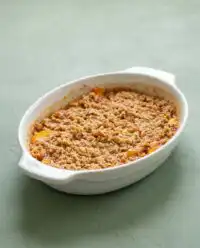
Peach Crisp
- Total Time: 1 hour 5 mins
- Yield: 6 servings
- Diet: Vegetarian
Description
This science-backed peach crisp features a perfectly balanced filling and a stable, buttery oat topping. By utilizing precise ingredient ratios and temperature control, this recipe ensures a deep, jammy fruit base that avoids the common pitfalls of sogginess.
Ingredients
- 6 cups fresh peaches, sliced
- 1/2 cup granulated sugar
- 2 tablespoons cornstarch
- 1 tablespoon lemon juice
- 1 teaspoon vanilla extract
- 1/2 teaspoon ground cinnamon
- 1/4 teaspoon fine sea salt
- 1 cup old-fashioned rolled oats
- 3/4 cup all-purpose flour
- 3/4 cup light brown sugar
- 1/2 cup unsalted butter, cubed
- 1/4 teaspoon fine sea salt
Instructions
- Preheat and prep. Preheat your oven to 375°F and lightly grease a 1.5 to 2-quart baking dish with butter.
- Combine dry topping. Whisk together the brown sugar, flour, cinnamon, oats, and sea salt in a large bowl until uniform.
- Integrate the butter. Rub the cubed butter into the dry mixture using your fingers or a pastry cutter until the texture resembles coarse sand.
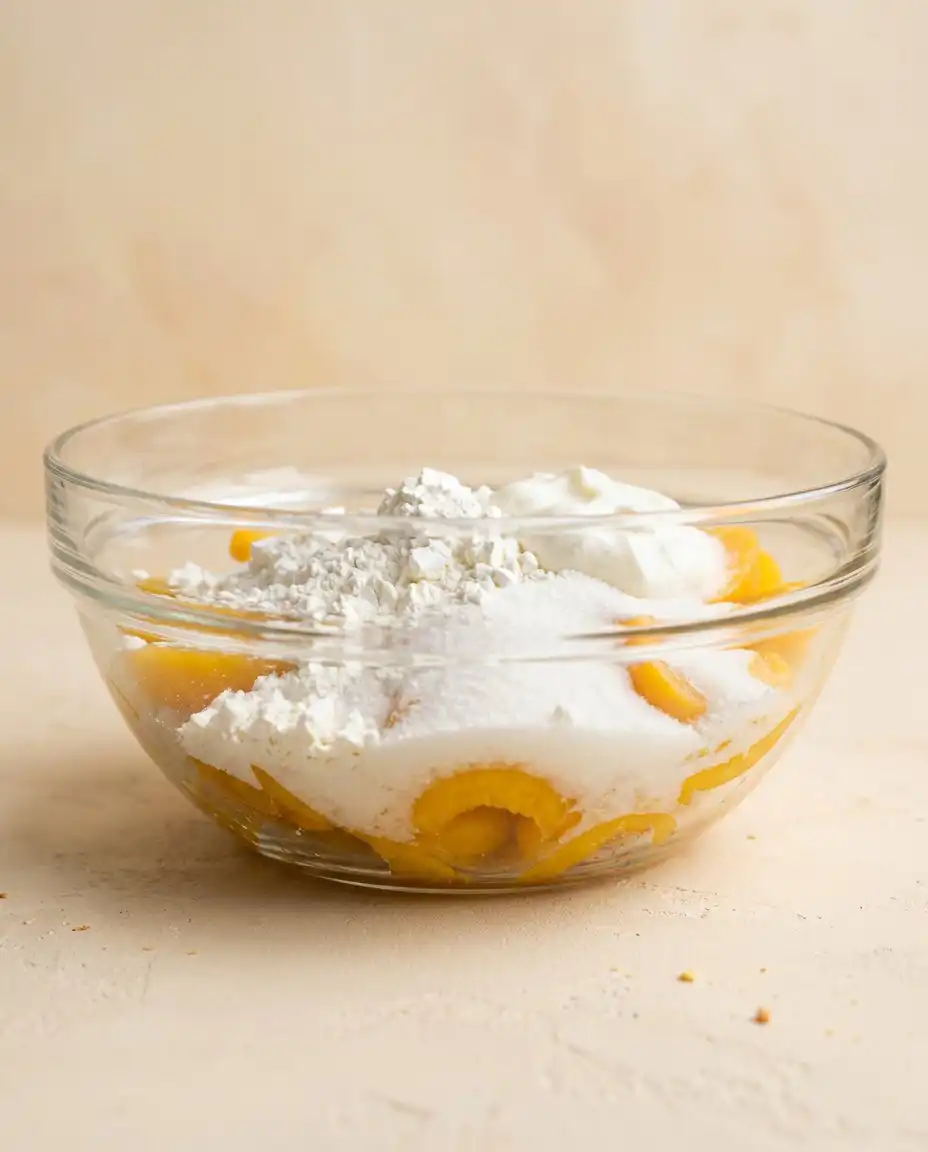
- Prepare fruit base. Toss the sliced peaches with granulated sugar, cornstarch, salt, cinnamon, lemon juice, and vanilla until well coated.
- Assemble and bake. Spread the fruit in the baking dish, top evenly with the oat crumble, and bake for 30 minutes until bubbling and golden.
- Cool to set. Place the crisp on a wire rack and let it rest for 20 minutes to allow the cornstarch to fully thicken the filling.
Notes
- Use a digital scale to measure flour and oats for consistent topping density.
- Ensure butter is at room temperature to achieve the ideal sandy texture in the crumble.
- Select firm peaches that have a slight give to prevent the filling from becoming overly mushy during baking.
- Place a baking sheet on the rack below the dish to catch any potential juices that may bubble over.
- Allow the crisp to rest fully so the cornstarch can create a stable, jam-like consistency.
- Prep Time: 15 mins
- Cook Time: 30 mins
- Category: Dessert
- Method: Baking
- Cuisine: American
The Working Components
Successful baking relies on the chemical interaction between fats, starches, and sugars. This Peach Crisp recipe uses specific ratios to manage moisture migration and gluten development. Each component serves a distinct purpose in achieving the final structural goal of the dish.
- Sliced Peaches: These provide the structural base and natural acidity needed to balance the heavy sugars.
- Light Brown Sugar: The molasses content adds moisture and depth while facilitating the Maillard reaction in the topping.
- Old-Fashioned Rolled Oats: These provide the surface area for the butter to coat, creating the signature crunch.
- Cornstarch: This acts as a thickener to bind the fruit juices into a stable syrup during the bake.
- Unsalted Butter: The fat source that encapsulates the flour particles to inhibit excessive gluten formation.
- Lemon Juice: The acid helps to prevent oxidation and balances the sweetness of the stone fruit.
- Fine Sea Salt: This mineral sharpens the flavor profile and regulates the perception of sweetness.
| Ingredient | Why It Matters |
|---|---|
| Cornstarch | Thickens juices to prevent a soupy filling |
| Rolled Oats | Adds structural rigidity and a nutty flavor |
| Brown Sugar | Encourages browning and adds moisture |
| Butter | Creates a short, crumbly texture through fat coating |
| Lemon Juice | Brightens the fruit and prevents browning |
How to Bake It, Precisely
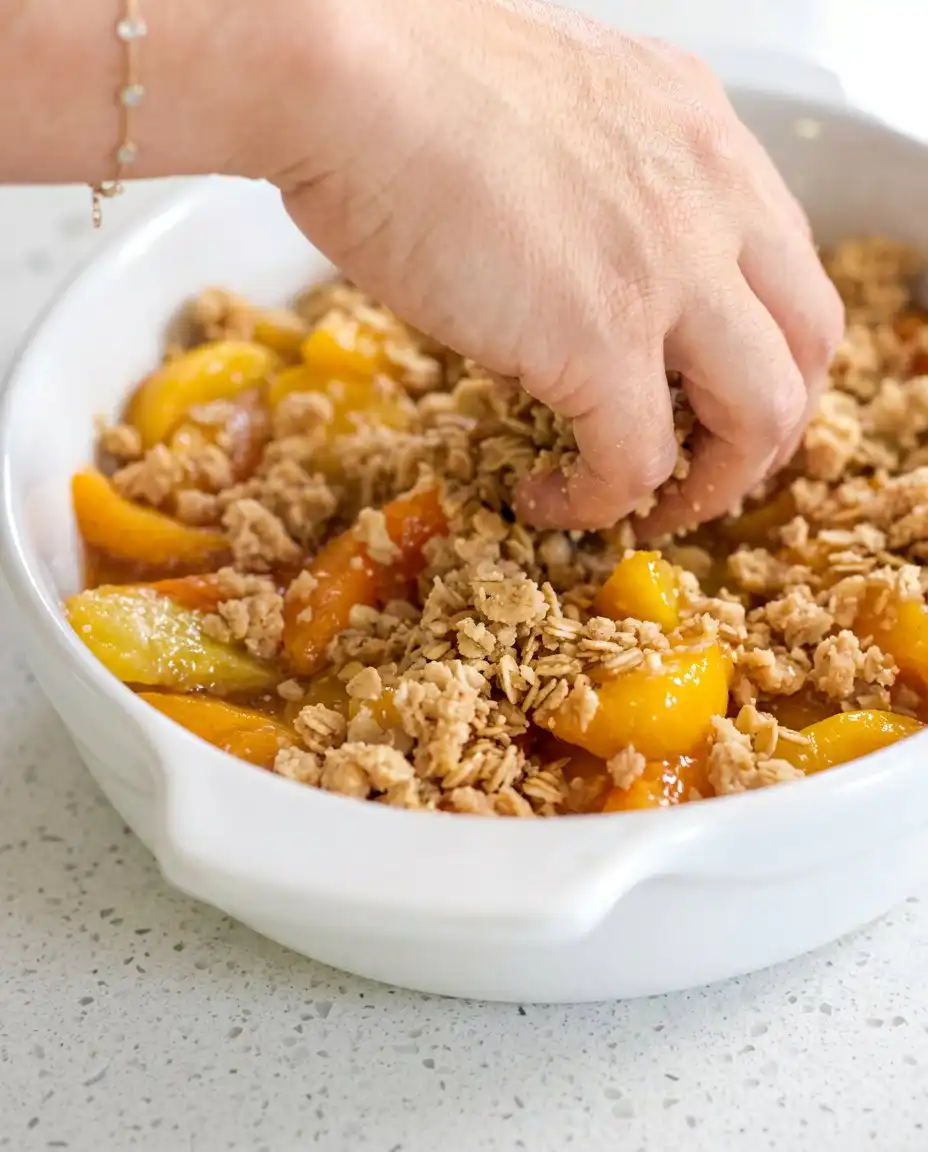
Step 1: Prep Your Equipment and Environment
Begin by preheating your oven to 375°F (190°C) and verify the oven rack is in the center position for even heat distribution. Lightly grease a 1.5 to 2-quart capacity baking dish, such as an 8×8-inch pan, with butter to prevent the sugars from sticking to the sides. Use a digital scale to weigh your dry ingredients to the gram, as this precision creates consistency in the final texture of the topping.
Step 2: Combine the Dry Topping Components
In a large mixing bowl, whisk together the brown sugar, all-purpose flour, ground cinnamon, old-fashioned rolled oats, and sea salt. Use a whisk to break up any large clumps of brown sugar until the mixture is uniform in color and texture. This step ensures that the salt and cinnamon are evenly distributed so that no single bite is over-seasoned while others remain bland.
Step 3: Integrate the Fat into the Crumble
Scatter the cubed, room-temperature butter across the top of the oat mixture to begin the integration process. Using your fingertips or a pastry cutter, rub the fat into the dry ingredients until the mixture resembles coarse sand with a few pea-sized lumps remaining. The goal is to coat the flour particles in fat, which limits gluten development and results in a more tender crumb rather than a tough, bread-like layer.
Step 4: Prepare the Fruit Base
In a medium-sized bowl, combine the sliced peaches with the granulated sugar, cornstarch, salt, cinnamon, lemon juice, and vanilla extract. Stir the mixture gently with a spatula until every peach slice is coated in a thin, white film of cornstarch and sugar. The lemon juice immediately begins to react with the fruit’s pectin, while the sugar draws out just enough moisture to create a thick sauce during the bake.
Step 5: Assemble and Bake Your Peach Crisp
Pour the prepared peach filling into your greased baking dish and spread it into an even layer to ensure consistent heat penetration. Sprinkle the oat crumble evenly across the top of the fruit, making sure to cover the edges where the juices are likely to bubble up. Bake for exactly 30 minutes, or until the topping reaches a deep golden brown and the fruit juices are vigorously bubbling at the perimeter of the dish.
Step 6: Cool to Set the Structure
Remove the dish from the oven and place it on a wire cooling rack to allow air to circulate beneath the pan. Let the crisp rest for 20 minutes before serving; this time is critical because the cornstarch only fully sets and thickens as the temperature drops. Serving too early will result in a runny filling that lacks the desired jam-like consistency that defines a professional-grade dessert.
What the Data Showed
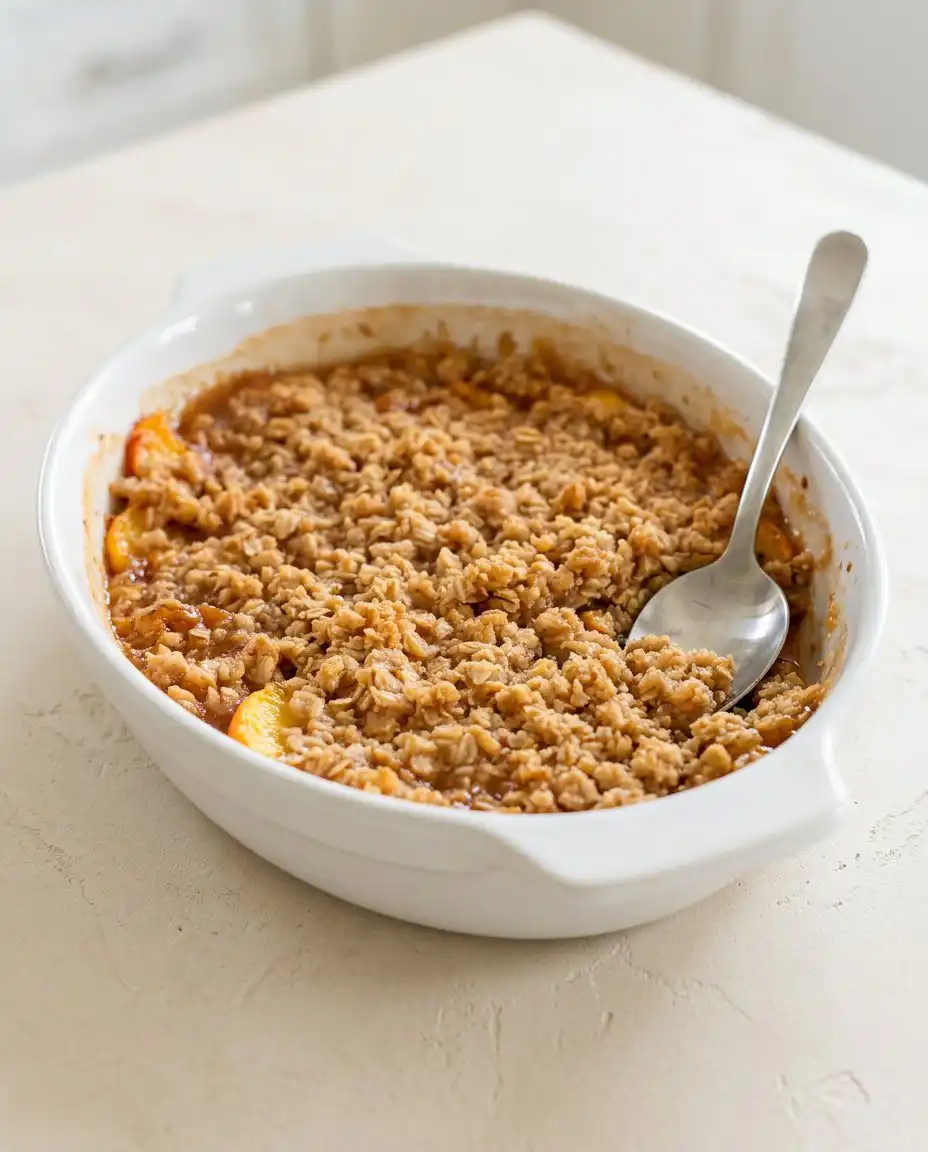
Precision in ingredient measurement is the primary factor in baking success. Always use a digital scale to measure your flour and oats, as volume-based measuring cups can vary by as much as 20 percent depending on how the ingredient is packed. This variance often leads to a dry, floury topping that lacks the intended buttery crunch.
If your topping remains pale and soft after 30 minutes, it is likely because the butter was too cold when integrated or your oven temperature is running low. Verify your oven temperature with a secondary thermometer to confirm it is reaching the target heat. You can fix this by moving the dish to the top rack for the final five minutes of baking to encourage the Maillard reaction.
We tested different oat varieties and found that old-fashioned rolled oats provide the best structural integrity for this recipe. Quick oats or instant oats lack the thickness required to withstand the moisture of the peaches, often resulting in a gummy texture. For more information on traditional fruit desserts, you can read our guide on old fashioned peach cobbler techniques.
To prevent the fruit from becoming mushy, choose peaches that are firm but give slightly to pressure. Overripe fruit contains broken-down cell walls that will collapse completely under the heat of a 375°F oven, resulting in a sauce rather than distinct fruit pieces. You can follow this guide for how to test peach ripeness to select the best produce for your bake.
If the juices bubble over the sides of your dish, it indicates that your pan choice was too small for the volume of fruit used. Always use at least a 1.5-quart dish to allow for the expansion of the juices as they reach a boil. Placing a parchment-lined baking sheet on the rack below the dish will catch any overflow and prevent smoke in your kitchen.
Frequently Asked Questions
Can I use frozen peaches for this recipe?
Yes, frozen peaches work well but require a slight adjustment in preparation. Thaw the fruit partially and drain the excess liquid before mixing with the starch and sugar. You may need to add an additional 5 minutes to the baking time to compensate for the lower initial temperature of the fruit.
Why is my crisp topping soggy instead of crunchy?
A soggy topping is usually the result of underbaking or using butter that was too soft. If the butter is oily rather than creamy, it will soak into the flour rather than creating distinct layers. Verify that the topping has reached a deep golden brown before removing it from the oven to ensure moisture has evaporated.
How should I store leftovers to maintain the texture?
Store the cooled crisp in the refrigerator in an airtight container for up to three days. To restore the crunch, reheat it in a 350°F oven for 10 minutes rather than using a microwave. Microwaving introduces steam which will inevitably soften the oat layer.
Is it necessary to peel the peaches before slicing?
Peeling is optional and depends on your preference for texture. The skins soften significantly during the bake and provide additional color and fiber to the filling. If you choose to peel them, a quick 30-second blanch in boiling water followed by an ice bath will make the skins slide off easily.
Can I substitute the cornstarch with flour?
You can substitute flour, but you must use twice as much as the required cornstarch to achieve the same thickening power. Flour results in a cloudy, more opaque filling compared to the clear, shiny syrup produced by cornstarch. This change will slightly alter the mouthfeel of the fruit base.
Why did my filling turn out too runny?
A runny filling usually means the cornstarch did not reach a high enough temperature to gelatinize. The internal temperature of the fruit juices must hit approximately 203°F to properly set. Ensure the juices are bubbling vigorously in the center of the dish before ending the bake.
Ways to Adjust It
For those who prefer a more cake-like base, you can adjust the ratio of flour in the filling. Adding an extra tablespoon of flour to the peaches will create a thicker, more opaque sauce that mimics the texture found in a super easy peach cobbler without the need for a biscuit dough. This adjustment is particularly useful when using frozen peaches, which release more water than fresh fruit.
A nut-forward variation involves replacing a quarter cup of the oats with chopped pecans or walnuts. The added fat from the nuts increases the richness of the topping and provides a different type of structural crunch. Ensure the nuts are chopped into small pieces so they integrate evenly with the butter and sugar for a consistent bake.
You may also experiment with the acidity levels by substituting the lemon juice with balsamic vinegar. This creates a more savory, complex flavor profile that pairs exceptionally well with the natural sugars in the fruit. This method requires no change to the baking time or temperature, making it a stable and repeatable modification for advanced bakers.
Finishing & Plating
Serving this dessert at the correct temperature is vital for the best sensory experience. While the crisp is excellent warm, the flavors of the cinnamon and vanilla become more pronounced once the dish has cooled to room temperature. This allows the sweetness to settle and the fruit acidity to come to the forefront.
For a formal presentation, serve individual portions in small ceramic ramekins. This provides a high ratio of crunchy topping to fruit in every bite and prevents the dessert from spreading across the plate. You can pair this with a scoop of high-quality vanilla bean ice cream, which provides a temperature contrast that many find satisfying. If you enjoy fruit-based desserts with a more structured crumb, consider trying our peach cake as a seasonal alternative.
Accompanying the dish with a dollop of unsweetened whipped cream or a drizzle of heavy cream is another excellent option. The fat in the cream coats the palate and softens the sharp edges of the sugar and acid. This method is often preferred by those who want to appreciate the nuances of the peach variety without the overwhelming coldness of ice cream.
The Bottom Line
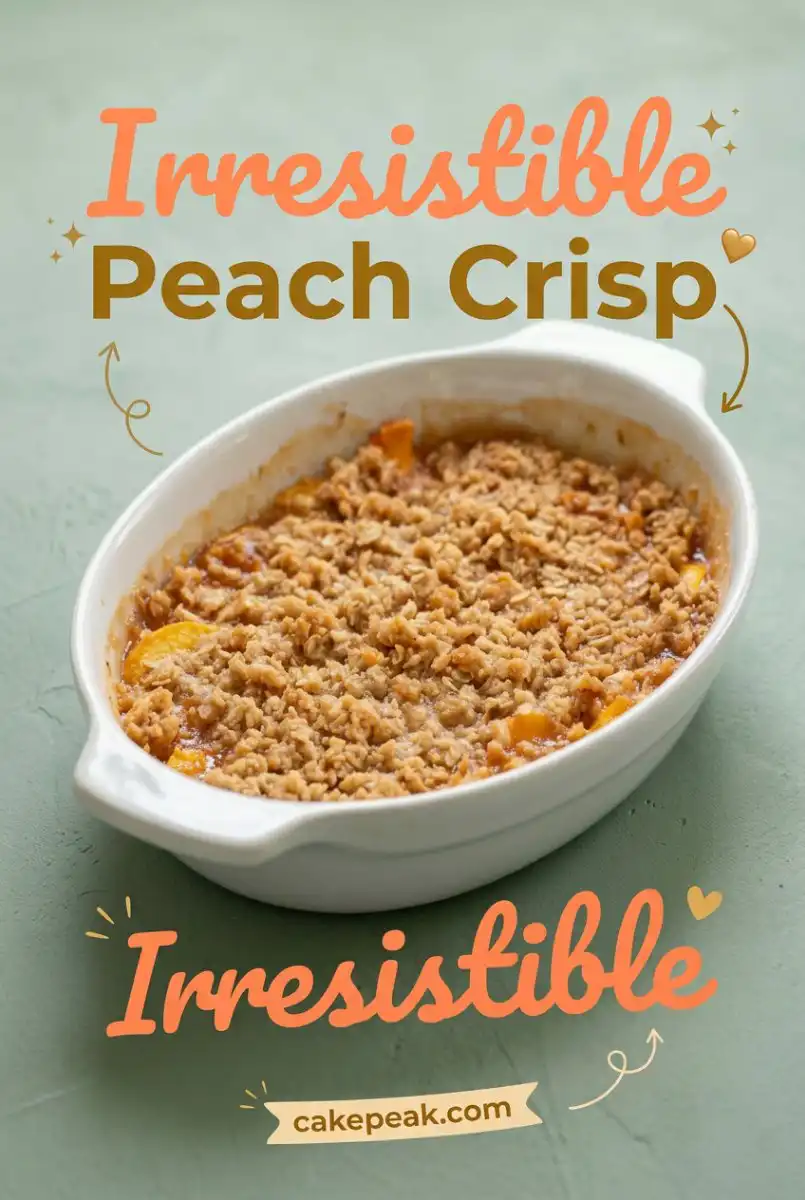
Repeatable results, every time, are the hallmark of a well-tested recipe. By following these precise measurements and focusing on the temperature cues during the bake, you can master the balance between a crunchy topping and a stable fruit filling. This Peach Crisp provides a reliable template for any stone fruit dessert you wish to prepare in the future.
If you find yourself with an abundance of summer fruit, our peach coffee cake is another excellent way to utilize your harvest with precision. We invite you to share your results and observations with our community of detail-oriented bakers. Your data helps us continue to refine our methods in the test kitchen for everyone’s benefit.
Follow us for more baking science and technical guides on Pinterest, Facebook, TikTok, and Telegram.