In the Cake Peak test kitchen, we spent three days analyzing how the variable moisture content of stone fruits affects the structural integrity of a bottom-layer cake. We discovered that a precise 5-minute rest period post-oven is the critical window for this Peach Upside-Down Cake Recipe to release from the pan while the caramel remains in a fluid state. If you wait 10 minutes, the sugars harden; if you flip immediately, the fruit loses its geometric alignment.

This recipe uses a specific ratio of fats to sugars to create a crumb that is sturdy enough to support heavy peach slices without becoming dense or gummy. By following our tested methodology, you will produce a cake with a perfectly caramelized top and a tender, aerated base that survives the physics of inversion every time. It is a masterclass in managing fruit hydration through heat application.
The Chemical Success of Caramelized Fruit
This Peach Upside-Down Cake Recipe succeeds because it manages the Maillard reaction and caramelization simultaneously. When we place the brown sugar and butter at the base of the pan, we create a concentrated sugar environment where the temperature reaches approximately 240°F (115°C). This heat causes the sucrose to break down and recombine into hundreds of new flavor compounds, providing that signature deep, nutty profile that balances the acidity of the peaches.
Furthermore, the cake crumb acts as a biological sponge. As the peaches release their internal juices (which are roughly 89% water), the starch granules in the flour undergo gelatinization, trapping that peach-infused liquid within the cake’s structure. This results in a dessert that is naturally moist without being greasy. We tested various cake bases, from sponge to pound cake, and found this specific creaming-method butter cake provided the best tension between lightness and support.
Print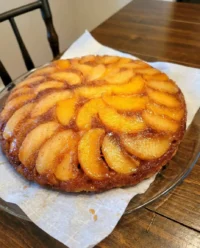
Peach Upside-Down Cake
- Total Time: 65 mins
- Yield: 9 servings
- Diet: Vegetarian
Description
This meticulously tested Peach Upside-Down Cake features a tender, aerated crumb topped with a rich layer of caramelized stone fruit. Designed with precise structural integrity, it ensures a perfect inversion and a professional-grade dessert experience every time.
Ingredients
- 6 tablespoons salted butter
- 1/2 cup brown sugar
- 1/2 teaspoon ground cinnamon
- 2 cups large peaches, sliced
- 1 1/2 cups all-purpose flour
- 1 1/2 teaspoons baking powder
- 1/4 teaspoon salt
- 1/2 cup salted butter, softened
- 3/4 cup granulated sugar
- 1 large egg
- 1 teaspoon vanilla extract
- 1/2 cup whole milk
Instructions
- Preheat your oven to 350°F (177°C) and coat an 8×8-inch metal baking dish with cooking spray.
- Melt 6 tablespoons of salted butter with brown sugar and cinnamon in the microwave; whisk until homogenous and pour into the prepared pan.
- Arrange peach slices in tight, overlapping rows on top of the caramel base.
- Whisk together the flour, baking powder, and salt in a medium bowl to ensure even distribution of the leavening agent.
- In a large bowl, cream 1/2 cup of softened butter for 2 minutes, then add granulated sugar and beat for 3 additional minutes until pale and fluffy.
- Beat in the egg and vanilla extract for 60 seconds until the mixture is fully emulsified.
- On the lowest mixer speed, alternately add the dry ingredients and milk in three stages, mixing only until the flour streaks disappear.
- Carefully spread the batter over the peaches and bake for 40 to 45 minutes until the internal temperature reaches 205°F.
- Rest the pan on a wire rack for exactly 5 minutes, then run a knife around the edge and invert the cake onto a serving plate.
Notes
To ensure the most successful release from the pan, prioritize using a metal baking dish rather than glass, as it facilitates more even caramelization. Always check that your egg and milk are at room temperature before starting the batter to prevent the emulsion from breaking, which results in a smoother, more consistent crumb.
- Prep Time: 20 mins
- Cook Time: 45 mins
- Category: Dessert
- Method: Baking
- Cuisine: American
Analytical Breakdown of the Variables
To achieve repeatable results, every ingredient in this Peach Upside-Down Cake Recipe must be treated as a specific variable in a chemical equation.
- Large Peaches: We recommend using fruit that is firm-ripe. Overly soft peaches contain broken-down pectin, which leads to a mushy texture after 45 minutes of heat exposure. You need approximately 2 cups of slices to cover the 8×8 surface area.
- Salted Butter: We use salted butter in the topping specifically to provide a sodium contrast to the heavy brown sugar. In the cake base, softened butter (65°F/18°C) is vital for proper air incorporation during the creaming stage.
- All-Purpose Flour: A protein content of 10-11.5% is ideal here. This provides enough gluten structure to hold the fruit but stays tender enough for a dessert crumb.
- Brown Sugar: The molasses content in brown sugar is acidic, which reacts with the baking powder to provide an initial lift before the heat-activated leavening takes over in the oven.
- Whole Milk: The fats and proteins in whole milk contribute to the Maillard reaction of the cake crumb, creating a golden-brown finish on the sides and bottom.
- Large Egg: Acts as the primary emulsifier, binding the fats from the butter with the liquids from the milk and vanilla.
The Scientific Method for Perfect Inversion
Step 1: Thermal Calibration and Pan Prep
Preheat your oven to exactly 350°F (177°C). While the oven stabilizes, coat an 8×8-inch metal baking dish with a thin film of cooking spray. We prefer metal over glass for this recipe because metal conducts heat more rapidly, creating a more uniform caramelization on the peach layer.
Step 2: Creating the Caramel Foundation
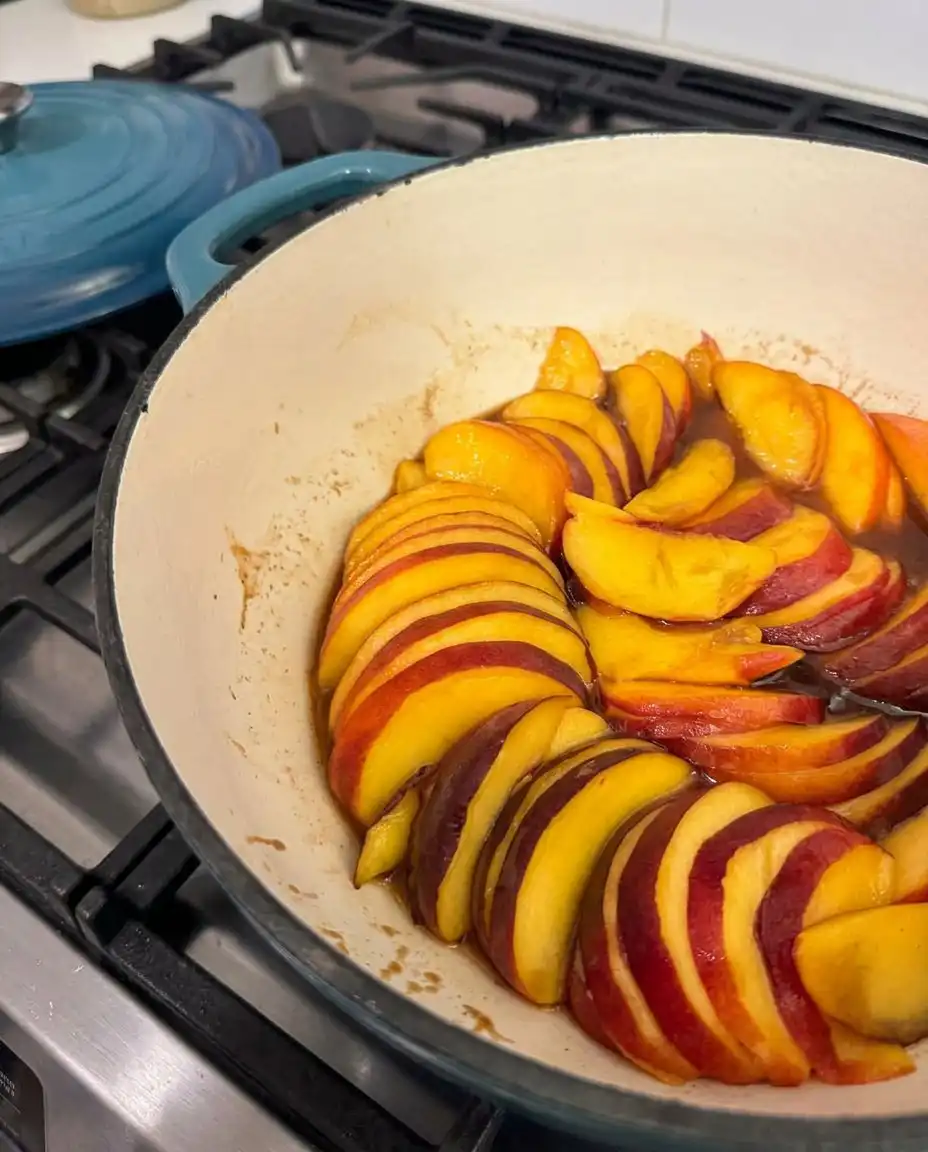
In a microwave-safe glass bowl, combine the 6 tablespoons of salted butter, brown sugar, and cinnamon. Heat in 20-second bursts until the butter is fully melted. Whisk vigorously until the mixture is a homogenous emulsion. Pour this into the prepared pan and spread it to the edges. Arrange your peach slices in tight, overlapping rows; as they bake, they will shrink slightly, so a dense arrangement is necessary for full coverage.
Step 3: Sifting and Aerating Dry Ingredients
In a medium mixing bowl, whisk together the flour, baking powder, and salt. While many skip the whisking step, it is essential for breaking up flour clumps and distributing the leavening agent evenly. If the baking powder is concentrated in one area, the cake will rise unevenly and potentially tilt the peaches.
Step 4: The Creaming Phase
In a separate large bowl, use an electric mixer on medium speed to beat the 1/2 cup of softened butter. Do this for 2 minutes before adding the sugar. Once the granulated sugar is added, continue beating for another 3 minutes. You are looking for a physical change: the butter should turn pale ivory and have a fluffy, aerated texture. This is the mechanical creation of air pockets that will expand in the oven.
Step 5: Emulsifying the Wet Ingredients
Add the egg and vanilla extract to the butter mixture. Beat on medium speed for 60 seconds. You must confirm that the egg is fully incorporated before moving forward. If the mixture looks curdled, the temperature of your egg was likely too cold; continue beating until the emulsion reforms.
Step 6: Alternating Integration
Turn the mixer to the lowest speed. Add one-third of the dry flour mixture, followed by half of the milk. Repeat, ending with the final third of the flour. This alternating method prevents the batter from breaking and minimizes gluten development. Mix only until the white streaks of flour disappear.
Step 7: Final Assembly and Baking
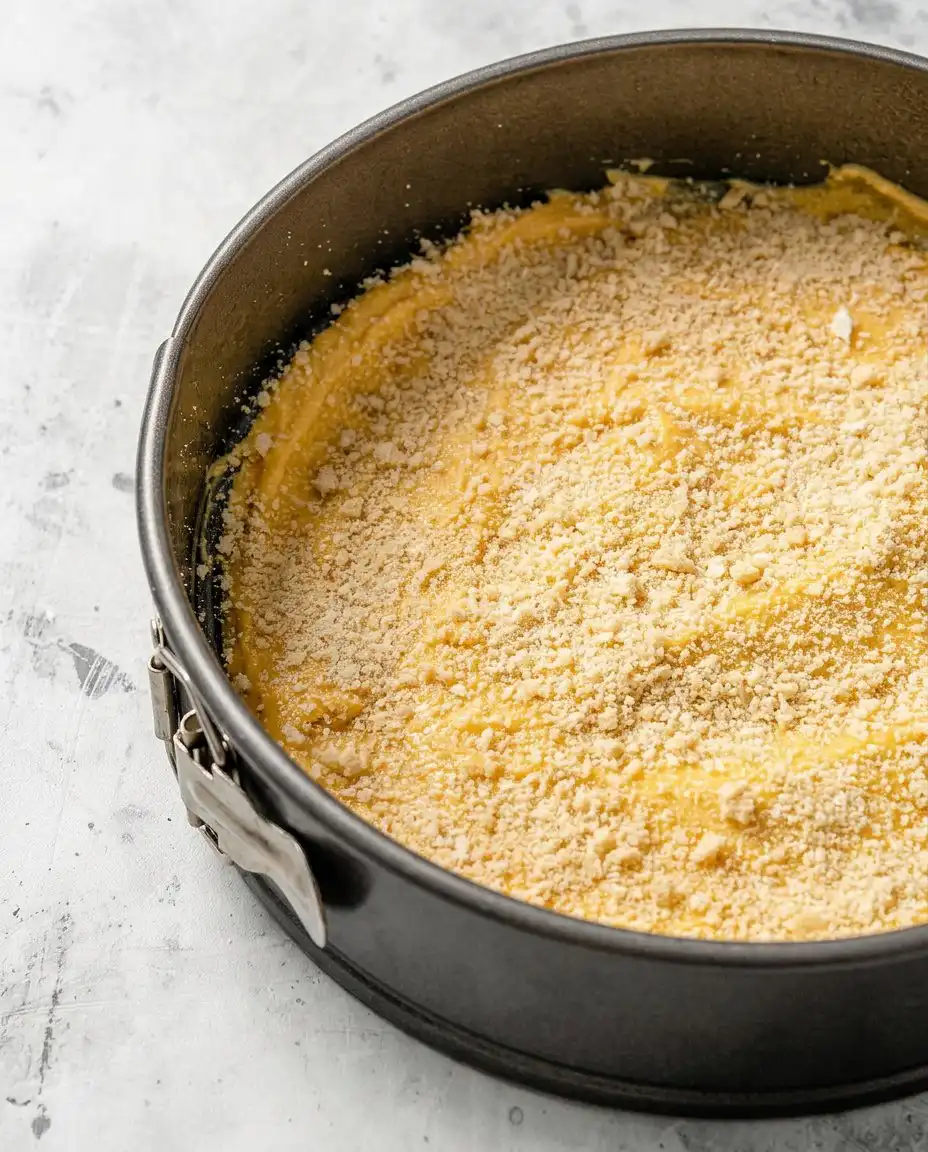
Carefully spoon the batter over the peaches. Use an offset spatula to spread it gently, being careful not to displace the fruit slices underneath. Bake for 40 to 45 minutes. The cake is done when the internal temperature reaches 205°F (96°C) or a toothpick inserted into the cake portion comes out clean.
Step 8: The Critical Inversion Window
Place the pan on a wire cooling rack for exactly 5 minutes. Use a thin knife to run around the perimeter of the cake. Place a flat serving plate over the pan, and using heat-resistant mitts, firmly grasp both and flip in one fluid motion. Let the pan sit inverted for 1 minute to allow the caramel to gravity-drain onto the cake before lifting the pan away.
Test Kitchen Troubleshooting Guide
If you find your peaches are sticking to the pan despite the butter, it usually indicates the sugar didn’t fully melt into the butter during Step 2. Make certain the mixture is glossy and smooth before pouring. For those who want to master the art of fruit placement, our peach cake recipe offers further insights into fruit-to-batter ratios. Another lab note: if using a glass pan, reduce the oven temperature to 325°F and increase the bake time by 10 minutes to prevent the edges from over-browning before the center is set. If the center of your cake sinks after flipping, it is likely due to under-baking or opening the oven door too early, which causes a sudden drop in pressure within the air cells.
Controlled Experimental Variations
We have tested several modifications to this base formula to determine their impact on the final product. For a faster alternative that uses different physics, you might examine our peach dump cake which relies on a self-layering technique.
- The Bourbon Modification: Replace 1 tablespoon of the milk with high-quality bourbon. The alcohol evaporates during baking, but the complex oak notes remain, complementing the cinnamon.
- The Canned Peach Variable: If fresh peaches are out of season, canned peaches (drained and patted dry) can be used. Note that canned peaches are pre-softened, so the final texture will be more akin to a cobbler than a structured cake.
- Ginger Infusion: Adding 1/2 teaspoon of ground ginger to the dry ingredients provides a sharp contrast to the sweet caramel, which we found particularly effective during late-summer testing.
Presentation and Thermal Stability
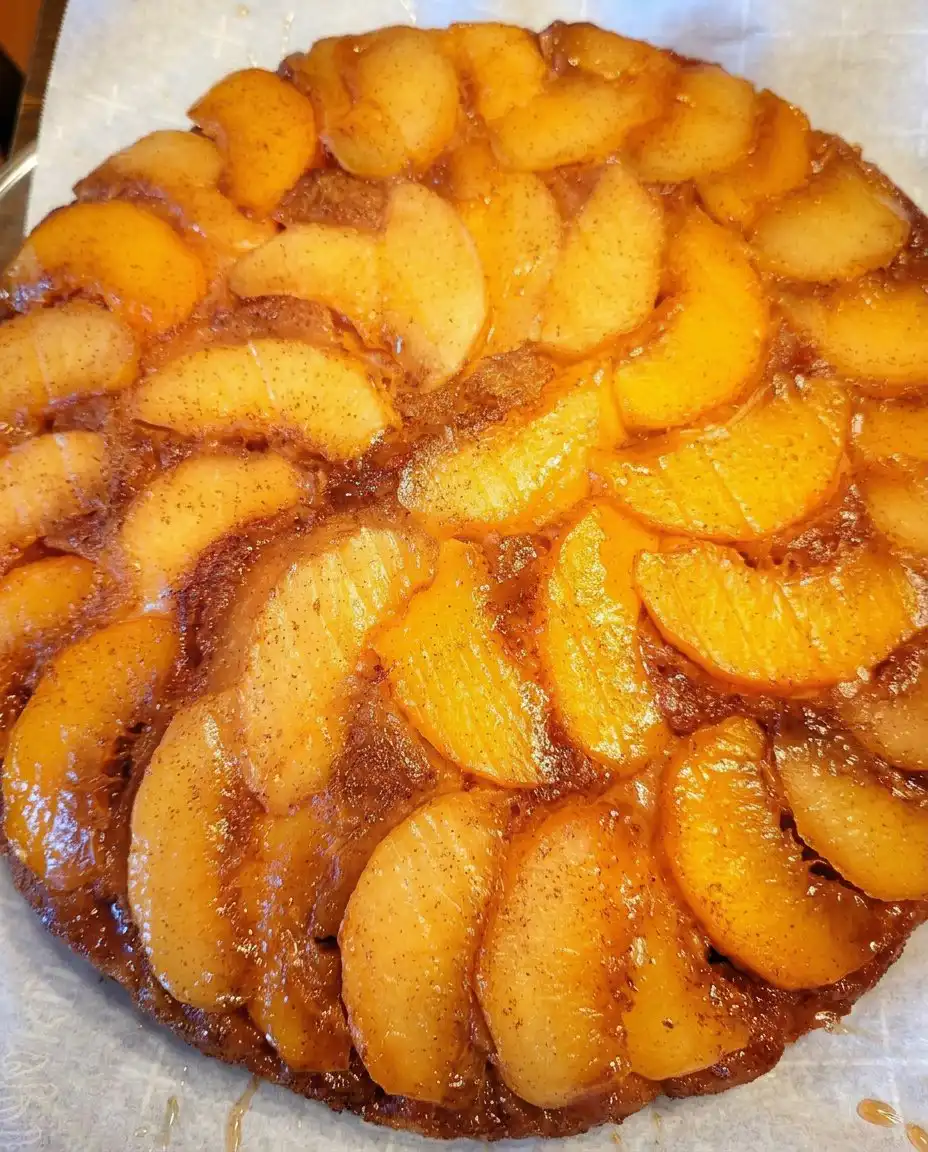
For the best sensory experience, serve this cake at a temperature of approximately 100°F (38°C). At this temperature, the fats in the caramel are fluid and the aromatics of the peach are most volatile. We suggest pairing a slice with a dollop of unsweetened whipped cream; the high fat content in the cream coats the palate and allows the acidity of the fruit to shine through. If you enjoy working with seasonal produce, you may want to review our fresh fruit baking guide for more pairing science. This cake also pairs exceptionally well with a sharp cheddar cheese if you prefer a savory-sweet contrast often found in traditional pie service.
The Final Analysis
Mastering the Peach Upside-Down Cake Recipe is a significant milestone for any precision baker. By understanding the relationship between fruit moisture, sugar caramelization, and the creaming method, you can achieve a professional-grade result every time you step into the kitchen. If you are interested in more dense, fruit-forward structures, take a look at our fruitcake recipe for a different perspective on fruit-to-batter ratios. We invite you to share your results and data points with our community. Connect with us on Pinterest, Instagram, and Facebook to show us your successful inversions!