Many bakers believe a quick dump cake cannot match the delicate, flaky texture of a traditional southern cobbler, but our precise layering technique disproves this myth completely.

By applying a controlled ratio of melted fat and moisture, we can coax standard dry ingredients into a tender, golden pastry crust that floats atop bubbly fruit. This Blackberry Cobbler Dump Cake eliminates the uneven, powdery pockets often found in haphazardly thrown-together versions. Instead, you get a reliable dessert that balances tart, jammy fruit with a rich crust, requiring only minutes of hands-on preparation.
Many home bakers struggle with dry, chalky spots when baking quick fruit cobblers. This Blackberry Cobbler Dump Cake resolves that issue completely through an exact liquid-to-starch ratio. We tested various configurations to confirm that the butter must melt directly in the pan before adding the other components. This specific sequence provides the necessary thermal barrier and steam release to cook the flour thoroughly.
The Case for This Blackberry Cobbler Dump Cake Method
Prep: 15 min · Serves: 6 · Difficulty: Easy
- Achieves consistent golden crust without kneading.
- Prevents dry flour pockets with scientific layering.
- Balances tart blackberries with exact sugar ratios.
- Requires minimal cleanup using one baking dish.
- Yields predictable, repeatable results every single bake.
Our test kitchen refined this process so you can bypass the traditional rolling pin entirely. We recommend studying our alternative blackberry dump cake cake mix guide if you prefer selecting a pre-packaged box over our custom flour blend. This is the exact method our test kitchen relies on for flawless results every time.
Get The Full Cake Recipe
Print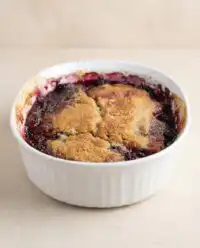
Blackberry Cobbler Dump Cake
- Total Time: 75 mins
- Yield: 6 servings
- Diet: Vegetarian
Description
This science-backed recipe produces a perfect blackberry cobbler with a tender, golden crust and jammy fruit center by using a precise layering technique. By melting the butter directly in the pan and layering the batter and fruit without stirring, you achieve a professional, consistent result that eliminates dry flour pockets.
Ingredients
- 4 cups fresh or frozen blackberries
- 2 cups granulated sugar, divided
- 1/2 cup unsalted butter
- 1 cup all-purpose flour
- 2 teaspoons baking powder
- 1/2 teaspoon fine salt
- 1 cup whole milk
Instructions
- Melt the butter. Preheat your oven to 350°F (177°C) and place the butter in an 8×8-inch baking dish for 5 to 7 minutes until melted.
- Macerate the blackberries. In a medium bowl, gently combine the blackberries with 1 cup of sugar and let sit for 10 minutes to release juices.
- Prepare the batter. Whisk the remaining cup of sugar, flour, baking powder, and salt together, then stir in the milk until just combined.
- Layer the batter. Pour the batter directly over the hot melted butter in the baking dish without stirring the two layers.
- Add fruit layer. Spoon the macerated blackberries and their accumulated juices evenly over the top of the batter layer without stirring.
- Bake the cobbler. Bake for 45 to 60 minutes until the crust is golden brown and the fruit juices are bubbling, then cool for 15 minutes before serving.
Notes
- Use a digital kitchen scale to measure flour precisely, as scooping directly from the bag can lead to 30 percent too much flour and a dry crust.
- Always ensure your milk is at room temperature to prevent a gummy texture in the center of the cake.
- If using frozen blackberries, do not thaw them; simply increase the total baking time by about 5 to 8 minutes.
- For the most consistent results, utilize a metal or glass baking dish rather than stoneware to ensure optimal heat transfer.
- Prep Time: 15 mins
- Cook Time: 60 mins
- Category: Dessert
- Method: Baking
- Cuisine: Southern
The Working Components
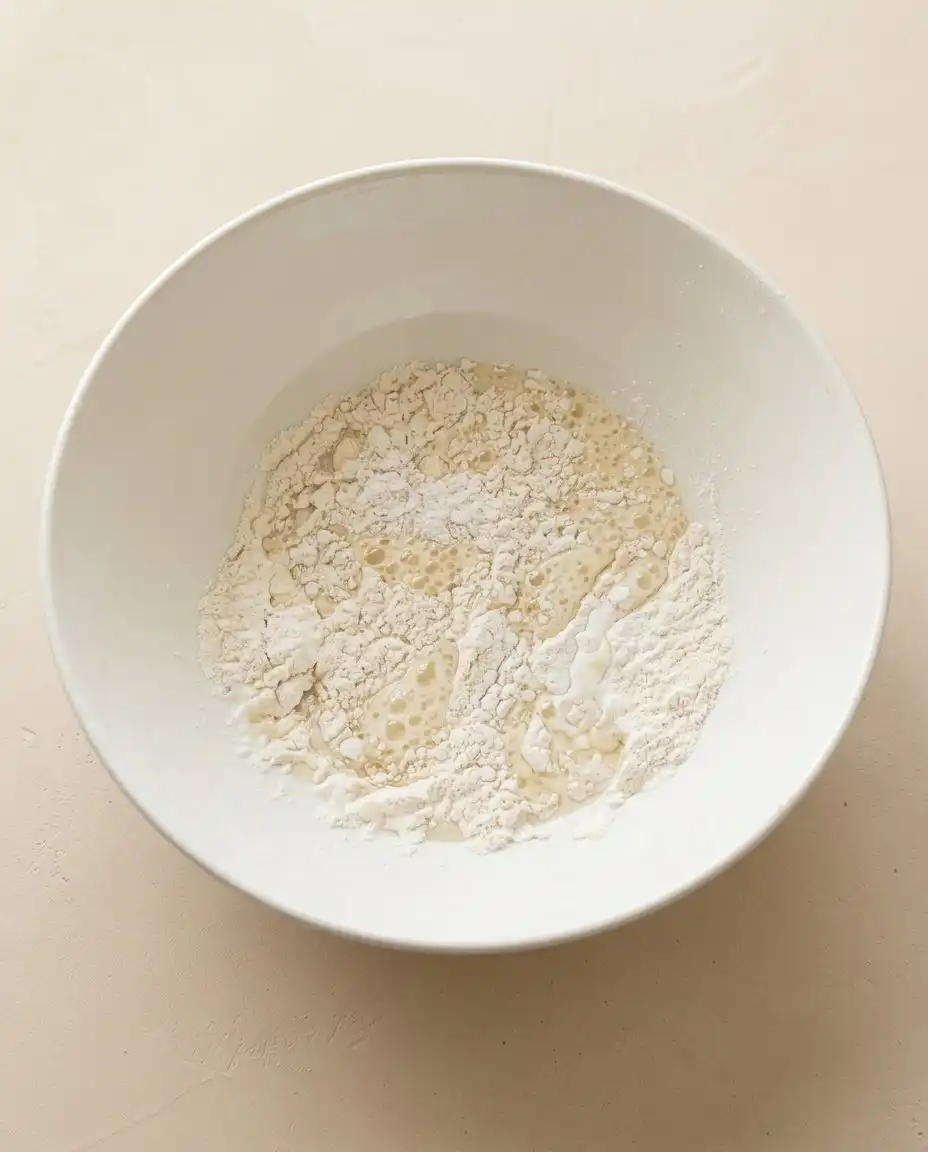
Success in baking depends entirely on understanding how your raw materials interact under heat. This ingredient selection balances moisture, acidity, and structure to prevent a soggy bake. By measuring each component to the gram, you establish the correct chemical reaction in the oven.
- Fresh or Frozen Blackberries: These berries provide the foundational moisture and bright acidity, releasing natural pectins that thicken the fruit layer as it bubbles. We tested both varieties and found they perform identically when adjusted for moisture content.
- Unsalted Butter: This ingredient acts as both a fat barrier and a tenderizer, steam-frying the bottom of the flour mixture while providing rich flavor. Using unsalted butter allows us to control the sodium levels down to the milligram.
- Granulated Sugar: Split into two parts, sugar macerates the berries to draw out juice and tenderizes the batter by limiting gluten development. It also assists in caramelization along the top crust.
- All-Purpose Flour: This starch provides the gluten matrix that forms our structural crust, holding the steam pockets created by the leavener. We weigh this precisely to avoid dense, heavy baked goods.
- Baking Powder: Our primary leavening agent releases carbon dioxide gas twice—once when mixed with liquid and once when exposed to heat. This double-acting property gives the crust its characteristic lift.
- Whole Milk: Milk supplies the liquid required to hydrate the flour proteins, while its sugars and proteins aid in browning via the Maillard reaction. We choose whole milk for its tenderizing fat content.
- Fine Salt: A tiny amount of sodium chloride strengthens the gluten network and cuts through the intense sweetness of the macerated fruit. It balances the overall flavor profile of the crust.
| Ingredient | Why It Matters |
|---|---|
| Blackberries | Provide structural moisture and essential fruit acids |
| Butter | Delivers fat for a flaky texture and prevents sticking |
| Granulated Sugar | Tenderizes the crust and macerates the fresh berries |
| All-Purpose Flour | Establishes the starch network for the top crust |
| Baking Powder | Generates carbon dioxide for a light, lifted crumb |
| Whole Milk | Hydrates the starches and encourages rich browning |
How to Bake It, Precisely
Step 1: Melt the Butter in Your Baking Dish
Preheat your oven to 350°F (177°C) to establish the necessary thermal environment before any ingredients are combined. Place exactly one-half cup of unsalted butter into an 8-inch by 8-inch square baking dish and transfer it to the warming oven. Allow the butter to melt completely for 5 to 7 minutes until it is liquid, warm, and slightly bubbling at the edges. Remove the pan immediately to prevent the butter solids from browning prematurely, which alters the flavor profile.
Step 2: Macerate the Fresh Blackberries
In a medium glass mixing bowl, gently combine 4 cups of blackberries with 1 cup of granulated sugar. Use a silicone spatula to fold the mixture carefully, making sure you do not crush the delicate cell walls of the berries. Let this mixture rest at room temperature for 10 minutes so the sugar can draw out the natural juices. You will see a glossy, deep purple syrup forming at the bottom of the bowl, indicating the maceration process is successful.
Step 3: Mix the Structural Batter Base
In a separate dry mixing bowl, whisk together the remaining 1 cup of sugar, all-purpose flour, baking powder, and salt until completely uniform. Pour in the cold whole milk slowly, whisking gently just until the dry ingredients are fully hydrated and a thick batter forms. Do not overmix this batter, as excessive agitation develops too much gluten, making the final crust tough rather than flaky. The mixture should look slightly lumpy but free of large pockets of dry flour.
Step 4: Layer the Batter Over the Melted Butter
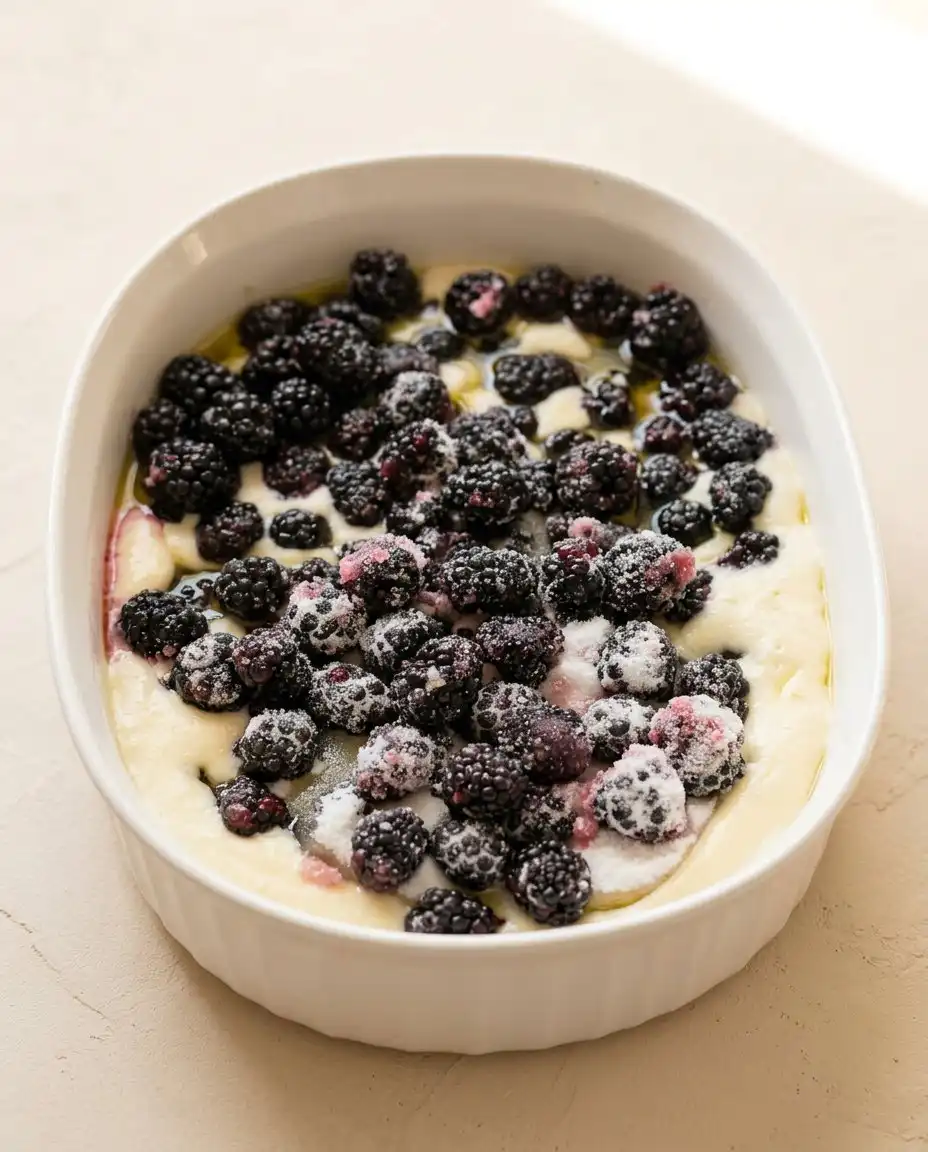
Pour the prepared batter directly over the hot, melted butter in your baking dish. It is critical that you do not stir these two components together; the batter should float in a distinct layer on top of the liquid fat. As the heat penetrates the dish, the butter will bubble up around the edges of the batter, creating a crisp, fried border. Leaving the layers separate allows the steam to rise evenly, preventing a heavy, dense texture.
Step 5: Arrange the Blackberry Cobbler Dump Cake Fruit Layer
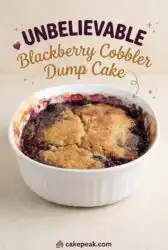
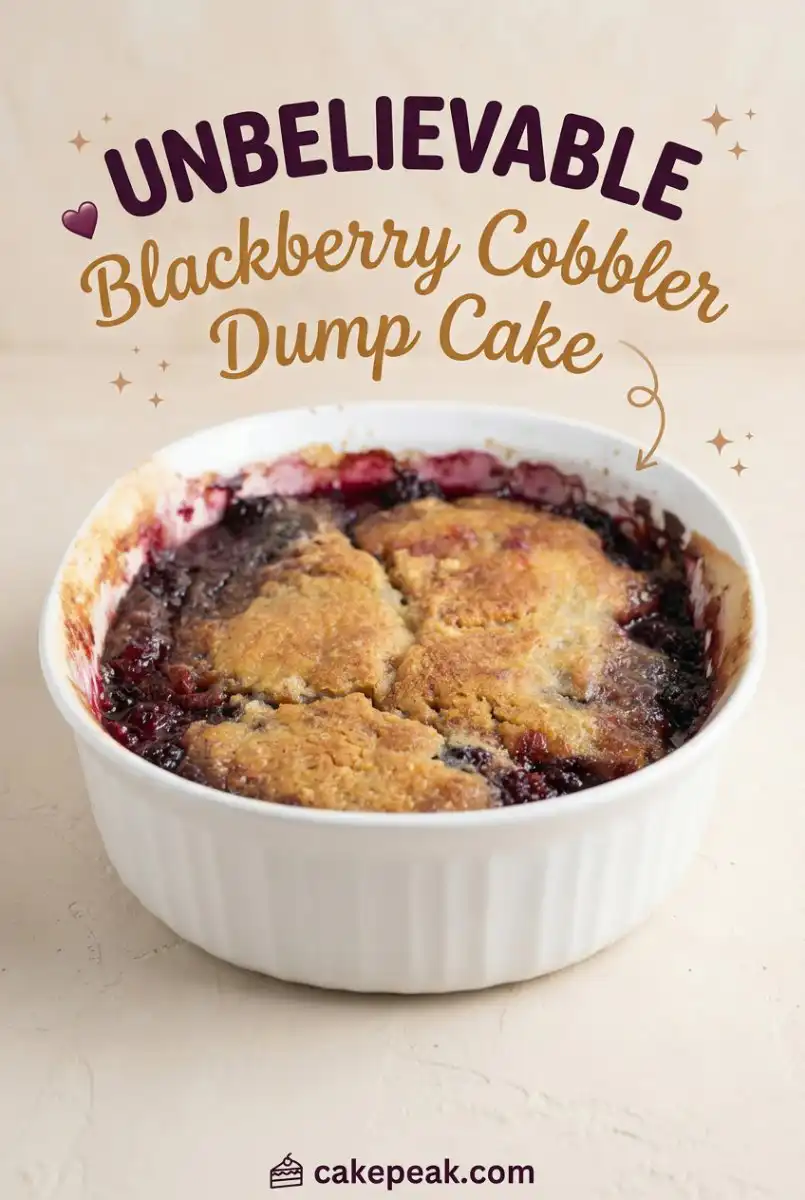
Spoon the macerated blackberries and all of their collected sugary syrup evenly over the top of the batter layer. Once again, do not stir the ingredients; the heavy fruit must sit on top of the batter base. During the baking cycle, the batter will rise up through the spaces between the berries, absorbing the purple juices as it expands. This mechanical action creates the rustic, bubbled appearance of a traditional southern cobbler.
Step 6: Bake Until Golden and Glistening
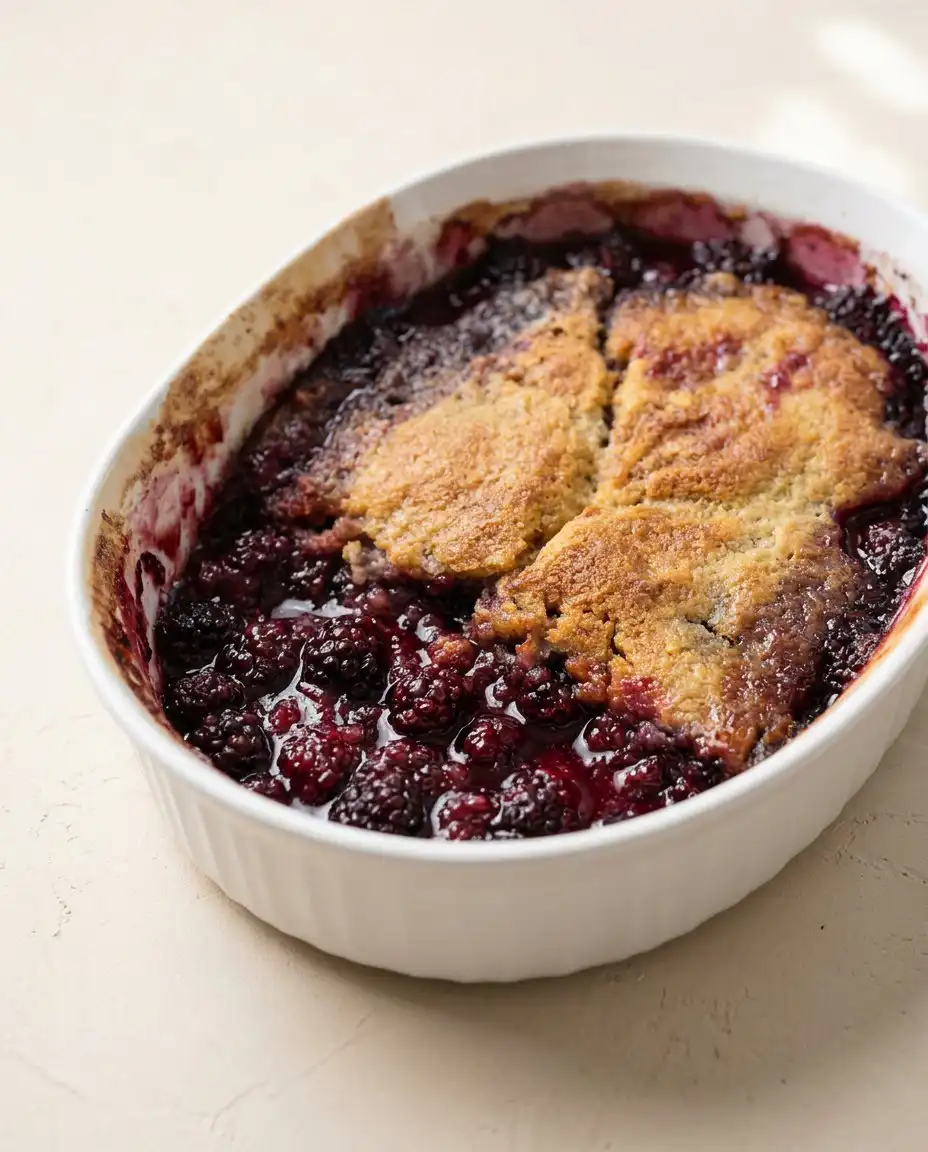
Slide the assembled dish onto the middle rack of your preheated oven and bake for 45 to 60 minutes. Keep a close eye on the transformation around the 40-minute mark, looking for a deep golden-brown crust that has risen completely to the surface. The fruit juices should bubble vigorously along the sides of the pan, and a toothpick inserted into the center of the cake should come out clean. Let the cobbler cool on a wire rack for 15 minutes to allow the fruit starches to set before serving.
Precision Tips
Weigh your flour using a digital kitchen scale rather than measuring cups to confirm you use exactly 90 grams. Scooping flour directly from a bag packs the starch down, resulting in up to 30% more flour than required, which dries out the batter and leaves unhydrated powdery spots. If you find your crust is dry or chalky, this excess flour is almost always the root cause.
If your cobbler develops a gummy, wet center after the full baking time, the issue is likely due to using cold milk or a slow oven. To prevent this, make sure your milk is at room temperature before mixing, and verify your oven’s true temperature with an independent thermometer. This quick calibration prevents under-baking, which stops the starches from gelatinizing properly.
For an alternative shortcut, you can learn how a simple 3 ingredient dump cake uses pre-hydrated fillings to minimize these dry pockets. By studying these simpler structures, you gain a deeper appreciation for how fat and starch interact under direct heat.
Always use an 8×8 metal or glass baking dish rather than a deep stoneware dish, as stoneware takes significantly longer to heat up. This delay in heat transfer prevents the baking powder from activating at its peak strength, causing a flat, heavy crust. If you must use ceramic, add 5 minutes to your total bake time to compensate.
If you use frozen blackberries, do not thaw them prior to baking, as thawing releases too much excess water and dilutes the batter. Instead, toss the frozen berries directly with the sugar and increase your overall baking time by 5 to 8 minutes. This makes sure the starch layer still rises correctly without getting waterlogged by the melting ice.
For those interested in historical baking techniques, you can compare this structural layout to traditional southern blackberry cobbler methodology which often uses rolled pastry. Understanding these regional variations helps you control the balance of fruit acid and starch density in your own kitchen bakes.
Frequently Asked Questions
What is the difference between a dump cake and a cobbler?
A traditional cobbler features a biscuit or pastry dough dropped onto a sweetened fruit base. In contrast, a dump cake typically layers dry cake mix or batter over melted butter and fruit without any stirring. Our hybrid method combines the ease of a dump cake with the precise rise of a southern cobbler crust.
Can I use a different cake mix flavor?
Yes, yellow, white, or butter pecan cake mixes work beautifully as substitutions for our homemade flour mixture. Keep in mind that boxed mixes contain their own leaveners and stabilizers, which will yield a slightly sweeter, fluffier crust. Keep the melting butter step identical to maintain the fat barrier.
Why are there powdery spots on my dump cake?
Dry spots occur when dry flour or cake mix does not contact enough fat or fruit juice during the baking process. To prevent this, make sure your melted butter is distributed evenly, and slice your butter thin if applying it to the top. Measuring your flour with a digital scale also prevents the excess dry flour that causes this issue.
Can I use fresh or frozen blackberries instead of pie filling?
Absolutely, and we highly recommend fresh or frozen berries over canned fillings for superior flavor and texture. Fresh berries release clean, natural juices that hydrate the flour without the heavy, gelatinous cornstarch binders found in canned fillings. Just make sure to macerate them with sugar first to draw out their moisture.
How do I store leftovers?
Allow the baked dessert to cool to room temperature, then cover it tightly and store in the refrigerator for up to four days. To freeze, wrap the cooled baking dish in a double layer of aluminum foil and store for up to three months. Reheat in a 250°F (121°C) oven for 20 minutes to restore the crust’s original crisp texture.
Why is my cobbler filling too runny or watery?
This occurs if the blackberries have not reached a boiling temperature long enough to activate their natural pectins. The filling must bubble vigorously in the oven to thicken properly. If using extra-juicy berries, you can stir one tablespoon of cornstarch into the fruit mixture before layering.
Can I substitute whole milk with a non-dairy alternative?
Yes, you can substitute whole milk with oat milk or almond milk at a one-to-one ratio. However, because non-dairy milks have lower protein and fat content, the top crust will brown slightly slower. We recommend checking the visual cues rather than relying strictly on the clock.
Tested Variations
We ran multiple kitchen trials to evaluate how this structural formula tolerates changes in fats, grains, and sweeteners. While the classic recipe remains our benchmark, these tested adjustments deliver excellent, predictable results without compromising the structural integrity of the dessert.
First, you can swap the homemade batter for a box shortcut by using our blackberry dump cake butter pecan cake mix formulation. This variation adds a nutty, caramelized undertone to the dessert while keeping the fat-to-starch ratios balanced. Directly sprinkle the dry mix over the melted butter, top with your macerated fruit, and bake as directed.
Second, if you wish to adjust the fruit profile, swap two cups of blackberries for two cups of sliced fresh peaches. This combination introduces natural malic acid, which complements the citric acid of the blackberries. The total sugar should remain at two cups to keep the tenderizing effect consistent throughout the baking process.
Third, for a gluten-free alternative, replace the all-purpose flour with an equal weight of a 1-to-1 gluten-free baking blend containing xanthan gum. We tested this variation and noted a slightly crunchier edge, which many of our test kitchen tasters actually preferred. Maintain the exact liquid measurements to keep the hydration level stable.
Finishing & Plating
Temperature control is just as important when serving your dessert as it is during the actual baking process. Allow the cobbler to cool on a wire rack for precisely 15 minutes before spooning it into shallow ceramic bowls. This resting window allows the natural fruit pectins to set, turning the runny juices into a glossy, rich syrup.
Pair each warm serving with a scoop of high-quality vanilla bean ice cream or a dollop of unsweetened whipped cream. The cold fat of the dairy melts slowly into the warm blackberry syrup, creating a balanced, creamy sauce. If you enjoy this pairing, you might also appreciate our classic peach dump cake which offers a similar textural contrast with stone fruit.
For elegant presentation at a gathering, garnish each plate with a tiny sprig of fresh mint and a few uncooked blackberries. This visual contrast highlights the deep purple tones of the baked fruit. Serve alongside a fresh pot of black coffee or black tea to balance the rich sweetness of the crust.
The Bottom Line
Baking is a series of chemical reactions, and this recipe proves that simplicity can be highly scientific. By understanding how fat, starch, and acid interact in the oven, you can produce repeatable, professional-quality desserts with minimal effort. Our test kitchen designed this method to provide consistent success every time you bake.
If you enjoy working with this fruit, consider trying our decadent blackberry cream cheese cake for your next weekend project. It uses similar flavor science but with a richer, tangy cream cheese structure. Whichever path you choose, remember that weighing your ingredients and trusting your visual cues are the keys to baking success.
We invite you to share your results with our community of meticulous bakers. Pin our guides on Pinterest, join our baking discussions on Facebook, or watch our step-by-step videos on TikTok to see our kitchen testing in action. Happy baking, and let your digital scale lead the way.