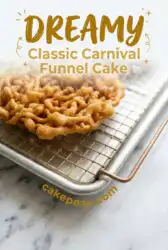
This recipe offers a consistent and repeatable method for achieving a professional fairground result. You will get a precisely crispy exterior and an airy, structural crumb in every single batch.

Success with a Classic Carnival Funnel Cake requires managing the relationship between leavening activity and oil temperature. During our testing, we found that maintaining a steady 350°F is the primary variable that prevents the batter from absorbing excess grease. This procedure eliminates the common issues of soggy centers or overly dense strands that plague many home versions. By controlling the viscosity of your batter, you ensure the lattice structure holds its shape the moment it hits the frying surface.
Why This Classic Carnival Funnel Cake Works
Prep: 25 min · Serves: 4 · Difficulty: Medium
- Predictable results through precise temperature control
- Balanced leavening for maximum structural lift
- Optimized batter viscosity for easy pouring
- Minimal oil absorption for a cleaner finish
- Superior texture compared to a standard funnel cake recipe
Precision creates consistency for this fairground favorite every time you fire up the stove.
Get The Full Cake Recipe
Print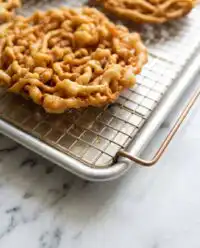
Classic Carnival Funnel Cake
- Total Time: 40 mins
- Yield: 4 servings
- Diet: Vegetarian
Description
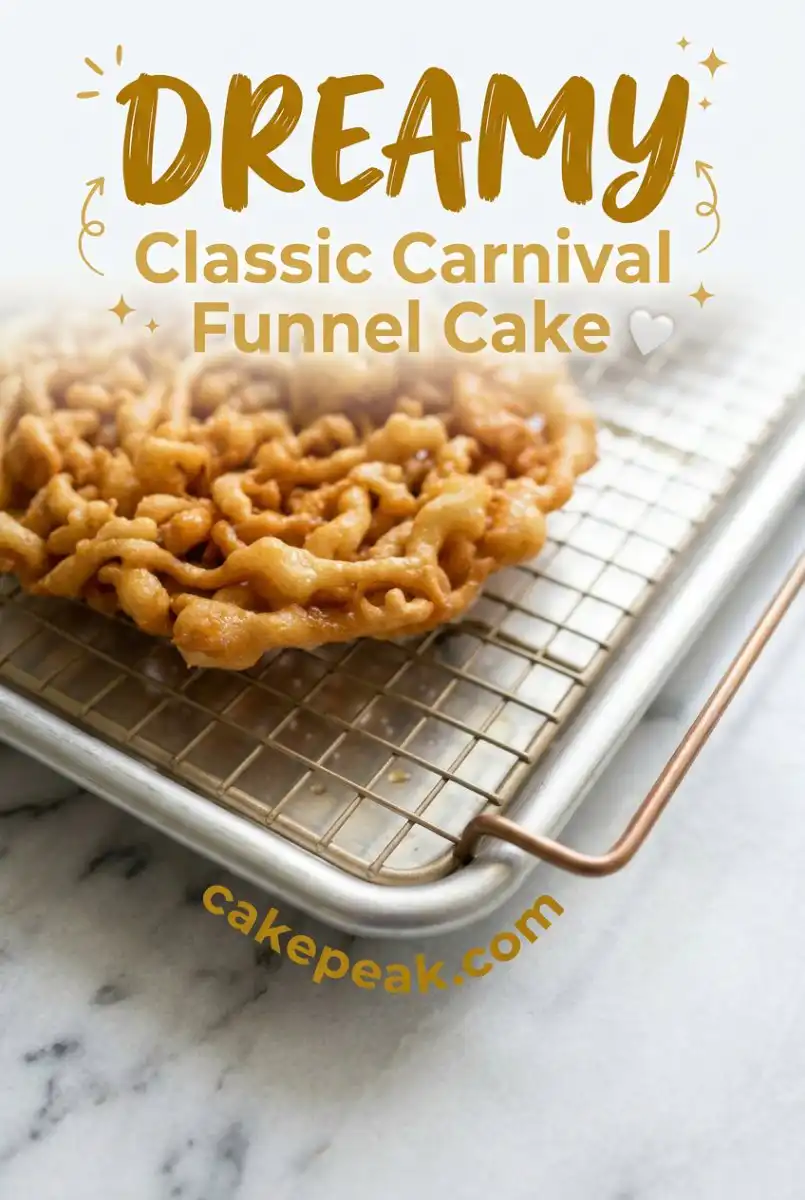
This classic carnival-style funnel cake features a perfectly crispy, golden-brown lattice structure with an airy interior. By mastering precise oil temperature control and optimal batter viscosity, you can achieve professional, fairground-quality results right in your own kitchen.
Ingredients
- 2 cups all-purpose flour
- 1 tablespoon baking powder
- 1/2 teaspoon baking soda
- 1/4 teaspoon salt
- 1 teaspoon ground cinnamon
- 2 large eggs
- 1 1/2 cups whole milk
- 1 tablespoon granulated sugar
- 1 teaspoon vanilla extract
- High-smoke-point oil (such as peanut or canola) for frying
- Powdered sugar for dusting
Instructions
- Prepare frying oil. Fill a heavy-bottomed wok or deep skillet with oil, attach a thermometer, and heat steadily to 350°F.
- Combine dry ingredients. Whisk the flour, baking powder, baking soda, salt, and cinnamon in a large bowl until uniform and aerated.
- Emulsify wet ingredients. In a separate vessel, whisk the eggs, milk, vanilla, and sugar until well integrated and slightly frothy.
- Mix the batter. Pour the liquid emulsion into the dry mixture and whisk gently using a circular motion until just combined.
- Load pouring container. Transfer the batter into a squeeze bottle or a funnel with a 1/4-inch opening, ensuring the spout is free of lumps.
- Fry the lattice. Squeeze the batter into the 350°F oil in a continuous, overlapping spiral pattern starting from the center.
- Flip the cake. Fry for 90 to 120 seconds until deep golden brown, then carefully flip to fry the second side for approximately 60 seconds.
- Drain excess oil. Lift the cake with a slotted spoon, hold briefly to drip, and transfer to a wire rack set over paper towels.
- Apply final finish. Dust the funnel cake generously with powdered sugar while still warm and serve immediately.
Notes
- Ensure your oil stays at 350°F between batches to prevent the batter from absorbing excess grease.
- Strain the finished batter through a fine-mesh sieve if you notice any flour lumps that might clog your squeeze bottle.
- Avoid overcrowding the pan, as this causes the oil temperature to drop rapidly and leads to a soggy final product.
- Use a wire rack rather than a plate for cooling to allow air circulation and preserve the crispy exterior.
- Always test your baking powder for freshness if you find the cakes are not puffing up as expected during the fry.
- Prep Time: 25 mins
- Cook Time: 15 mins
- Category: Dessert
- Method: Deep Frying
- Cuisine: American
The Working Components
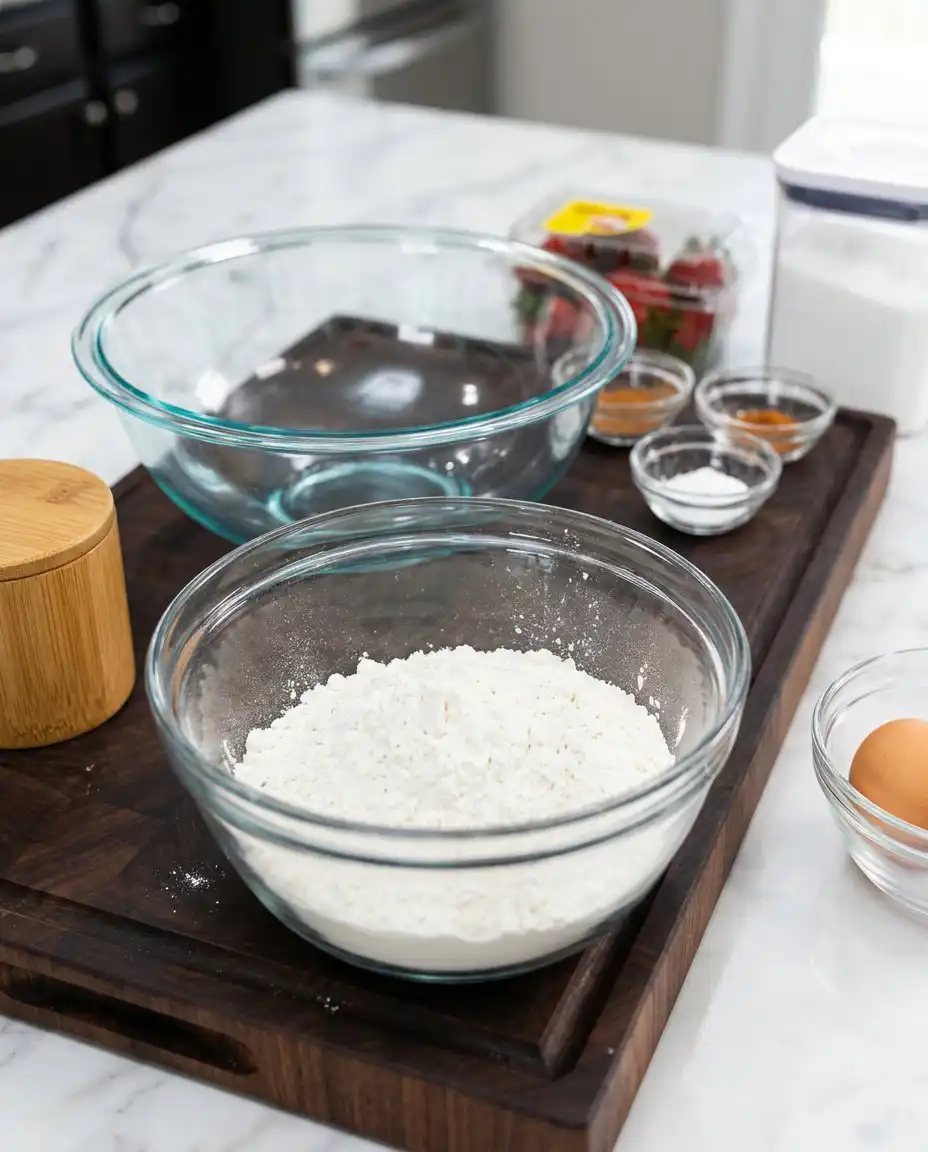
The success of this batter relies on the chemical interaction between alkaline leaveners and acidic components in the dairy. We use a combination of baking powder and baking soda to ensure both immediate lift and a balanced pH for optimal browning.
- All-purpose flour: This provides the necessary protein structure to support the weight of the fried lattice.
- Baking powder: It creates the initial expansion as soon as the batter enters the hot oil.
- Baking soda: This reacts with the lactic acid in the milk to improve the Maillard reaction.
- Whole milk: The fat content here tenderizes the crumb and adds richness that water-based batters lack.
- Ground cinnamon: We include this for aromatic depth that complements the toasted sugar notes.
- Granulated sugar: Beyond sweetness, it helps stabilize the egg proteins during the mixing phase.
- Vanilla extract: High-quality extract provides a consistent flavor base that stands up to deep frying.
| Ingredient | Why It Matters |
|---|---|
| All-purpose Flour | Provides the gluten framework to hold the spiral shape |
| Baking Powder | Generates carbon dioxide for an airy, light texture |
| Whole Milk | Adds fat for a softer crumb and improved browning |
| Eggs | Act as a binder and provide structural stability |
| Cinnamon | Offers a subtle aromatic contrast to the powdered sugar |
The Tested Procedure
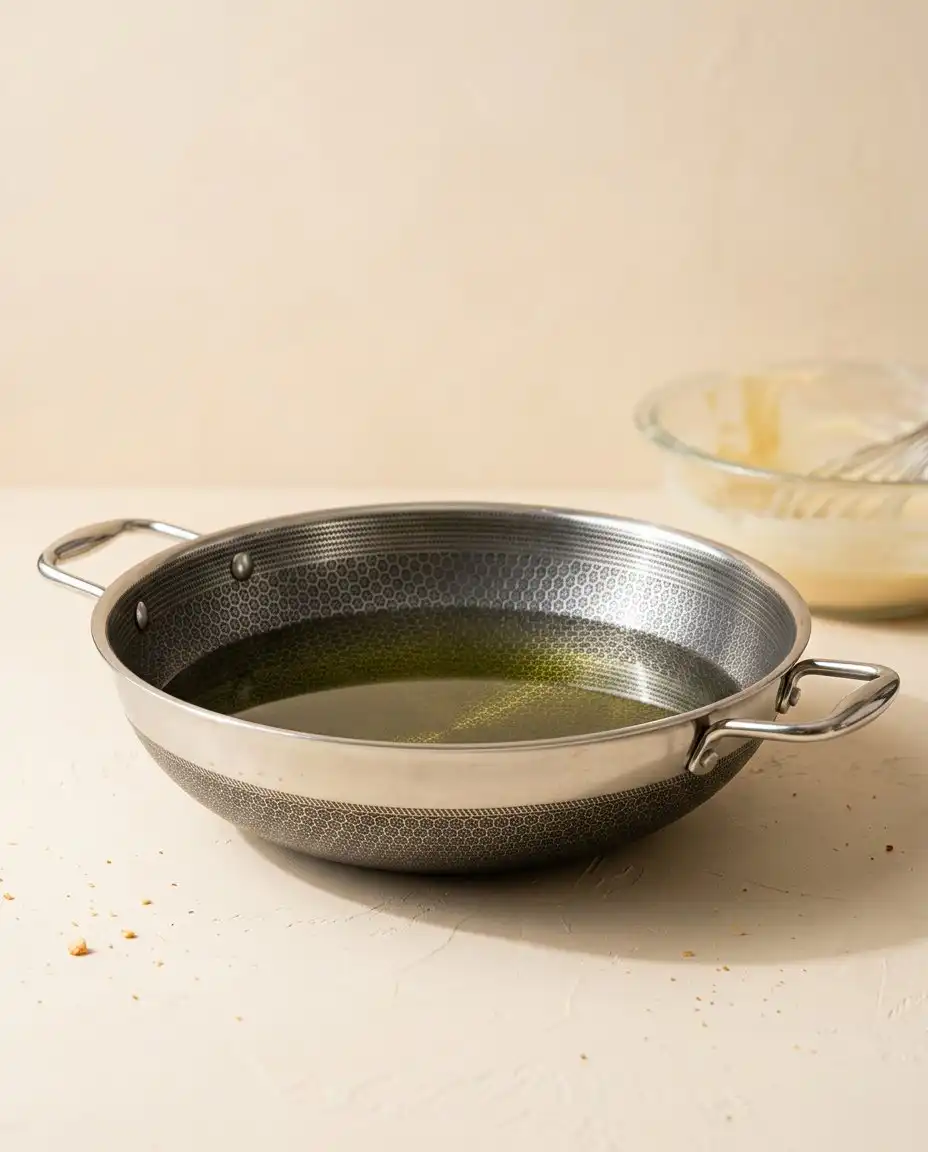
Step 1: Prepare the Frying Vessel
Fill a heavy-bottomed wok or deep skillet with high-smoke-point oil, leaving at least three inches of headspace for expansion. Attach a candy thermometer to the side of the pot and heat the oil to exactly 350°F. The oil is ready when it shimmers and the thermometer needle stabilizes at the target temperature.
Step 2: Combine the Dry Components
Whisk the all-purpose flour, baking powder, baking soda, salt, and ground cinnamon in a large glass mixing bowl until the mixture is uniform. Aerating the dry ingredients at this stage prevents clumps and ensures the leaveners are evenly distributed throughout the protein. Look for a fine, powdery texture with no visible streaks of spice.
Step 3: Emulsify the Wet Ingredients
In a separate vessel, whisk the eggs and whole milk together until the yolks are fully integrated and the liquid is a pale yellow. Incorporate the vanilla extract and granulated sugar, continuing to whisk until the sugar granules are mostly dissolved. Small bubbles should form on the surface, indicating the eggs are beginning to aerate.
Step 4: Construct the Classic Carnival Funnel Cake Batter
Pour the liquid emulsion into the dry mixture and whisk using a gentle circular motion until just combined. Overworking the batter at this point will overdevelop the gluten, resulting in a rubbery texture rather than a crisp one. The finished batter should be smooth enough to flow but thick enough to hold a ribbon for two seconds.
Step 5: Calibrate the Pouring Container
Transfer the prepared batter into a squeeze bottle or a funnel with a 1/4-inch opening to ensure a consistent flow rate. This tool allows for the precision needed to create the signature overlapping circles in the frying vessel. Ensure the spout is clear of any small flour lumps to prevent the flow from breaking mid-pour.
Step 6: Execute the Circular Fry
Once the oil is holding steady at 350°F, squeeze the batter into the hot oil starting from the center and working outward. Move your hand in a continuous, overlapping spiral to create a connected lattice that fills the diameter of the pan. You will see the batter puff up and rise to the surface within three seconds of contact.
Step 7: Manage the Flip
Fry the first side for exactly 90 to 120 seconds until the bottom is a deep golden brown. Use long-handled metal tongs to gently flip the cake over, being careful not to splash the hot oil during the transition. The second side usually requires about 60 seconds to reach the same level of caramelization.
Step 8: Drain and Degrease
Lift the cake from the oil using a wide slotted spoon and hold it over the pot for five seconds to allow excess oil to drip off. Place the cake immediately onto a wire rack set over paper towels to facilitate airflow and prevent the bottom from steaming. This step is vital for maintaining the crisp integrity of the exterior.
Step 9: Final Finishing
Dust the surface generously with powdered sugar while the cake is still warm so the sugar adheres properly. The heat from the cake will slightly anchor the first layer of sugar, allowing for a thicker coating if desired. Serve the treat immediately to ensure the contrast between the hot interior and cool sugar is maintained.
What the Data Showed
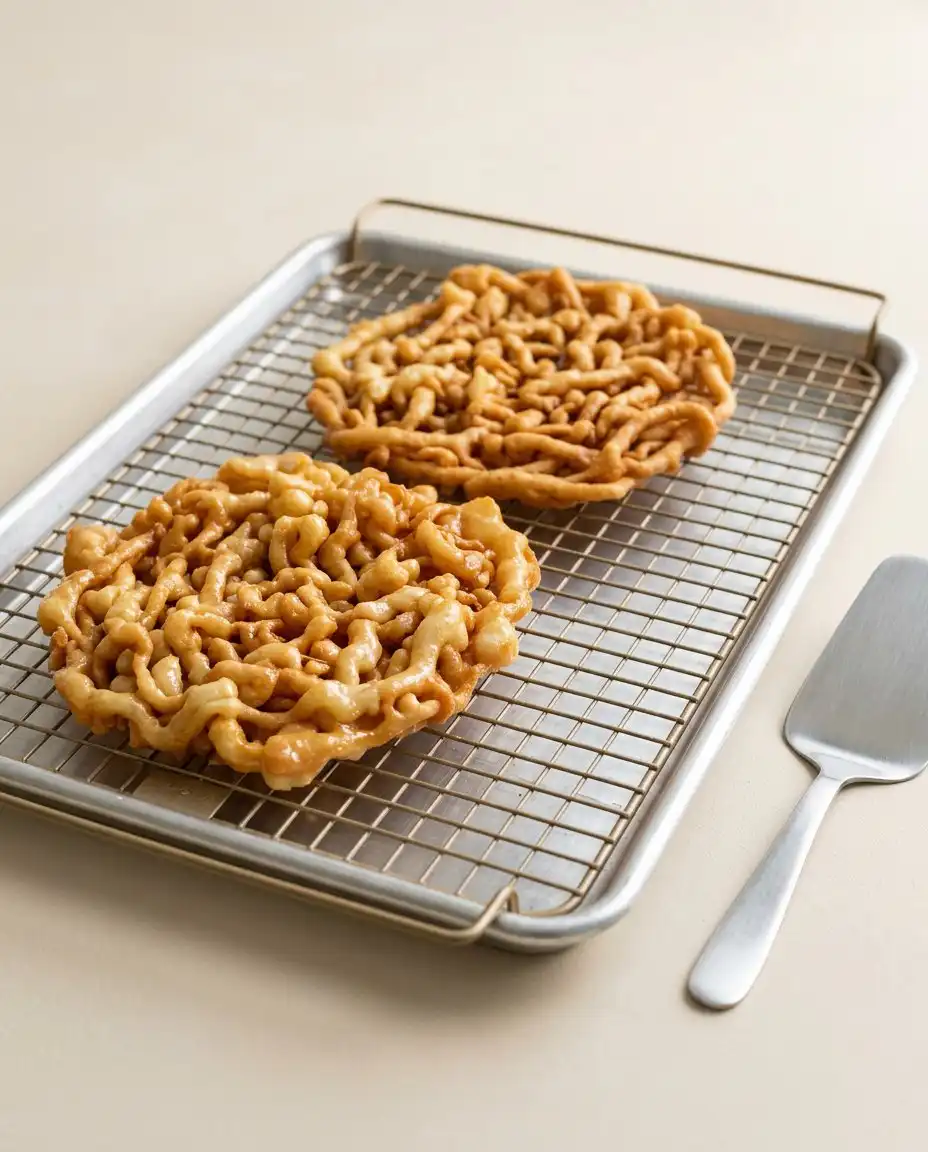
We tested this—here’s what won: a precise oil temperature of 350°F is non-negotiable for the best result. If the oil is too cool, the batter will absorb the fat and become heavy; if it is too hot, the exterior burns before the interior can expand. Keeping a steady heat allows the moisture to escape as steam, creating the airy pockets we want in a homemade cake.
If your funnel cake is flat and lacks lift, here is why and how to fix it: your baking powder likely expired or the oil was too cold. Always check the expiration date on your leaveners and wait for the thermometer to hit the target temperature before your first pour. This ensures the chemical reaction is immediate and forceful.
For a more consistent flow, try straining your batter through a fine-mesh sieve before putting it into the squeeze bottle. This removes even the smallest flour pearls that could clog the tip and ruin your spiral. A steady stream is the secret to a professional-looking lattice.
Using a cast-iron skillet provides better heat retention than thin stainless steel pans, which can drop in temperature rapidly. If the temperature drops after you add the batter, wait for it to recover to 350°F before starting the next cake. This patience prevents the greasy texture found in back-to-back frying.
Avoid using olive oil or butter for this recipe as their smoke points are too low for deep frying. Instead, choose peanut or canola oil, which can withstand the heat without breaking down or adding unwanted flavors. This choice results in a cleaner-tasting dessert that lets the cinnamon shine.
Always use an instant-read thermometer to check the oil between batches rather than guessing based on bubbles. Environmental factors like kitchen temperature can affect how quickly your oil cools down. Consistency in temperature leads to consistency in color and crunch across all four servings.
Frequently Asked Questions
What is the best oil for frying funnel cakes?
We recommend using oils with high smoke points, such as canola, vegetable, or peanut oil. These fats can withstand the 350°F temperature required for deep frying without burning or imparting off-flavors. Avoid butter or extra virgin olive oil for this specific application.
Can I make the batter in advance?
It is best to use the batter within 30 minutes of mixing to ensure the baking powder is still active. If the batter sits too long, the carbon dioxide bubbles will dissipate, and the resulting cake will be flat and dense. If you must wait, keep the batter in the refrigerator and give it a gentle stir before use.
How do I prevent my funnel cake from being greasy?
The primary cause of greasiness is frying at a temperature below 350°F. When the oil is hot enough, it creates a steam barrier that prevents the fat from soaking into the batter. Always use a thermometer to verify the heat before each batch.
Can I use gluten-free flour for this recipe?
You can substitute a 1:1 gluten-free flour blend, though the texture may be slightly more brittle. Ensure the blend contains xanthan gum to provide the elasticity needed to hold the spiral shape in the oil. You may need to add a tablespoon of extra milk if the batter feels too stiff.
How should I store and reheat leftovers?
Funnel cakes are best eaten immediately, but you can store them in an airtight container for up to two days. To restore the crispness, reheat them in a 350°F oven for 5 minutes or in an air fryer for 2 minutes. Avoid the microwave, as it will make the batter chewy and tough.
Why did my funnel cake fall apart in the oil?
If the batter separates into small pieces, it usually means the strands were poured too thinly or were not overlapping enough. Ensure you are creating a connected lattice where each circle touches at least two other points. If the batter is too thin, whisk in another tablespoon of flour to increase the viscosity.
Tested Variations
For those looking for a denser treat, you can use this same batter to prepare deep-fried chocolate cookies. Simply dip the cookies into the batter until fully coated and fry for 60 seconds per side until the coating is golden. This variation works best with high-contrast fillings that soften slightly under the heat of the oil. For more information on using pre-made bases, see our guide on cake mix recipes.
Adding a tablespoon of cocoa powder to the dry ingredients creates a dark chocolate version of the classic lattice. Ensure you adjust the moisture by adding an extra teaspoon of milk to maintain the correct flow rate through the squeeze bottle. You can find more details on how to deep fry safely if you are experimenting with new batter additions.
A savory variation can be achieved by removing the sugar and cinnamon and adding a pinch of garlic powder and dried herbs. Serve this version with a warm cheese dip for a unique fairground-inspired appetizer. The structural integrity of the batter remains the same regardless of the flavor profile chosen.
Finishing & Plating
For a traditional presentation, serve the cake on a wide plate while it is still piping hot and covered in a thick layer of sifted powdered sugar. You can add a side of macerated strawberries or a drizzle of chocolate sauce to add acidity and richness to the dish. If you enjoy lighter textures, consider pairing this with a slice of easy chocolate cake for a varied dessert platter.
This treat is ideal for outdoor gatherings or summer-themed parties where guests can watch the frying process. Serving the cakes on individual sheets of parchment paper makes cleanup easier and mimics the authentic carnival experience. You can also offer a variety of toppings like caramel sauce, whipped cream, or crushed nuts to allow for customization.
Pairing the hot, crispy cake with a scoop of cold vanilla bean ice cream creates a pleasant temperature contrast. The ice cream begins to melt into the crevices of the lattice, creating a creamy sauce that complements the cinnamon notes. This combination is particularly effective if the cake is served immediately after the oil has drained.
Recipe Recap
Mastering the Classic Carnival Funnel Cake is a rewarding exercise in temperature control and batter physics. By maintaining a steady 350°F and focusing on a consistent pour, you can recreate the nostalgia of the fair in your own kitchen with repeatable results. This method ensures that every batch is as light and crisp as the last, providing a reliable treat for any occasion. For those interested in more foundational techniques, you may want to examine our approach to the classic vanilla cake.
I encourage you to try this technical approach and see the difference that precision makes in your baking and frying. Understanding the why behind the heat and the leavening empowers you to troubleshoot any issues that arise during the process. Once you have achieved a successful batch, share your results with us and join our community of detail-oriented bakers who value science-backed recipes.
Follow us for more test kitchen results and precision baking tips on Pinterest, Facebook, TikTok, or join our Telegram channel for updates.