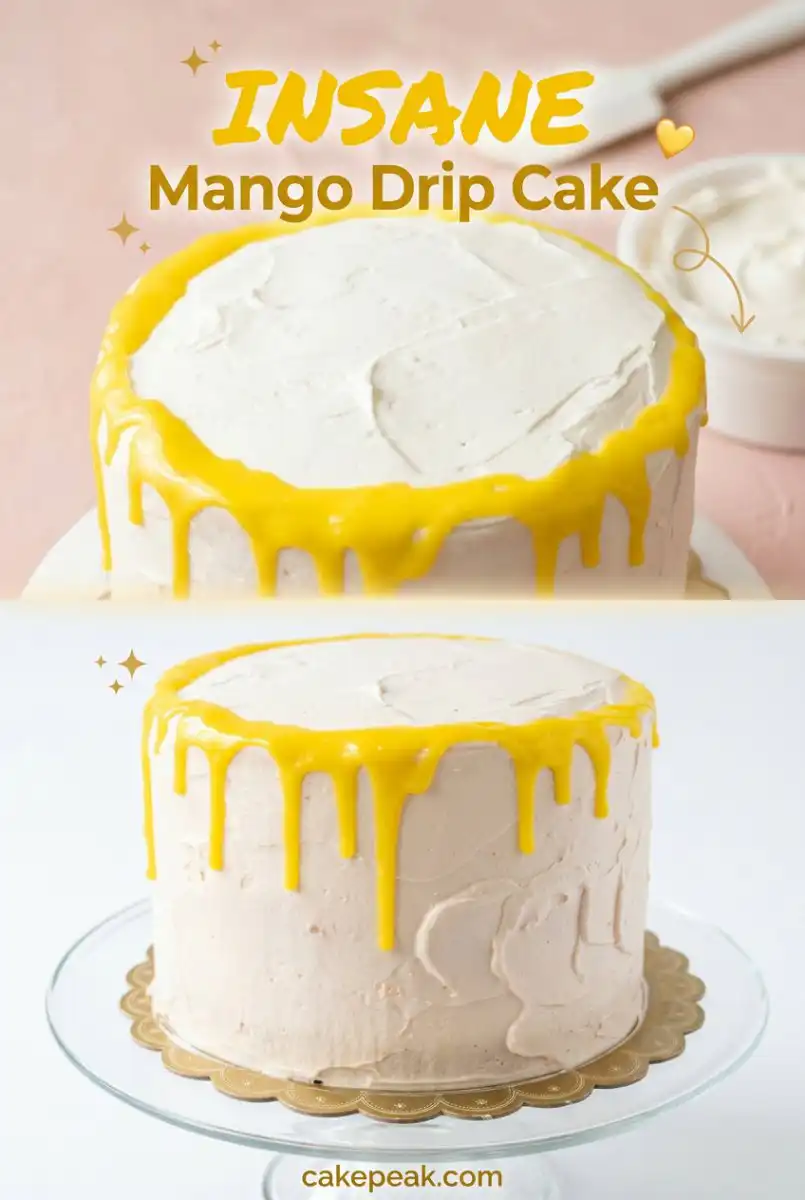
A golden glaze catches the morning light, trailing down sides of cream like sunbeams over a summer orchard fence.

This Mango Drip Cake celebrates the peak of harvest with honest textures and unhurried preparation. The sponge remains light and humble, providing a quiet base for the bright, honey-like sweetness of Alphonso fruit. It is a bake that rewards patience, from the slow whipping of eggs to the final, rustic drip.
The Beauty of This Mango Drip Cake Bake
Prep: 60 min · Serves: 12 · Difficulty: Medium
- Bright seasonal fruit at its peak
- Honest sponge with a light crumb
- Hand-poured glaze adds rustic charm
- Creamy layers for a soft finish
- Wholesome ingredients from the market
This cake is the quiet centerpiece of every late August gathering, much like a classic cake with fruit found on a farmhouse table.
Get The Full Cake Recipe
Print
Mango Drip Cake
- Total Time: 1 hour 30 mins
- Yield: 12 servings
Description
This elegant Mango Drip Cake features a light, airy sponge filled with fresh Alphonso mango cream and topped with a luscious fruit-infused glaze. It is the perfect centerpiece for summer gatherings, balancing wholesome textures with the vibrant, honey-like sweetness of seasonal fruit.
Ingredients
- Alphonso mangoes
- Large farm-fresh eggs
- Heavy whipping cream
- White baking chocolate
- Corn starch
- All-purpose flour
- Sugar
- Vanilla extract
- Baking powder
- Gelatin
- Powdered sugar
Instructions
- Prepare the pan. Grease only the base of a nine-inch springform pan and line with parchment paper, leaving the sides ungreased.
- Foam the eggs. Beat room-temperature eggs with a splash of hot water in a bowl on high speed until foamy.
- Whisk to ribbon. Gradually add sugar and vanilla while whisking for twelve minutes until the mixture reaches the ribbon stage.
- Fold ingredients. Sift flour, corn starch, and baking powder together, then gently fold into the egg mixture in three batches using a spatula.
- Bake the cake. Transfer to the prepared pan and bake at 350 degrees F for twenty-five to thirty minutes until golden.
- Cool and slice. Cool the cake on a wire rack, then use a sharp knife to carefully saw the sponge into three even layers.
- Prepare the cream. Whip heavy cream with powdered sugar and vanilla until soft peaks form, then fold in chopped mango chunks.
- Assemble the layers. Stack the cake layers by spreading mango puree and mango-flecked cream between each layer, then frost the outside.
- Create the drip. Warm mango puree with white chocolate and gelatin, then drizzle over the edges of the chilled cake.
- Add final decorations. Pipe small mounds of whipped cream around the top perimeter and finish with fresh mango balls.
Notes
- Ensure all dairy and mixing equipment are thoroughly chilled before whipping the cream for maximum stability.
- Use room temperature eggs to guarantee the sponge reaches its full, airy potential during the whisking phase.
- Test the mango glaze consistency on the side of a cold glass before drizzling to ensure the perfect drip length.
- Keep the assembled cake in a cool environment until serving to maintain the integrity of the whipped cream filling.
- Prep Time: 60 mins
- Cook Time: 30 mins
- Category: Dessert
- Method: Baking
- Cuisine: Contemporary
Seasonal Ingredient List
Wholesome baking begins with ingredients that speak for themselves without needing ornamentation or heavy masking. We look for heavy, fragrant mangoes that feel soft to the touch and eggs with deep orange yolks that suggest a life spent in the sun. This list reflects the honest bounty of the summer kitchen.
- Alphonso Mangoes: These provide a deep, honey-like flavor and a smooth texture that defines the filling.
- Farm-Fresh Eggs: Used at room temperature, they provide the entire structure and lift for our sponge.
- Heavy Whipping Cream: This must be chilled to create the stable, pillowy clouds that hold the fruit.
- White Baking Chocolate: When melted into the puree, it creates a glaze that holds its shape beautifully.
- Corn Starch: A small amount added to the flour ensures the crumb remains tender and light.
- Gelatin: This humble ingredient provides the necessary stability for a clean, professional drip.
| Ingredient | Why It Matters |
|---|---|
| Alphonso Mango | Provides the signature golden color and intense sweetness |
| Large Eggs | Creates a natural, airy lift without heavy chemical leaveners |
| Heavy Cream | Offers a rich, clean mouthfeel that balances the fruit acid |
| White Chocolate | Adds enough body to the mango glaze to create perfect drips |
| Gelatin | Functions as a stabilizer to keep the cake tall and steady |
The Method, Step by Step
Step 1: Prepare the Springform Pan
Begin by greasing only the base of a nine-inch springform pan with a light coating of neutral oil. Press a circle of parchment paper firmly over the bottom to ensure the delicate sponge releases without a struggle. Leave the sides of the pan ungreased so the batter can climb the walls as it rises, creating a tall and even cake.
Step 2: Begin the Egg Foam
Place your room-temperature eggs into a clean enamel or glass bowl and add a splash of hot water. Using the whisk attachment, beat the eggs on high speed for at least one minute until they become foamy and pale. This initial burst of air is the foundation of the cake’s height and lightness.
Step 3: Reach the Ribbon Stage
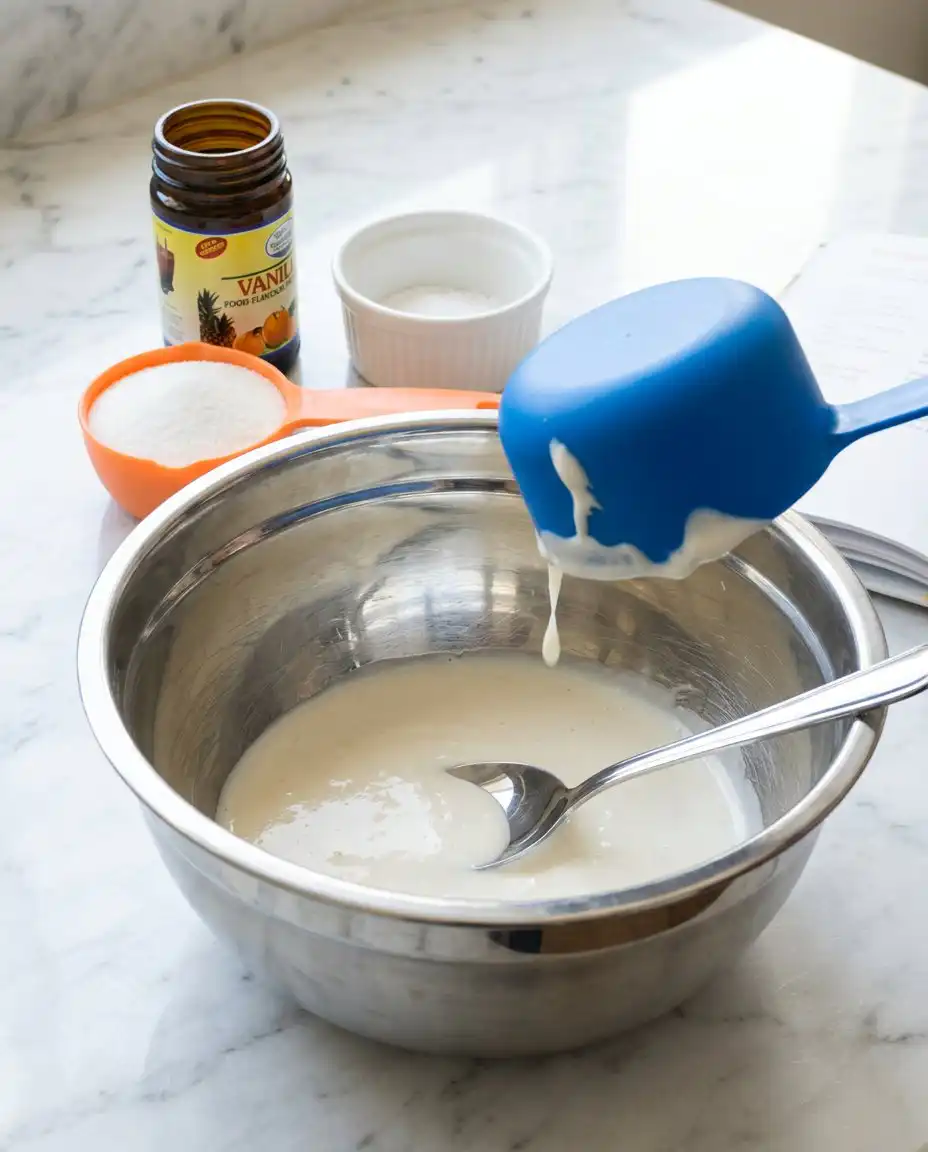
Gradually stream in the sugar and vanilla while continuing to whisk at the highest speed for up to twelve minutes. You are looking for the ribbon stage, where the mixture is thick and pale enough to hold a shape for several seconds. When you lift the whisk, the batter should fall in a slow, heavy trail that rests on the surface before slowly disappearing.
Step 4: Fold the Dry Ingredients
Sift the flour, corn starch, and baking powder together before adding them to the egg mixture in three careful batches. Use a wide spatula to fold the flour in with a slow, circular motion, scraping the bottom of the bowl to find hidden pockets. This gentle hand ensures you do not deflate the precious air you worked so hard to incorporate.
Step 5: Bake Your Mango Drip Cake to Gold
Transfer the airy batter into your prepared pan and place it in the center of a preheated oven at 350 degrees F. Bake for twenty-five to thirty minutes until the surface is golden and springs back when pressed lightly with your palm. Avoid opening the oven door too early, as the sudden change in temperature can cause the center to dip.
Step 6: Cool and Slice the Layers
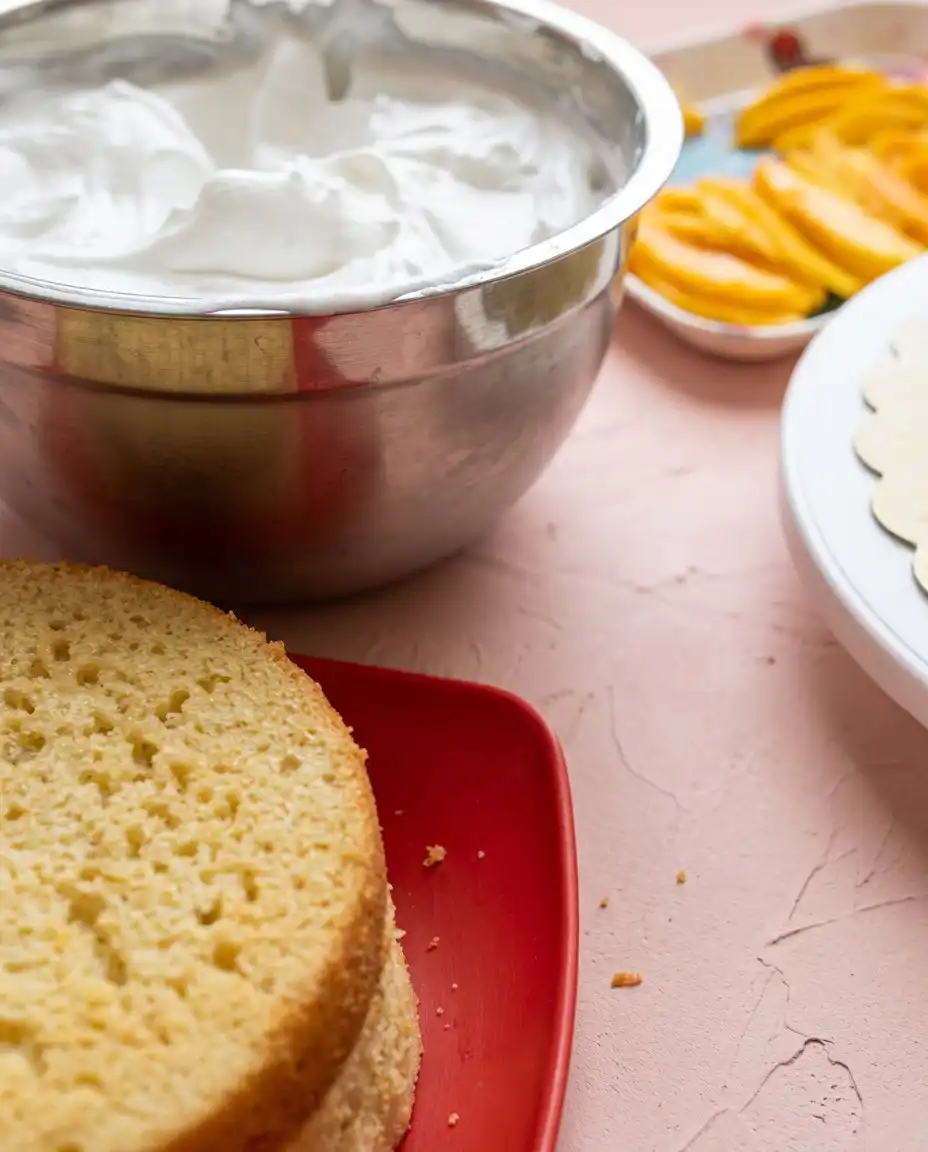
Let the cake rest on a wire rack for a few minutes before running a thin spatula around the edges to loosen the sponge. Once completely cool, use a long, sharp knife to saw through the cake to create three even layers. Marking the edges first with a small knife helps keep your path straight and your layers uniform in thickness.
Step 7: Prepare the Mango Cream
While the sponge rests, whip the chilled heavy cream until soft peaks appear, then add the powdered sugar and vanilla. Gently fold in two cups of freshly chopped mango chunks into a portion of the cream to create the filling. This mixture should look thick and studded with fruit, ready to be sandwiched between the golden sponge layers.
Step 8: Assemble the Foundation
Place the sturdiest layer of cake on your stand and spread a thin coating of mango puree followed by the fruit-flecked cream. Repeat this process with the second layer, making sure the cake stays level and centered. Top with the final sponge layer and use an offset spatula to smooth the remaining white cream over the top and sides.
Step 9: Craft the Rustic Drip
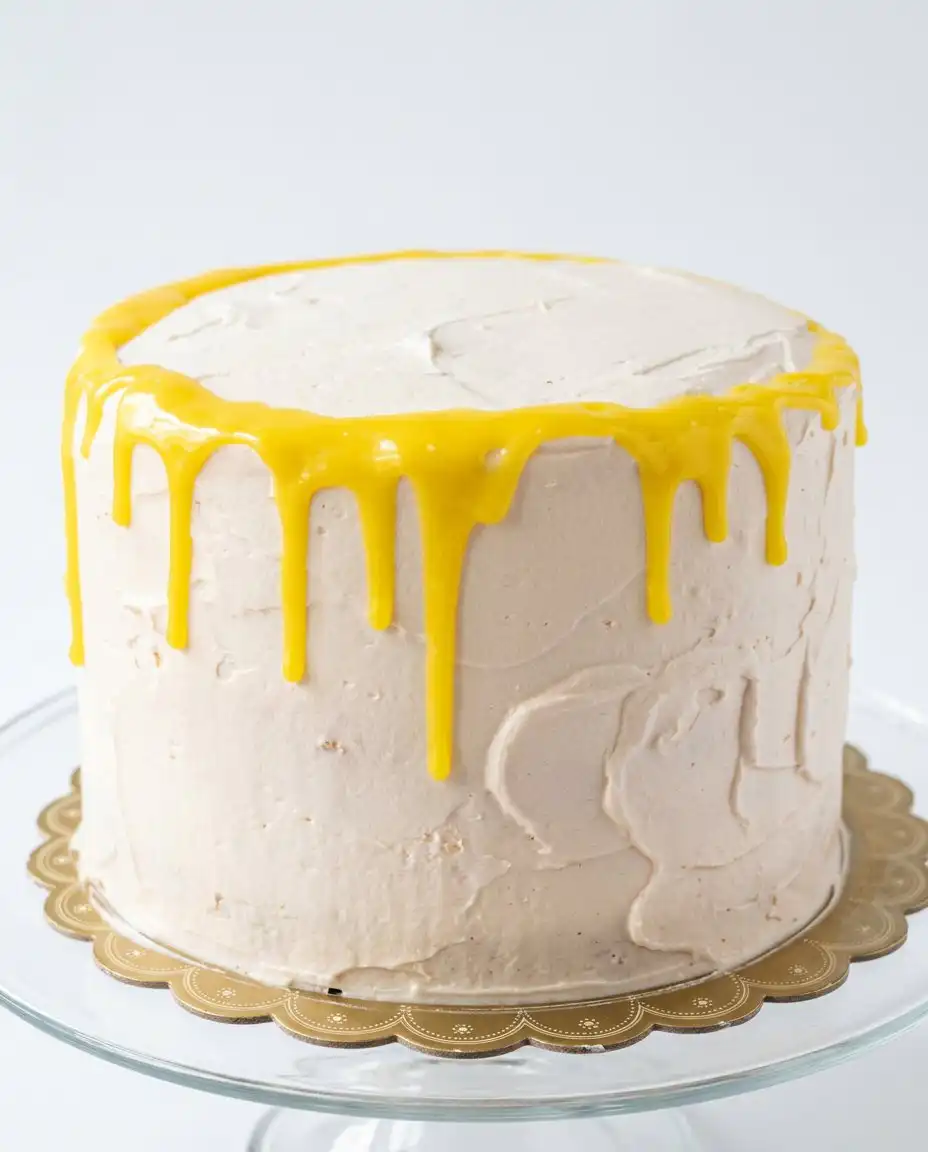
Warm the remaining puree and stir in the gelatin and white chocolate until the mixture is smooth and slightly thickened. Using a small bottle or a spoon, let the glaze fall over the edges of the cold cake in random, uneven trails. These drips should vary in length, catching the light as they set quickly against the chilled cream.
Step 10: Final Fruit Flourish
Finish the cake by piping small mounds of whipped cream around the top perimeter to act as nests for the fruit. Place a hand-scooped mango ball in the center of each cream puff for a touch of seasonal elegance. Keep the cake in a cool place until the moment you gather everyone at the table to slice into it.
Notes From the Kitchen
Always use mangoes that are fully ripe but still firm enough to hold their shape when sliced. If the fruit is too mushy, it will release excess moisture into the cream and cause the layers to slide. I find that fresh fruit baking requires a careful eye on the fruit’s water content to maintain the cake’s structure.
Temperature is the most important factor when working with heavy whipping cream in a warm kitchen. Place your mixing bowl and whisk in the freezer for fifteen minutes before you begin to help the fat molecules stay stable. If your cream turns grainy, it has been over-whipped; fold in a splash of liquid cream to smooth it back out.
When preparing the sponge, the eggs must be at room temperature to achieve the maximum volume. Cold eggs will not trap air as effectively, resulting in a cake that is dense rather than light and airy. If you forget to take them out of the refrigerator, let them sit in a bowl of warm water for ten minutes.
If your mango drip is too thin and runs all the way to the bottom of the stand, the glaze was likely too warm. Let the mixture sit on the counter for a few minutes to thicken further before you continue the process. You can learn more about how to achieve a stable mango cake texture by understanding the balance of fruit solids and binders.
The ribbon stage is a non-negotiable part of the process that requires patience and a steady hand. Do not rush this step, as the stability of the entire cake depends on the strength of the egg foam. Use a timer to ensure you whisk for the full duration, even if the mixture looks ready after five minutes.
For a cleaner finish on the sides, use a metal spatula that has been dipped in hot water and wiped dry. The warmth of the metal helps to melt the surface of the cream slightly, creating a smooth and polished look. This technique is particularly helpful if you find the cream is dragging or looking rough as you work.
Frequently Asked Questions
What is drip cake made of?
A drip cake consists of a layered sponge, a stable frosting like whipped cream or buttercream, and a pourable glaze. In this specific recipe, we use a mixture of mango puree, white chocolate, and gelatin to create the golden trails. The glaze must be at the correct temperature to flow slowly without melting the cream underneath.
How to bake a drip cake?
Baking a drip cake involves creating even layers of sponge that are cooled and leveled before assembly. The cake is then covered in a smooth layer of frosting and chilled thoroughly to provide a cold surface for the drip. Finally, the glaze is applied to the edges using a piping bag or spoon to create controlled drips.
How to make a mango cake?
To make this mango cake, you combine a light sponge with fresh mango chunks and a stabilized whipped cream filling. The key is to use high-quality Alphonso mangoes for both the filling and the decorative glaze on top. Each layer is carefully stacked to ensure the fruit stays centered and the cake remains tall.
What kind of mango is best for cake?
The Alphonso mango is widely considered the best choice because of its intense sweetness and lack of fibrous texture. If those are not available, look for Honey or Ataulfo mangoes at your local market. These varieties offer the smooth, buttery consistency needed for a clean puree and a tender filling.
Can I make this cake ahead of time?
You can bake the sponge layers a day in advance as long as you keep them wrapped tightly in parchment and stored at room temperature. However, the whipped cream should be prepared and the cake assembled on the day you plan to serve it. This keeps the cream fresh and prevents the sponge from becoming overly moist from the fruit.
How should I store leftovers of this cake?
Any remaining slices should be kept in an airtight container in the refrigerator to keep the dairy stable. The cake will maintain its flavor and texture for three to four days, though the cream may begin to lose its volume over time. Avoid freezing the assembled cake, as the fresh mango and cream will not thaw well.
Ways to Adapt It
If the market is short on mangoes, you might consider a strawberry vanilla cake which follows a similar assembly method. The soft berries provide a different kind of sweetness that pairs just as beautifully with the light sponge and whipped cream. You can use a strawberry reduction in place of the mango puree for the signature drip decoration.
For those who enjoy a hint of spice, a teaspoon of ground cardamom added to the dry ingredients provides a warm, floral note. Cardamom is a natural companion to mango and adds an earthy depth to the wholesome sponge. This small change transforms the profile of the cake without altering the fundamental texture or baking time.
In the cooler months, you can swap the fresh mango for a thick passion fruit curd to create a sharper, more acidic flavor. The bright yellow color remains the same, but the tartness offers a refreshing contrast to the rich heavy cream. This version works well when you want a tropical feel but cannot find the perfect Alphonso mangoes at the market.
Serving It Simply
This cake deserves a setting that matches its honest, rustic charm. I prefer to serve it on a plain white plate or a wooden board, allowing the golden mango drips to be the focal point of the table. A linen tea towel and a few sprigs of fresh mint nearby add to the farmhouse aesthetic without feeling forced. Much like a lemon drizzle cake, it is best enjoyed in the afternoon when the sun is low and the pace of the day has slowed.
When slicing the cake, use a long knife dipped in hot water to ensure clean cuts through the cream and fruit layers. Wipe the blade after every slice to keep the white cream from mixing with the golden mango glaze on the surface. This care in serving honors the time spent at the counter preparing the bake. It pairs wonderfully with a cup of light herbal tea or a cold glass of milk for a wholesome snack.
The Quiet Goodbye
There is a special kind of satisfaction that comes from bringing a cake like this to the table. It is not about the perfection of the decoration, but the quality of the fruit and the care put into the sponge. As the season turns, we look for ways to hold onto the warmth of the sun, and a slice of this mango-filled treasure does exactly that. Whether you are celebrating a late summer birthday or a simple Saturday, I hope this recipe finds a place in your kitchen.
If you find yourself with an abundance of stone fruit later in the year, you might also enjoy making a rustic peach cake as the weather begins to cool. There is always room for another seasonal bake on the counter and another story to tell through ingredients. Please share your results with our community and let us know how your mangoes tasted this year.