Letting good ingredients lead is the quiet secret of every true farmhouse baker.

There is a deep, quiet satisfaction in watching a warm skillet cake emerge from a farmhouse oven in the late afternoon. This Cast Iron Skillet Pineapple Upside Down Cake relies on honest, reliable ingredients that work in perfect harmony without any need for fussy decoration. The heavy iron pan coaxes the brown sugar and cultured butter into a deep, bubbly caramel glaze that beautifully coats the golden fruit. It is a sweet, dense dessert that belongs on a plain wooden counter by an open window, ready to be sliced and shared with family.
The Beauty of This Cast Iron Skillet Pineapple Upside Down Cake
Prep: 15 min · Serves: 8 · Difficulty: Easy
- Rich, caramelized edges from heavy iron
- Moist, tender crumb that holds its shape
- Simple pantry staples you already have
- No fussy decorating or frosting required
- A timeless dessert everyone gathers around
When you want an honest dessert that speaks of seasonal warmth, this cake stands ready. It delivers a rich, buttery flavor similar to our classic peach upside down cake but with a bright tropical note that recalls sunny late-summer days. The heavy iron pan distributes the heat so evenly that every single corner of the cake develops a beautiful golden chew.
Baking in cast iron is a time-honored tradition passed down through generations of home bakers who appreciate reliable tools. It requires no special parchment paper liners, delicate springform pans, or elaborate decorating equipment. You merely melt your butter, sprinkle your sugar, arrange your fruit, and pour the comforting batter over the top. This direct contact with the hot metal is what creates the coveted crackled edges and deep caramelization.
There is no need to worry about a perfect finish here, because the rustic character is exactly what makes it beautiful. The slight unevenness of the fruit and the occasional crack in the crumb are honest features of a hand-crafted bake. It is the kind of cake that looks best served on a plain white plate on a wooden table. This reliable kitchen classic will become your favorite late summer baking ritual.
Get The Full Cake Recipe
Print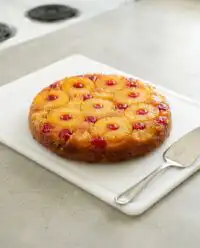
Cast Iron Skillet Pineapple Upside Down Cake
- Total Time: 1 hour 30 mins
- Yield: 8 servings
- Diet: Vegetarian
Description
This classic, rustic pineapple upside down cake is baked in a seasoned cast iron skillet to achieve perfectly caramelized edges and a tender, moist crumb. It is a timeless farmhouse dessert that relies on simple, honest ingredients and creates a stunning, golden fruit pattern without any complex decorating techniques.
Ingredients
- 1/2 cup unsalted butter, softened
- 1/2 cup unsalted butter, for the topping
- 1 cup brown sugar, packed
- 1/2 cup brown sugar, for the topping
- 1/2 cup sour cream
- 1/4 cup whole milk
- 1 large egg, room temperature
- 1 teaspoon vanilla extract
- 1/4 cup reserved pineapple juice
- 1 1/2 cups all-purpose flour
- 1 teaspoon baking powder
- 1/2 teaspoon baking soda
- 1/4 teaspoon salt
- 1 can pineapple rings, drained and patted dry
- Maraschino cherries
Instructions
- Preheat the oven. Position your oven rack in the center and preheat to 350°F.
- Combine wet ingredients. Whisk softened butter and sugar until smooth, then incorporate sour cream, milk, egg, vanilla, and pineapple juice until smooth.
- Fold in dry. Sift flour, baking powder, baking soda, and salt, then gently fold into the wet mixture until just combined.
- Prepare the fruit. Blot pineapple rings and cherries on paper towels to remove excess moisture.
- Melt base ingredients. Melt 1/4 cup butter in a 10-inch cast iron skillet over low heat, then sprinkle 1/2 cup brown sugar evenly over the top.
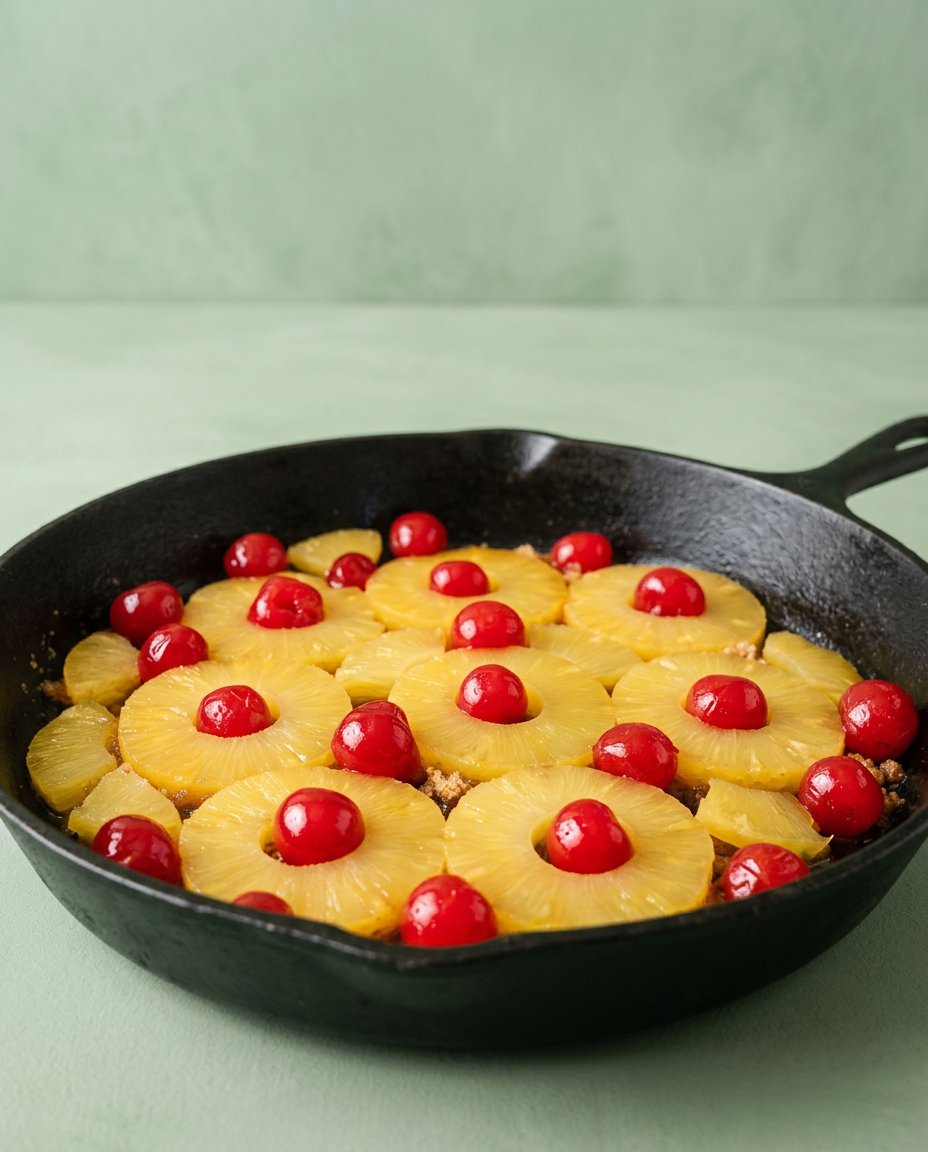
- Arrange the fruit. Place pineapple rings in the skillet and nestle maraschino cherries in the center of each ring and in the gaps.
- Add the batter. Pour the cake batter over the fruit and smooth the surface evenly to the edges.
- Bake the cake. Bake at 350°F for 40 to 45 minutes until the top is golden brown and a toothpick inserted into the center comes out clean.
- Cool before inverting. Let the cake rest in the skillet on a wire rack for 20 to 30 minutes to allow the caramel to set.
- Flip and serve. Invert the skillet onto a large serving plate in one swift motion and gently lift the pan to reveal the fruit.
Notes
- Ensure your cast iron skillet is well-seasoned to prevent the fruit from sticking during the bake.
- Blotting the fruit thoroughly on paper towels is the secret to preventing a soggy caramel layer.
- Always use full-fat sour cream to achieve the most tender and moist cake crumb.
- Wait exactly 20 to 30 minutes before flipping so the caramel is firm enough to release but warm enough to pour.
- Spoon-and-level your flour measurement to ensure the cake does not turn out dense or dry.
- Prep Time: 15 mins
- Cook Time: 45 mins
- Category: Dessert
- Method: Baking
- Cuisine: American
Honest Ingredients
The secret to a truly beautiful upside-down cake lies in the quality and physical state of your ingredients. We use simple, unhurried elements that allow the natural sweetness of the fruit to take center stage. When your butter is properly softened on the counter and your eggs are at room temperature, the batter comes together easily with a simple wooden spoon.
- Canned pineapple rings: These rings provide a consistent thickness and acidity that balances the sweet caramel topping.
- Maraschino cherries: Placed in the center of each ring, they add a nostalgic splash of crimson and vintage charm.
- Sour cream: This full-fat dairy ingredient provides deep moisture and a gentle acidity, making sure the cake crumb remains wonderfully soft, tender, and rich without becoming greasy.
- Pineapple juice: Reserved directly from the canned fruit, this bright liquid carries the tropical sweetness deep into the dry flour mixture.
- Unsalted butter: We melt high-quality cultured butter directly in the bottom of the pan to form the luxurious, bubbling base for our brown sugar glaze.
- Brown sugar: This sugar dissolves slowly into the melting butter, creating a thick, molasses-scented caramel that coats the pineapple slices as they bake.
- Farm-fresh egg: A large egg with a deep orange yolk provides structure and a rich golden color to the batter.
| Ingredient | Why It Matters |
|---|---|
| Pineapple Rings | Provide the sweet, juicy foundation of the caramelized topping |
| Sour Cream | Softens the gluten structure for a tender, moist crumb |
| Pineapple Juice | Infuses the batter with natural fruit acidity and aroma |
| Cast Iron Skillet | Retains heat to create crisp, dark golden edges |
Using the juice from the canned pineapple is a small but important detail. It avoids wasting any part of the fruit while binding the flavors together. Always measure your flour carefully using a spoon-and-level method so the cake does not become heavy.
The Method, Step by Step
Step 1: Prepare the Oven and Skillet
Position your oven rack in the center of the oven and preheat to 350°F. Place your seasoned ten-inch cast iron skillet on a wooden cutting board so it is ready for the baking process. Making sure the oven is fully preheated is crucial so the leavening agents react immediately when the batter hits the hot pan.
Step 2: Combine the Wet Batter Ingredients
In a large enamel bowl, bring together the softened unsalted butter and brown sugar. Whisk these together until they are smooth, then add the sour cream, whole milk, large room-temperature egg, vanilla extract, and reserved pineapple juice. Whisk steadily until the wet ingredients form a completely smooth, pale yellow liquid with no lumps of butter remaining.
Step 3: Fold in the Dry Ingredients
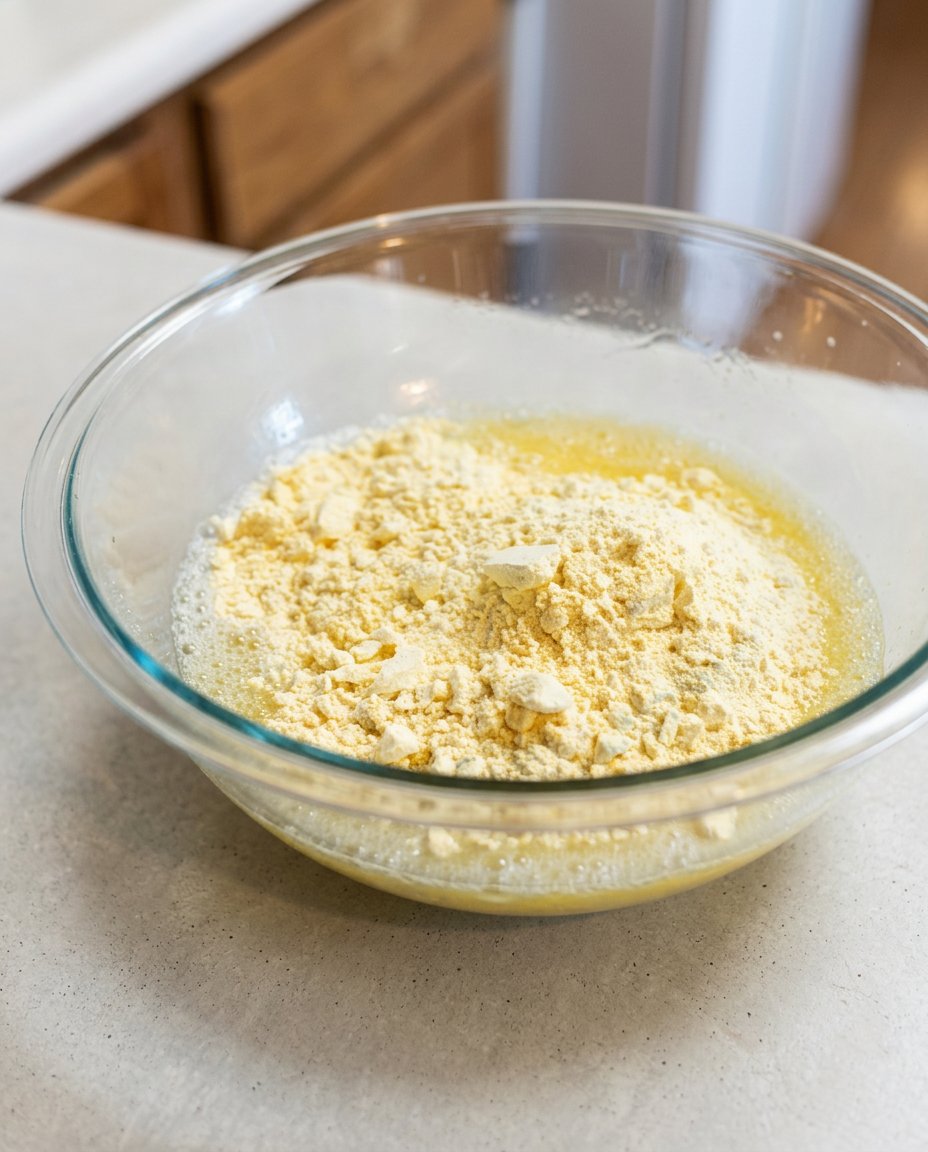
Sift the all-purpose flour, baking powder, baking soda, and salt directly over your bowl of wet ingredients. Use a sturdy wooden spoon or a rubber spatula to gently fold the mixture together from the bottom of the bowl. Stop mixing the very moment the dry pockets of flour disappear, leaving you with a thick, velvety batter that holds its shape.
Step 4: Dry the Canned Fruit Thoroughly
Spread your pineapple rings and bright maraschino cherries onto a clean, dry linen tea towel on your counter. Use a clean paper towel to press down gently on each piece of fruit, absorbing any excess juices. Removing this moisture is a small but essential step that prevents your caramel glaze from becoming watery during baking.
Step 5: Melt the Topping Base in the Skillet
Place your cast iron skillet over low heat on the stovetop and melt the remaining quarter-cup of butter. As soon as the butter is fully melted and begins to foam, turn off the burner heat immediately to prevent burning. Sprinkle the half-cup of brown sugar evenly over the melted butter, allowing it to absorb the fat without stirring it.
Step 6: Arrange the Fruit Pattern
Lay the dry pineapple rings carefully onto the sugar-dusted skillet in a single, beautiful layer. Press a maraschino cherry firmly into the center of each pineapple ring and tuck the remaining cherries into the open spaces. The bright red cherries and golden pineapples should look snug and beautiful against the dark iron of the skillet.
Step 7: Pour the Batter for Your Cast Iron Skillet Pineapple Upside Down Cake
Spoon the thick cake batter gently over the arranged fruit slices, taking care not to slide them out of place. Use an offset spatula to smooth the surface of the batter evenly to the very edges of the skillet. The batter should completely cover the fruit layer, sealing it beneath a comforting and even layer of dough.
Step 8: Bake to a Golden Brown
Slide the heavy skillet into your preheated oven and bake at 350°F for forty to forty-five minutes. You will know it is done when the top is deeply golden brown and a toothpick inserted into the center of the cake comes out clean. The sweet scent of caramelized sugar and warm vanilla will fill your farmhouse kitchen.
Step 9: Cool the Cake Warm
Remove the pineapple upside down cake from the oven using sturdy mitts and set it on a wire cooling rack on your counter. Let the cake cool in the skillet for exactly twenty to thirty minutes before attempting to invert it. This crucial window allows the bubbling caramel to settle slightly while remaining warm enough to release clean.
Step 10: Invert with Confidence
Place a large, flat serving plate face down over the top of your warm cast iron skillet. Grasping both the plate and the skillet handles firmly, flip the assembly over in one swift, confident motion. Let the skillet sit inverted for a minute so the juices can run down, then gently lift the pan to reveal your masterpiece.
Small Things That Matter
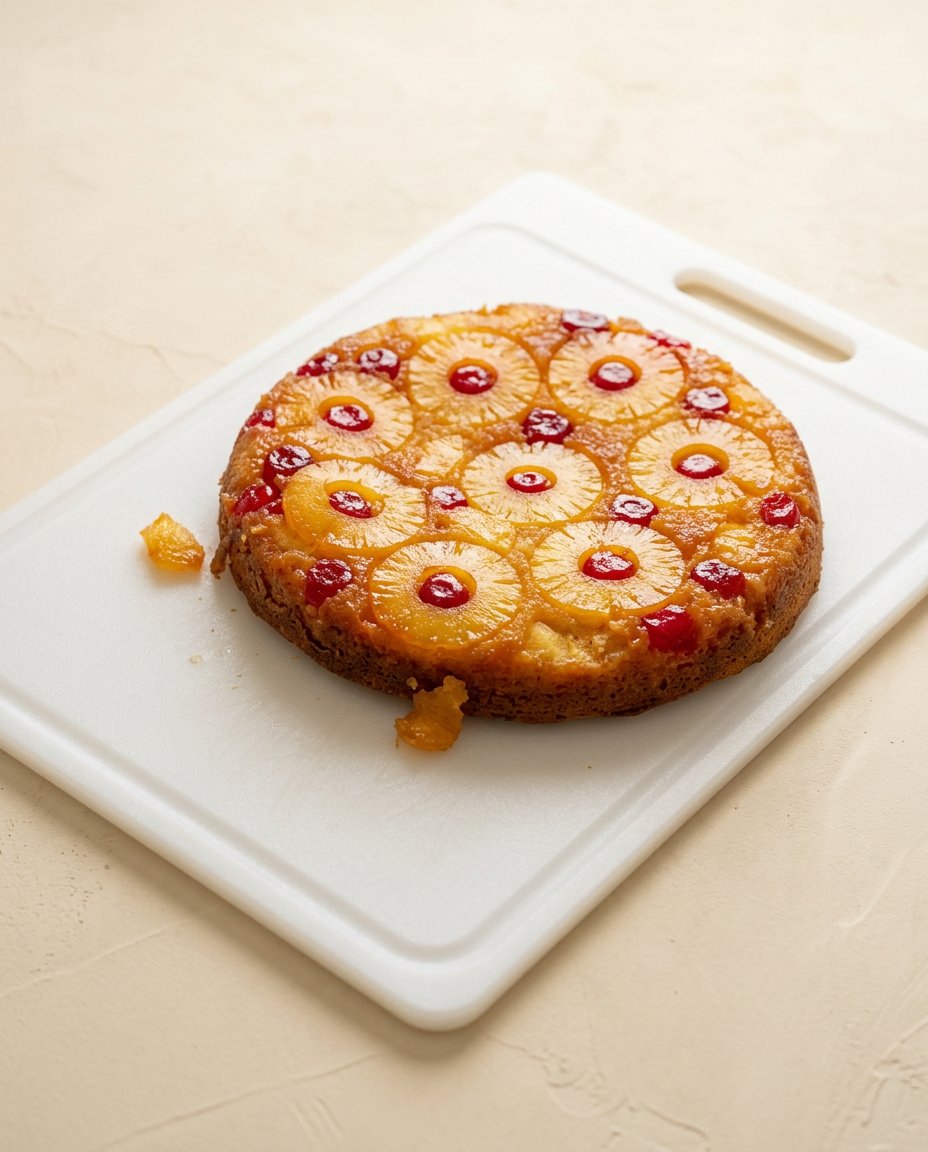
The state of your cast iron pan plays a major role in the success of the cake release. If your skillet is not well-seasoned, the sweet fruit is highly likely to stick to the bottom during the bake. To fix this, make sure your pan has a smooth, seasoned black finish, and rub a tiny drop of vegetable oil on the interior walls before melting your butter.
If your cake turns out dry and crumbly, you may have over-baked it or used milk with too little fat. Always use whole milk or two percent milk to provide the fat needed for a soft, creamy crumb. If this happens to your cake, brush a little extra pineapple juice over the warm slices before serving to restore moisture.
Do not let the baked cake cool completely in the skillet before inverting it onto a plate. As the sugar cools, it acts like glue and will lock the pineapples and cherries to the cast iron permanently. If you find this process intimidating, you can always practice with a classic pineapple upside down cake baked in a standard parchment-lined round cake tin.
A well-seasoned iron skillet is the best natural non-stick surface you can find. If you notice any dull or rough spots on your pan, it is time to re-season it in your oven with a thin layer of oil. You can study these expert guidelines on how to prevent sticking in cast iron to guarantee a clean release every single time you bake.
Substituting sour cream with Greek yogurt is an excellent option if you do not have sour cream in your refrigerator. Use full-fat plain Greek yogurt to maintain the correct fat content and acidity levels required for a tender texture. Avoid using flavored or non-fat yogurts, as they contain excess sugar and water that can ruin the delicate balance of the batter.
Measuring your flour by weight is the most accurate way to keep your cake from becoming dense and dry. If you do not have a kitchen scale, fluff your flour with a fork, spoon it gently into your measuring cup, and level it off with a flat knife. Never scoop directly from the bag, as this packs the flour tightly and adds too much starch.
Frequently Asked Questions
How do you get a pineapple upside-down cake out of a cast iron skillet?
The secret is to flip the cake while it is still warm, about twenty to thirty minutes after removing it from the oven. Place a flat serving platter over the top of the skillet, hold both firmly with heavy mitts, and invert them quickly in one confident motion. The warm caramel will flow down naturally, releasing the fruit from the seasoned iron without sticking or tearing.
Do you have to flip a skillet pineapple upside-down cake immediately?
No, you should never flip the cake immediately after taking it out of the hot oven. The boiling caramel topping needs about twenty minutes to cool slightly and thicken so it does not run off the sides of your plate. However, waiting longer than thirty minutes will cause the sugar to cool completely and stick permanently to the iron skillet.
How do you keep pineapples from sticking to the cast iron?
You must use a well-seasoned skillet and a generous amount of butter in the bottom of your pan. Ensuring the skillet is warm when you melt the butter and sprinkle the sugar also helps create a smooth barrier. Finally, drying the pineapple rings thoroughly before baking prevents watery steam from dissolving the protective caramel layer.
Can I use a boxed cake mix for a skillet pineapple upside-down cake?
While you can use a boxed yellow cake mix, a homemade scratch batter provides a much sturdier structure. Boxed mixes are often too light and airy to support the heavy weight of the pineapple rings and caramelized topping. Our farmhouse recipe provides a dense, moist cake that holds together beautifully when sliced and served.
What size skillet is best for a pineapple upside-down cake?
A standard ten-inch cast iron skillet is the ideal size for this specific recipe. It holds the seven or eight pineapple rings beautifully in a single layer with a cherry in the center of each ring. A larger twelve-inch skillet will make the cake too thin and dry, while a smaller nine-inch pan may overflow in your oven.
Can I use fresh pineapple instead of canned pineapple?
Yes, fresh pineapple works beautifully if it is fully ripe and sliced to a uniform quarter-inch thickness. You will need to remove the tough core from each slice before placing them in the skillet. Keep in mind that fresh pineapple is less sweet and slightly more fibrous than canned versions, so your final bake may have a firmer bite.
Make It Your Own
For an elegant autumn twist, swap the pineapples and cherries for thin slices of ripe autumn pears and fresh cranberries. Sprinkle a generous pinch of ground cinnamon and a dash of ground ginger over the brown sugar before arranging your fruit. The tartness of the cranberries balances the rich caramel beautifully as it bakes in the heavy iron pan.
Introduce fresh summer stone fruits when they are at their peak of ripeness in late July. Replacing the canned pineapple with sweet, blushing peach halves creates a stunning dessert similar to our brown sugar peach upside down cake. The peaches soften beautifully into the butter and sugar, creating a wonderfully juicy and fragrant topping that tastes like midsummer.
Add a rustic touch of texture by scattering half a cup of chopped pecans or walnuts over the butter and sugar before arranging your fruit. The nuts will toast gently in the hot skillet as the cake bakes, absorbing the rich caramel glaze. This provides a delightful woody crunch that contrasts wonderfully with the soft, tender crumb of the yellow cake beneath.
At the Table
This warm skillet cake is best enjoyed on a lazy Saturday afternoon when the sun is beginning to dip behind the orchard. Serve it family-style directly on a rustic wooden board, letting your guests admire the golden pineapple rings and glowing cherries. It needs very little decoration, as the caramelized topping is naturally beautiful and speaks for itself.
For an extra layer of decadence, serve each slice with a generous dollop of unsweetened whipped cream or a scoop of vanilla bean ice cream. The cold cream melts into the warm, caramel-soaked crumb, creating a lovely contrast of temperatures on the plate. If you enjoy these rich caramel notes, you might also appreciate our no bake caramel peach upside down cake during the warmer summer months when turning on the oven feels too heavy.
A cup of strong black coffee or a hot cup of tea balances the sweet richness of the caramelized sugar beautifully. Leftovers can be kept on the counter under a glass dome for up to two days without losing their soft texture. Gently warm each slice in a toaster oven before serving to revive the buttery crumb and soften the caramel topping.

From the Farmhouse
Baking this classic dessert is a wonderful way to slow down and appreciate the simple rhythms of the kitchen. Letting the seasonal ingredients speak for themselves is the heart of true farmhouse baking. When you lift the heavy skillet to reveal that perfect golden pattern, you are sharing a piece of culinary history with your loved ones.
If you find joy in upside-down cakes, don’t stop with pineapple. The same rustic technique works wonders with other seasonal fruits throughout the year. For a slightly deeper, more sophisticated flavor profile, consider baking our bourbon peach upside down cake when peaches are at their peak of ripeness in late August.
We hope this skillet cake brings warmth and comfort to your kitchen this season. Share your beautiful bakes with us and join our community of passionate home bakers on Pinterest, Facebook, TikTok, and Telegram. Let us keep baking with honest ingredients and sharing the simple joy of a cake cooling on the windowsill.