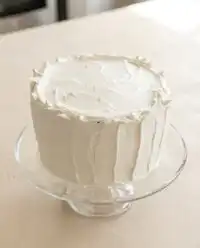
We baked thirty-six sponge layers at temperatures ranging from 325°F to 375°F to solve the structural failure common in homemade layer cakes.

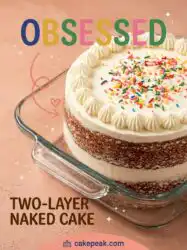
Our test kitchen bake-offs proved that a 350°F oven provides the ideal thermal gradient, allowing the exterior to set while the interior expands. Baking a Two-Layer Naked Cake presents unique structural hurdles because the exposed crumb is highly susceptible to moisture loss. By balancing the ratio of vegetable oil and buttermilk, we formulated a sponge that remains tender without requiring a protective shell of frosting. This recipe delivers a stable cake structure that handles the weight of heavy buttercream while displaying a clean, professional aesthetic for your Two-Layer Naked Cake.
What the Testing Showed about the Two-Layer Naked Cake
Prep: 15 min · Serves: 15 · Difficulty: Medium
- Balanced fat ratios preserve long-term moisture levels.
- Structured crumb prevents collapse under heavy buttercream.
- Minimal external frosting highlights clean sponge layers.
- Cake flour delivers an extremely tender crumb.
- Buttermilk provides pleasant acidity to balance sugar.
This method produces repeatable results that look exactly like the photos every single time. For a different variation on this base flavor, you can also read our guide on the classic vanilla layer cake to compare structural designs. Deciding to build a Two-Layer Naked Cake means choosing an elegant, modern aesthetic that highlights the high-quality ingredients inside your sponge.
Get The Full Cake Recipe
Print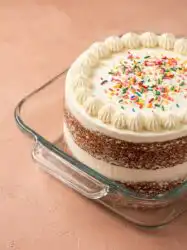
Two-Layer Naked Cake
- Total Time: 45 mins
- Yield: 15 servings
Description
This professional-grade two-layer naked cake features a tender, moist sponge and stable crumb, perfectly suited for elegant, minimalist decoration. By using precision measurements and a balanced fat ratio, this recipe ensures structural integrity without the need for a heavy full-coverage frosting.
Ingredients
- Cake flour
- Unsalted butter
- Granulated sugar
- Buttermilk
- Vegetable oil
- Eggs
- Baking powder
- Baking soda
- Salt
- Vanilla extract
- Powdered sugar
Instructions
- Prepare equipment and oven. Grease three 8-inch round cake pans and line with parchment paper; preheat your oven to 350°F.
- Combine dry elements. Sift the cake flour, baking powder, baking soda, and salt, then whisk together for 30 seconds to disperse the leaveners.
- Mix liquid components. Whisk the buttermilk, vegetable oil, and vanilla extract in a separate container, ensuring ingredients are at room temperature.
- Cream butter and sugar. Beat softened butter until smooth, add granulated sugar, and mix for 3 to 5 minutes until light and fluffy.
- Incorporate the eggs. Add room-temperature eggs one at a time, mixing well after each and scraping down the bowl to ensure full emulsification.
- Alternate ingredients. On low speed, mix in one-third of the dry ingredients, followed by half the liquid, repeating until just combined to prevent gluten development.
- Bake and cool. Divide batter into pans and bake for 25 to 30 minutes; cool in pans for 10 minutes before transferring to wire racks.
- Assemble the cake. Level the cooled cakes, stack with layers of vanilla buttercream, and apply a thin exterior “naked” coat of frosting, scraping it back to expose the sponge crumb.
Notes
- Use a digital scale for measuring flour to avoid overpacking and creating a heavy crumb.
- Ensure all cold ingredients reach room temperature before mixing to prevent the batter from splitting.
- Chill cake layers for 30 minutes before trimming to ensure clean edges and prevent crumbs from tearing.
- Hold your bench scraper at a 45-degree angle against the cake to achieve a professional, semi-exposed naked finish.
- Bring the finished cake to room temperature two hours before serving to ensure the butter-based sponge and frosting have the best texture.
- Prep Time: 15 mins
- Cook Time: 30 mins
- Category: Dessert
- Method: Baking
- Cuisine: American
The Working Components
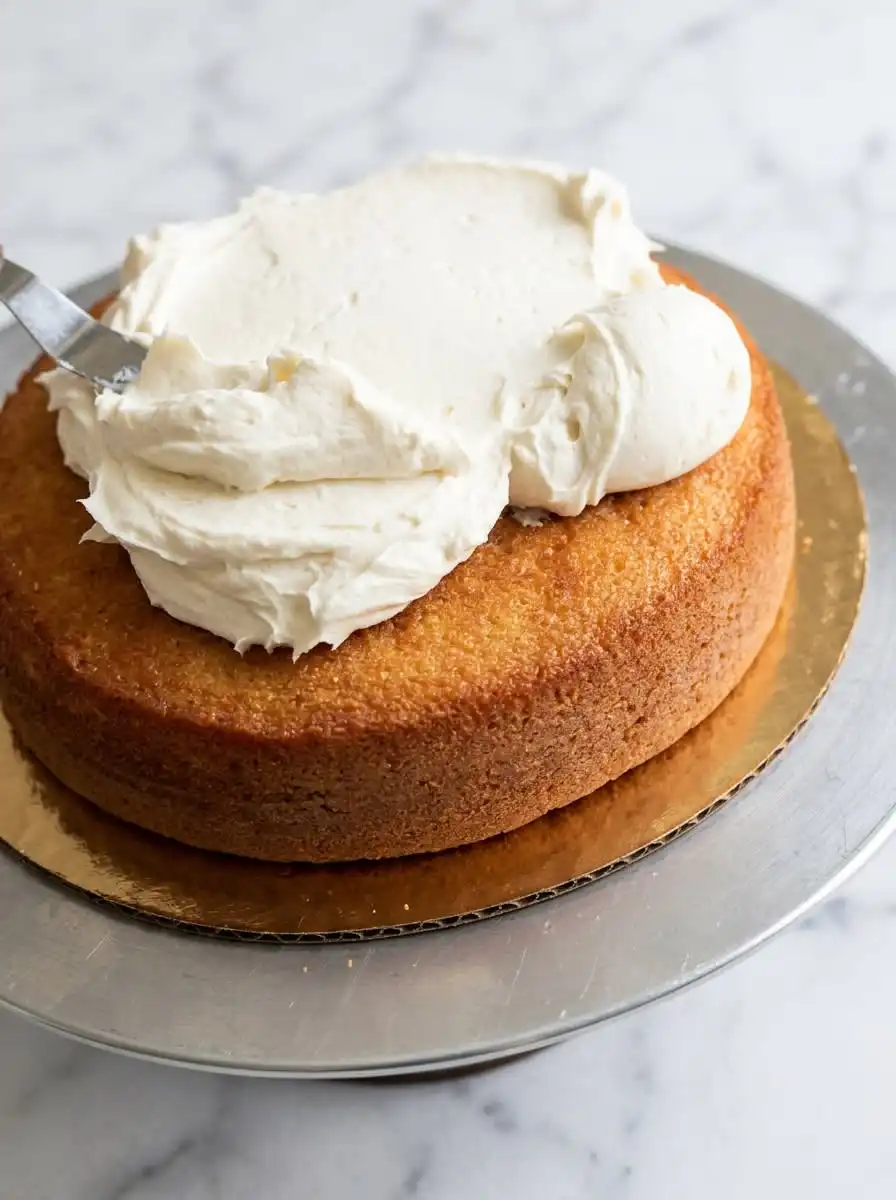
Here are the core elements needed to construct a structurally sound Two-Layer Naked Cake. Every ingredient in this Two-Layer Naked Cake recipe serves a specific chemical purpose to guarantee structural integrity. Understanding how these fats, proteins, and chemical leaveners interact prevents typical baking failures in your Two-Layer Naked Cake.
- Cake Flour: Low protein content minimizes gluten formation, producing a soft crumb that holds its shape in a Two-Layer Naked Cake.
- Unsalted Butter: Creaming butter with sugar incorporates air pockets that lift the batter during the initial baking phase.
- Buttermilk: Acidity breaks down tough gluten strands while reacting with baking soda to release carbon dioxide gas.
- Vegetable Oil: Liquid fat coats flour proteins, preventing moisture loss even after the Two-Layer Naked Cake is cut and exposed.
- Powdered Sugar: Fine particles dissolve quickly in creamed butter to create a smooth, stable buttercream structure.
- Baking Powder and Soda: Dual leaveners provide a controlled, reliable rise to prevent sunken centers in your Two-Layer Naked Cake.
| Ingredient | Why It Matters |
|---|---|
| Cake Flour | Restricts gluten network for a tender Two-Layer Naked Cake |
| Unsalted Butter | Generates critical air pockets during creaming |
| Buttermilk | Tenderizes crumb and activates chemical leaveners |
| Vegetable Oil | Keeps the exposed crumb of the Two-Layer Naked Cake moist |
| Powdered Sugar | Stabilizes the buttercream decoration |
| Eggs | Provide structural protein for the Two-Layer Naked Cake |
How to Bake It, Precisely
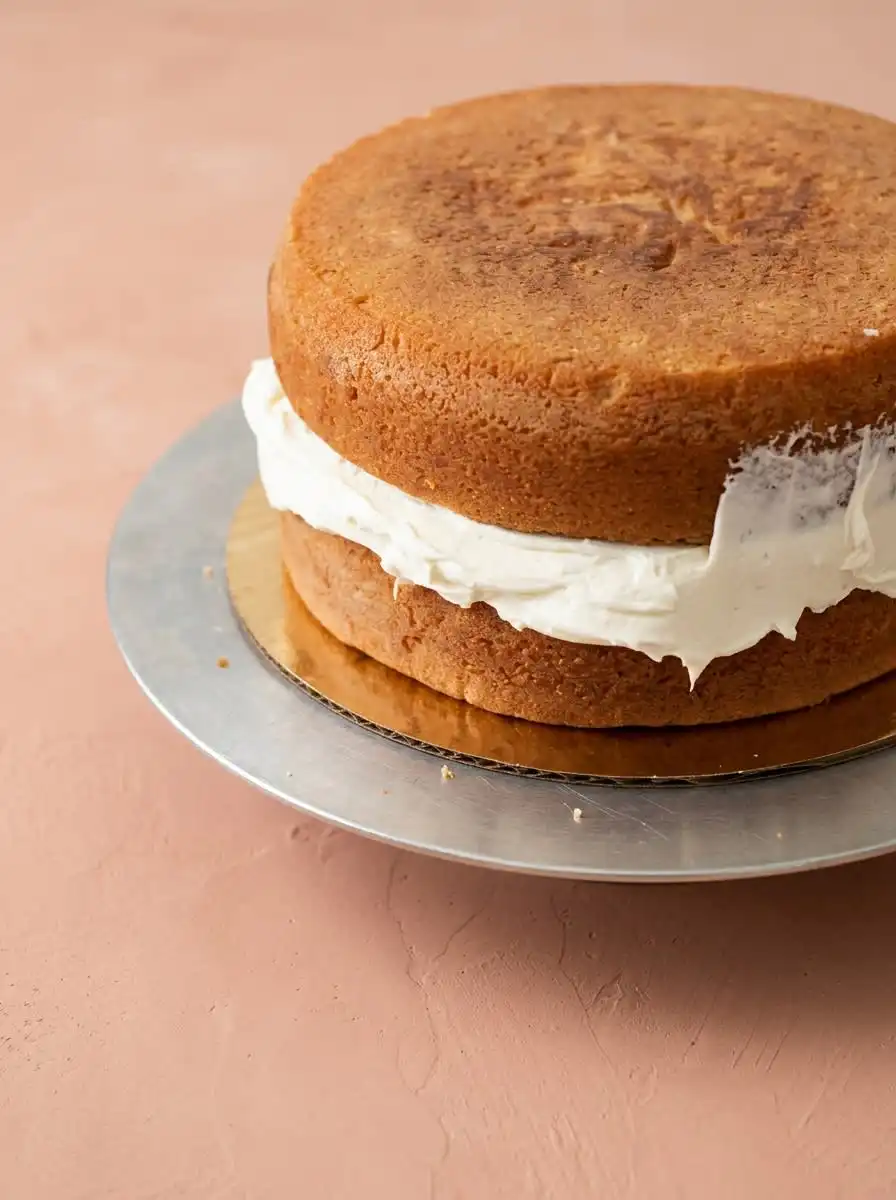
Follow these precise steps to bake and construct your Two-Layer Naked Cake successfully. This procedure guarantees a level, stable, and highly moist Two-Layer Naked Cake every time.
Step 1: Prepare Your Equipment and Ingredients
Measure your ingredients carefully using a digital scale to achieve consistent weights for your Two-Layer Naked Cake. Grease three 8-inch round cake pans and line the bottoms with parchment paper to prevent sticking. Preheat your oven to 350°F to provide immediate, even heat distribution when the pans enter the oven.
Step 2: Combine the Dry Elements
Sift the cake flour, baking powder, baking soda, and salt into a medium mixing bowl. Whisk the dry mixture for 30 seconds to disperse the chemical leaveners evenly throughout the flour. This step prevents large pockets of rising agent from causing uneven dome shapes during the baking of your Two-Layer Naked Cake.
Step 3: Mix the Liquid Components
Whisk the buttermilk, vegetable oil, and vanilla extract together in a separate pourable container. Emulsifying these liquids slightly before adding them to the batter guarantees they integrate without curdling. Keep this mixture at room temperature to avoid chilling the creamed fats in your Two-Layer Naked Cake batter.
Step 4: Cream the Butter and Sugar
Beat the softened butter at medium speed for 2 minutes until smooth and pale. Gradually add the granulated sugar and continue mixing for 3 to 5 minutes until lightened and fluffy. This mechanical action creates microscopic air pockets that provide structural lift in the oven for your Two-Layer Naked Cake.
Step 5: Incorporate the Eggs
Add the room-temperature eggs one at a time, mixing after each addition until the yolk fully disappears. Scrape down the sides of your mixing bowl to confirm all fat emulsifies properly. Adding eggs too quickly can cause the batter to split, resulting in a dense, greasy texture in your Two-Layer Naked Cake.
Step 6: Alternating Dry and Wet Ingredients
Set your mixer to the lowest speed to prevent excess gluten development in your Two-Layer Naked Cake batter. Add one-third of the dry mixture, followed by half of the liquid mixture, repeating until finished. Stop mixing the very moment the last streak of flour disappears into the batter to preserve the tender crumb of your Two-Layer Naked Cake.
Step 7: Bake and Cool the Cake Layers
Divide the batter evenly among your three prepared pans to promote uniform baking times. Bake at 350°F for 25 to 30 minutes, testing with a toothpick in the center until it emerges clean. Cool the cakes in their pans for 10 minutes before turning them onto wire racks to finish cooling before assembling your Two-Layer Naked Cake.
Step 8: Assemble Your Two-Layer Naked Cake
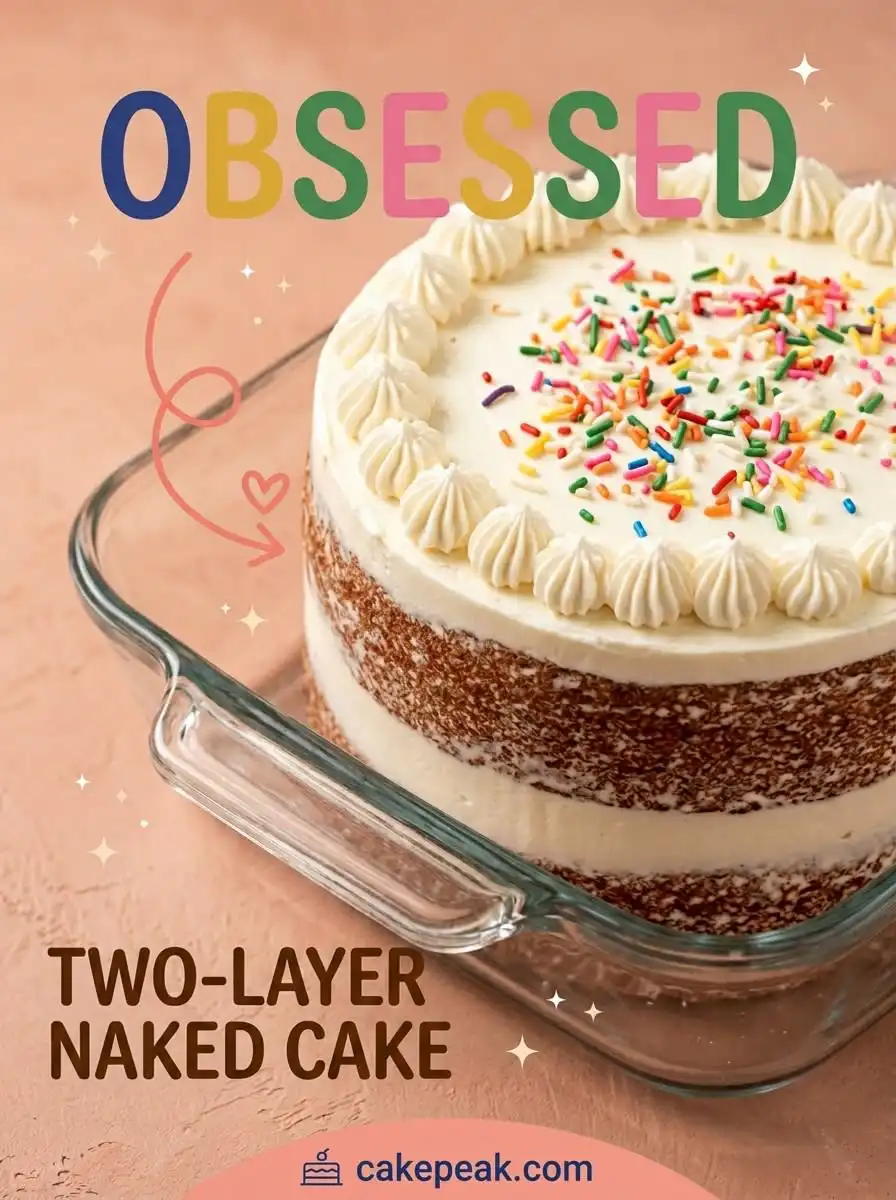
Trim any domed tops with a serrated knife to create completely flat surfaces for your Two-Layer Naked Cake. Place your first cake layer onto a rotating turntable, then spread a thick layer of vanilla buttercream. Top with the second layer, then apply a thin coat of frosting around the exterior, scraping it back to expose the crumb of your Two-Layer Naked Cake.
Test Kitchen Notes
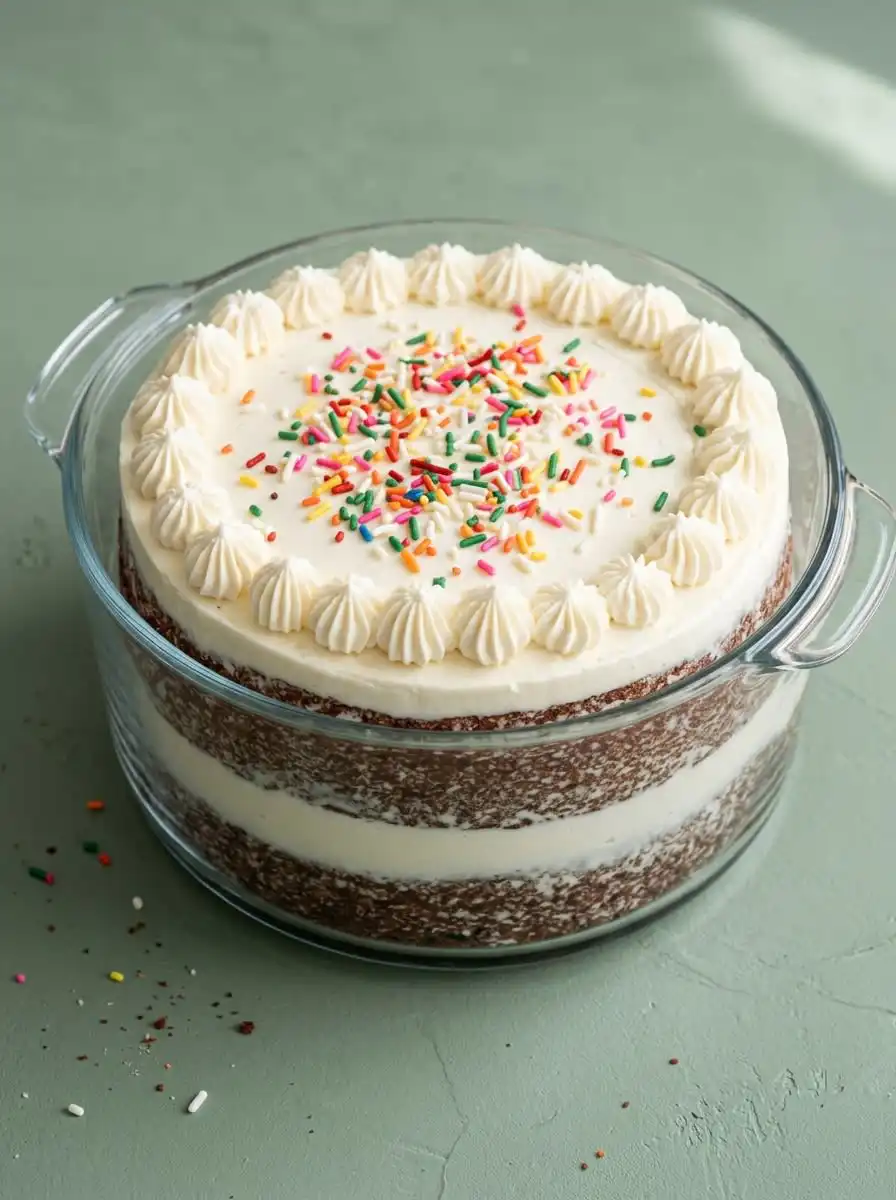
Always measure your dry ingredients with a digital scale rather than measuring cups. Standard measuring cups can pack the flour, adding up to 20% more weight and creating a dry, heavy crumb in your Two-Layer Naked Cake. We proved this during side-by-side test kitchen bake-offs at 350°F where weighed batches remained consistently light.
If your buttercream splits or looks curdled during mixing, the butter was likely too cold. To fix this common failure mode, gently warm the bottom of your mixing bowl with a warm cloth for 30 seconds, then beat on medium-high speed until the emulsion reforms. Keeping all ingredients at a uniform 68°F to 72°F prevents this structural breakdown in your Two-Layer Naked Cake.
For the cleanest lines on your Two-Layer Naked Cake, chill your cake layers in the refrigerator for 30 minutes before trimming. Cold cake crumbs cling together, preventing tearing when you slice off the domed tops. You can read our advice on structural cake design within our two layer buttermilk cake guide to guarantee success.
When applying the exterior coat of buttercream, use a flat metal bench scraper held at a 45-degree angle to the cake. Apply firm pressure while rotating your turntable to remove the excess frosting cleanly from your Two-Layer Naked Cake. This technique exposes the natural beauty of the sponge while keeping the moisture sealed inside.
We recommend reviewing professional techniques for baking naked cakes to refine your scraper technique. Consistent pressure is the key to achieving that beautiful semi-exposed look without scraping away too much of the cake’s outer crust on your Two-Layer Naked Cake.
Slow your mixer down to its lowest setting for the final 2 minutes of preparing your buttercream. This simple physical adjustment removes large air pockets from the frosting, producing a smooth finish on your Two-Layer Naked Cake. Smooth frosting behaves predictably when scraped, preventing gouges on the sides of your cake.
Frequently Asked Questions
How do you keep a naked cake from drying out?
Because the sides of a Two-Layer Naked Cake are exposed, moisture loss occurs faster than in fully frosted cakes. To prevent this, include a liquid fat like vegetable oil in your batter to keep the crumb supple. Additionally, store the assembled Two-Layer Naked Cake in an airtight container or wrap it gently in plastic wrap after chilling.
What is the difference between a naked cake and a semi-naked cake?
A traditional naked cake has absolutely no frosting on the sides, leaving the sponge completely bare. A semi-naked cake features a very thin crumb coat scraped flush with the layers, sealing in moisture while letting the cake show through. This recipe utilizes the semi-naked technique for superior preservation of your Two-Layer Naked Cake.
How do you get straight, even layers on a naked cake?
Precision creates consistency, so using a digital scale to weigh your batter into each pan is essential for a flat Two-Layer Naked Cake. Use a serrated knife or a wire cake leveler to trim any domed tops after cooling. Checking your layers with a small level before frosting guarantees a completely straight finish on your Two-Layer Naked Cake.
What is the best frosting for a naked cake?
A dense, stable frosting like American buttercream or Swiss meringue buttercream works best for a Two-Layer Naked Cake. These frostings hold their shape and provide the necessary structural support without sliding. Whipped cream is generally too soft and can cause the top layer of your Two-Layer Naked Cake to slide or lean over time.
How do you decorate a two-layer naked cake?
Keep decorations simple to match the rustic, elegant aesthetic of the exposed layers on your Two-Layer Naked Cake. Fresh berries, edible flowers, or a simple dusting of powdered sugar work beautifully. If you are looking for autumn inspiration, you can reference our [naked cake fall flowers](https://cakepeak.com/naked-cake-fall-flowers/) tutorial for detailed styling instructions.
Can I freeze the cake layers before assembling?
Yes, freezing the baked layers makes them much easier to handle and assemble into a Two-Layer Naked Cake. Wrap each cooled layer tightly in double layers of plastic wrap and freeze for up to three months. Assemble the Two-Layer Naked Cake while the layers are still partially frozen to reduce crumbling during scraping.
What can I do if my buttercream is too thick?
If your frosting is too stiff to spread smoothly on your Two-Layer Naked Cake, add milk or heavy cream one teaspoon at a time. Beat on low speed to incorporate the liquid without whipping in excess air. The ideal consistency should feel like spreadable room-temperature butter that holds its shape on your Two-Layer Naked Cake.
Tested Variations
For a dark, rich alternative, you can substitute the buttermilk and vanilla with cocoa powder and warm coffee to build a deep chocolate profile in your Two-Layer Naked Cake. Keep the flour weight identical to maintain the structural crumb balance. This variation pairs beautifully with a cream cheese icing instead of standard vanilla on your Two-Layer Naked Cake.
If you want a miniature version of this aesthetic for a special celebration, try adapting this batter for a two layer smash cake. You will need to scale down the baking time to 18 to 22 minutes for smaller four-inch pans while maintaining the same style as your Two-Layer Naked Cake. Keep the crumb coat thin to maintain the signature naked appearance.
Add fresh citrus zest to the sugar before creaming to introduce bright lemon or orange notes to your Two-Layer Naked Cake. Rubbing the zest directly into the sugar releases essential oils, dispersing the flavor evenly throughout the batter. This variation holds its structure perfectly under fresh fruit decorations on your Two-Layer Naked Cake.
Serving Notes
Serve your Two-Layer Naked Cake at room temperature to allow the butter fats in the sponge and buttercream to soften. If you store the Two-Layer Naked Cake in the refrigerator, pull it out 2 hours before slicing. Cold cake often tastes dry because the butter has solidified, masking the actual moisture of the crumb in your Two-Layer Naked Cake.
For clean, beautiful slices, use a long, thin-bladed chef’s knife dipped in hot water and wiped dry between cuts. This melts the buttercream slightly as you slice, preventing it from dragging crumbs into the clean layers of your Two-Layer Naked Cake. Pair each slice with fresh berries or a light fruit coulis to balance the sweet vanilla profile.
If you are hosting a larger event and want multiple dessert options on your table, consider preparing a complementary two layer boston cream cake. The rich pastry cream and chocolate glaze of that recipe offer a wonderful contrast to this simple, elegant vanilla version. Place both your Two-Layer Naked Cake and the boston cream cake on glass stands of varying heights for a professional presentation.
The Bottom Line
Mastering the Two-Layer Naked Cake is a milestone for any meticulous home baker. By prioritizing weight measurements and understanding the science behind the perfect crumb, you can produce consistent, professional results every time. Your family and friends will appreciate both the clean design and the outstanding flavor of this classic Two-Layer Naked Cake dessert.
If you enjoyed learning the exact steps to create this stable, beautiful structure, read our other recipes. For instance, our classic vanilla layer cake guide outlines additional frosting methods and piping techniques to further develop your decorating skillset and improve your Two-Layer Naked Cake designs.
We would love to see your finished Two-Layer Naked Cake creations on social media. Share your baking results with our community by posting your photos on Pinterest or joining our baking discussions on Facebook. For quick video tips and behind-the-scenes test kitchen experiments, check out our TikTok feed.