Late August brings a quiet shift in the kitchen garden, where the heavy morning dew clings to overgrown vines and the sweet scent of sun-warmed melons fills the dry afternoon air.

The Watermelon and Pineapple Tropical Fruit Cake is born from this late-summer abundance, offering an honest dessert that requires no heat at all. We stack thick rounds of crisp melon with sweet golden pineapple to build a striking, rustic centerpiece. Guests are always drawn to the honest colors of sliced fruit, which look far more beautiful than any piped frosting. This raw creation cools the palate and reminds us of how generous the earth can be when we let simple ingredients speak for themselves.
Why This Watermelon and Pineapple Tropical Fruit Cake Belongs in Your Kitchen
Prep: 25 min · Serves: 10 · Difficulty: Easy
This cold bake brings the pure joy of the farmers market directly to your table.
- classic watermelon fruit cake layers offer deep hydration.
- No baking sheets or warm ovens are required.
- Ripe seasonal fruits provide all the natural sugars.
- Striking rustic beauty commands attention without frosting.
- Wholesome ingredients keep everyone at the table happy.
Get The Full Cake Recipe
Print
Watermelon and Pineapple Tropical Fruit Cake
- Total Time: 1 hour 25 mins
- Yield: 10 servings
- Diet: Vegan, Gluten-Free, Paleo
Description
This refreshing, no-bake fruit cake uses layers of fresh, carved watermelon and pineapple as a naturally sweet, hydrating alternative to traditional sponge cakes. It is a stunning, rustic centerpiece perfect for summer gatherings that celebrates seasonal produce without the need for an oven.
Ingredients
- 1 large seedless watermelon
- 1 ripe pineapple
- 3 kiwis, peeled and thinly sliced
- 1 cup fresh blueberries
- 1 cantaloupe, balled or sliced
- 2 cups seedless grapes, halved
- 2 maltas or sweet oranges, thinly sliced
Instructions
- Select and wash. Choose a heavy, symmetrical watermelon and ripe pineapple, washing the rinds thoroughly before drying them with a clean cloth.
- Carve the watermelon. Slice off the ends of the watermelon to create flat surfaces, then stand it up and carefully slice away the rind and pith to create a smooth red cylinder.
- Shape the pineapple. Remove the crown and base of the pineapple, shave off the skin and eyes, then slice the flesh into thick, sturdy round planks.
- Pat fruit dry. Slice the watermelon into two equal rounds and gently pat all fruit surfaces with paper towels to ensure they are tacky rather than slippery for assembly.
- Stack the tiers. Place the largest watermelon round on a plate, top with the second watermelon round, and finish by centering the pineapple round on top.
- Decorate with fruit. Press kiwi slices into the sides of the watermelon, arrange cantaloupe balls around the seams, and tuck half-cut grapes into any visible gaps.
- Crown and chill. Pile blueberries and remaining grapes on top of the pineapple tier, then refrigerate for at least one hour to help the structure settle and chill.
Notes
- Use a very sharp chef’s knife to ensure clean, crisp cuts that prevent the fruit from weeping excess juice.
- Choose seedless watermelon varieties for the best structural integrity and to avoid cracks in your tiers.
- If the stack feels wobbly, insert bamboo skewers vertically through the center of the fruit to act as stabilizers.
- Always assemble the cake on the day of serving to ensure the fruit remains vibrant and maintains its firm, refreshing texture.
- Prep Time: 25 mins
- Cook Time: 0 mins
- Category: Dessert
- Method: No-Bake
- Cuisine: Tropical
Honest Ingredients
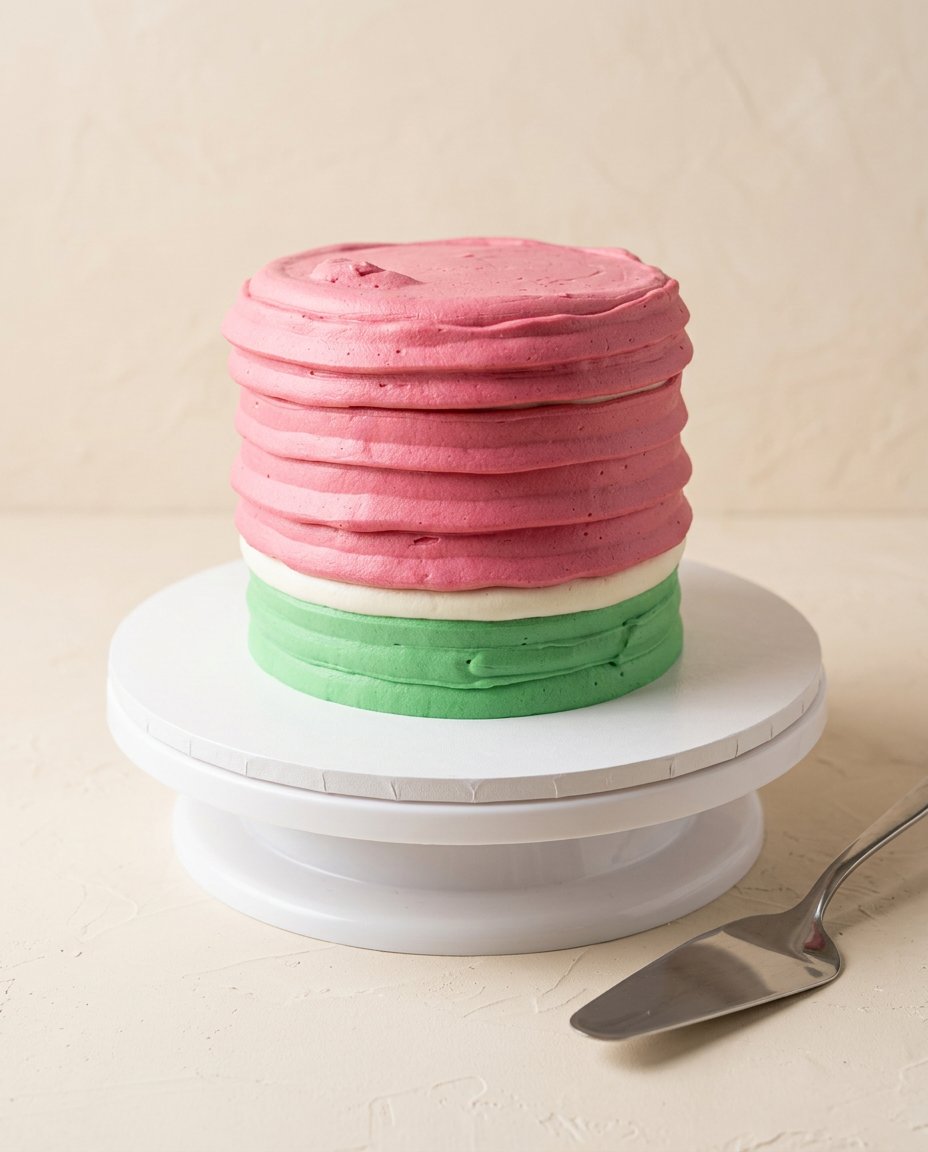
Gathering ingredients for this dessert feels like bringing a piece of the summer garden indoors. We choose fruits at their heavy, fragrant peak to make sure each slice is dripping with natural juices and rich sweetness. When the fruit is this good, keep it simple.
- Watermelon: The base of our creation must be a heavy, seedless melon with a deep hollow sound when tapped. This provides the structurally sound, crisp layers that mimic traditional sponge cake while offering cooling hydration.
- Pineapple: A ripe crown of golden pineapple adds a sharp, tropical contrast to the mellow sweetness of the melon base. We slice it into thick, sturdy rounds that stack beautifully, holding the structure upright without slipping.
- Kiwi: With its bright green flesh and tiny black seeds, kiwi brings a lovely tart contrast that balances the rich sugars of the larger fruits. Slicing them thinly allows us to press them against the sides like stained glass.
- Blueberries: These dark, plump berries are scattered across the top to fill empty crevices and add a deep, earthy color to the bright palette. They hold their shape beautifully when piled high on the upper tier.
- Cantaloupe: Slicing this orange melon into delicate ribbons or round balls adds visual depth and a warm, musky flavor that bridges the gap between the pineapple and watermelon.
- Grapes: Sweet seedless grapes, sliced in half, are tucked between the layers to add pockets of crisp texture and juicy sweetness that surprise the palate.
- Maltas: These aromatic sweet oranges provide bright citrus rounds that we drape over the edges, allowing their fragrant oils to scent the entire cake.
| Ingredient | Why It Matters |
|---|---|
| Watermelon | Formulates the crisp, sturdy layers of the cake base |
| Pineapple | Offers a sweet, tangy tropical contrast to the melon |
| Kiwi | Creates visual contrast and a tart flavor balance |
| Cantaloupe | Adds warm color tones and sweet, musky aromatics |
| Blueberries | Provide small pops of dark color and clean texture |
A Slow, Steady Bake
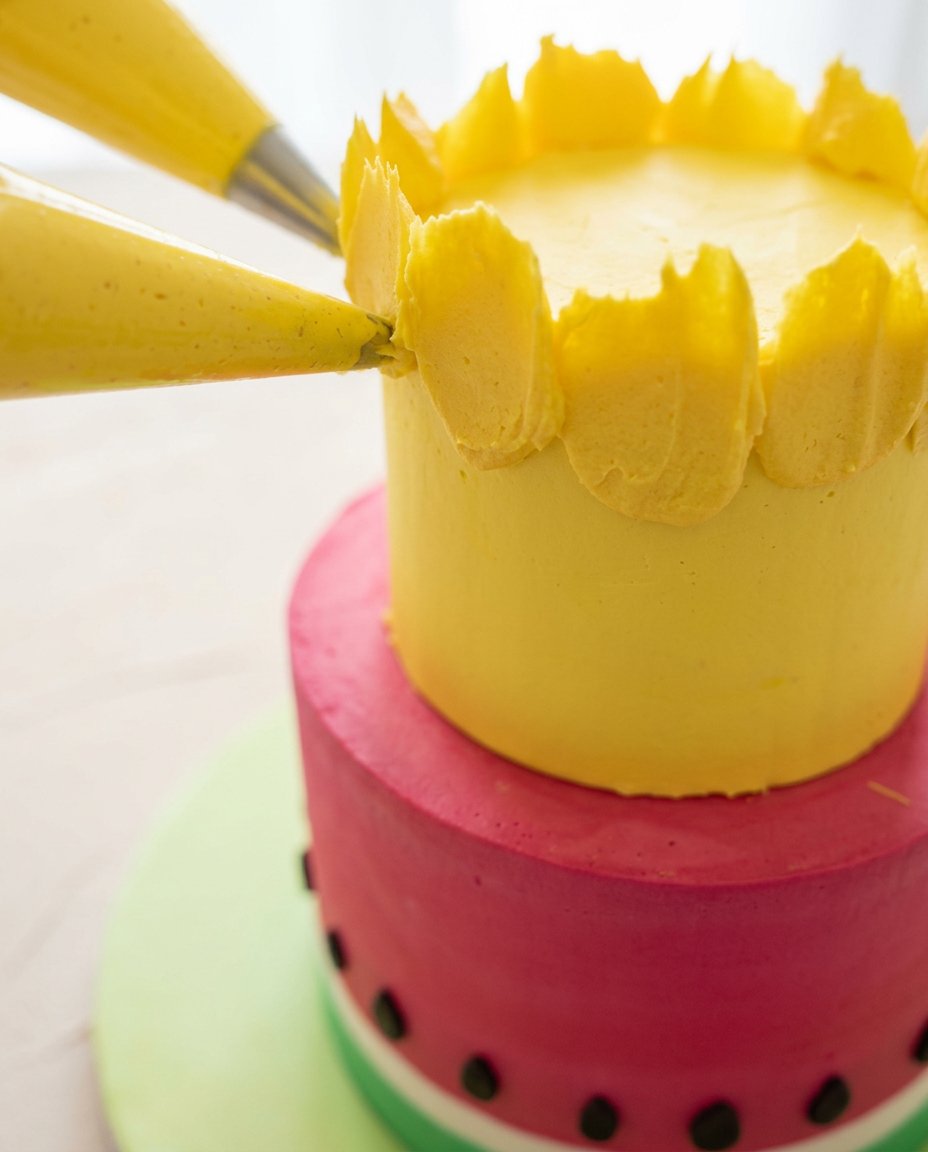
Step 1: Select and Clean Your Melons
Begin by choosing a large, symmetrical watermelon and a ripe pineapple that feel heavy for their size. Wash the outer rinds under cool well water to remove any garden soil, then dry them thoroughly with a clean linen tea towel. You want the skins free of moisture so your hands do not slip during the heavy cutting ahead. Place them on a sturdy wooden cutting board that won’t slide on your counter.
Step 2: Carve the Watermelon Base
Slice off both ends of the watermelon with a long, sharp chef’s knife to create a stable flat bottom and top. Stand the melon upright on its flat base, then carefully slice down along the curve of the rind to expose the deep red flesh. Work slowly, turning the melon as you go, until all green rind and white pith are entirely removed. You should be left with a beautiful, solid red cylinder that smells wonderfully sweet and fresh.
Step 3: Shape the Pineapple Tier
Prepare the pineapple by cutting off the leafy crown and the fibrous bottom base. Stand the pineapple upright and shave away the prickly outer skin, carving slightly inward to remove the dark wooden eyes. Slice the remaining golden flesh into thick, round planks that will form the top tier of your cake. Feel the flesh to make sure it is firm enough to support weight, set aside the core pieces, and wipe away any pooling juice.
Step 4: Level and Dry the Fruit Rounds
Take your carved watermelon cylinder and slice it horizontally to create two equal, flat rounds. Use a dry paper towel to gently pat the surfaces of both the watermelon and pineapple rounds to remove excess surface moisture. Drying the fruit is essential because a wet surface will cause the tiers and decorations to slide around. The fruit should feel tacky to the touch rather than slippery before you proceed to assembly.
Step 5: Stack Your Watermelon and Pineapple Tropical Fruit Cake Layers
Place the largest watermelon round onto the center of a plain white serving plate to form the bottom tier. Carefully place the second, slightly smaller watermelon round directly on top of the first, checking to make sure it sits completely level. Gently press the golden pineapple round onto the very top of the melon stack to complete your multi-tiered structure. The layers should sit square and solid, smelling of sweet summer rain and tropical sunshine.
Step 6: Secure and Arrange the Accent Fruits
Begin decorating by slicing the bright green kiwi and warm orange maltas into thin, delicate rounds. Press the kiwi slices gently against the damp sides of the watermelon base where they will naturally cling without any wooden skewers. Cut your cantaloupe into small, round spheres using a melon baller, then arrange them in a rustic wreath around the seam where the melon meets the pineapple. Use half-cut grapes to fill any gaps, pressing them firmly into the soft flesh.
Step 7: Crown with Berries and Chill
Pile the fresh blueberries and remaining grape halves high onto the top pineapple deck, letting a few tumble naturally down the sides. Secure any loose berries with clean wooden toothpicks if you plan to transport the cake to a backyard gathering. Place the finished cake into the refrigerator for at least one hour to allow the structural juices to settle and chill. When you pull it out, the cold fruit will have a beautiful frosty sheen that looks wonderful on a summer table.
What I’ve Learned at the Counter
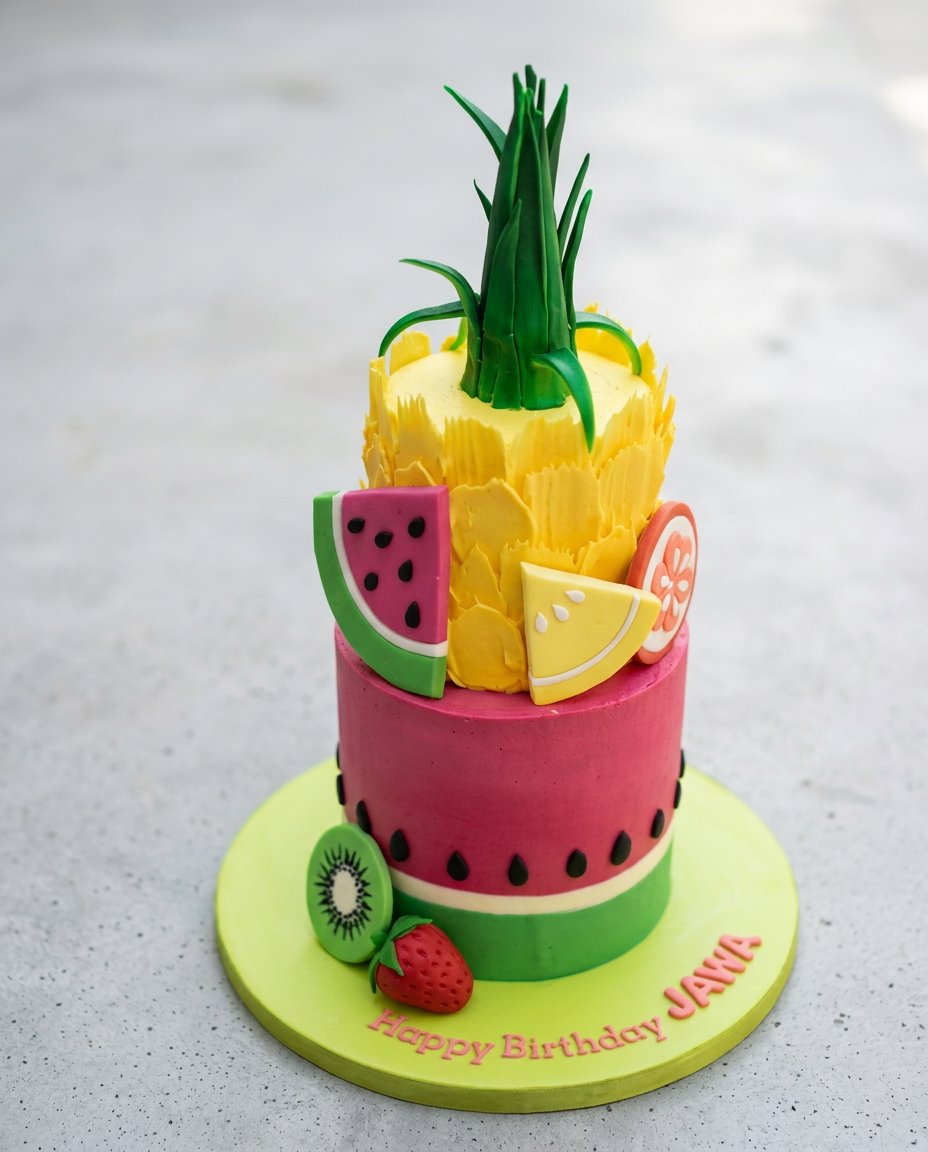
The secret to a stable stack is choosing seedless watermelons, which have a much denser, more uniform cellular structure than seeded varieties. Seeded melons tend to crack along the seed pockets when weight is applied, causing the cake to tilt. If you find your tiers are sliding apart during assembly, insert three clean wooden dowels or bamboo skewers vertically through the center of the stack to anchor them.
If the fruit layers begin to weep excessively and pool juice on your platter, you likely skipped the patting dry phase or carved them too thin. You can fix this by sliding folded paper towels under the base of the cake for ten minutes to absorb the runoff, then replacing them with fresh grape leaves or mint sprigs to hide any remaining moisture. Reading about how to build a fresh watermelon layer cake will help you understand how to manage this moisture effectively.
For an elegant, rustic look, use a crinkle cutter or a mandoline to slice the kiwi and cantaloupe garnish. The ridges create textured surfaces that catch the light beautifully and help the smaller fruits stick to the melon walls. You can also look at professional tropical fruit cake options to see how decorators play with these different natural shapes.
Keep your knife exceptionally sharp throughout the carving process. A dull blade squeezes the melon cells instead of cutting them, which forces precious juices out and leaves the flesh looking bruised and soft. A clean, swift stroke preserves the crisp structural integrity of each tier so it stands straight and tall.
Always carve your fruit pieces on the same day you plan to serve the cake. While you can prep the smaller accent fruits a few hours ahead, the main structural melon tiers lose their crispness and shine if left cut in the refrigerator overnight. Freshly sliced fruit has a glistening, lively appearance that simply cannot be replicated once it has sat in a cold fridge for too long.
If the top pineapple tier seems too heavy or causes the watermelon below to compress, trim the thickness of the pineapple round by half. You want the weight of each tier to decrease as you go up, making sure the base is never carrying more than it can handle. Balance is everything when you are working with pure, unadorned fruit straight from the earth.
Frequently Asked Questions
How do you make a watermelon fruit cake?
You make this cake by carving a whole seedless watermelon into thick, skinless cylinders that resemble cake layers. These melon tiers are then stacked and decorated with other fresh fruits like pineapple, kiwi, and berries. It requires no baking, using the natural moisture of the fruit to hold everything together.
How do you attach the fruit to the watermelon?
Most sliced fruits, such as kiwi and orange rounds, will naturally stick to the damp surface of the carved watermelon. For heavier fruits like cantaloupe balls or whole grapes, you can use wooden toothpicks to secure them firmly. Be sure to tuck the toothpicks fully into the fruit so they are not visible to your guests.
How do you make a multi-tiered fruit cake?
To build multiple tiers, cut your watermelon into graduating sizes, starting with a wide base and getting progressively smaller. Place the largest layer on your platter, then stack the smaller melon or pineapple layers centered on top. If the tower feels unstable, slide a long wooden dowel down through the center of all the layers.
Can you make a watermelon cake the day before?
It is best to assemble this cake on the day you plan to serve it so the fruit remains crisp and shiny. You can slice the smaller garnishes and carve the melon rounds the night before, storing them separately in airtight containers. Simply assemble the tiers and add the fresh toppings a few hours before your guests arrive.
Who is the fruit cake for?
This raw dessert is perfect for anyone looking to celebrate with a wholesome, refreshing alternative to traditional baked goods. It is especially wonderful for hot summer backyard barbecues, children’s birthday parties, or outdoor garden gatherings. Because it is naturally vegan and gluten-free, it welcomes everyone at the table to enjoy a slice.
What specific fruits do you already have on hand?
You can use almost any firm, seasonal fruit that is currently growing in your garden or available at your local market. Plums, peaches, strawberries, and blackberries make wonderful additions when lightly pressed into the melon base. Avoid overly soft or mushy fruits like bananas or overripe pears, as they will quickly lose their shape and slip off the cake.
How should I store the leftover cake?
Wrap any leftover portions tightly in plastic wrap or transfer the pieces to a glass container and store them in the refrigerator. The cut fruit will stay fresh and delicious for up to three days, though it will naturally release more juice over time. You can drain this sweet juice off and use it in your morning smoothies or simple table waters.
Ways to Adapt It
The Autumn Orchard Blend
As the summer fades into September, you can adapt this raw cake to reflect the changing harvest. Swap the tropical pineapple for a tier of firm, honeyed pears and surround the base with sliced figs and concord grapes. This creates a deeply comforting, rustic dessert that bridges the warmth of summer and the crispness of autumn beautifully. If you want to build a taller version for an autumn gathering, consider constructing a watermelon fruit cake tower to showcase these richer seasonal colors.
The Citrus and Herb Garden Cake
For a brighter, more aromatic variation, tuck fresh sprigs of garden mint and lemon verbena between the fruit layers. You can replace the kiwi with thin slices of blood orange and key lime, which add a stunning color contrast against the red melon. The herbs will release their essential oils as the cake chills, infusing every slice with a clean, farmhouse garden fragrance that feels incredibly restorative.
The Berry Patch Picnic Style
If your garden is overflowing with mid-summer berries, cover the entire melon base with a dense mosaic of blackberries, raspberries, and wild strawberries. Press them firmly into the melon flesh using a light glaze of melted apricot jam to act as a natural, wholesome glue. This rustic style looks wonderfully imperfect and feeds a crowd at a country roadside picnic with very little effort.
Serving It Simply
Bringing this beautiful cake to the table requires very little ceremony, as its natural colors speak for themselves. Place the platter on a simple linen tea towel alongside a sharp carving knife and a small bowl for discarded toothpicks. I love serving this dessert on plain white earthenware plates, which lets the bright red watermelon and golden pineapple stand out. It feels honest, unhurried, and wonderfully suited for an afternoon spent under the shade of an apple tree.
To complement the cool, hydrating layers of the melon, offer a pitcher of iced herbal tea or sparkling spring water infused with cucumber and fresh basil. If you have guests who crave a touch of traditional baked sweetness alongside their raw fruit, a slice of rustic pineapple cake makes a wonderful companion on the dessert table. The contrast between the baked, caramelized pineapple and the cool, raw melon offers a beautiful study in seasonal textures.
When it comes time to slice the cake, use a long, thin serrated knife to cut clean, generous wedges from top to bottom. Encourage your guests to use their fingers for the smaller berry toppings, embracing the rustic imperfection of a dessert that is meant to be eaten casually. There is a deep, simple joy in eating food that is still cool from the cellar, shared with friends while the late summer sun begins to dip below the horizon.
From the Farmhouse
There is a quiet wisdom in letting the season write the recipe, stepping back to let the natural beauty of ripe fruit take center stage. This uncooked cake reminds us that dessert does not always require flour, sugar, and a hot kitchen to feel celebratory and special. It is an honest tribute to the warm months, a fleeting gift that we must enjoy before the autumn winds begin to stir the leaves. The edges crack — that’s rustic charm, and it is precisely why we love it.
Whether you are hosting a gathering in the backyard or celebrating a little one’s milestone with a smash cake made from watermelon, this recipe brings people together around something pure and simple. It is the kind of bake that leaves your hands sticky and your heart light, grounded in the honest rhythms of the earth. I hope you take this idea to your kitchen counter, pile it high with whatever fruit is ripe in your corner of the world, and share it with the people you love.
If you build this creation at home, I would love to hear about the fruits you gathered from your local market. Share your rustic kitchen moments with our growing community on Pinterest, swap ideas with other home bakers on Facebook, show us your assembly process on TikTok, or join our quiet corner on Telegram for more seasonal inspiration. Let us keep our kitchens warm with conversation and our tables cool with the very best of the harvest.