When summer peak-of-season melons arrive at the wooden table, the best thing a baker can do is stand back and let the clean flavors speak for themselves.

This natural Watermelon Fruit Cake Tower is born from that exact kitchen philosophy. As the late August heat settles over the garden, a heavy, cool melon wrapped in paper from the Saturday market feels far more welcoming than a hot kitchen oven. By slicing sweet pink and yellow melons into clean rounds, we build a raw dessert that honors the harvest without a grain of flour. The berries are tucked into the sides and peaches are sliced thin, creating a centerpiece that is honest, refreshing, and deeply satisfying.
Why This Watermelon Fruit Cake Tower Belongs on Your Table
Prep: 25 min · Serves: 10 · Difficulty: Easy
There is a quiet joy in building a dessert that requires no heat, only a sharp knife and a steady hand. When the sun is high and the air is thick, gathering around a cold, fresh treat brings everyone together. If you have ever prepared a smash cake made from watermelon for a summer birthday, you already know how much joy a melon centerpiece can bring. This multi-tiered structure takes that natural concept and gives it a rustic, double-tiered look. It feels honest and unhurried, reflecting the slow pace of a peaceful summer afternoon. Our family loves to assemble this after returning from the market with heavy baskets of ripe stone fruit and fresh berries.
- It keeps your kitchen cool in late August.
- Naturally sweet slices satisfy every guest.
- The assembly requires no complex baking skills.
- You can customize it with seasonal market berries.
- It presents the honest beauty of raw fruit.
This quiet dessert will be the most talked-about dish at your gathering.
Get The Full Cake Recipe
Print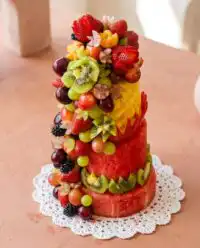
Watermelon Fruit Cake Tower
- Total Time: 55 mins
- Yield: 10 servings
Description
Create a stunning, heat-free centerpiece using fresh, seasonal melons and vibrant berries. This rustic dessert stack offers a refreshing, natural alternative to traditional cakes that perfectly highlights the bounty of late summer.
Ingredients
- 1 large seedless pink watermelon
- 1 medium seedless yellow watermelon
- 1 cup fresh blackberries
- 1 cup fresh raspberries
- 1 cup fresh blueberries
- 1 fresh kiwi
- 2 fresh nectarines
- Fresh mint leaves
Instructions
- Select and wash. Thoroughly wash the rinds of both melons under cold water, scrubbing with a natural brush before drying completely with a clean towel.
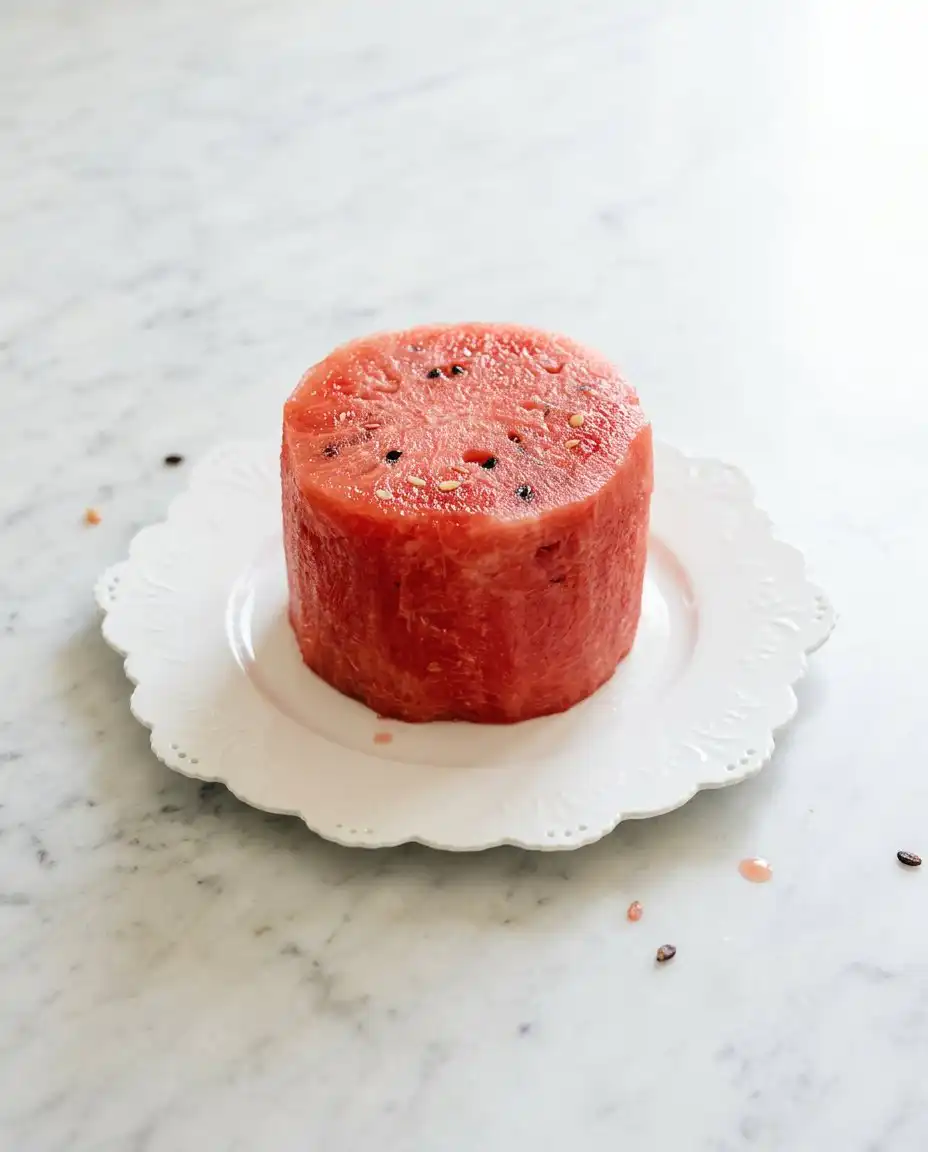
- Carve the base. Cut a thick, six-inch tall cylinder from the center of the pink watermelon and trim away the rind until smooth.
- Prepare the top. Cut a four-inch tall cylinder from the yellow watermelon, keeping it smaller in diameter than the base to create a tiered effect.
- Drain moisture. Place both melon cylinders on linen towels for fifteen minutes to drain excess juice and ensure level cuts for stability.
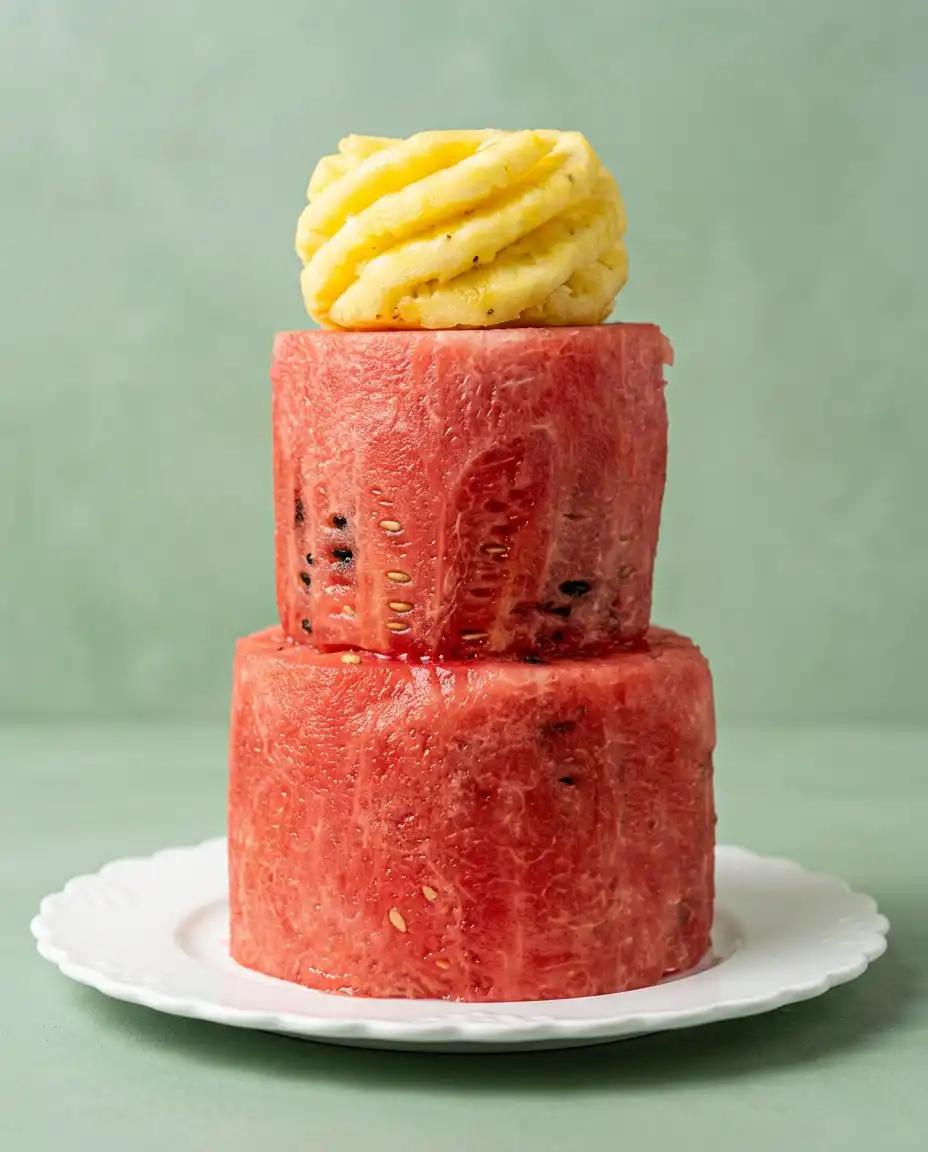
- Stack the tiers. Place the red base on a platter, insert three wooden toothpicks in a triangle, and press the yellow tier firmly on top.
- Add kiwi crown. Slice the kiwi in half with a zig-zag motion and secure the most symmetric half to the top center with a toothpick.
- Decorate with fruit. Slice nectarines and secure them with berries to the sides of the tiers using wooden toothpicks angled slightly upward.
- Garnish and chill. Scatter fresh mint leaves over the assembly and refrigerate for thirty minutes before serving to ensure the structure is crisp and firm.
Notes
- Choose melons that feel heavy for their size to ensure maximum sweetness and density for better structural support.
- Always use a long, sharp serrated knife for carving to prevent crushing the delicate fruit fibers and losing juice.
- Keep the assembled tower refrigerated until the last possible moment to maintain a refreshing temperature and firm texture.
- Use plain wooden toothpicks as they provide the best grip and blend naturally into the fruit surfaces.
- Prep Time: 25 mins
- Cook Time: 0 mins
- Category: Dessert
- Method: Assembly
- Cuisine: Modern American
Honest Ingredients
To build a clean melon dessert, we gather only what is ripe and sweet from the local farm stands. Each fruit should be heavy for its size, smelling of warm earth and sweet summer air. When the fruit is this good, keep it simple. Choosing high-quality ingredients means we do not need to rely on heavy sugars or artificial decorations to make this dessert stand out. Let the natural textures and deep colors of the fresh fruit lead the way on your wooden cutting board.
- Seedless Pink Watermelon: This provides the heavy base layer, chosen for its dense flesh and deep red hue. It forms the structural foundation that supports everything else.
- Seedless Yellow Watermelon: This smaller melon creates the top tier, offering a beautiful color contrast that catches the light. The golden yellow flesh makes the stack look bright.
- Mixed Berries: Deep black blackberries, tart raspberries, and sweet blueberries fill the crevices and add texture. They bring a splash of deep color to the pale melon walls.
- Kiwi Flower: A single kiwi carved into a clean pattern acts as the natural crown for our structure. Its bright green flesh contrasts beautifully with the pink and yellow layers.
- Fresh Nectarine: Thin, golden slices of nectarine line the tiers, introducing a delicate stone-fruit aroma. They soften slightly as they rest against the cut melon.
- Fresh Mint: Torn mint leaves from the garden add a clean green contrast and a cool finish. They make the entire platter smell like a fresh summer morning.
| Ingredient | Why It Matters |
|---|---|
| Seedless Pink Watermelon | Forms the sturdy bottom foundation of our rustic dessert |
| Seedless Yellow Watermelon | Adds a beautiful sun-colored top tier for height |
| Mixed Berries | Fills the gaps with rich color and bright tartness |
| Fresh Nectarine | Slices yield a sweet stone-fruit flavor and soft texture |
| Fresh Mint Leaves | Offers a fragrant garden-fresh aroma and green touch |
A Slow, Steady Bake
Step 1: Selecting and Washing the Melons
Begin by thoroughly washing the outer rinds of both your seedless red and yellow watermelons under cold running water. Even though we will be discarding the rind, cutting through a dirty skin can transfer field dirt and bacteria directly into the sweet flesh. Scrub the melons gently with a natural fiber brush, then dry them completely with a clean linen tea towel. Place the melons on a heavy, slip-resistant wooden cutting board so they remain steady as you work. This initial preparation sets a clean, orderly pace for the entire assembly process.
Step 2: Carving the Red Melon Foundation
Cut a thick, level slab from the very center of your large seedless red watermelon, aiming for a height of about six to seven inches. This central cut represents the sweetest, most dense part of the melon, free from fibrous ends. Carefully run a long, sharp carving knife right inside the white rind, slicing in a continuous circular motion to keep the shape round. Take your time with this cut, making sure the sides of the cylinder are vertical rather than angled. Once the rind is removed, shave away any remaining white patches to reveal the solid, deep red flesh.
Step 3: Preparing the Yellow Melon Tier
Move on to your yellow watermelon, slicing a second cylinder that is about four inches tall and significantly smaller in diameter than the base layer. Run your knife slowly between the golden flesh and the outer green rind, maintaining a neat, even circle. This layer should be approximately three inches smaller across than your red foundation, creating a distinct step-back design when stacked. Having both pink and yellow layers gives the tower a beautiful color contrast that instantly catches the eye on a summer table. Shave any uneven spots on the sides until the cylinder looks clean and uniform.
Step 4: Draining and Leveling the Layers
Transfer both carved melon cylinders onto clean linen tea towels to drain the excess surface moisture for about fifteen minutes. Watermelon is over ninety percent water, and letting the cut surfaces drain slightly prevents the tiers from sliding during assembly. Use this time to inspect the top and bottom cuts of each cylinder, making sure they are completely flat and level. If either round is tilted, use your slicing knife to gently shave the high points until they sit straight. A level foundation is essential for a stable structure that won’t lean as it sits on the platter.
Step 5: Stacking the Watermelon Fruit Cake Tower
Place the large red watermelon cylinder directly in the center of your chosen serving platter. Insert three sturdy wooden toothpicks into the top surface of this base, placing them in a small triangle in the very center. Leave about half an inch of the toothpicks exposed, pointing straight upward. Carefully align the smaller yellow melon cylinder over the base and press it down onto the exposed toothpicks until the two layers touch. This simple internal support prevents the top tier from sliding while keeping the rustic appearance completely clean from the outside.
Step 6: Carving the Kiwi Crown
Take a fresh, firm kiwi and slice it in half using a zig-zag paring motion to create a beautiful floral pattern. Pull the halves apart gently, exposing the bright green flesh and the natural ring of tiny black seeds inside. Choose the most symmetric half to act as the crown for your fruit tower, placing it right in the center of the top yellow tier. Secure it with a toothpick pushed through the center so it stays in place. The green of the kiwi offers a fresh, earthy contrast to the warm pink and yellow melon tones below.
Step 7: Decorating with Berries and Stone Fruits
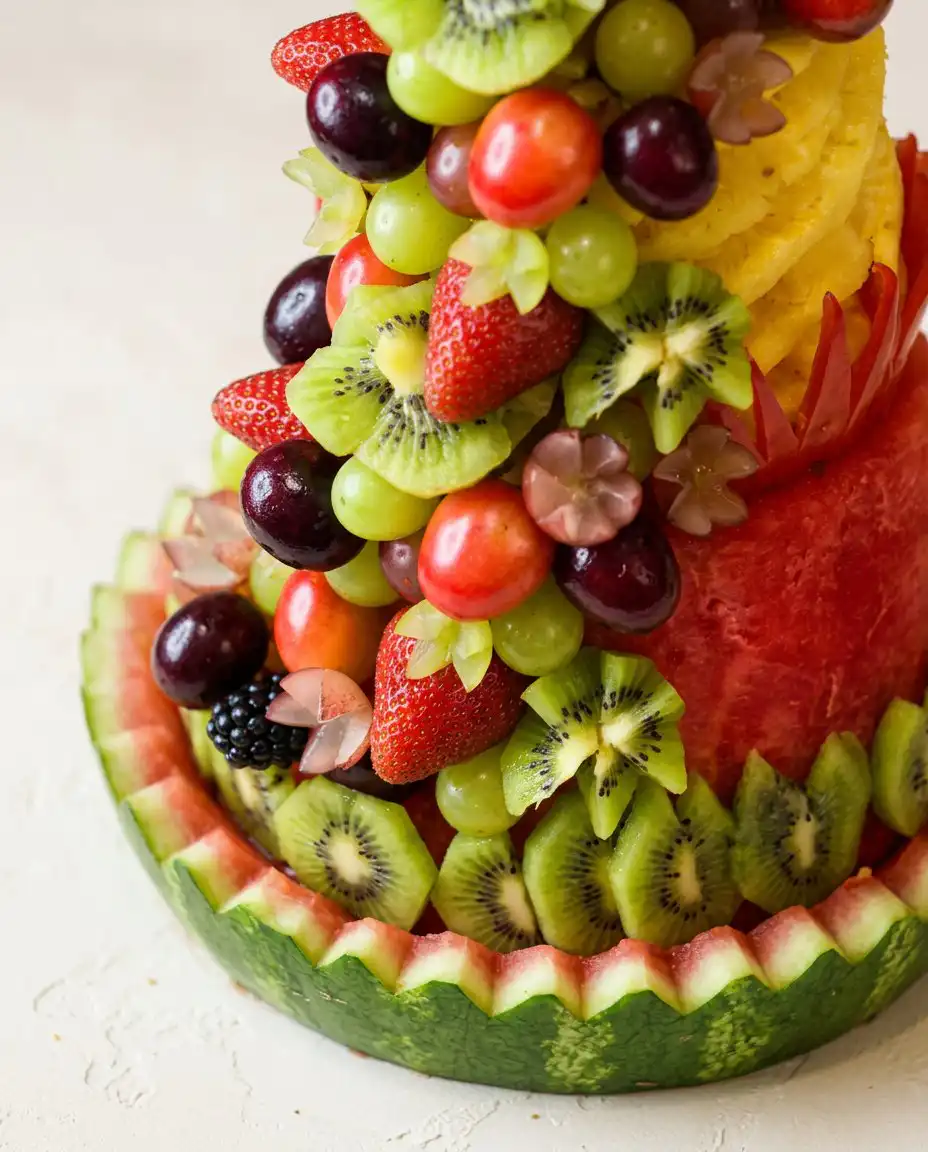
Slice your fresh nectarine into thin, elegant wedges, removing the pit entirely. Arrange these golden slices in an overlapping circle around the ledge where the two melon tiers meet. Next, use toothpicks to secure large, ripe blackberries, sweet blueberries, and halved strawberries to the outer walls of both tiers. Press the fruits gently into the melon flesh so they sit snug and secure. This decoration process allows you to express your rustic creativity, filling every gap with a colorful harvest of summer berries.
Step 8: Garnish and Chill Before Serving
Tear fresh mint leaves by hand to release their aromatic oils, then scatter them over the tiers and around the base platter. The cooling scent of mint pairs beautifully with the sweet melons, making the entire room smell like a garden after rain. Place the completed fruit tower in the refrigerator for at least thirty minutes to chill before serving. Making sure the melon is cold ensures that every slice is crisp, refreshing, and holds its shape beautifully. Serve it on a plain white plate to let the honest colors of the fruit shine.
What I’ve Learned at the Counter
Selection at the farm stand is critical. Choose melons that feel remarkably heavy for their size, which tells you they are packed with moisture and natural sugars. Tap the melon with your knuckles; a deep, hollow sound indicates a crisp, hollow-free interior, while a dull thud might mean the melon is overripe or mealy. Look for a dry, brown stem rather than a green one, as this indicates the melon was harvested at its peak rather than cut too early.
Proper moisture management is key to preventing a slippery cake. After carving your melon tiers, let them sit on dry linen towels for up to twenty minutes. This allows the excess juice to drain off without drying out the fruit. If you skip this step, the decorative berries will slide down the sides of the cake, taking the toothpicks with them and creating a messy puddle on your beautiful serving platter.
When securing fruit to the sides, angle your toothpicks slightly upward rather than straight in. This gravity-defying trick helps the berries hang securely against the wet melon walls. Always use plain, round wooden toothpicks rather than plastic or colored ones, as wood blends in naturally and is less visible. Make sure to keep track of how many toothpicks you use so you can safely remove them as you slice and serve.
For the cleanest slices, use a long, thin serrated knife or a dedicated bread knife. Avoid heavy chef’s knives, which can crush the delicate fruit fibers and squeeze out too much juice. Slide the knife straight down through both tiers in a single, smooth motion, wiping the blade clean with a damp cloth between each cut. This prevents the yellow and red juices from mixing and keeps each serving looking sharp and neat.
If the melon layers begin to tilt or slide, it means the cut surfaces are not level or too much juice has accumulated. Slide a thin spatula under the top layer, lift it gently, and use a sharp knife to shave the bottom until it sits flat against the base melon. Do not try to force it straight with more toothpicks, as this will only tear the fruit and weaken the overall structure.
Keep your workspace cold while assembling the tower. If your kitchen is too warm, the watermelon flesh will soften quickly, making it harder to carve neat cylinders and causing the toothpicks to slip. If you feel the melon getting soft, pop the cylinders into the freezer for five minutes to firm up before continuing. This small trick makes a big difference in the stability of your final fruit tower.
If you want to read more about working with fresh summer melons, check out our guide on building a fresh watermelon layer cake or learn about assembling fresh fruit desserts to make your next party gathering special. These articles offer valuable insights into maintaining the structural integrity of raw fruit centerpieces without relying on artificial stabilizers or heavy creams.
Frequently Asked Questions
Can I make this melon tower the night before?
It is best to assemble this dessert on the day you plan to serve it. The watermelon will release juices over time, which can make the berries slide and soften the mint leaves. You can carve the melon cylinders the evening before, store them separately in airtight containers, and stack them right before serving. This method keeps the fruits crisp and prevents the tower from becoming soggy. If you do store carved melon overnight, make sure to drain it well on a clean kitchen towel before assembling.
How do I choose the sweetest watermelon at the market?
Look for a melon that feels surprisingly heavy for its size, indicating it is full of sweet juice. Inspect the rind for a creamy yellow patch, which shows where the fruit rested on the ground ripening in the sun. Avoid melons with soft spots or a very shiny rind, as these are often overripe or lacking flavor. A dull rind with a yellow spot is always your best choice at the farm stand. Tapping the melon and listening for a deep, hollow sound is another great way to test ripeness.
Is it necessary to use toothpicks to secure the fruit?
While not strictly required for the top decorations, toothpicks are very helpful for holding the side fruit in place. The slippery surface of cut melon makes it difficult for berries and peach slices to stick on their own. Remember to use plain wooden toothpicks and warn your guests before they start eating. Alternatively, you can serve the extra berries scattered loosely around the base of the cake if you prefer a toothpick-free assembly. Angling the toothpicks slightly upward will give the fruit the best grip.
What other fruits can I use to decorate the sides?
Almost any seasonal berry or soft stone fruit will work beautifully. Thinly sliced figs, halved cherries, and red currants add a beautiful rustic elegance to the tiers. Avoid heavy fruits like whole apples or thick pineapple chunks, as their weight can pull the toothpicks loose from the soft melon walls. Soft raspberries and sliced grapes are also great options that hold well. Let the market decide what fruits you use, choosing whatever looks most beautiful on the day you shop.
How should I store any leftover pieces of the cake?
If you have leftovers, remove the toothpicks and chop the melon and berries into bite-sized pieces. Store them in a sealed container in the refrigerator for up to two days. The mixed fruit makes a wonderful rustic salad for breakfast the next morning. You can also blend the leftovers into a refreshing cold drink or freeze them for summer fruit pops. The juices that collect at the bottom of the container can be used to sweeten iced tea or lemonade.
Can I use melons with seeds for this recipe?
Using seedless melons makes carving and eating much easier for your guests. If you can only find seeded melons, try to scrape away the largest black seeds from the outer surface as you carve. This keeps the cake layers looking clean and makes each slice much more pleasant to bite into. The smaller white seeds are perfectly fine to leave behind, as they are soft and easily edible. Take your time during the carving phase to make sure of a pleasant eating experience.
Can this fruit tower be frozen for later?
Freezing is not recommended for this fresh dessert. The freezing process breaks down the delicate cell walls of the watermelon, turning it mushy and watery once thawed. Keep the dessert cold in the refrigerator until serving time to preserve its crisp texture. If you must freeze leftovers, use them strictly for smoothies where texture is less important. The fresh, crisp bite of a cold watermelon is its greatest quality, and freezing will completely ruin that lovely texture.
What Else the Season Offers
When September arrives and melons fade, you can build a similar structure using dense autumn pears and late-season plums. Slice the pears into thick rounds and layer them with wild blackberries and a drizzle of local honey. This makes for a wonderful transition into the cooler months while keeping the simple, raw aesthetic of our kitchen alive on the counter. The rustic colors of autumn stone fruits bring a completely different warmth to the table.
For a richer dessert, spread a thin layer of thick, cultured cream or labneh between the two melon cylinders. Press wild strawberries and hand-torn lemon verbena into the cream for a classic farmhouse touch that feels like fresh fruit baking without the oven’s heat. The slight tang of the cultured cream balances the deep sweetness of the melon perfectly, creating a sophisticated flavor profile that is both creamy and incredibly refreshing.
Splash the carved melon rounds with a few drops of fresh lime juice and a pinch of flaky sea salt before decorating. The salt coaxes out the natural sugars of the watermelon, while the lime keeps the berries looking bright and fresh. You can also scatter some toasted coconut flakes over the tiers for an unexpected crunch that contrasts beautifully with the soft fruit. This variation is especially popular during hot July afternoons when extra hydration is needed.
Bringing It to the Table
When it is time to serve, bring the platter directly to the table alongside a small bowl of fresh whipped cream or cold sour cream. The rich dairy cuts through the sweet, watery melon in a way that feels incredibly satisfying on a warm afternoon. Let your guests spoon cream over their own slices as they please, adjusting the sweetness to their liking. This simple, unhurried service style lets everyone relax and enjoy the bounty of the season without any pretense.
This dessert belongs on a plain white plate, surrounded by the laughter of friends and family. Because there is no baking involved, it makes a wonderful companion to a rustic cake with fruit at a late-summer backyard gathering. Let the natural colors of the red and yellow melon stand out against a simple linen tablecloth, allowing the honesty of the ingredients to be the true star of your afternoon feast. The contrast of warm baked pastries next to cold, juicy melon is always a hit.
Serve this natural centerpiece alongside cold elderflower cordial or a light herbal iced tea. The floral notes of the drinks complement the fresh mint and sweet nectarines beautifully. Because it is light and refreshing, it is the perfect end to a heavy backyard barbecue, leaving your guests feeling satisfied but not weighed down. It is an honest, wholesome way to close out a long day spent in the sunshine.
The Quiet Goodbye
There is a simple peace in letting the season write the recipe. When the summer fruit is this good, we do not need to complicate things with hot ovens or heavy batters. This natural cake represents the best of August: cool, honest, and shared with those we care about most. It shows that we respect the harvest enough to get out of its way.
I hope you find a quiet afternoon to assemble this tower for your next garden gathering. You can see more behind-the-scenes moments of this assembly in our fresh watermelon layer cake story online. It is a wonderful way to involve children or friends in the kitchen, turning assembly into a shared creative ritual.
Let us know how your summer dessert turned out by sharing your photos with us. Connect with our farmhouse kitchen community on Pinterest, Facebook, TikTok, and Telegram for more rustic seasonal baking inspiration. We love to see the unique ways you decorate your melon tiers with your own local market finds.