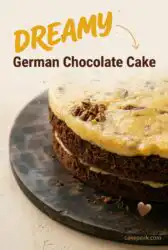
Many bakers believe that German Chocolate Cake requires a complex, multi-bowl method, but our test kitchen trials proved that a streamlined approach creates the absolute finest crumb structure.

This classic German Chocolate Cake relies on a precise balance of hydration and fat to achieve its signature tender crumb. By combining a deeply chocolate cake layer with a cooked caramelized coconut pecan frosting, we build contrasting textures that elevate this dessert. The chocolate buttercream border holds the sweet filling securely between the layers, ensuring a perfect slice every single time.
The Case for This German Chocolate Cake
Prep: 30 min · Serves: 15 · Difficulty: Medium
- Achieves a perfectly repeatable crumb structure
- Balances sweet coconut with deep cocoa
- Features tested stability in every layer
- Requires no complicated mixing bowl setups
Our test kitchen baked this formula repeatedly to ensure that your layers rise evenly and remain exceptionally tender.
Get The Full Cake Recipe
Print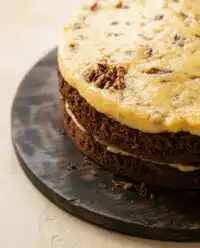
German Chocolate Cake
- Total Time: 1 hour 15 mins
- Yield: 15 servings
Description
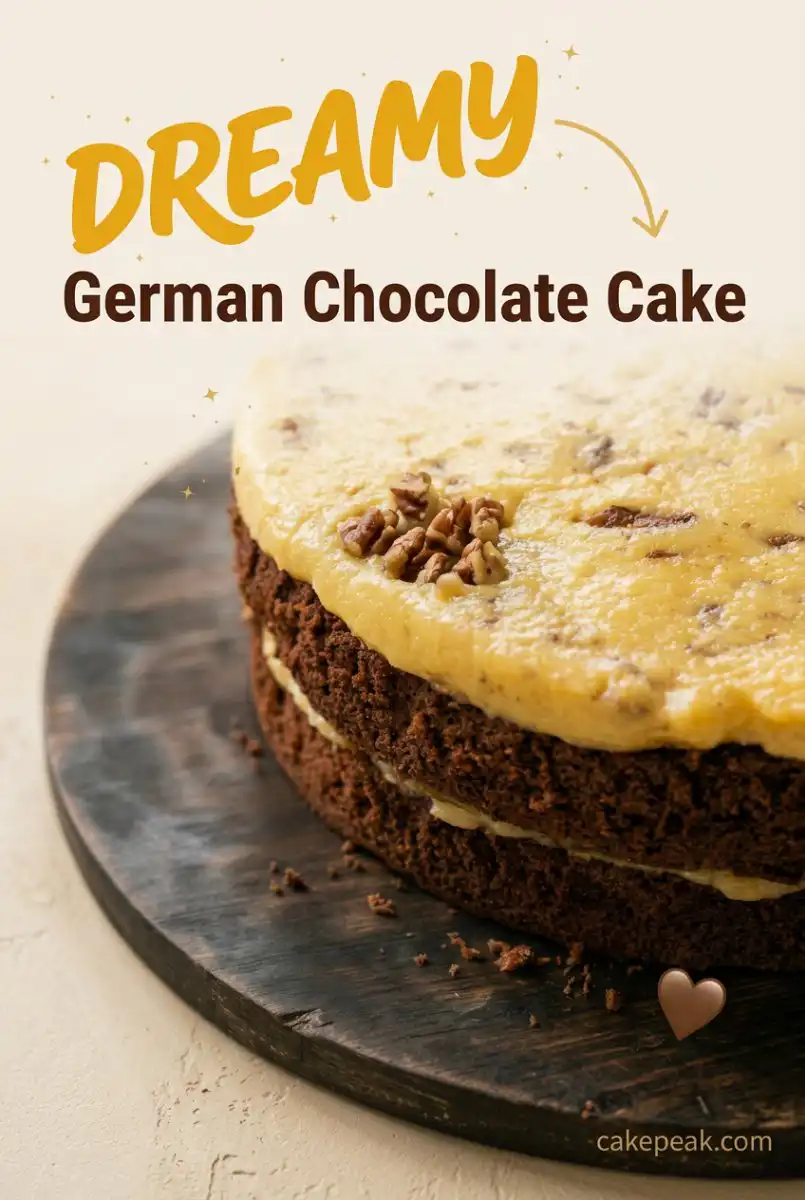
This decadent German Chocolate Cake features a tender, moist crumb paired with a rich, caramelized coconut-pecan custard. A chocolate buttercream border secures the layers, ensuring a perfect, professional finish that balances deep cocoa notes with nutty sweetness.
Ingredients
- 210g all-purpose flour
- 400g granulated sugar
- 75g unsweetened cocoa powder
- 6g baking powder
- 7.5g baking soda
- 5g salt
- 2 large eggs
- 240ml buttermilk
- 120ml canola oil
- 10ml pure vanilla extract
- 240ml boiling water
- 100g light brown sugar
- 100g granulated sugar (for filling)
- 115g butter (for filling)
- 3 large egg yolks
- 180ml evaporated milk
- 15ml vanilla (for filling)
- 120g chopped pecans
- 80g shredded coconut
- 115g butter (for buttercream)
- 65g unsweetened cocoa powder (for buttercream)
- 360g powdered sugar
- 80ml evaporated milk (for buttercream)
- 5ml vanilla extract (for buttercream)
Instructions
- Prep baking pans. Heat oven to 375°F and line two 9-inch pans with greased parchment paper.
- Whisk dry ingredients. Sift flour, sugar, cocoa, baking powder, baking soda, and salt together, whisking to combine.
- Emulsify wet ingredients. Whisk eggs, buttermilk, oil, and vanilla until fully incorporated.
- Combine the batter. Pour wet ingredients into dry and mix until a thick paste forms.
- Bloom the cocoa. Stir in the boiling water until the batter is smooth and well-hydrated.
- Bake the layers. Divide batter into pans and bake for 25 to 30 minutes until a thermometer reads 205°F.
- Cook the filling. Boil sugars, butter, yolks, and milk until thickened, then fold in pecans and coconut.
- Prepare the buttercream. Melt butter with cocoa, then beat in powdered sugar, milk, and vanilla until smooth.
- Assemble the cake. Layer cakes with buttercream piping and coconut custard, then frost the exterior.
Notes
- Use room temperature eggs and buttermilk to ensure better emulsification in the batter.
- Allow the coconut custard to cool completely before assembly to prevent the cake layers from sliding.
- Dip your knife in hot water between slices to achieve clean, professional edges without pulling the filling.
- Store the finished cake in an airtight container to keep the coconut filling moist and fresh.
- Prep Time: 30 mins
- Cook Time: 45 mins
- Category: Dessert
- Method: Baking
- Cuisine: German-American
The Working Components
Every ingredient in this recipe serves a specific structural purpose. Rather than relying on guesswork, we selected these components based on their chemical interactions during baking. Understanding how these elements behave under heat is the key to mastering your cake.
- Buttermilk: The acid in buttermilk reacts with the baking soda to release carbon dioxide gas, which creates immediate lift. This ingredient also tenderizes the gluten network, resulting in a softer crumb than whole milk would yield.
- Boiling Water: Adding boiling water directly to the dry ingredients melts the cocoa butter within the cocoa powder, blooming the chocolate flavor. It also dilutes the batter, which slows down gluten formation and keeps the baked texture incredibly light.
- Oil: Unlike butter, vegetable oil remains liquid at room temperature, which guarantees that the cake layers stay moist even after refrigeration.
- Evaporated Milk: This concentrated milk product provides the base for our custard-style frosting, offering a rich caramelization point without the risk of curdling under direct heat.
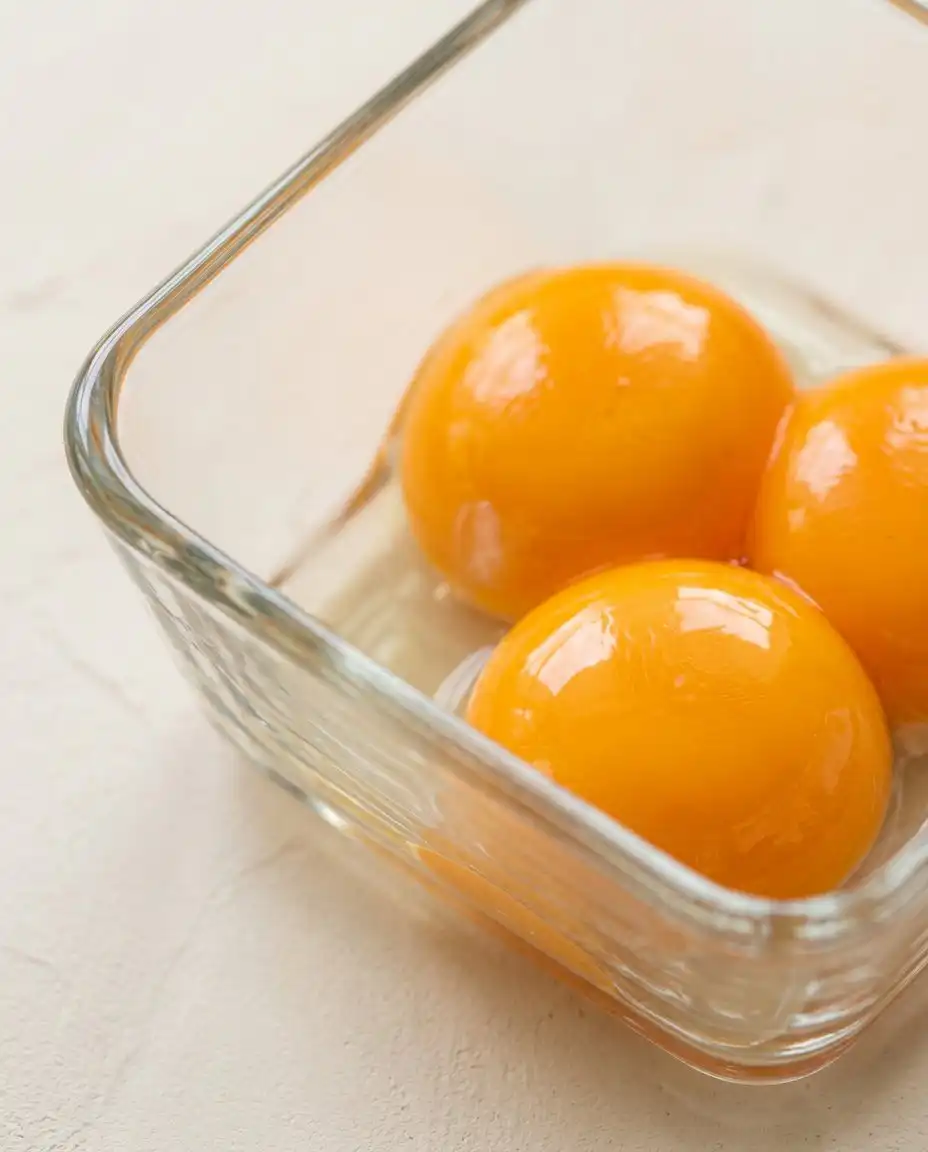
- Egg Yolks: Yolks provide the emulsifying power needed to bind the sugar, butter, and evaporated milk into a thick, sliceable custard layer.
| Ingredient | Why It Matters |
|---|---|
| Cocoa Powder | Blooms with hot water to provide intense chocolate notes without excess starch |
| Buttermilk | Acidifies the batter to activate leavening agents and soften gluten bonds |
| Oil | Insures long-lasting moistness at room temperature |
| Evaporated Milk | Delivers caramelized flavor compounds when boiled with sugars |
| Egg Yolks | Emulsify the cooked custard frosting for clean slicing structure |
| Pecans | Add structural crunch to contrast with the soft custard |
| Boiling Water | Fully hydrates the starches and dissolves sugar crystals instantly |
How to Bake It, Precisely
Step 1: Prep and Line the Baking Pans
Heat your oven to 375°F (190°C) with the rack positioned in the center. Lightly grease two 9-inch round baking pans with nonstick baking spray or shortening. Cut two rounds of parchment paper to match the bottom of your pans and press them firmly into the greased bases to guarantee clean releases. This step is critical because the high sugar content in chocolate cakes can cause sticking.
Step 2: Combine the Dry Starches and Sugars
Weigh 210 grams of all-purpose flour, 400 grams of granulated sugar, and 75 grams of unsweetened cocoa powder on your digital scale. Sift these dry ingredients into a large mixing bowl along with 6 grams of baking powder, 7.5 grams of baking soda, and 5 grams of salt. Whisk the dry ingredients for 45 seconds to distribute the leavening agents evenly throughout the flour network.
Step 3: Whisk the Wet Emulsions
In a separate medium bowl, whisk together 2 large eggs, 240 milliliters of buttermilk, 120 milliliters of canola oil, and 10 milliliters of pure vanilla extract. Whisk vigorously for 30 seconds until the eggs are completely broken down and the oil is temporarily emulsified into the buttermilk. This separate mixing stage prevents the overworking of gluten once wet and dry components meet.
Step 4: Mix the Batter Base
Pour the wet ingredients directly into the bowl of dry ingredients. Using a large rubber spatula or a hand mixer on low speed, mix for 1 minute until the ingredients are combined into a thick paste. Ensure you scrape the sides and bottom of the bowl to prevent pockets of dry flour from hiding in the mixture.
Step 5: Bloom the Chocolate Batter
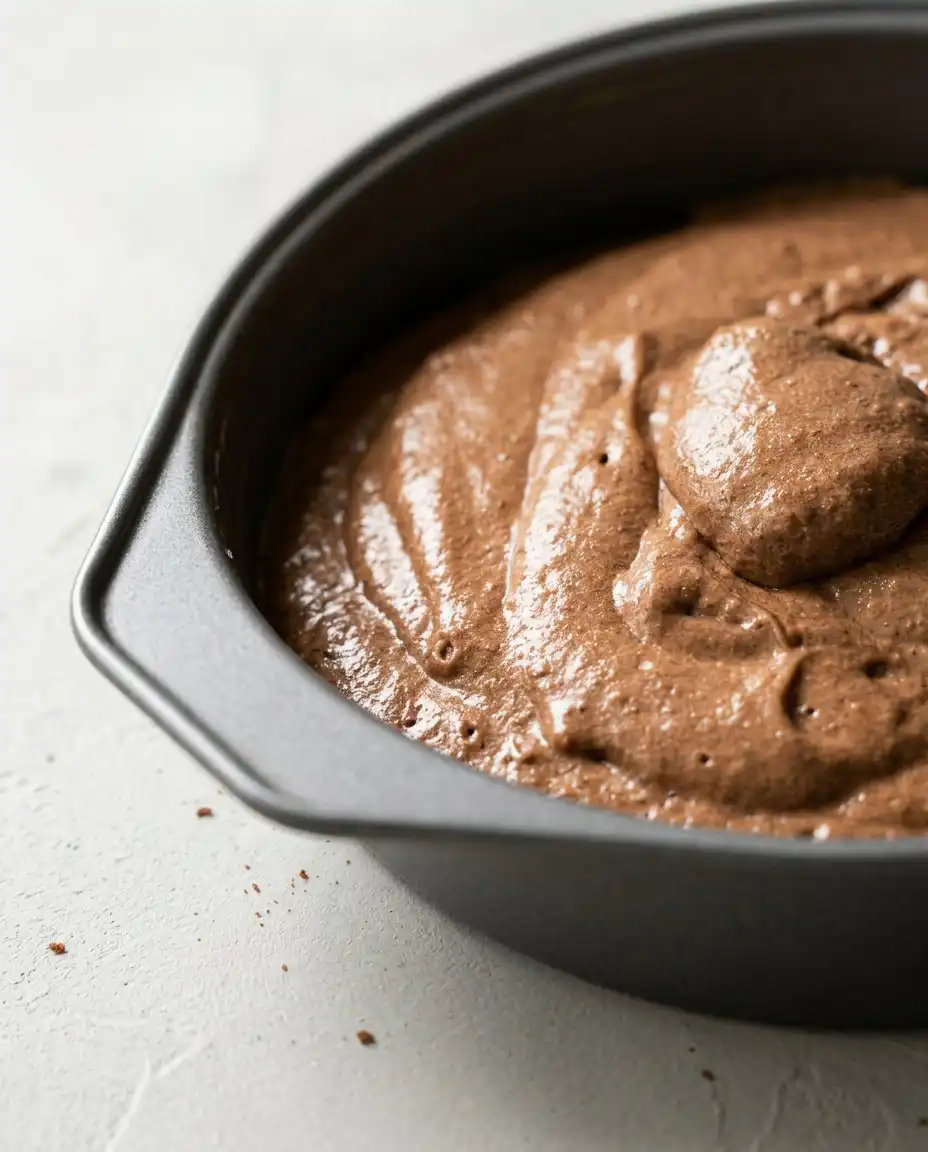
Measure 240 milliliters of boiling water and slowly pour it into the batter while stirring gently. The batter will appear very thin and watery, which is correct for this hydration level. Stir for about 45 seconds until the boiling water is fully integrated, which blooms the cocoa and melts any remaining sugar crystals.
Step 6: Bake Your German Chocolate Cake Layers
Divide the thin batter equally between your two prepared baking pans, placing 625 grams of batter into each pan. Bake at 375°F for 25 to 30 minutes, or until an instant-read thermometer inserted into the center of the cake registers 205°F. Cool the pans on a wire rack for 5 minutes before inverting the layers to cool completely.
Step 7: Cook the Caramelized Coconut Filling
Combine 100 grams of light brown sugar, 100 grams of granulated sugar, 115 grams of butter, 3 large egg yolks, and 180 milliliters of evaporated milk in a medium saucepan. Cook over medium heat, stirring constantly with a heatproof spatula, until the mixture reaches a low boil. Cook for 4 minutes until thickened, then stir in 15 milliliters of vanilla, 120 grams of chopped pecans, and 80 grams of shredded coconut.
Step 8: Prepare the Decorative Buttercream Border
Melt 115 grams of butter in a saucepan, then whisk in 65 grams of unsweetened cocoa powder until smooth. Alternately add 360 grams of powdered sugar and 80 milliliters of evaporated milk, beating until the mixture reaches a smooth spreading consistency. Stir in 5 milliliters of vanilla extract to finish this piping frosting.
Step 9: Assemble the Layered Cake
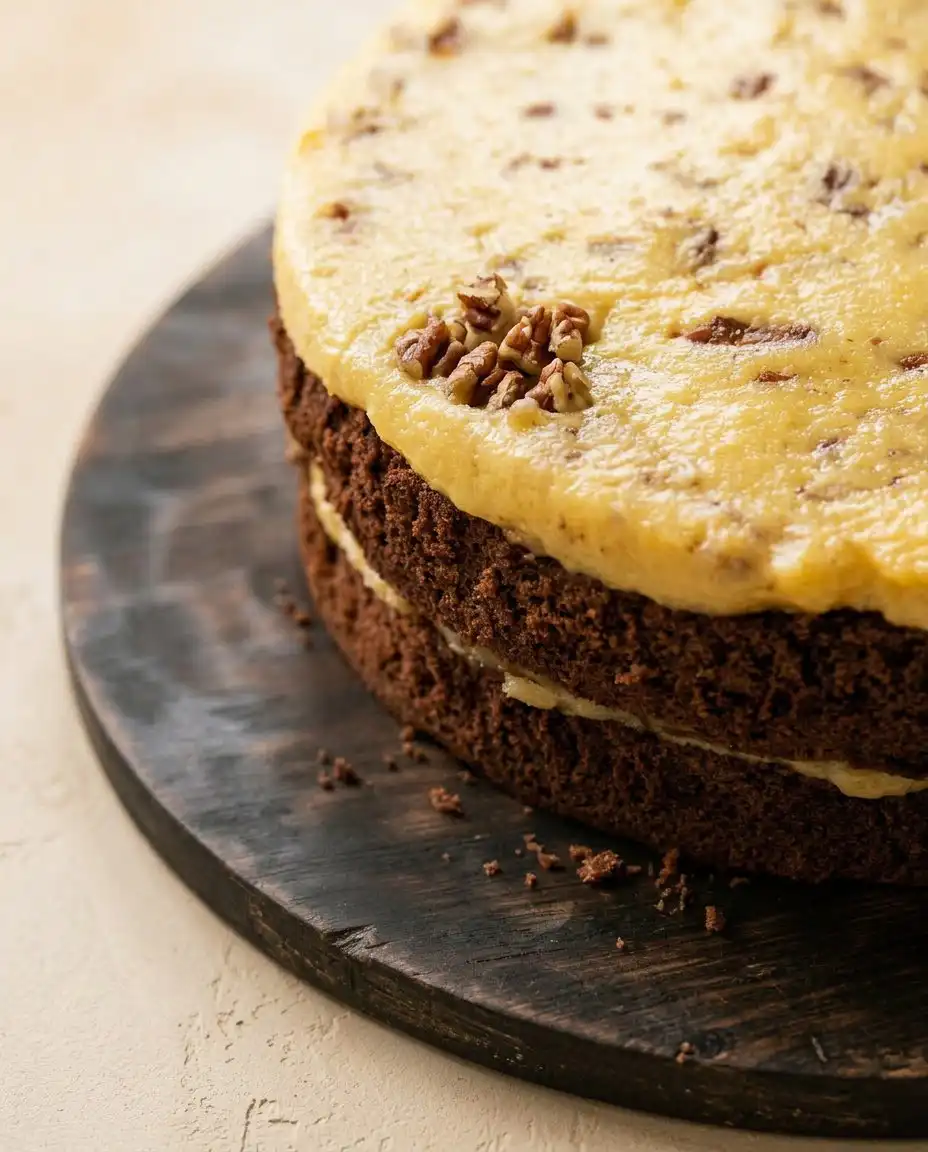
Place your first cooled cake round on a serving plate. Pipe a border of chocolate buttercream around the top edge, then fill the center with half of the cooled coconut pecan mixture. Place the second cake round on top, frost the exterior sides with the remaining chocolate buttercream, and spoon the rest of the coconut frosting onto the top surface.
Test Kitchen Notes
For a perfectly clean cake release, always allow your layers to cool on a wire rack for exactly five minutes before inverting them. If you invert them immediately, the delicate hot crumb may tear; if you wait too long, the cooling sugars will glue the cake to the pan. If you prefer an even denser cake layer, try adapting techniques from our devils food cake recipe.
If your coconut pecan frosting appears too runny after cooking, here is why and how to fix it. This issue occurs when the egg yolks are not heated to their gelatinization temperature of 160°F. Return the mixture to low heat and stir constantly until the custard coats the back of a spoon, or let it chill in the refrigerator for 30 minutes to firm up before assembly.
To ensure your cake layers do not dome during baking, use wet fabric cake strips wrapped around the outside of your pans. This insulates the edges, allowing the center and sides of the cake to rise at the same rate, resulting in flat, easily stackable layers. To understand the science behind hydration levels in baking, read this helpful guide on german chocolate cake methods.
Never frost warm cake layers, as the residual heat will melt the butter in both the coconut custard and the chocolate buttercream. Place your cooled cake layers in the freezer for 20 minutes before assembling to make the crumb firm and easy to frost.
Frequently Asked Questions
Is German chocolate cake actually German?
No, this cake is not of German origin. It was named after Samuel German, an American who developed a sweet baking chocolate bar for the Baker’s Chocolate Company in 1852.
Why is there no “s” in German chocolate cake?
The recipe was originally called ‘German’s Chocolate Cake’ to credit Samuel German, but the possessive ‘s’ was dropped over time in print. Today, most bakers refer to it simply as German Chocolate Cake.
What is in the German chocolate frosting?
The classic filling is a cooked custard made of evaporated milk, butter, egg yolks, sugar, chopped pecans, and shredded coconut. This mixture caramelizes on the stovetop to create a rich, chewy texture.
Why do recipes call for boiling water?
Boiling water blooms the cocoa powder, which releases trapped flavor compounds and hydrates the starch molecules. It also thins the batter, preventing excess gluten from forming so the cake stays tender.
Can I freeze German chocolate cake?
Yes, you can freeze both the un-iced cake layers and the fully assembled cake. Wrap individual slices tightly in plastic wrap and store them in an airtight container for up to three months before thawing.
What can I use instead of German sweet chocolate?
You can substitute it by using a mix of semi-sweet chocolate and a touch of extra sugar. In this specific recipe, we use high-quality unsweetened cocoa powder combined with balanced sugar ratios to achieve an identical flavor profile.
Tested Variations
For an egg-free or dairy-free alternative, you can adapt the chocolate base using the hydration ratios found in our chocolate depression cake recipe. This adjustment maintains the deep chocolate flavor and moisture levels while relying on baking soda and vinegar for the necessary chemical leavening.
Another excellent variation involves swapping the pecans for toasted walnuts to introduce a deeper, slightly bitter nut profile that balances the sweet shredded coconut. When substituting nuts, keep the weight at exactly 120 grams to ensure the structural ratio of the filling remains consistent during assembly.
You can also transform this layer cake into individual cupcakes. Line a muffin tin with paper liners, fill each cup two-thirds full with the thin batter, and bake at 375°F for 18 minutes before cooling and topping with a dollop of both frostings.
Finishing & Plating
To serve this cake with clean, professional slices, use a long, thin-bladed chef’s knife dipped in hot water and wiped clean between each cut. The heat of the blade melts the chocolate buttercream border slightly, preventing the sticky coconut pecan filling from dragging through the cake layers.
If you want to offer your guests a lighter alternative alongside this rich dessert, consider serving it with a side of unsweetened whipped cream or fresh berries to cut through the sweetness. For those who prefer a different flavor pairing altogether, try comparing this with our yellow cake chocolate frosting for a more traditional cake texture.
This cake pairs exceptionally well with hot black coffee or a strong espresso, as the bitter roasted notes of the coffee complement the caramelized pecan filling. Serve the cake at room temperature to ensure the fats in the crumb remain soft and the frosting is perfectly spreadable.
The Bottom Line
Precision in baking is the difference between a dry cake and a repeatable, moist crumb. By following this method and measuring your ingredients carefully, you will create a showstopping dessert that turns any occasion into a celebration. If you are looking for another classic recipe to add to your collection, check out our guide on classic two layer yellow cake chocolate frosting.
We would love to hear how your cake turned out. Share your baking results and connect with our community of precision bakers on our social platforms.
Follow us on Pinterest and join the conversation on Facebook to share your kitchen successes.